2027 The Cost of Taking One Business Administration BS Course at a Time
Audited and Verified:
Our Editorial and Data Verification Process
Research.com uses government datasets, official education statistics and primary institutional information to support its career and degree guides. Our review process checks factual accuracy, occupational definitions, source dates and the requirements associated with the credentials discussed.
How This Article Was Fact-Checked
Our editorial team verifies salary estimates, employment projections, education requirements and program information against original data providers and official organizations. Salary figures are checked against the relevant occupational definitions and reporting periods. Information about licensure, accreditation and required in-person training is reviewed separately.
Fact-checked and verified on:

Co-Founder and Chief Data Scientist
Taking one business administration course at a time can make a bachelor's degree fit around work, caregiving, or a limited monthly budget. But a manageable course bill is not necessarily the lowest-cost path to graduation: fees, financial-aid eligibility, and the number of terms you remain enrolled all matter.
This guide shows how to calculate the cost of one course, estimate the remaining degree cost, and compare a slower schedule with faster options before you commit.
Key Things You Should Know
- For a per-credit course, calculate tuition as the published rate multiplied by the course's credits, then add mandatory fees, materials, and any travel or technology costs.
- One course at a time can lower each payment but increase total spending if it adds fee-bearing terms, delays graduation, or limits financial aid.
- At a hypothetical 120-credit program with three-credit courses, completing all 40 courses at four courses per year would take 10 years; accepted transfer credits and course availability can substantially change that timeline.
How much does one business administration BS course cost?
There is no single national price for one BS in Business Administration course. Schools may charge by credit, by course, or by term, and a quoted tuition rate may exclude fees and materials. For a three-credit course billed per credit, multiply the published undergraduate rate by three; use the rate for your residency status, program, and delivery format.
These billing structures determine which published price you need to request. The comparison is most useful when each school's quote covers the same number of credits and required charges.
| Billing structure | How to estimate one-course cost | What to check |
| Per credit | Credit rate × course credits, plus applicable charges | Whether online, upper-division, or nonresident rates differ |
| Flat price per course | Published course price plus applicable charges | Whether courses with different credit values cost the same |
| Flat price per term | Term charge plus applicable charges | Whether one course triggers the full term charge |
Request a written estimate for an actual required course, not just an advertised "starting at" tuition rate. To identify schools worth requesting quotes from, consult resources on colleges offering economical online business study; confirm each school's current charges directly before comparing them.
How does taking one course at a time affect total degree cost?
Under a constant per-credit rate, taking the same required credits one at a time does not, by itself, change base tuition. Total cost can still rise when a longer schedule means more term fees, future tuition increases, renewed software access, or delayed entry into a job that requires the degree. A slower pace may also protect earnings if it lets you keep working.
Estimate completion cost from your remaining required courses, not the credits listed on an old transcript. Your calculation should include tuition for those courses, recurring and one-time charges, materials, borrowing costs if applicable, and a realistic allowance for courses you may need to repeat. Keep any projected pay increase separate: it is uncertain, not a discount on tuition.
A lower advertised per-course price can lose its advantage if a program requires substantially more courses after transfer evaluation. Use the same assumptions when comparing low-cost business administration degrees with federal aid options, and obtain each school's degree audit before estimating a final total.
Is paying per course cheaper than paying per semester?
It depends on how many courses you can take in the term and what the school charges. Per-course or per-credit billing often avoids paying a full-time flat rate while taking only one class. A flat semester rate may cost less per credit when you can take enough eligible courses within that rate without risking your grades or work hours.
Compare two schedules using identical remaining requirements: the tuition and fees for one course each term versus the tuition and fees for a feasible multi-course term. Include any terms when prerequisites or an infrequently offered business core course would leave you enrolled below your planned load. A faster calendar is valuable only if the schedule is sustainable.
If a school markets fast completion, check whether its courses actually run often enough to support your plan. Ranked US colleges for faster business degree completion can provide comparison candidates, but a ranking cannot establish your personal completion time or price.
Ask the bursar for an itemized estimate for a specific course and term. The important distinction is whether a charge occurs once, with every course, or with every term: term-based charges can make a long, one-course-at-a-time plan more expensive.
Check the following charges against the school's current schedule of fees and the course syllabus:
- Mandatory student, technology, online-learning, or campus fees, including fees assessed even for part-time enrollment.
- Digital textbooks, access codes, business simulations, spreadsheet or analytics software, and required equipment.
- Exam-proctoring, residency, parking, or travel costs when a course requires them.
- Payment-plan, late-payment, or repeat-course charges if they apply to your circumstances.
Fee categories can appear across business-related majors; project management tuition fees and financial aid offer another comparison framework. Do not substitute another program's fee schedule for the business administration program's written quote.
Online is not automatically cheaper. An online course may avoid commuting and parking but carry a distinct tuition rate or technology fee. A campus course may have a lower published rate yet require travel, childcare, or time away from paid work. Compare the cost of attending the specific course, not the labels "online" and "campus."
For working students and parents, scheduling is part of the financial comparison. Ask whether online classes require live meetings, timed exams, group presentations, or campus visits. A course that forces a change in work hours or paid care arrangements may cost more than its bill suggests.
When using ranked online business schools in America to build a shortlist, verify each program's actual delivery requirements and your applicable tuition category.
Yes—if the receiving school applies them to requirements you would otherwise have to pay to complete. A school can accept a prior course as elective credit without letting it replace accounting, statistics, general education, or a required business course. Program residency rules may also require you to earn a minimum number of credits there.
Before paying for another course, send official transcripts for evaluation and request a degree audit showing accepted credits, the requirements they satisfy, and what remains. Confirm course equivalencies and any substitution with the registrar or business program adviser. Only the receiving institution can make the final determination.
Transfer policies in adjacent fields illustrate why an audit matters: project management bachelor's completion using existing credits is a comparison point, not evidence that those same credits will fulfill a business administration BS.
Students enrolled in an eligible degree program may be considered for federal aid after filing the FAFSA, but the type and amount depend on eligibility, the school's enrollment calculations, and other rules. A single course may fall below the half-time enrollment generally required for federal Direct Loans. An eligible student may still qualify for a Pell Grant at a lower enrollment intensity; the school must determine the actual award.
Ask the financial-aid office to calculate aid for your planned course load before registration. Confirm that the course counts toward your degree, how satisfactory academic progress is measured, and whether a change in enrollment or a withdrawal would alter your award. Also compare school grants, payment plans, and employer tuition assistance; reimbursement after a passing grade does not eliminate the need to pay an earlier bill.
For a broader explanation of aid categories in a related online bachelor's field, see resources on financial aid packages for online project management bachelor's students. Your business program's aid office must confirm your eligibility.
Time depends on credits remaining, credits per course, the number of course-start opportunities each year, and prerequisite sequencing. In a hypothetical 120-credit degree made up entirely of three-credit courses, a student starting with no applicable credit would need 40 courses. At one course in each of four terms per year, that is 10 years before allowing for unavailable courses or breaks. With 60 applicable transfer credits, the same pace would take five years.
Real programs may have courses with different credit values, shorter sessions within a term, or required classes offered only at certain times. Taking one course in each of several consecutive sessions can shorten the calendar, but do not assume every required course is available in every session. Ask for a term-by-term course map.
An accelerated business college program guide can help you examine faster formats. Compare their actual weekly workload and total billed terms with a one-course plan.
A BS in Business Administration can support applications for roles involving operations, customer accounts, marketing coordination, procurement, or project support. Your strongest entry route depends on prior experience: someone who already handles scheduling or purchasing may be able to document relevant results, while a career changer may need an internship or work samples alongside the degree.
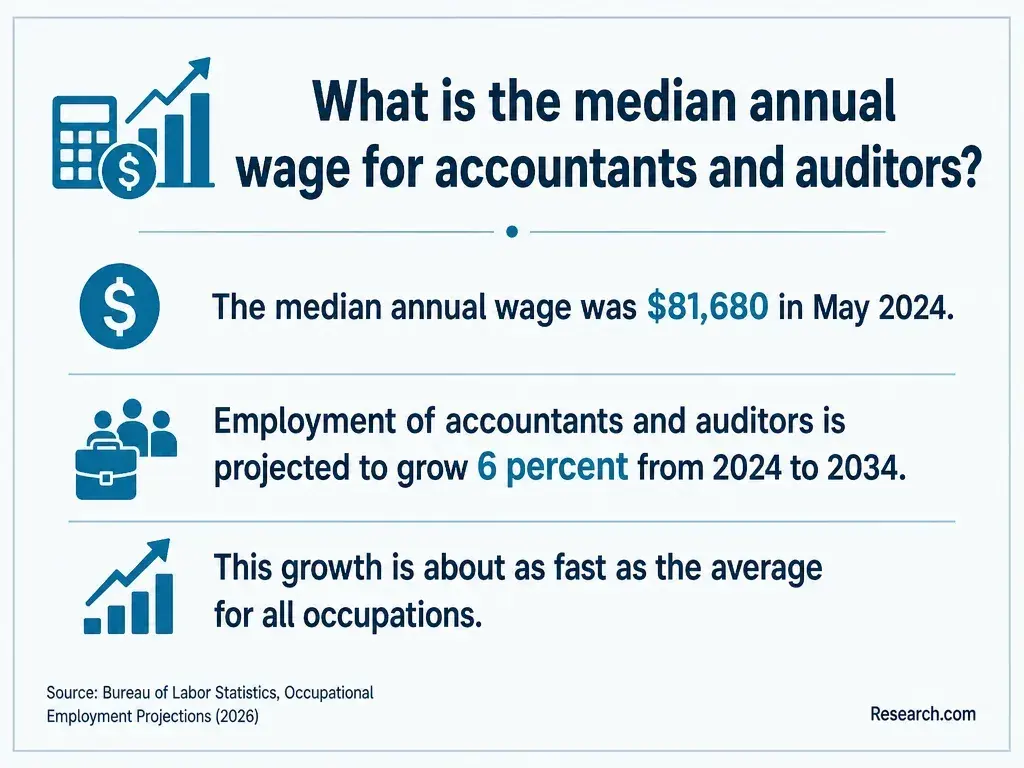
For salary context, the U.S. Bureau of Labor Statistics reports a May 2025 median annual wage of $78,760 for market research analysts. That is an occupation-wide median—not a starting salary or an expected outcome for a business administration graduate. Analyst roles may also call for stronger research and data skills than a general business curriculum provides.
If your target is specifically procurement or logistics, compare the general degree's course options with specialized study. Resources on shorter supply chain degrees and career value provide an alternative to investigate; neither path substitutes for the experience a particular employer requires.
Is a business administration BS worth the cost?
One-course-at-a-time study can be worth considering when a bachelor's degree is required for a role you realistically seek, your prior credits apply well, and the schedule lets you remain employed without taking on unmanageable debt. It is less compelling if a targeted course, employer training, or a different credential would meet your goal sooner—or if recurring fees make a long completion plan unaffordable.
Before enrolling, compare written degree audits and itemized cost estimates from your finalists. Calculate what you must pay before any employer reimbursement, what you may need to borrow, and how many terms the approved course sequence requires. Then test a faster but feasible schedule against the one-course option. Resources that compare accelerated undergraduate programs can help you identify alternatives, but your decision should rest on your own remaining requirements, budget, and available study time.
Other Things You Should Know About Business Administration
Some schools permit nondegree enrollment, but admission rules vary. Ask whether the course will count toward the BS if you are admitted later; permission to enroll is not a promise of degree credit.
Often, yes. A finance or advanced analytics course may require earlier accounting, mathematics, or statistics work. Check the catalog and ask an adviser to map prerequisites before choosing your first class.
Check the school's leave, reentry, and catalog-year policies before stopping. A long gap could affect access to a prior degree plan or the timing of required courses.
Possibly, depending on the student's eligibility, qualified expenses, and applicable tax-credit rules. A Form 1098-T can help document payments, but receiving one does not itself establish eligibility; consult IRS guidance or a qualified tax professional.
- Chapter 3 - Courses and Enrollment, Full Course of Study, and Reduced Course Load | USCIS https://www.uscis.gov/policy-manual/volume-2-part-f-chapter-3
- Work-Study Jobs | Federal Student Aid https://studentaid.gov/understand-aid/types/work-study
- Fast Facts: Tuition costs of colleges and universities (76) | ed.gov https://nces.ed.gov/fastfacts/display.asp
- Online and Distance Education | Student Services Center https://studentservices.ncsu.edu/finances/tuition-and-fees/tuition-and-fee-rates/online-and-distance-education/
- Course Substitutions & Credit for Prior Learning | Montgomery Community College https://www.montgomery.edu/catalog/course-substitutions-credit-for-prior-learning/
- Transfer Policies and Prior Learning Assessment for Advanced Standing | Columbia-Greene Community College https://catalog.columbiagreene.edu/transfer-policies-and-prior-learning-assessment-for-advanced-standing
- Financial Aid Glossary & Terms | Newman University https://newmanu.edu/financial-aid/financial-aid-glossary-terms
- How Many Credits Do You Need to Graduate College? | snhu.edu https://www.snhu.edu/about-us/newsroom/education/how-many-credits-to-graduate-college
- Program: Business Administration (BS) - USC Catalogue https://catalogue.usc.edu/preview_program.php
- Part-Time & Full-Time Enrollment - Student Payment Center https://www.payments.pitt.edu/tuition-fees/part-time-full-time-enrollment