2027 BS in Business Administration Program Choice: A Project Involving a Local Small Business as a Capstone Option
Audited and Verified:
Our Editorial and Data Verification Process
Research.com uses government datasets, official education statistics and primary institutional information to support its career and degree guides. Our review process checks factual accuracy, occupational definitions, source dates and the requirements associated with the credentials discussed.
How This Article Was Fact-Checked
Our editorial team verifies salary estimates, employment projections, education requirements and program information against original data providers and official organizations. Salary figures are checked against the relevant occupational definitions and reporting periods. Information about licensure, accreditation and required in-person training is reviewed separately.
Fact-checked and verified on:

Co-Founder and Chief Data Scientist
A local small business can give your business administration capstone a real decision-maker and a practical problem - but only if the project is feasible, approved, and safe to share with faculty. This guide is for students comparing BS in Business Administration programs or preparing a final project with a local owner. It explains what a small-business capstone can produce, how to choose a manageable scope, and which academic and business permissions to confirm before committing.
You can then judge whether this option fits your schedule, learning goals, and career plans better than a simulation or another approved capstone.
Key Things You Should Know
- A local-business project counts as a capstone only if the program approves its scope, supervision, deliverables, and assessment; an owner's invitation alone does not award credit.
- The strongest projects answer one bounded question - such as how to improve an appointment process - and distinguish a recommendation from a change the business actually implemented. Check data access before choosing the topic.
- A useful analysis may rely on public information, owner-approved summaries, and stated assumptions rather than customer records or confidential financial statements.
What Is a BS in Business Administration With a Local Business Capstone?
A BS in Business Administration is an undergraduate degree covering several business functions. A local small-business capstone is an approved final academic project that applies those skills to a defined question for a business, such as whether a proposed scheduling change is practical. The student produces work for faculty assessment; the owner may also use the recommendations, but is not obliged to implement them.
"Capstone option" matters: some programs assign a simulation or case instead, while others permit an external client only with advance approval. Check the catalog and capstone syllabus for eligibility, required courses, faculty oversight, team rules, and whether the business must sign an agreement. An internship, an informal favor for an owner, and a capstone are not interchangeable.
This option fits a student who wants evidence of applied judgment across marketing, operations, finance, or management - not just another classroom case. If finishing quickly is the priority, compare quick-completion business degree pathways, then check whether their capstone schedule leaves enough time to recruit a business and secure approvals. A compressed term can make a project with an unpredictable client harder to complete.
How Does a Local Small-Business Capstone Project Work?
The project should begin with a decision the owner can realistically make during the academic term. A proposal to redesign an entire business is usually too broad; comparing two ways to reduce missed appointments is more manageable. Faculty evaluate the academic work, while the owner confirms the business context and any permitted access.
A workable sequence keeps the project useful without depending on unapproved data or a promised business result:
- Define one question, the decision-maker, the deadline, and a deliverable such as a process map, marketing test plan, or operating-budget scenario.
- Agree on available inputs and permissions with the owner and faculty adviser; separate public facts, approved internal information, and assumptions.
- Document the baseline and compare feasible options using relevant measures, such as staff time per order or estimated cost per appointment.
- Present a recommendation with costs, risks, missing evidence, and a way the business could evaluate it later.
- Submit the required academic report or presentation and obtain permission before including any business material in a portfolio.
For example, a customer-appointment review could deliver a current-state process map and a proposed reminder workflow. Without an authorized trial and reliable before-and-after records, it should not claim that the workflow reduced no-shows. Keep raw customer and employee information out of coursework unless the business and institution have explicitly approved its use; check privacy, intellectual-property, and any applicable academic review requirements before collecting interviews or survey responses.
If you are changing schools or majors, do not assume an earlier project will replace the new program's capstone. Even guidance on project management bachelor's residency and transfer requirements is only a starting point: the receiving institution decides whether prior work satisfies its own final-project rules.
Which Accreditation Should a BS in Business Administration Have?
Start by verifying that the institution holds recognized institutional accreditation and that the degree is offered by that institution. Then check whether its business school or specific program has applicable AACSB, ACBSP, or IACBE accreditation. These are different questions: institutional accreditation does not establish business-specific accreditation, and a school-level claim does not necessarily cover every degree or location.
Accreditation is a screening factor, not proof that a particular capstone has an external-client option. Ask for the current catalog, capstone syllabus, and written policy on client approval. Students comparing application costs can compare accredited schools with no application charge, but should verify accreditation scope and project availability directly before applying.
Programs typically combine general education with accounting, finance, marketing, management, economics, business law, operations, and quantitative coursework. Exact requirements vary. For a small-business capstone, the most useful preparation is often the ability to read basic financial information, estimate costs, interpret imperfect data, map a process, and communicate a recommendation an owner can act on.
Choose electives around the proposed problem rather than the business's industry alone. A purchasing project may benefit more from operations and spreadsheet analysis than from an entrepreneurship elective. Students considering that focus can explore planning an affordable supply chain education route, while confirming which courses actually count toward their BS. An elective or capstone topic does not, by itself, create an official concentration.
Either format can support a local-business project if the program permits external clients and offers workable supervision. The decisive issue is not where lectures occur; it is whether you can meet faculty and owner deadlines, collaborate with any assigned team, and present the final work in the required format.
The comparison below highlights capstone conditions to verify rather than assuming one format is more flexible.
| Format | Potential project advantage | Constraint to verify |
| Online | May allow a project with a business near your home or workplace | Live meetings, team availability, presentation times, and remote-client rules |
| Campus-based | May offer easier in-person faculty and team coordination | Travel to the business and required meetings outside class hours |
| Hybrid | Can combine remote analysis with scheduled in-person work | Which visits and presentations are compulsory |
For students working while enrolled, flexible online study for business administration career growth is worth comparing - but "online" does not mean self-paced. Ask for a recent capstone schedule before promising an owner that you can meet during business hours.
Requirements depend on whether you are entering as a first-year student, transferring, or returning to finish a degree. Schools may request prior transcripts and evidence that you meet their academic standards; admission to the institution may be separate from admission to the business major. Mathematics, statistics, accounting, or other courses may also need to be completed before upper-level work.
For this capstone choice, ask an adviser two additional questions early: when do you become eligible to enroll in the capstone, and must your proposed business be approved before that term starts? Use business administration degree prerequisite planning to prepare those questions. Transfer students should request an official degree audit; accepted credits do not automatically satisfy capstone prerequisites or residency rules.
A conventional full-time bachelor's path often takes about four years, but transfer credits, enrollment pace, prerequisite sequencing, and capstone availability can change the finish date. For a prospective local-business project, check whether the capstone runs every term and whether client approval must occur in a preceding course. A delay can matter more financially than a small difference in advertised tuition.
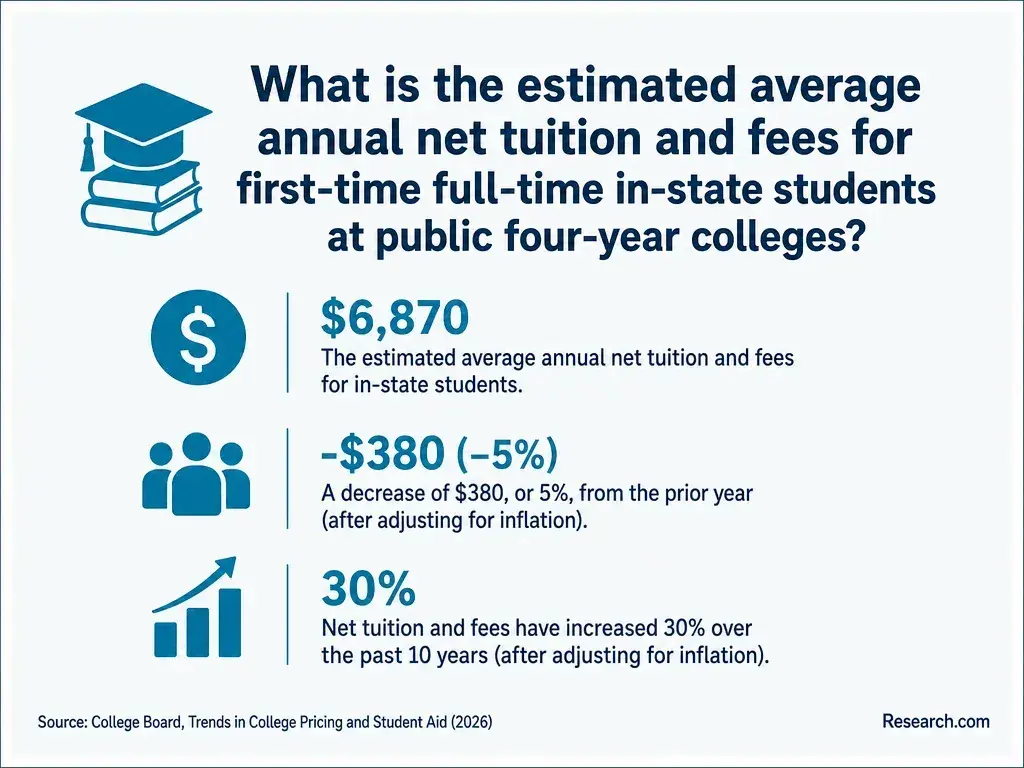
Compare the cost of the remaining degree: required credits, tuition and fees, books or software, any travel to the business, and income affected by scheduling. Ask the financial-aid office which charges and enrollment patterns are aid-eligible. Resources on business administration college affordability and FAFSA participation can help narrow a search, but only a school's current aid offer and degree audit can establish your likely net cost and timeline.
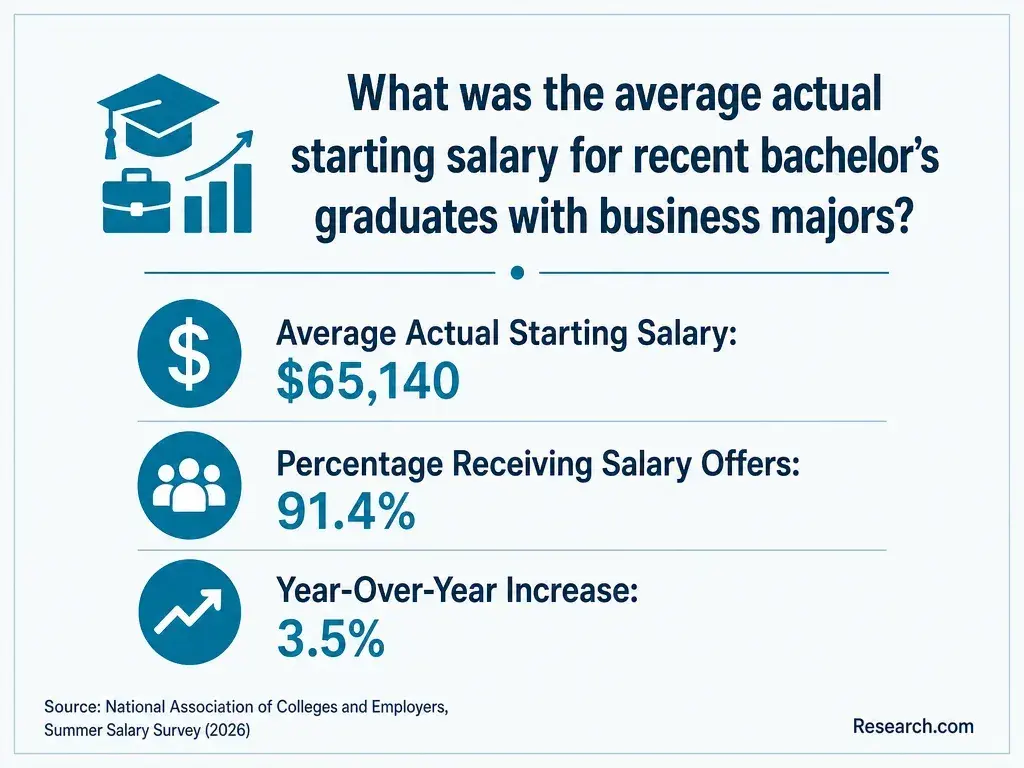
A relevant capstone can help an early-career applicant explain how they framed a problem, handled constraints, and communicated with a stakeholder. It may support applications for roles such as operations coordinator, marketing coordinator, purchasing assistant, or project coordinator when the work sample matches the role's tasks. The degree and project do not confer management experience or guarantee a job.
Describe your contribution accurately: "developed an owner-reviewed process recommendation" is different from "improved company performance." If an employer needs a graduate by a particular hiring cycle, compare fastest bachelor's-level business study options against their actual capstone sequence, recruiting support, and remaining requirements - not the advertised pace alone.
There is no single salary for a BS in Business Administration graduate. The U.S. Bureau of Labor Statistics reports a May 2025 median annual wage of $78,760 for market research analysts and projects 7% employment growth for that occupation from 2025 to 2035. Those figures cover workers across experience levels and educational backgrounds; they are not an entry-level offer or the return from completing a marketing capstone.
Use the occupation that matches your intended work, then compare its hiring requirements with the skills your project actually demonstrates. When weighing education expense against possible career value, evaluate price duration and outcomes of business administration degrees without assuming that a national occupational median predicts your pay. Local employers, relevant work experience, and the quality of your work sample also matter.
Do Business Administration Graduates Need Licenses or Certifications?
A general business administration degree and a small-business capstone do not normally require a general business license for the graduate. A particular job may have separate requirements: regulated accounting or financial-services work, for example, cannot be authorized by a capstone. Voluntary credentials may be useful later, but their eligibility rules are set by the issuing organization, not by your degree title.
If your project centers on schedules, budgets, and stakeholder coordination, decide whether you need broad business preparation or a more focused project-management path. You can compare lower-priced project management degrees against the BS's coursework and cost; neither degree alone establishes eligibility for every professional certification or an experienced project-manager role.
Other Things You Should Know About Business Administration
Follow your institution's AI policy and disclose permitted use. Do not enter confidential business or personal information into a tool without authorization, and verify any AI-assisted analysis yourself.
Discuss the change with your faculty adviser before revising the scope. You may need to retain the approved question or document a formally approved amendment to protect your assessment deadline.
Possibly, if the program permits it. Disclose the relationship and ask how the school will assess independent work, supervision, and potential conflicts of interest.
Ownership and reuse depend on institutional policy and any agreement with the business. Clarify those terms before sharing the report publicly, submitting it to a competition, or using it as a portfolio sample.
- A study of the impact of project-based learning on student learning effects: a meta-analysis study - PMC https://pmc.ncbi.nlm.nih.gov/articles/PMC10411581/
- School-Determined Requirements - FSA Partner Connect https://fsapartners.ed.gov/knowledge-center/fsa-handbook/2025-2026/vol1/ch1-school-determined-requirements
- Trade Secrets | copyright https://www.wipo.int/en/web/trade-secrets
- Business Course Selection Guide | Undergraduate Academic Advising https://advising.nd.edu/first-year-and-incoming-students/college-and-school-curricula/mendoza-college-of-business/business-course-selection-guide/
- BA in Business Administration in Chicago | St. Augustine College https://www.staugustine.edu/programs/business-administration/
- Academics Capstones and Culminating Projects | Columbia University School of Professional Studies https://sps.columbia.edu/academics/capstones-and-culminating-projects
- Bachelor of Business Administration (BBA) Degree Completion Program | University of Illinois Chicago https://business.uic.edu/undergraduate/degrees/bachelor-business-administration-completion-program/
- What Is a Capstone Project? - Boston University Questrom https://www.bu.edu/questrom/blog/what-is-a-capstone-project/
- Dr. Sam Pack College of Business - Tarleton Catalog https://catalog.tarleton.edu/undergrad/collegeofbusinessadministration/
- Intellectual Property and Non-disclosure Agreements | psu.edu https://lf.psu.edu/sponsors/sponsor-agreements/