2027 BS in Business Administration Decision Guide: A Hospitality Focus or a General Management Degree
Audited and Verified:
Our Editorial and Data Verification Process
Research.com uses government datasets, official education statistics and primary institutional information to support its career and degree guides. Our review process checks factual accuracy, occupational definitions, source dates and the requirements associated with the credentials discussed.
How This Article Was Fact-Checked
Our editorial team verifies salary estimates, employment projections, education requirements and program information against original data providers and official organizations. Salary figures are checked against the relevant occupational definitions and reporting periods. Information about licensure, accreditation and required in-person training is reviewed separately.
Fact-checked and verified on:

Co-Founder and Chief Data Scientist
A hospitality focus can make a business degree more relevant to hotels, events, and other guest-facing operations - but it may leave less room to explore other industries. A general management degree offers broader choices without necessarily teaching the sector knowledge hospitality employers value. If you are choosing or finishing a BS in Business Administration, this guide compares the coursework, practical experience, cost, and career evidence behind each path so you can choose for the work you actually want to do.
Key Things You Should Know
- Choose a hospitality focus when you want guest-facing operations and can gain relevant industry experience; choose general management when you want flexibility across sectors or remain undecided.
- Check whether "hospitality" is an official concentration, a few electives, or a separate degree. The distinction affects required courses, transfer credit, and what appears on your academic record. Neither route makes a new graduate a manager.
- For context, the U.S. Bureau of Labor Statistics projects 6% employment growth for meeting and event planners from 2025 to 2035; the projection covers the occupation, not graduates of either degree.
What is the difference between a hospitality-focused and general management business degree?
Both routes can combine accounting, marketing, finance, operations, and organizational behavior. A hospitality-focused route applies those subjects to service settings such as lodging, events, food service, or tourism. A general management route typically applies them across organizations and may leave more elective space for another function or industry.
The credential matters as much as the label. Hospitality might be a formal concentration within a BS in Business Administration, an elective cluster, or a separate hospitality degree. Likewise, "general management" might name a concentration or simply describe the broad business curriculum. Ask what the diploma and transcript will say, which courses are mandatory, and whether either route adds credits. If your goal is specifically to coordinate projects rather than run service operations, value-focused project management degree choices offer a different comparison; project management is not interchangeable with general management.
Which business administration degree is better for your career goals?
Hospitality is the stronger fit if you want to work in a hotel, venue, restaurant group, or guest-experience operation and can pair classes with relevant work. Its sector-specific assignments can help you discuss service recovery, staffing during demand swings, and guest expectations in interviews. It is less compelling if the available courses do not match your intended part of the industry.
General management is the stronger fit if you are still testing industries, already work outside hospitality, or want electives in a transferable function such as operations or human resources. Broad preparation does not replace proof that you can do a particular job. For an HR goal, compare the actual HR courses and work opportunities with HR degree requirements and job opportunities rather than assuming a management title covers employment practices in depth.
If you already have substantial hospitality experience, general management may fill broader accounting or analytical gaps better than repeating familiar service concepts. Conversely, a student with broad office experience who wants to enter lodging may benefit more from hospitality courses and an industry placement. Your existing skills can reverse the recommendation.
What courses do hospitality and general management programs include?
Compare required courses and approved electives - not course titles alone. The table shows typical areas to look for; no individual program necessarily includes every example.
| Area | Hospitality-focused route | General management route | What to check |
| Shared business foundation | Accounting, marketing, finance, statistics, and management | Accounting, marketing, finance, statistics, and management | Whether quantitative and prerequisite courses differ |
| Distinctive study | Possible lodging, food-service, event, revenue, or guest-experience courses | Possible organizational leadership, operations, HR, or strategy courses | Whether desired subjects are required or merely offered |
| Applied work | Possible service case, industry internship, or operations project | Possible cross-industry case, simulation, or capstone | Supervision, scheduling, approval, and graduation rules |
Read recent syllabi where available. A hospitality revenue-management course should involve pricing and demand decisions, while a general operations course may emphasize process measures across industries; neither title proves the depth of the assignments. If cost limits your elective choices, inspect the catalog alongside cheaper business administration college programs: an inexpensive program is not the better fit if it lacks the courses you need.
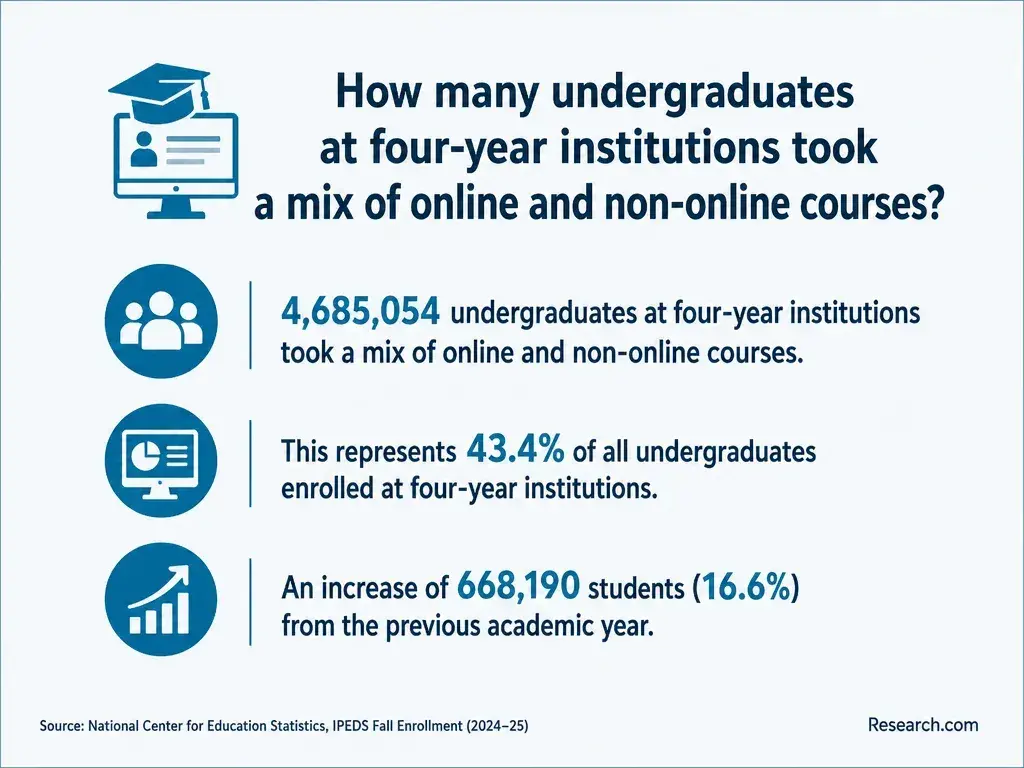
Online study can reduce travel and make it easier to keep a job, but it does not guarantee self-paced classes. Hospitality students should check how they will access industry contacts, approved placements, and service-related projects. Campus programs may make local recruiting and hands-on activities easier to reach, but commuting and fixed class times can limit work availability.
For either route, ask about live sessions, group projects, proctored exams, campus visits, and internship schedules before accepting a place. Online business degrees with compressed terms can shorten the calendar, but faster deadlines may be difficult to combine with hospitality shifts or a full-time job. Compare the actual weekly workload and course sequence, not just the advertised delivery format.
Schools set their own requirements. Applicants commonly provide prior academic records, while transfer students may need transcripts and course descriptions for credit evaluation. Some schools admit students to the university before they can enter the business major or a particular concentration. Confirm whether mathematics, accounting, or other prerequisites must be finished before upper-level courses.
For a returning student, the decisive question is not simply how many credits a school accepts: it is where those credits apply. Request an official evaluation showing general education, business core, hospitality or management requirements, electives, and credits still needed at the institution. An associate degree may provide a useful starting point without satisfying every major requirement. If HR is emerging as a more precise goal, online human resources programs for associate degree holders provide another route to compare against the school's written transfer evaluation.
A full-time bachelor's path commonly spans four academic years, but your remaining time depends on applied transfer credit, prerequisites, course availability, and enrollment pace. A concentration need not add time if its courses fit available electives; it can add time if required classes are offered infrequently or do not fit your degree audit.
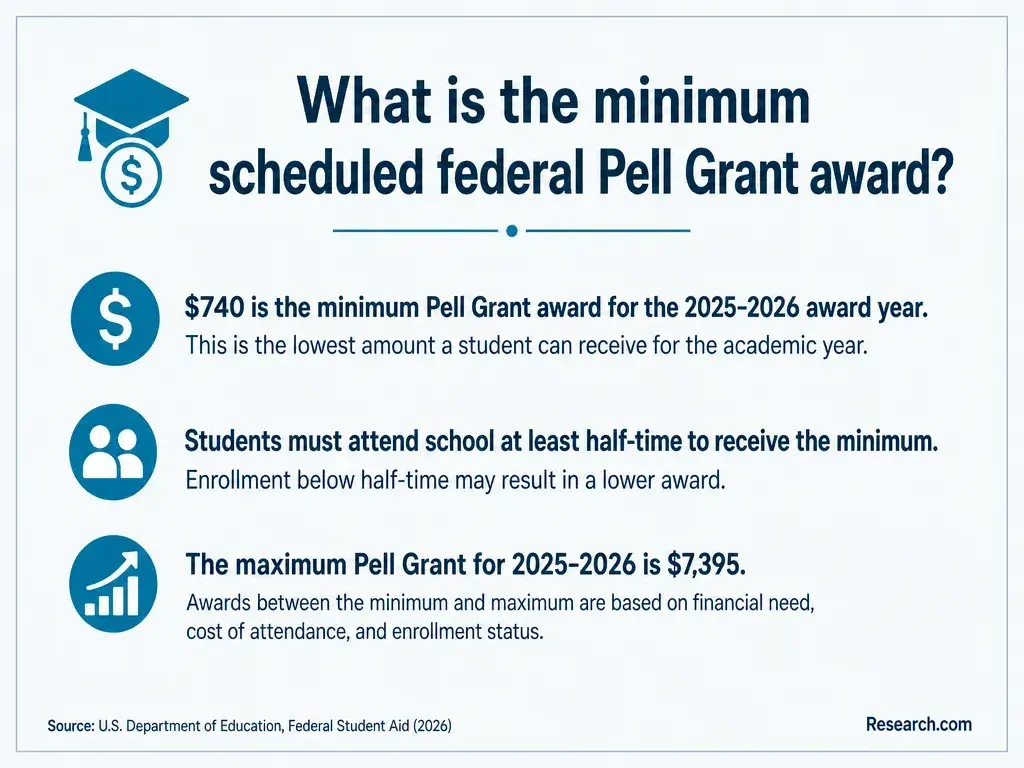
Compare a personalized cost to completion, not just the advertised tuition rate. Include required credits, mandatory fees, materials, technology, travel, and any earnings you would give up for an internship. Ask each school for its charges and a term-by-term plan, then check aid eligibility and your expected out-of-pocket payments. FAFSA planning for affordable business administration study can help you frame financing questions, but aid and final costs depend on your circumstances and the institution.
First, verify the institution's accreditation through the accreditor's official directory and confirm it covers the school and location or delivery arrangement you are considering. Then check any claimed AACSB, ACBSP, or IACBE accreditation directly with that organization: business-school or programmatic accreditation has a defined scope and should not be assumed to cover every degree or concentration.
Accreditation is a baseline check, not evidence that a hospitality placement or management course will meet your goal. Ask for the current catalog, sample course sequence, internship rules, faculty access, and career-services offerings. If a school reports employment outcomes, check which students were counted and when. Use US online business education program comparisons to build a shortlist, then verify each shortlisted program's current details with the school.
Hospitality-focused graduates might seek guest-services, event, reservations, sales-support, or operations-coordinator roles. General management graduates might target operations coordination, administrative support, purchasing support, or other entry-level business functions. Employers assess the role's tasks and your experience; a concentration alone does not qualify you to supervise staff or control a major budget.
Work backward from several relevant job postings. If they ask for event logistics and client communication, seek supervised event work and assignments you can discuss. If they ask for purchasing analysis or process tracking, build spreadsheet and operations evidence. A student committed to logistics may also find fast undergraduate routes into supply chain management more directly aligned than either broad management or hospitality. Verify whether an accelerated route accepts your credits before expecting a shorter finish.
There is no reliable salary attached to either degree label: pay follows the occupation, responsibilities, experience, employer, and location. As occupational reference points, the U.S. Bureau of Labor Statistics reports a May 2025 median annual wage of $61,160 for meeting and event planners and $78,760 for market research analysts. Those are wages for workers across each occupation, not starting salaries or outcomes promised to hospitality and general management graduates.
For a financial comparison, use entry-level postings for roles you could realistically obtain and weigh their pay against your remaining education costs. A hospitality path with relevant paid experience may serve you better than a broadly titled degree without work evidence; the reverse may hold if your target role is outside the service sector. Compare low-cost online business degree programs only after checking their course fit and your individual cost to finish.
What certifications or licenses do business administration graduates need?
Neither a hospitality focus nor general management creates a universal professional license. Employers may value job-specific training - for example, a food-safety credential for certain food-service responsibilities - but requirements depend on the role and jurisdiction. Voluntary industry or project-management certifications have their own eligibility rules; completing a related college course does not automatically satisfy them.
Before paying for a credential, inspect target job postings and the issuing organization's eligibility requirements. If project coordination is your goal, compare a targeted credential, supervised project experience, and a specialized degree, including project management study costs beyond tuition. Choose the qualification that addresses a documented hiring gap rather than collecting credentials without a target role.
Other Things You Should Know About Business Administration
Often, but the effect on graduation depends on when you switch and how completed courses apply. Ask an adviser for a revised degree audit before changing your concentration.
It varies by school. A concentration may appear on the transcript rather than the diploma; an informal elective cluster may not appear as a credential at all. Confirm the school's recording policy.
No. Service, scheduling, sales, and operations experience can transfer to other settings. For a move outside hospitality, show employers the specific tasks and results relevant to their role.
Possibly, but employment alone does not award academic credit. The school may require advance approval, defined learning objectives, supervision, and assessed work distinct from your usual duties.
- A Guide to Business School Accreditation | Alliant University https://www.alliant.edu/blog/guide-business-school-accreditation
- What Can You Do With a Bachelor of Business Administration? | Tiffin University https://go.tiffin.edu/blog/what-can-you-do-with-a-bachelor-of-business-administration-degree/
- Business Administration vs. Management Degrees | CMU https://www.calmu.edu/news/business-administration-vs-management
- AACSB: Global Business Education Network https://www.aacsb.edu/
- The Difference Between a Hospitality Management Degree and Tourism Studies | Les Roches https://lesroches.edu/blog/differences-between-hospitality-management-degree-and-tourism-studies/
- Hospitality Management Vs. Business Management | American Public University https://www.apu.apus.edu/area-of-study/business-and-management/resources/hospitality-management-vs-business-management/
- What Is a Hospitality Management Degree? | American Military University https://www.amu.apus.edu/area-of-study/business-administration-and-management/resources/what-is-a-hospitality-management-degree/
- What You'll Learn in a Hospitality & Tourism Program | Carson-Newman University https://www.cn.edu/cps-blog/what-is-a-hospitality-degree/
- Hospitality vs. Business Administration Degree Comparison | NMSU Global Campus https://global.nmsu.edu/blog/agriculture-and-consumer-sciences/hrtm-vs-business-administration/
- Transferable skills in tourism and hospitality | sciencedirect.com https://www.sciencedirect.com/science/article/pii/S0160738324001312