2027 BS in Business Administration: Choosing a Degree When Career Goals Are Still Evolving
Audited and Verified:
Our Editorial and Data Verification Process
Research.com uses government datasets, official education statistics and primary institutional information to support its career and degree guides. Our review process checks factual accuracy, occupational definitions, source dates and the requirements associated with the credentials discussed.
How This Article Was Fact-Checked
Our editorial team verifies salary estimates, employment projections, education requirements and program information against original data providers and official organizations. Salary figures are checked against the relevant occupational definitions and reporting periods. Information about licensure, accreditation and required in-person training is reviewed separately.
Fact-checked and verified on:

Co-Founder and Chief Data Scientist
You may know you want to work in business without knowing whether your future lies in marketing, operations, finance, or another function. A BS in Business Administration can preserve options, but breadth is valuable only if the program lets you explore interests and build evidence of what you can do.
This guide explains how to evaluate that flexibility, choose courses and experience while your goals evolve, and compare the degree's cost with more focused alternatives. It is for prospective and returning students who want a sound decision now without pretending their career plan is final.
Key Things You Should Know
- A BS in Business Administration can suit an undecided student when its core covers several functions and its electives leave room to explore; check the actual degree plan before enrolling.
- Keep options open through an early exploratory course or project, then use later electives, a concentration, and relevant experience to demonstrate a clearer direction.
- Do not treat broad career options as guaranteed outcomes, the U.S. Bureau of Labor Statistics projects 7% employment growth for market research analysts from 2025 to 2035, but individual roles have different skill and experience requirements.
What Is a BS in Business Administration?
A Bachelor of Science in Business Administration is an undergraduate degree combining general education with a business core, usually drawing from accounting, finance, marketing, management, operations, and quantitative subjects. Its value for an undecided student is exposure to several ways organizations make decisions - not a promise that every business job will remain equally accessible after graduation.
The name alone does not establish the curriculum. A BBA may offer comparable breadth, while a BS in Management may emphasize organizational leadership. Schools also differ in how many electives students can choose and when they must select a concentration. If leadership is already your strongest interest, compare the curriculum with undergraduate leadership programs with shorter timelines; a narrower program is useful only if its courses and scheduling fit your goal better.
For a goal that is still evolving, examine how each degree handles the following trade-off:
| Path | Potential advantage | Main question to check |
| General business administration | Exposure to multiple business functions | Are there enough electives and applied opportunities to develop a direction? |
| Business degree with a concentration | Broad core plus additional study in one function | When must you declare, and would changing it add courses? |
| Specialized bachelor's degree | More focused preparation for an established goal | Would its depth justify giving up some flexibility? |
What Careers Can You Pursue With a Business Administration Degree?
A business administration graduate might seek entry-level work in operations coordination, sales support, marketing coordination, administrative services, or HR support. These roles use different skills: an operations coordinator may track workflows and vendors, while a marketing coordinator may help organize campaigns and interpret results. Employer requirements matter more than the degree title alone.
If your interests are unsettled, compare job postings by tasks, not just titles. Look for recurring requirements such as spreadsheets, customer communication, budgeting, scheduling, or data interpretation. Then seek a class project, internship, job assignment, or volunteer responsibility that lets you test one function and document your contribution. Students leaning toward HR who already have college credits can also investigate colleges accepting credits toward human resources study before choosing between broad and specialized degrees.
A bachelor's degree can help meet an employer's education requirement, but it does not itself qualify someone to manage staff, practice a regulated profession, or enter a specialist role that requires particular technical training.
How Much Does a Business Administration Degree Cost?
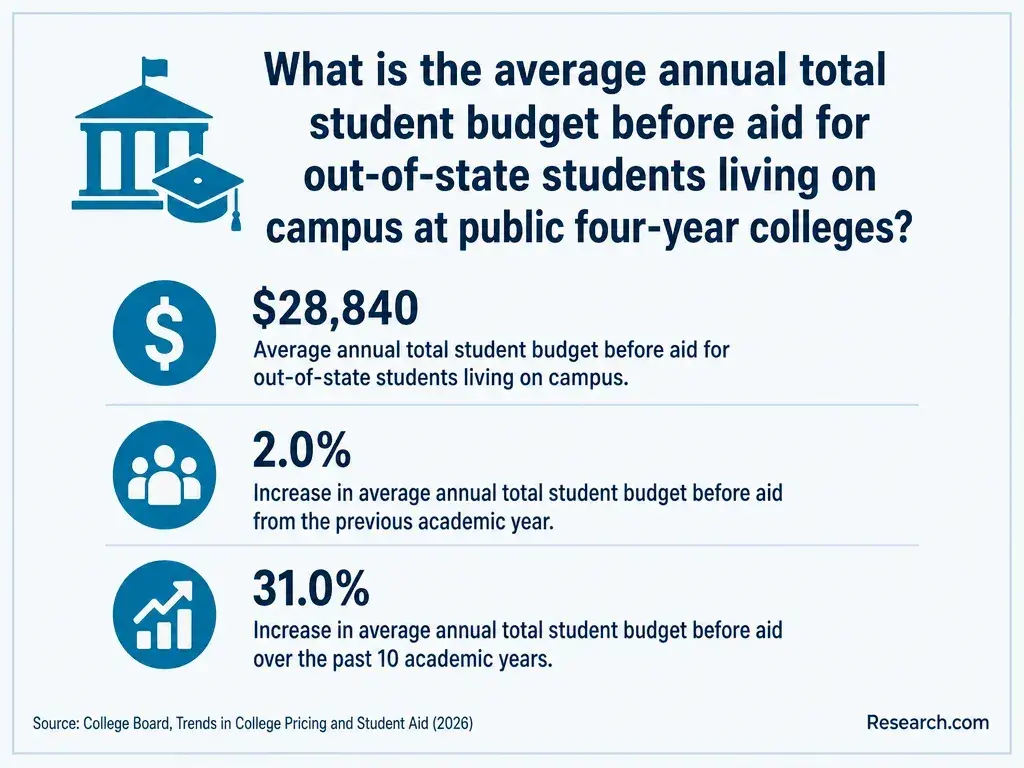
There is no reliable single price for a BS in Business Administration. Compare each school's published tuition and mandatory fees against your remaining requirements, then add books, software, travel or technology costs, and any income you would give up to attend. For a returning student, an accepted transfer course saves money only if it applies to a requirement you otherwise would have taken.
Ask for a written degree audit and a term-by-term cost estimate before deciding that one program is cheaper. Check whether a concentration adds courses, whether required classes are offered when you need them, and how part-time enrollment affects aid eligibility. Federal grants and loans, institutional aid, and employer benefits have separate eligibility rules; reimbursement may arrive after you have paid tuition. For an initial comparison of sticker prices, see online business education on a smaller budget, then verify the current charges and your likely net cost directly with each school.
The business core typically introduces how organizations account for resources, understand customers, manage people and processes, and use evidence to make decisions. A BS may also emphasize statistics or other quantitative work, but course names and depth vary. For an undecided student, introductory courses are most useful as tests of fit, enjoying a marketing case is different from enjoying campaign measurement, just as liking finance concepts is different from building and checking a spreadsheet model.
Use electives and applied work to move from exploration toward evidence. An operations course might lead to a process map; a marketing course, a research brief; or an accounting course, a financial-statement analysis. Check whether a concentration is officially awarded, which prerequisites unlock its advanced courses, and whether changing direction would delay graduation. A course or informal elective cluster is not automatically a concentration or professional credential.
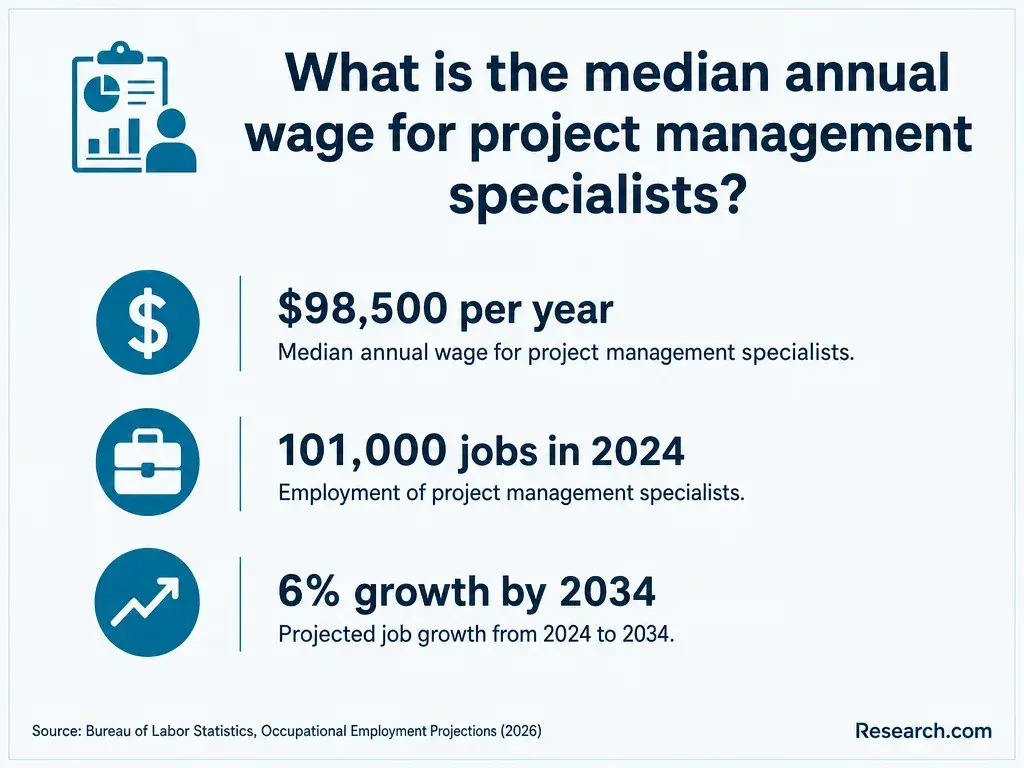
If project coordination becomes a serious goal, compare the program's assignments with the tasks in relevant job postings. You can also examine federal aid for undergraduate project management study when weighing a focused degree against business administration; aid eligibility and project-management credential requirements must be checked separately.
A traditional full-time bachelor's path is commonly planned over four academic years, but your timeline depends on applicable prior credit, course load, prerequisites, and when required courses run. Part-time study may make work or caregiving manageable while extending the calendar time needed to finish.
Do not mistake an accelerated calendar for fewer requirements. Before choosing shorter routes to an online bachelor's, ask for a degree audit and a proposed course sequence. An undecided student should pay particular attention to when exploratory electives are available: a fast sequence that requires an early concentration choice may remove the flexibility that made the BS appealing.
Choose the format that makes both coursework and career exploration feasible. Online study can reduce commuting, but it may still require live meetings, group presentations, scheduled exams, or fixed weekly deadlines. Campus study can make faculty contact, recruiting events, and peer collaboration easier to access, but travel and class times may be harder to fit around work.
Request a sample course schedule and ask how internships, group projects, career advising, and capstones work in your intended format. For employed students, online business administration degrees for employed adults can provide comparison points, but confirm live-attendance and pacing rules with each school. If you are still testing career interests, access to useful projects and employers may matter as much as convenience.
Requirements differ for first-time, transfer, and returning applicants. A school may consider secondary-school records or previous college transcripts, and admission to the university may be separate from admission to the business major. Mathematics, accounting, or other introductory courses may be prerequisites for particular classes rather than universal conditions for entering the institution.
Request the current admissions criteria and, if you have prior credits, a formal evaluation showing where they apply. Understanding business administration entry standards can help you prepare questions, but the receiving institution decides admission and credit applicability. A nonbusiness academic background need not rule out the degree; it may change which foundational courses you still need.
First, confirm the institution's current accreditation and whether its accreditor is recognized by the U.S. Department of Education or the Council for Higher Education Accreditation. Then check any claimed AACSB, ACBSP, or IACBE accreditation against the accreditor's own directory, including its scope and whether the specific business program is covered. Institutional accreditation and business-program accreditation are different claims; neither guarantees a job outcome.
For a practical comparison, keep a record of the exact degree name, delivery format, accreditation status, and catalog term you checked. An application-fee policy is a separate consideration: accredited online colleges without application fees may help narrow where to apply, but verify both the fee policy and the relevant accreditation before submitting an application.
There is no single salary for the degree. Pay depends on the occupation, experience, location, industry, and responsibilities. For example, the U.S. Bureau of Labor Statistics reports a $78,760 median annual wage for market research analysts in May 2025. That is an occupation-wide midpoint - not a starting salary for business administration graduates or a prediction for someone who takes one marketing course.
For a useful return-on-investment estimate, compare the roles you could credibly pursue with your current skills and planned experience, rather than assuming a future manager's salary. Weigh that evidence against your likely net education cost and borrowing. If aid is central to the decision, compare affordable accredited business administration programs accepting FAFSA, then obtain school-specific aid offers; eligibility and awards are not guaranteed.
What Is the Job Outlook for Business Administration Graduates?
Job outlook is measured by occupation, not by business administration degree. The Bureau of Labor Statistics projects 7% growth in U.S. market research analyst employment from 2025 to 2035. That suggests continuing demand for the occupation, but it does not show how many openings will suit a new graduate or whether a general business curriculum supplies every skill an employer requests.
Use outlook figures to investigate promising functions, then compare local postings and the program's opportunities to gain relevant experience. If you remain undecided, favor a degree plan that lets you test more than one function without adding avoidable courses. Keep cost in that comparison: resources to compare the least expensive business administration schools are a starting point, not a substitute for an individual degree audit, aid offer, and review of career support.
Other Things You Should Know About Business Administration
Yes. An introductory course, approved nondegree study, or a small work or volunteer assignment can help you assess the subject. Confirm in advance whether any course would count toward a later degree.
No. An exploratory internship can reveal which tasks you enjoy and which skills you need. If you want academic credit, the school must approve the placement under its own rules.
No. Businesses, nonprofits, and public institutions all need administrative and operational skills. Hiring requirements and the usefulness of particular courses still depend on the role and sector.
Not necessarily. If your goal is still forming, relevant work experience may clarify whether graduate study is worthwhile and which program fits. Compare MBA admissions expectations, cost, and career purpose before committing.
- Price of Attending an Undergraduate Institution - COE https://nces.ed.gov/programs/coe/indicator/cua/price-of-attending-an-undergraduate-institution
- Transferring Credit | Undergraduate Admissions https://admissions.northeastern.edu/application-information/transferring-credit/
- What is an Undecided Major? | St. John's University https://www.stjohns.edu/news-media/johnnies-blog/what-undecided-major
- Career Outlook for Business Administration | University of Bridgeport https://www.bridgeport.edu/news/career-outlook-for-business-administration/
- 13 High-Paying Jobs with a Bachelor's in Business Administration | PBA https://www.pba.edu/academics/outcomes/articles/degree-outcomes/13-high-paying-jobs-with-a-bachelors-in-business-administration/
- BSBA vs BBA - What's the Difference? https://post.edu/blog/bsba-vs-bba-whats-the-difference/
- UNC Policy 400.1.5.3[R] | northcarolina.edu https://www.northcarolina.edu/apps/policy/doc.php
- Undeclared or Undecided? Tips From SUNY Advisors To Help You Find Your Way - https://blog.suny.edu/undeclared-or-undecided-tips-from-suny-advisors-to-help-you-find-your-way/
- Undecided Students - Undergraduate Academic Advising https://advisor.umn.edu/undecided
- What Can I Do with a Business Administration Degree? | CTU https://www.coloradotech.edu/degrees/studies/business-and-management/articles/what-can-i-do-with-a-business-administration-degree