2027 Online BS in Business Administration Admissions with A Completed AAS Without an Articulation Agreement: What to Check
Audited and Verified:
Our Editorial and Data Verification Process
Research.com uses government datasets, official education statistics and primary institutional information to support its career and degree guides. Our review process checks factual accuracy, occupational definitions, source dates and the requirements associated with the credentials discussed.
How This Article Was Fact-Checked
Our editorial team verifies salary estimates, employment projections, education requirements and program information against original data providers and official organizations. Salary figures are checked against the relevant occupational definitions and reporting periods. Information about licensure, accreditation and required in-person training is reviewed separately.
Fact-checked and verified on:

Co-Founder and Chief Data Scientist
A completed Associate of Applied Science (AAS) can serve as a starting point for an online BS in Business Administration, even without an articulation agreement between your colleges. However, the uncertainty lies in determining how much of your coursework will count towards the bachelor's degree, not just whether a school will admit you.
This guide is for AAS graduates comparing completion options. It explains what to request from each university, how to read a transfer evaluation, and which remaining requirements could change your cost and graduation date before enrollment.
Key Things You Should Know
- No articulation agreement does not rule out admission or transfer credit; the receiving university evaluates your AAS coursework under its own policies.
- Ask for an evaluation that separates credits accepted from credits applied to general education, the business major, electives, and graduation requirements.
- Compare schools using the courses still required, their availability, and the total cost to finish - not an advertised maximum number of transferable credits.
Can You Earn an Online BS in Business Administration With an AAS?
Yes, potentially. An AAS is usually designed around an applied field or occupation, while an Associate of Arts or Associate of Science may be designed with transfer in mind. That difference does not make an AAS ineligible for bachelor's admission. It does mean that technical courses may satisfy electives rather than the business core or general education requirements.
An articulation agreement is a formal arrangement describing how coursework moves between specified institutions or programs. Without one, the university can still review courses individually, but you should not assume the completed AAS transfers as a guaranteed block. Admission to the university, admission to the business major, and application of credits toward the degree are separate decisions.
If finishing quickly is your priority, use quick-completion business degree pathways as possibilities to investigate, then ask how each school would evaluate your transcript. A fast format cannot eliminate missing prerequisites or required courses.
How Does Transfer Credit Work Without an Articulation Agreement?
The receiving institution typically reviews the sending college, course level, grade, credit hours, and course content. It may award an exact equivalent, apply a course as a general elective, request more documentation, or decline credit under its published policy. The university - not the AAS-granting college - has final authority over its degree requirements.
Request a written evaluation for the catalog and online program you intend to enter. These steps make the result useful for comparing schools:
- Send official transcripts from every college attended, plus available syllabi for courses that might match business requirements.
- Ask the transfer office which credits are accepted and whether any courses require a departmental review.
- Ask a business adviser to map accepted credits to general education, prerequisites, the major, electives, and any concentration.
- Review the resulting degree audit for remaining courses, residency rules, minimum grades, and an appeal or substitution process.
A school advertising generous transfer acceptance may still leave substantial required coursework. For a function-specific alternative, compare credit acceptance at online HR schools using the same accepted-versus-applied distinction.
What Admissions Requirements Apply to AAS Transfer Students?
Requirements vary by institution and sometimes by business school. A completed AAS may establish transfer-applicant status, but a university may separately set minimum grades, prerequisite courses, or standards for entry into the BS in Business Administration major. An offer of general admission does not necessarily mean you can start upper-level business courses immediately.
Before applying, ask admissions which transcripts and application materials it requires. Then ask the business department whether your prior math, statistics, accounting, economics, and writing courses meet its prerequisites. If a course is missing, clarify whether you can complete it after admission, whether it delays later courses, and whether a community-college equivalent needs advance approval.
Applied experience can strengthen an application, but work experience does not automatically replace a required course. If project coordination is your target and you are considering a different major, compare transfer policies at online project management colleges before choosing between programs.
Check institutional accreditation first: confirm the university's current status through the accreditor and the U.S. Department of Education's recognized-accreditor information. Use the university's exact legal name, especially if an online division markets the program under a different name.
Next, verify the exact degree title and whether the online program is offered by the accredited institution. AACSB, ACBSP, and IACBE accreditation is a separate question: check the accreditor's listing and ask whether its scope includes the relevant business school or program. Do not assume that institutional accreditation means the business program holds additional accreditation - or that such accreditation guarantees a particular transfer decision or job outcome.
Ranked school options for studying business online can help build a comparison list, but confirm accreditation scope and transfer policies directly before applying.
Course content matters more than the AAS title. A business-related AAS may contain readily comparable courses; an AAS in a trade, health field, or technology may contribute valuable credits but leave more of the business core unfinished. Neither outcome is automatic.
This comparison shows where common AAS courses might land. It is a planning aid, not a promise of equivalency.
| AAS coursework | Possible application | Question for the evaluator |
| Writing, communication, mathematics, or social sciences | General education or a prerequisite | Does the course meet the required level and content? |
| Accounting, economics, or introductory business | Business core or prerequisite | Is it equivalent to the required course, with an acceptable grade? |
| Occupational or technical courses | Open electives or, occasionally, major electives | How many elective credits can the degree use? |
| Internship or applied work course | Elective or experiential requirement, if approved | Does the program require different supervision or assessed work? |
A particularly important limit is elective space: a university can accept technical credits yet have no room to apply all of them within the BSBA. If your AAS is in logistics, compare that result with faster-paced online supply chain college study; a specialized curriculum may use your prior courses differently.
Online and campus versions can lead to the same institution's degree, but delivery changes how you complete the remaining coursework. Online classes may have fixed deadlines, live meetings, proctored exams, group projects, or scheduled presentations. Campus classes add commuting but may offer easier access to in-person services. Neither format changes a course's transfer equivalency by itself; confirm whether the specific online degree has different curriculum or residency rules.
For a working AAS graduate, ask for a sample schedule of the remaining required courses, not just a description of online flexibility. Check how often prerequisites and capstones run, whether part-time enrollment is possible, and whether internships or campus visits are required. Shorter routes to an online bachelor's are useful only if the pace fits those actual obligations and your available study time.
There is no reliable completion time or price based on the AAS credential alone. The deciding figure is the coursework still required after evaluation. A program with a lower per-credit price can cost more overall if it applies fewer AAS credits or requires extra terms to offer a needed course.
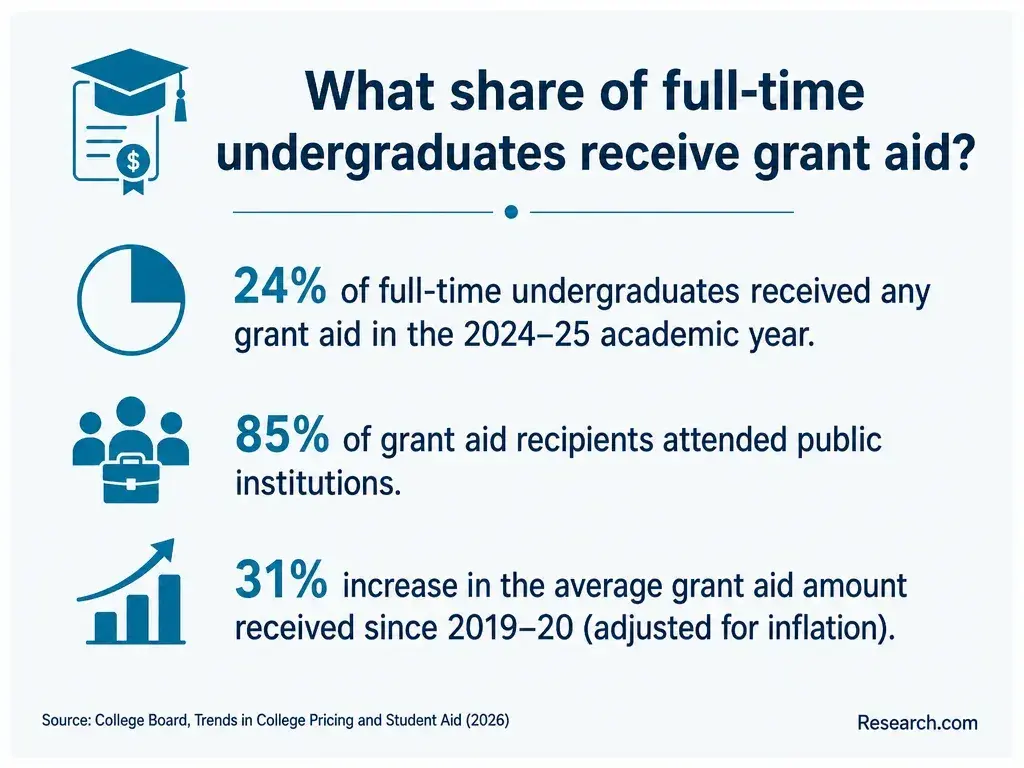
For each school, request a term-by-term plan and a cost estimate covering remaining tuition, mandatory online or technology fees, books or software, any travel or proctoring charges, and the effect of your intended enrollment pace. Ask the financial-aid office how your remaining requirements and enrollment level affect aid eligibility; if an employer reimburses tuition, check when payment arrives and which courses qualify.
Compare online business colleges with competitive costs against your estimated total to graduation, not their advertised tuition alone. Treat any estimate made before an official evaluation as provisional.
A BSBA commonly combines general education with accounting, economics, finance, marketing, management, operations, quantitative work, and a strategy or capstone course. Actual titles, prerequisites, and upper-level credit requirements vary. Some programs offer formal concentrations; others offer only electives, which should not be described as a separately awarded concentration.
Read the course sequence against your AAS evaluation. For example, an accepted introductory accounting course may let you move forward, while a technical accounting course awarded as an elective may not unlock managerial finance. Ask the department - not just admissions - to approve any proposed substitution in writing.
If your goal is HR work, compare human resources degree pathways with the BSBA's actual HR courses and electives. The better fit depends on both the skills you want and how your existing credits apply.
An online BSBA can support applications for business functions such as operations coordination, HR, marketing, procurement, and project support. Your AAS specialty and work history may make an adjacent role more realistic than an immediate move into an unfamiliar function. Employers will still assess job-specific skills, experience, and evidence of work - not the degree title alone.
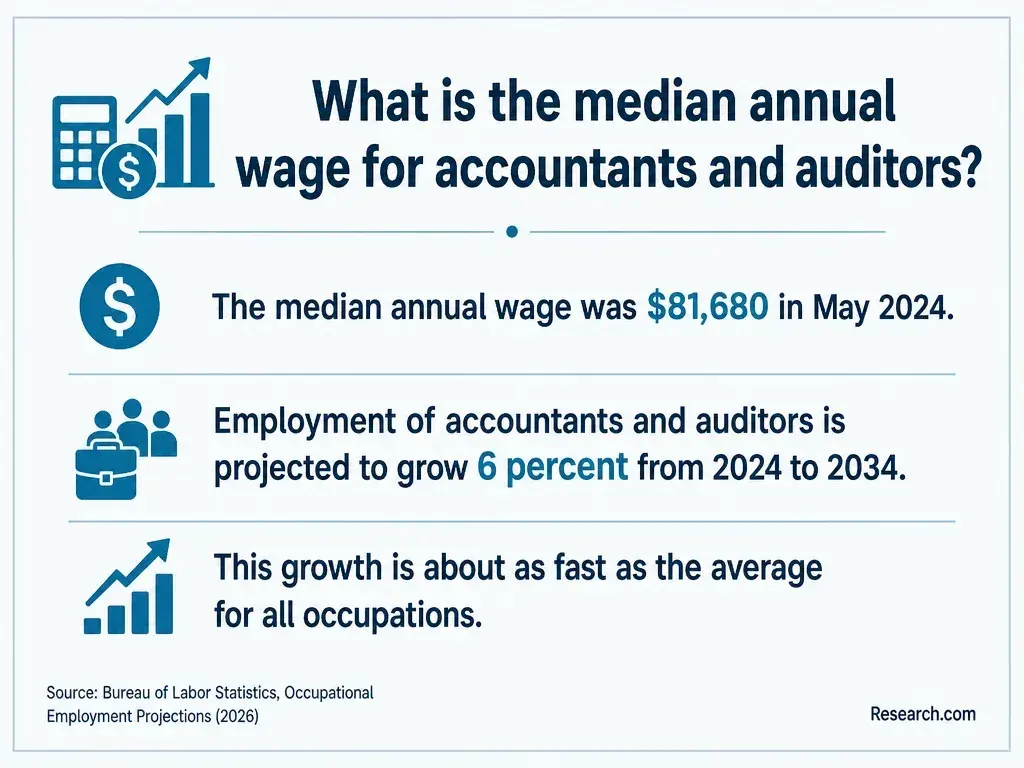
As one occupation-specific reference, the U.S. Bureau of Labor Statistics reports a May 2025 median annual wage of $75,940 for human resources specialists. That is a wage across workers in the occupation, not an expected starting salary for a BSBA graduate; duties, experience, employer, and location matter.
If your AAS and experience are in logistics, compare a broad BSBA with online supply chain programs balancing cost and completion time. The narrower degree may better match the work you want, but only if its curriculum and transfer evaluation justify the choice.
Which Certifications or Professional Standards Matter for Business Graduates?
A BSBA is an academic degree, not an occupational license or automatic qualification for a professional designation. Accounting licensure, HR certifications, and project management credentials have separate rules set by licensing boards or certifying organizations. Check those rules directly if a target job names a credential; do not infer eligibility from a business course or concentration.
For many graduates, the immediate priority is showing relevant competence through documented work, an approved internship, or an appropriate capstone. If project work is your goal, compare credential requirements and the cost of targeted training with an accredited online project management tuition guide before paying for another degree pathway. Keep the distinction clear: school accreditation and professional certification assess different things.
Other Things You Should Know About Business Administration
Often, but ask admissions. A university may review your application using an in-progress transcript and require a final official transcript before confirming your credential or transfer evaluation.
Generally, a withdrawal does not award completed course credit. The receiving school may still require the transcript showing it; its admissions and academic-standing policies determine whether it has any other effect.
That depends on the institution. Ask for the exact diploma wording and degree title rather than assuming online and campus students receive identical documents.
Possibly. Obtain advance written approval for the exact course and check transfer, residency, and financial-aid rules before registering elsewhere.
- Resources for Transfer Students | studentaid.gov https://studentaid.gov/resources/transfer-students
- Definitions | Transfer Credit Ohio https://transfercredit.ohio.gov/educational-partners/educational-partner-initiatives/articulation-transfer-policy-policy/articulation-transfer-policy-definitions
- College of Business Administration - Academic Catalog https://catalog.uic.edu/ucat/colleges-depts/business-administration/
- Transfer Credit from Institutions Not a Part of Rutgers University https://catalogs.rutgers.edu/generated/nb-ug_1315/pg635.html
- Transfer Credit - SUNY Empire Academic Catalog https://catalog.sunyempire.edu/undergraduate/transfer-credit/
- Transfer Credit Process | Cal State LA https://www.calstatela.edu/undergraduate-student-success/transfer-credit-process
- Transfer Credit - College of LSA - University of Michigan https://lsa.umich.edu/lsa/academics/lsa-academic-policies-and-procedures/transfer-information---residence-policy.html
- Transferring Credits | Capella University https://www.capella.edu/admissions-requirements/transfers/
- How Do Transfer Credits Work When You Go Back to School? | Whitworth Online https://online.whitworth.edu/news-articles/how-do-transfer-credits-work-when-you-go-back-to-school/
- Transfer Credit Services | usc.edu http://arr.usc.edu/transfer-credit-services/