2027 BS in Business Administration: Evaluating a Degree for Geographic Career Mobility
Audited and Verified:
Our Editorial and Data Verification Process
Research.com uses government datasets, official education statistics and primary institutional information to support its career and degree guides. Our review process checks factual accuracy, occupational definitions, source dates and the requirements associated with the credentials discussed.
How This Article Was Fact-Checked
Our editorial team verifies salary estimates, employment projections, education requirements and program information against original data providers and official organizations. Salary figures are checked against the relevant occupational definitions and reporting periods. Information about licensure, accreditation and required in-person training is reviewed separately.
Fact-checked and verified on:

Co-Founder and Chief Data Scientist
If you expect to move for work - or want the freedom to apply beyond your current city - a degree's value depends on more than its title. A BS in Business Administration can build skills used across industries, but employers still hire for specific functions, experience, and local opportunities.
This guide is for prospective and returning students weighing whether the degree will make a geographic move easier. It explains which roles may travel well, where specialized preparation matters, and how to compare programs against the places and jobs you have in mind.
Key Things You Should Know
- A BS in Business Administration is geographically versatile because its accounting, operations, marketing, and management foundations apply across industries; it does not, by itself, qualify a graduate for every business job.
- Test portability against actual openings in your target locations: compare required skills, experience, and industry knowledge - not just job titles or the availability of remote work.
- The U.S. Bureau of Labor Statistics reports a May 2025 median annual wage of $75,940 for human resources specialists, with 6% projected employment growth from 2025 to 2035. Those occupation-wide figures are context, not a starting salary or a forecast for degree holders.
What Is a BS in Business Administration?
A Bachelor of Science in Business Administration is an undergraduate degree that combines general education with a broad business core. Depending on the school, students may add a formal concentration, electives, an internship, or a capstone. The "BS" label does not establish a uniform curriculum: compare required courses and applied work at each institution.
For geographic career mobility, breadth is useful when it lets you explain how your skills transfer from one employer or industry to another. A BBA or BA in Business may offer similarly broad preparation; a specialized degree may provide more depth for a defined occupation. If your goal is specifically to supervise teams, you can also compare accelerated organizational leadership degrees, while checking whether they cover the finance and analytical skills your target jobs require.
Is a BS in Business Administration Worth It?
It can be worth the investment if a bachelor's degree is a recurring requirement in your target markets and the program helps you build evidence of relevant work. Its advantage is option value: you can pursue related operations, HR, marketing, or project-support roles without committing your entire degree to one sector. Its limit is depth. A broad degree may be less direct than accounting, information systems, or supply chain study when employers consistently request those skills.
Make the decision using postings from both your current location and places you might move. Note which requirements recur, which skills you already have, and whether a concentration, internship, or existing job can close the gaps. Then compare the remaining education cost with more targeted training and relevant work experience.
For examples of how program price and career aims can interact, review business administration college costs and potential career outcomes; neither a low advertised price nor an occupation's median wage establishes your return on investment.
What Jobs Can You Get With a BS in Business Administration?
Look for roles whose core tasks exist in many locations, then assess how much employer-specific or industry-specific knowledge each requires. The table distinguishes plausible entry routes from occupations that generally call for stronger functional experience.
| Career direction | Work to demonstrate | Mobility consideration |
| Operations or project coordinator | Scheduling, reporting, process documentation, and stakeholder communication | Tools and workflows transfer, but employers may require industry knowledge. |
| HR assistant or specialist | Recordkeeping, recruiting support, employee communication, and policy awareness | Workplace practices transfer; state employment rules and employer systems may differ. |
| Marketing coordinator | Campaign support, customer research, content coordination, and performance reporting | A portfolio can travel with you, though markets and customer groups differ. |
| Analyst or manager | Function-specific analysis or responsibility for people, budgets, and results | These titles often require substantial technical or prior work experience beyond a general degree. |
For an HR-focused move, compare general business coursework with human resources education and career options. The better route depends on whether you want flexibility across business functions or deeper preparation for HR work.
Common subjects include accounting, finance, economics, marketing, management, operations, statistics, and business communication. Their mobility value comes from applying them: interpreting a budget, explaining a process problem, analyzing customer information, or presenting a recommendation. Introductory exposure alone does not demonstrate specialist competence.
Choose electives and applied assignments around a function that appears in your target locations. For example, procurement and inventory projects can strengthen an operations application, while spreadsheet analysis can support a coordinator role. If logistics is your clear destination, compare the business core with affordable supply chain programs and salary outlook; a specialized curriculum may offer more relevant depth than general electives.
A conventional full-time bachelor's pathway often takes about four years, but your timeline depends on accepted credits, requirements still outstanding, course availability, and enrollment pace. A transfer student should distinguish credits the school accepts from credits that actually satisfy the business core, concentration, and graduation requirements. Moving during your studies adds another risk: a new institution may apply the same coursework differently.
Before relocating or changing schools, request an official degree audit and ask when remaining required courses are offered. If project work is your intended specialization, information on how to finish project management studies with transferred college credits can help frame the comparison - but only the receiving institution can decide how your credits apply.
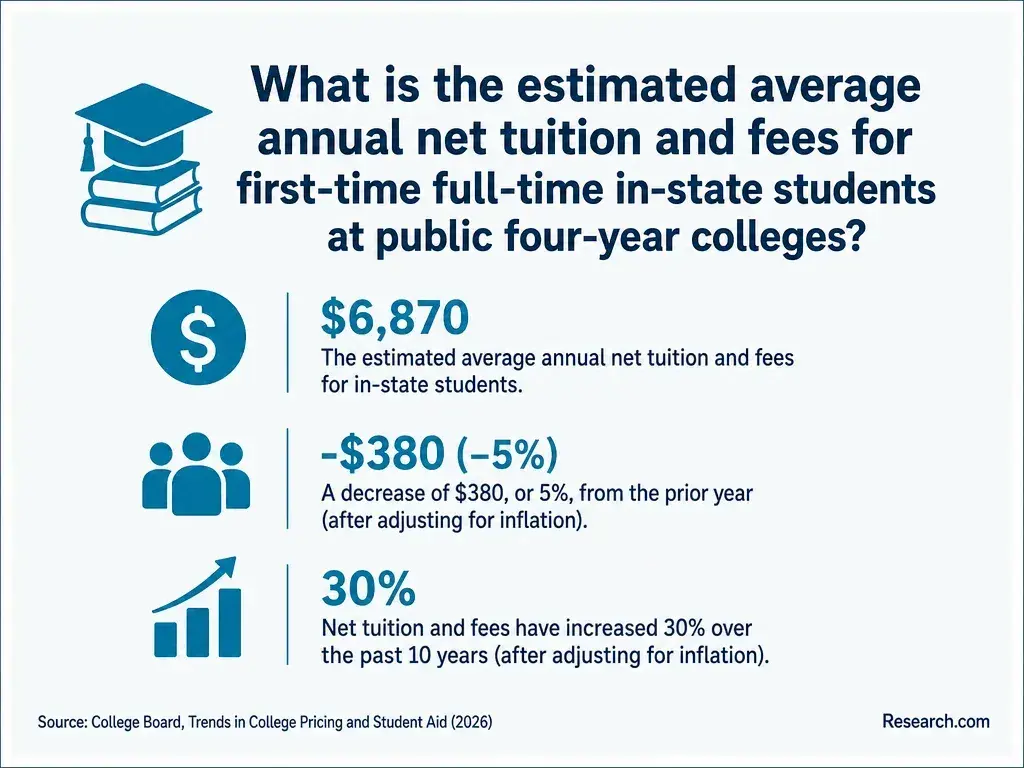
There is no single reliable price for the degree. Compare each school's tuition and mandatory fees against the credits you still need, then include books, software, travel, and possible lost work hours. A lower per-credit price may not save money if fewer previous courses satisfy graduation requirements or required classes delay completion.
Ask each school for a written estimate based on your record, and separate grants from loans and employer reimbursement that arrives only after a course is completed. If project coordination is your principal goal, comparing affordable college choices for aspiring project managers may reveal a more focused option. Compare total remaining cost and curriculum, not advertised tuition alone.
Requirements vary by institution and by entry route. First-year applicants commonly submit prior academic records; transfer applicants also need college transcripts. Some schools admit students directly to the business major, while others require later application or completion of introductory courses. Admission does not confirm that previous coursework will meet business-degree requirements.
If you plan to change schools after a move, ask about mathematics, accounting, and economics prerequisites before enrolling in courses elsewhere. A school's published prerequisites for a business administration degree are a starting point; its admissions and transfer offices must confirm the rules for your entry term and transcript.
Online study can make a degree easier to continue through a move, provided the institution is appropriately accredited and the format fits your needs. Check live-session times, group meetings, exam rules, internship expectations, and any campus visits. "Online" does not necessarily mean self-paced, and a program without local employer connections may require you to arrange your own networking and applied experience.
Compare online programs by the work you can complete and show employers, not delivery mode alone. For a student with prior credits and a specific HR goal, HR bachelor's completion with transferred coursework may be a useful alternative to a broad online business degree. Obtain a program-specific credit evaluation before assuming either route is faster.
Institutional accreditation is a foundational check when comparing schools, particularly if you may transfer again or pursue further education. Business-school or programmatic accreditation - such as AACSB, ACBSP, or IACBE - is a separate distinction. Verify whether it covers the particular school or program you would enter; it does not guarantee credit transfer, employment, or acceptance into graduate study.
Check an institution's accreditation status and ask receiving schools about their transfer policies. Also confirm the proposed program's financial-aid eligibility rather than assuming accreditation alone settles funding questions. An online project management undergraduate funding guide can help identify questions to ask when comparing a specialized alternative, but your school's financial-aid office must determine your actual eligibility.
What Salary and Job Outlook Can Business Graduates Expect?
There is no single salary or growth rate for business administration graduates. The relevant figures belong to occupations, and they vary with role, location, industry, and experience.
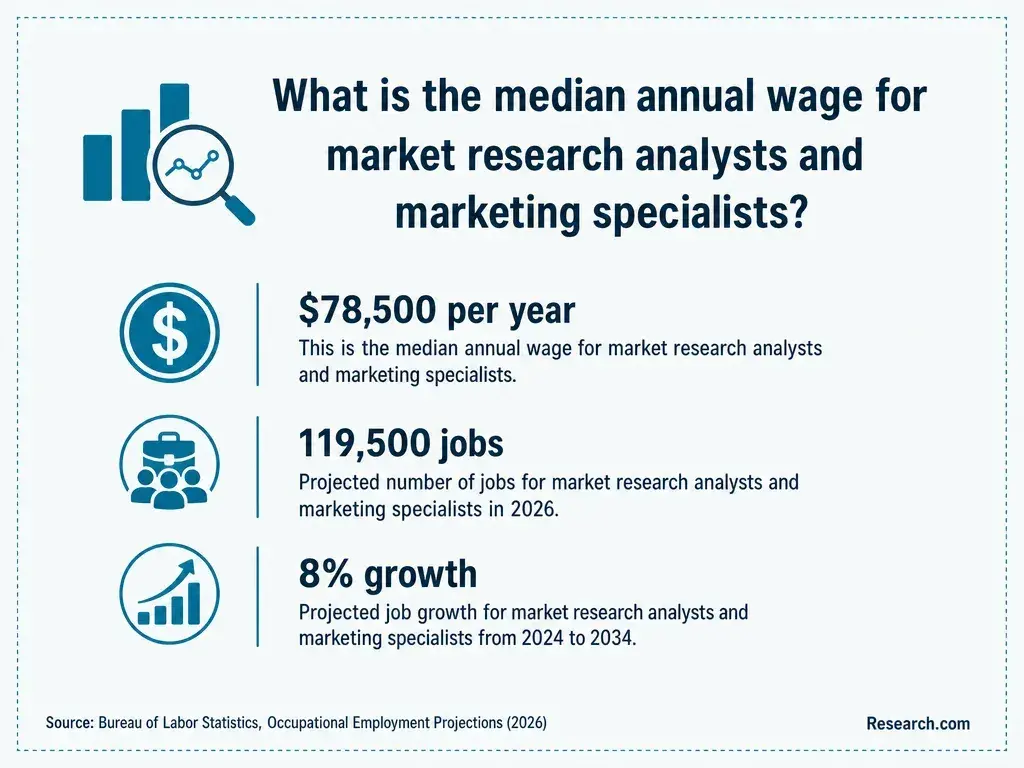
For example, the U.S. Bureau of Labor Statistics reports a May 2025 median annual wage of $75,940 for human resources specialists and projects 6% employment growth from 2025 to 2035. That median includes workers at different career stages; it is not an expected offer for a new graduate or someone entering HR from another function.
For a geographic move, compare postings and wage information for the same occupation in your destination markets. Then assess whether your experience matches those jobs. If you intend to advance while remaining employed, career advancement study options in business administration may help you compare formats, but demonstrated responsibility and results will still matter in hiring.
Other Things You Should Know About Business Administration
Possibly. Confirm that you can enroll from your new location, complete any in-person requirements, and access the courses needed to graduate before you move.
No. Employers may restrict where remote employees can work because of payroll, tax, or other operational requirements. Verify permitted locations for each job.
Recognition depends on the destination country, employer, and occupation. Check local credential-evaluation and work-authorization requirements separately; a U.S. degree does not provide permission to work abroad.
Only if the change improves preparation for your target roles without adding unjustified courses or delaying graduation. Ask an adviser for a revised degree audit before switching.
- Online vs Traditional Business Admin Degrees: What's Best? | UAGC https://www.uagc.edu/blog/online-vs-traditional-business-administration-degrees-whats-best-you
- Business Administration Skills Employers Want Most - Campus https://campus.edu/blog/business/business-skills-most-in-demand-by-employers
- Is a Business Degree Still Worth It in Today's Job Market? | MVNU https://mvnu.edu/blogs/is-a-business-degree-still-worth-it/
- Change in work arrangement during the COVID-19 pandemic | sciencedirect.com https://www.sciencedirect.com/science/article/pii/S2590198223002166
- What Can You Do with a Business Administration Degree? | University of Wisconsin Flexible Option https://flex.wisconsin.edu/stories-news/what-can-you-do-with-a-business-administration-degree/
- Transferable Skills in Business Administration Across Industries | The College of Westchester https://www.cw.edu/blog/how-business-administration-courses-build-transferable-skills-across-multiple-industries/
- Business Administration, B.A. - Governors State University https://www.govst.edu/academics/programs/business-administration-ba
- Which metro areas have the most opportunity for college graduates to use their degrees? | Urban Institute https://www.urban.org/urban-wire/which-metro-areas-have-most-opportunity-college-graduates-use-their-degrees
- International Students in Higher Education | oecd.org https://www.oecd.org/en/publications/international-students-in-higher-education_005ff28d-en/full-report/post-graduation-opportunities-and-possibilities_42892cac.html