2027 Is an Online BS in Business Administration the Right Next Step for Municipal Administrative Staff?
Audited and Verified:
Our Editorial and Data Verification Process
Research.com uses government datasets, official education statistics and primary institutional information to support its career and degree guides. Our review process checks factual accuracy, occupational definitions, source dates and the requirements associated with the credentials discussed.
How This Article Was Fact-Checked
Our editorial team verifies salary estimates, employment projections, education requirements and program information against original data providers and official organizations. Salary figures are checked against the relevant occupational definitions and reporting periods. Information about licensure, accreditation and required in-person training is reviewed separately.
Fact-checked and verified on:

Co-Founder and Chief Data Scientist
Municipal administrative staff often know how a city office works but need stronger budgeting, operations, or supervisory skills to pursue a different role. An online BS in Business Administration can build those skills while allowing continued employment - but it may not be the most direct route for every public-sector goal.
This guide helps city and town employees assess the degree's practical value, compare it with alternatives, and check the scheduling, cost, and hiring requirements that matter before enrolling.
Key Things You Should Know
- An online business degree is most useful when a target municipal role requires or prefers a bachelor's degree and calls for broader financial, operational, or management skills - not merely a short course in one procedure.
- Online does not necessarily mean self-paced: verify live meetings, group work, exam rules, and required courses against your municipal work schedule.
- The U.S. median pay for administrative services managers was $114,130 in May 2025, but that occupation-wide figure is not an expected starting salary or a promise of a municipal promotion.
Is an online BS in Business Administration right for municipal administrative staff?
It can be a strong next step if a bachelor's degree is a barrier to the role you want and you need skills that extend beyond your current duties. Staff who already coordinate purchasing, track expenditures, support department operations, or prepare reports can connect business coursework to work they understand. The degree is less compelling if your immediate goal is to learn one city system, meet a narrow job requirement, or qualify for a role that specifically calls for public administration or accounting preparation.
The right choice depends on the vacancy, not the appeal of a degree title. This comparison shows where each route may offer the clearest return on your time and money.
| Path | Best fit for a municipal employee | Important limit |
| BS in Business Administration | Broad preparation for budgeting support, operations, procurement coordination, or future supervisory responsibilities | Private-sector examples may need translation into public rules and accountability |
| Public administration degree | Goals centered on government policy, public budgeting, and intergovernmental work | May offer less general business depth or portability to private employers |
| Targeted training or certificate | A specific gap in municipal purchasing, spreadsheets, records, or supervision | May not satisfy a bachelor's-degree requirement |
If speed is important, compare the actual remaining coursework rather than choosing a program advertised as fast. Three-year organizational leadership bachelor's options are another route to examine, but their degree titles and curricula may fit a municipal vacancy differently.
What can municipal staff learn in an online business administration degree?
Business administration combines financial, organizational, and operational decision-making. For municipal staff, useful applications include explaining a budget variance, mapping a permit-processing workflow, evaluating a purchasing process, and presenting a recommendation to a department head. Accounting and spreadsheet work can strengthen analysis; management and communication courses can help staff explain trade-offs to coworkers and residents.
Public agencies cannot simply adopt private-sector methods. A low-cost purchasing option may still conflict with procurement rules, and faster service must still protect accessibility, records, privacy, and fair treatment. A worthwhile program gives students room to test business ideas against those constraints rather than treating revenue or profit as a city department's primary measure of success.
Employees aiming specifically for personnel work should compare the business curriculum with human resources qualifications and degree routes. An HR-focused path may provide more depth in staffing and employee relations, while a general business degree offers broader preparation for moving among departments.
How does an online business administration degree compare with campus programs?
Both formats can lead to a bachelor's degree, but their schedules and learning conditions differ. The comparison below identifies obligations to check before deciding that online study will fit around council meetings, public-facing office hours, or irregular workload peaks.
| Consideration | Online program | Campus program |
| Attendance | May use recorded lessons, live sessions, or both | Usually requires travel at scheduled class times |
| Collaboration | Group assignments may require evening coordination | In-person meetings may be easier to arrange around class |
| Assessments | Deadlines, timed exams, or proctoring may limit flexibility | Exams and presentations commonly occur on campus |
| Support | Advising and tutoring must be accessible remotely | Face-to-face services may be easier to use locally |
Ask for a recent course schedule and sample syllabus, not just a statement that classes are "flexible." Compare accelerated terms with standard pacing: short-term classes toward a bachelor's degree can reduce calendar time while concentrating assignments into busier weeks.
Programs generally combine general education with a business core that may cover accounting, economics, finance, management, marketing, operations, business law, statistics, and information systems. The exact requirements, quantitative depth, and elective choices vary by school. A BS, BBA, or business-related BA should not be treated as an identical curriculum under a different label.
For municipal work, examine course descriptions rather than relying on names. A budgeting assignment may teach financial analysis without covering public appropriations; a procurement course may emphasize commercial supply chains rather than local bidding rules. Ask whether electives or an approved capstone can address public-service operations. Using a workplace problem for credit requires faculty approval and permission to use any nonpublic city information.
If your goal is coordinating capital projects, compare the business degree's project coursework with a project-management-focused program. Project management schools with competitive tuition offer a starting point for that cost comparison, but check whether their curricula address the budgeting and administrative skills your target municipal role also needs.
Requirements depend on whether you apply as a first-time student, transfer student, or returning student. Schools may request prior transcripts and may set separate standards for entry to the institution and the business major. Mathematics, accounting, or economics courses may be required before certain upper-level classes even when they are not required for initial admission.
Municipal employees with previous college study should request an official evaluation showing where each accepted credit applies: general education, business core, electives, or another requirement. Acceptance alone does not establish that a course shortens the path to graduation. If you are weighing a project-management degree instead, compare transfer policies at online project management colleges separately; credit applicability can differ substantially between majors.
Before applying, send transcripts to the school's admissions or transfer office and ask an academic adviser which prerequisites remain. Get the resulting degree plan in writing, including any required credits that must be earned at that institution.
Completion time depends chiefly on credits that satisfy degree requirements, course sequencing, and how many classes you can manage alongside work. Part-time study may make deadlines sustainable but extend the period in which tuition or fees can change. An accelerated calendar does not eliminate required coursework.
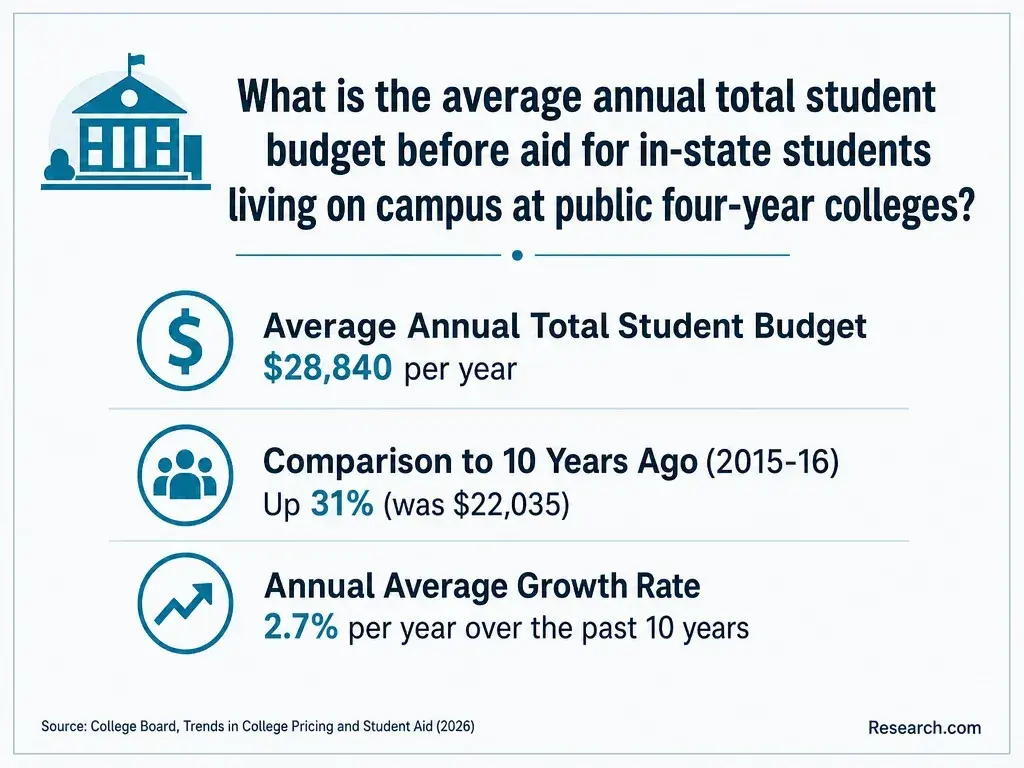
Request a school-specific estimate covering remaining tuition, mandatory fees, books or software, proctoring, and any travel. Compare economical online college programs in business using the cost to finish your degree, not advertised tuition alone. A lower per-credit price may not be cheaper if fewer prior credits apply.
Ask your municipal HR office whether education assistance covers the institution and degree, when reimbursement arrives, and whether grade, service, or repayment conditions apply. Confirm financial-aid eligibility with the school before relying on grants or borrowing.
Relevant paths include administrative or operations coordinator, procurement support specialist, budget support staff, and departmental supervisory roles. The progression is not automatic: a coordinator may track contracts and deadlines, while a manager may be accountable for staff, facilities, spending, and compliance. Review your municipality's position descriptions for education requirements, civil-service rules, experience, and promotion procedures.
Build evidence for the next role while studying. Document permissible examples of process documentation, budget reporting, vendor coordination, or cross-department communication, without including confidential records or resident information in a portfolio. If personnel administration is your target, compare a business degree with using existing credits in a human resources degree; the more specialized route may better match HR vacancies.
There is no single salary for municipal employees with a business degree. Pay depends on the position's classification, locality, bargaining agreement where applicable, and the employee's responsibilities and experience. The U.S. Bureau of Labor Statistics reports a May 2025 median annual wage of $114,130 for administrative services managers across employers. That occupation-wide midpoint describes established workers in a defined management occupation; it is not the pay for a newly qualified city employee or a municipal-only estimate.
For a useful financial comparison, obtain the posted pay range for your target city role and compare it with your current compensation and remaining education costs. Do not borrow based on a national manager median. Even when considering a more specialized route, explanations of grants versus loans for project management bachelor's study can help clarify why aid that need not be repaid differs from financing that increases total cost.
The Bureau of Labor Statistics projects 5% U.S. employment growth for administrative services managers from 2025 to 2035. That national, all-employer projection does not predict openings in a particular city. Local budgets, retirements, hiring rules, and department reorganizations may matter more to your next opportunity.
Check recent municipal postings for the duties and qualifications you want, then speak with HR or a department supervisor about realistic progression. A shorter degree schedule can help only if it is sustainable and covers the requirements of those positions. Compare fast-paced online business degrees with your actual work calendar rather than treating completion speed as a substitute for relevant experience.
How can you choose an accredited online business administration program?
Start by confirming the institution's recognized accreditation and the exact degree awarded. If a school advertises AACSB, ACBSP, or IACBE accreditation, check the accreditor's stated scope and whether it covers the relevant business unit or program; it is distinct from institution-level accreditation and does not guarantee a job outcome.
Then ask for an official transfer evaluation, a term-by-term degree plan, sample online course obligations, the full cost estimate, and details of remote advising and career support. Confirm whether required classes run often enough for your planned pace and whether a public-sector project is permitted. Application-cost-free online school options may reduce the cost of exploring schools, but a waived application fee should not outweigh credit applicability, scheduling, or total completion cost.
Choose the program whose verified requirements fit both your target vacancy and your available time. If no target role calls for a bachelor's degree, ask whether employer-supported training would address your immediate skill gap more directly.
Other Things You Should Know About Business Administration
Yes, if the program's attendance and assignment demands fit the employee's schedule. Confirm any live sessions and examination arrangements before enrolling.
Only if the institution offers an applicable prior-learning or work-based-credit process and formally approves the evidence. Employment by itself does not award credit.
Possibly, with faculty approval and any required employer permission. Use public or appropriately authorized information, and protect resident, employee, and vendor data.
Not by itself. The municipality may also require specific experience, an examination, internal eligibility, or specialized knowledge. Check the actual position description.
- Students & Recent Graduates | U.S. Office of Personnel Management https://www.opm.gov/policy-data-oversight/hiring-information/students-recent-graduates/
- Choosing a Vocational School or Certificate Program | Consumer Advice https://consumer.ftc.gov/articles/choosing-vocational-school-or-certificate-program
- Employer-offered educational assistance programs can help pay for college | Internal Revenue Service https://www.irs.gov/newsroom/employer-offered-educational-assistance-programs-can-help-pay-for-college
- Accreditation in the U.S. | ed.gov http://www.ed.gov/laws-and-policy/higher-education-laws-and-policy/college-accreditation/accreditation-in-the-us
- 00338 | nj.gov https://info.csc.nj.gov/Titlelist/JobSpec
- Synchronous vs Asynchronous | University of Bridgeport https://www.bridgeport.edu/news/synchronous-vs-asynchronous/
- How Long Does It Take to Finish an Online Degree? | NMSU Global Campus https://global.nmsu.edu/blog/general/how-long-does-it-take-to-finish-an-online-degree/
- Regional vs. National Accreditation: Which is Better? | Drexel University Online https://www.online.drexel.edu/news/national-vs-regional-accreditation.aspx
- Tuition and Financial Aid - Undergraduate Online Programs | Bay Path University https://www.baypath.edu/admissions-aid/undergraduate-online-programs/tuition-and-financial-aid/
- Public Administration or Business Administration: A Couple Questions to Consider Before Choosing a Management Degree https://blogs.uofi.uis.edu/view/8598/807882