2027 BS in Business Administration Curriculum: How to Evaluate Preparation in Job Search Research
Audited and Verified:
Our Editorial and Data Verification Process
Research.com uses government datasets, official education statistics and primary institutional information to support its career and degree guides. Our review process checks factual accuracy, occupational definitions, source dates and the requirements associated with the credentials discussed.
How This Article Was Fact-Checked
Our editorial team verifies salary estimates, employment projections, education requirements and program information against original data providers and official organizations. Salary figures are checked against the relevant occupational definitions and reporting periods. Information about licensure, accreditation and required in-person training is reviewed separately.
Fact-checked and verified on:

Co-Founder and Chief Data Scientist
A course catalog can tell you what a BS in Business Administration teaches, but not whether it prepares you for the jobs you want. For prospective students and early-career workers, the useful comparison is between required coursework, opportunities to demonstrate skills, and the tasks employers actually advertise.
This guide shows you how to research those connections, interpret career and salary information without mistaking it for a promise, and identify questions to settle before enrolling.
Key Things You Should Know
- Compare required courses and graded assignments with recurring tasks in job postings; a course title alone does not establish job readiness.
- Look for supervised projects, internships, or other work samples that let you demonstrate spreadsheet, communication, and function-specific skills.
- The U.S. median wage for market research analysts was $78,760 in May 2025, but that occupation-wide figure is not an expected starting salary for business graduates.
What is a BS in Business Administration?
A Bachelor of Science in Business Administration is an undergraduate degree combining general education with a business core and, sometimes, electives or a formal concentration.
It generally offers broader preparation than a specialized accounting or supply chain degree. "BS" does not guarantee a particular amount of mathematics, technology, or applied work: schools set their own requirements.
For job-search research, the degree name is a starting point, not the comparison unit. Examine the actual degree map and the work students complete. A BBA may cover similar ground; a management or organizational leadership degree may emphasize different tasks.
If finishing sooner is important, explore US business bachelor's fast-track rankings, then confirm which credits apply and when required courses are offered. Advertised speed does not establish your completion date.
What courses are included in a BS in Business Administration curriculum?
Most curricula combine introductory accounting, economics, finance, marketing, management, operations, business law, and quantitative study. Many also require a strategy course or capstone.
The job-search question is whether that sequence develops enough depth for your target function, not simply whether a subject appears in the catalog.
The following comparison shows what common course areas can contribute. Actual assignments, prerequisites, and elective choices vary by school:
| Course area | Typical learning | Connection to job tasks |
| Accounting and finance | Reading statements, budgeting, evaluating costs | Supporting budgets and explaining financial information |
| Statistics and analytics | Working with data and interpreting uncertainty | Summarizing results and checking the limits of a finding |
| Marketing and customer research | Understanding audiences and measuring responses | Supporting campaigns or research projects |
| Operations and management | Mapping processes, coordinating resources, studying organizations | Tracking workflows and helping teams improve them |
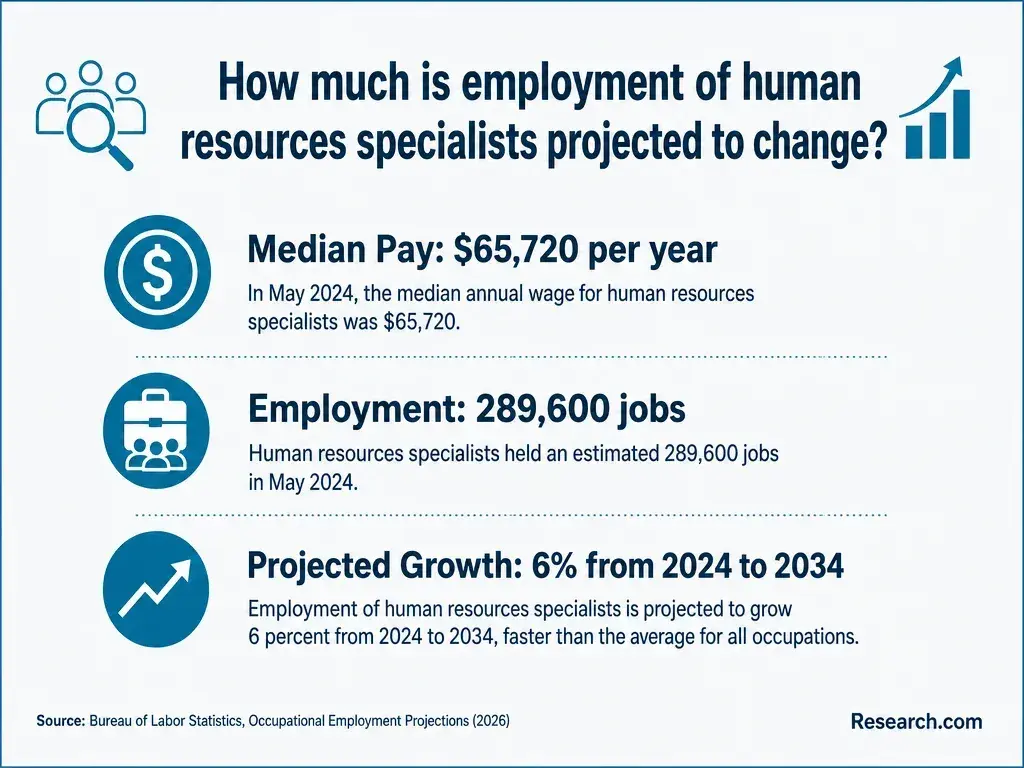
If job postings repeatedly call for employee relations or recruiting knowledge, compare HR curricula and career directions with the general business core. Check whether the courses you need are required, available as electives, or part of an officially named concentration. An elective alone does not award a separate credential.
How does a business administration degree prepare graduates for jobs?
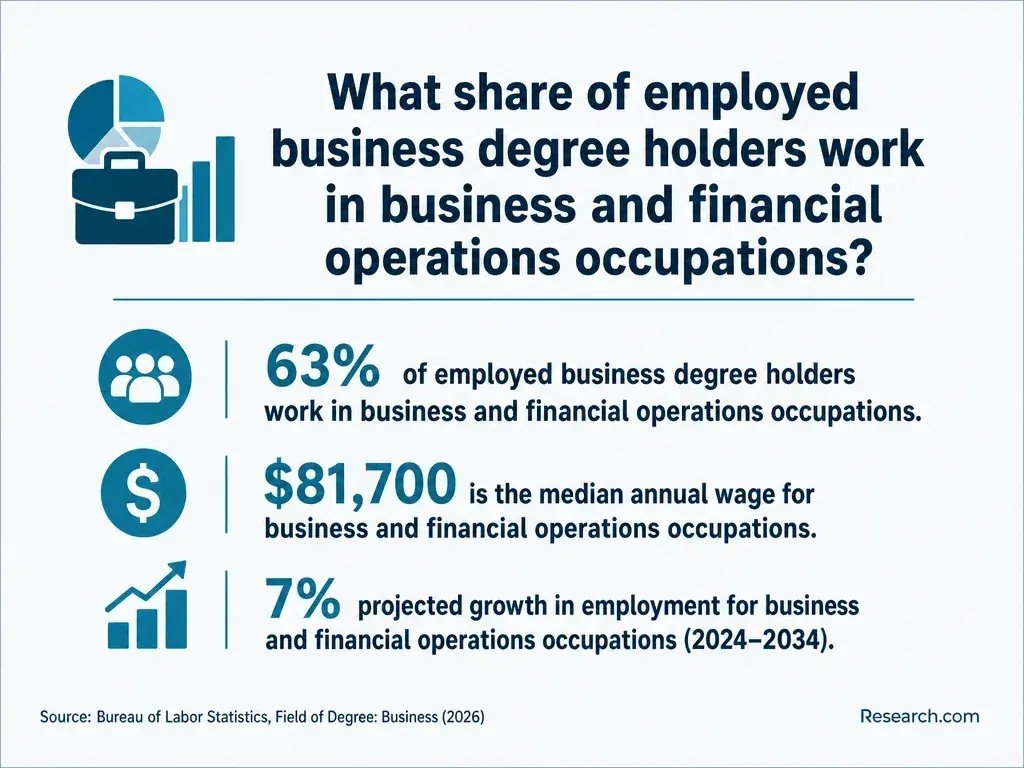
The strongest preparation connects concepts to tasks employers expect an applicant to perform. A case analysis might develop judgment; a spreadsheet assignment might show how a student checks assumptions; an internship might add supervised experience.
These are different forms of evidence, and none automatically substitutes for the others.
Research the roles you might apply for before judging a program. This short sequence turns job descriptions into a useful curriculum check:
- Collect recent postings for a specific entry-level role and location, such as operations coordinator or marketing coordinator.
- Separate repeated duties and tools from preferred qualifications and experience requirements.
- Match those duties to required courses, assessed assignments, electives, and accessible work experiences.
- Ask career services how students obtain relevant experience and which outcomes it can document for that role.
Give extra weight to evidence you could discuss or show in an interview. A student employed full-time should also check whether internships are mandatory and whether a current workplace project could qualify with faculty and employer approval.
Guidance on business administration study alongside full-time employment can help frame that scheduling decision; employment itself does not automatically earn academic credit.
For many entry-level business roles, useful evidence combines spreadsheet work, clear writing, presentations, teamwork, basic financial reasoning, and responsible handling of data.
A program should provide opportunities to practice these skills and receive feedback, not only describe them as learning outcomes.
Look closely at the level of responsibility in assignments. Building a budget with stated assumptions is different from owning an organization's budget; studying leadership is different from supervising employees.
If postings emphasize people management rather than broad business operations, organizational leadership bachelor's completion planning offers a related pathway to compare. For either degree, prior work responsibility and demonstrated results matter alongside coursework.
Delivery mode matters when it changes your access to feedback, collaborators, software, internships, or recruiting. Online study can reduce travel, while campus study may make in-person activities easier to attend. Neither format guarantees stronger job preparation.
Ask for sample course schedules and assessment descriptions. An online course may still require live meetings, team presentations, proctored exams, and fixed deadlines.
Campus courses may also offer flexible scheduling. If considering accelerated online bachelor's programs, check whether compressed terms leave enough time for substantial projects and job-search activities. Faster calendar pacing does not mean fewer assignments.
Verify the institution's accreditation and its current standing through the institution and the accreditor. Separately, check whether any advertised business accreditation, such as AACSB, ACBSP, or IACBE, covers the relevant school or program.
Institution-level and business-specific accreditation answer different questions; neither proves that graduates obtain particular jobs.
Accreditation also belongs in the financing check, but it is not the only condition for aid eligibility. When reviewing online business administration degrees accepting federal aid applications, confirm the school's federal aid eligibility, your own eligibility, and the applicable program and enrollment rules with its financial-aid office.
Requirements vary by institution and entry route. First-year applicants may need secondary-school records; transfer applicants generally submit prior college transcripts.
Some schools admit students directly to the business major, while others require introductory courses or a later major application. Admission, transfer-credit acceptance, and satisfaction of a business-core requirement are separate decisions.
If applying to several schools, no-application-fee online college choices may reduce an upfront expense. Do not let the application fee outweigh curriculum fit. Ask each school for its current major-entry requirements and, if you have prior credits, an official evaluation showing where those credits apply.
A conventional full-time bachelor's path is commonly planned over four academic years, but part-time enrollment, transfer applicability, prerequisites, and course availability can change the timeline substantially.
Without a specific school, credit evaluation, and enrollment plan, a reliable personal total cost cannot be calculated.
Compare the cost of completion, not a tuition headline. Account for required remaining credits, fees, books or software, travel, and earnings affected by the schedule.
Economical online college programs in business can provide options to investigate, but request a written degree audit and cost estimate from each school before treating one as the least expensive for you.
Possible entry routes include operations or project coordination, marketing support, HR support, and procurement-related work. The relevant job description determines whether a general business degree is sufficient, whether a specialized skill is needed, and how much experience the employer expects. A new graduate should not treat manager titles as automatic next steps.
For context, the U.S. Bureau of Labor Statistics reports a May 2025 median annual wage of $78,760 for market research analysts and projects 7% employment growth for that occupation from 2025 to 2035.
The median covers workers across experience levels; it is not a graduate starting salary or a placement rate. If your postings consistently emphasize logistics rather than general administration, supply chain degree cost and duration comparisons may help you assess a more focused route.
What certifications or licenses may business administration graduates need?
A general business administration degree does not itself confer professional licensure. Requirements depend on the work: accounting licensure is governed by state rules, financial-services activities may require specific licenses, and many HR or project-management certifications have separate eligibility and examination requirements.
Check the responsible board or credentialing organization before choosing courses around a credential goal.
Use job postings to distinguish a required license from a preferred certification or software skill. If the target is project coordination, compare a broad BS with a focused course or credential pathway; an accredited online project management tuition guide can inform the degree-cost side of that comparison. Neither a project-management class nor a general business degree automatically establishes certification eligibility.
Other Things You Should Know About Business Administration
Review enough recent postings for the same role and location to distinguish recurring duties from one employer's preferences. Recheck them near application time because requirements can change.
Ask whether an elective, approved project, internship, or targeted training can close the gap. Verify that you will have access to the tool and a way to demonstrate your work.
Usually, if course and intellectual-property rules allow it. Identify it as student work, explain its assumptions, and remove confidential or personal information.
No. It fits roles that value cross-functional knowledge, but a specialized degree, targeted training, or relevant experience may be more direct when postings consistently demand a particular function.
- Accreditation in the U.S. | ed.gov http://www.ed.gov/laws-and-policy/higher-education-laws-and-policy/college-accreditation/accreditation-in-the-us
- Business Administration | York College of Pennsylvania https://www.ycp.edu/academics/programs/business-administration-bs
- Two Approaches to Experiential Learning | AACSB https://www.aacsb.edu/insights/articles/2023/04/two-approaches-to-experiential-learning
- Business Administration Major | Towson University https://www.towson.edu/cbe/departments/management/undergrad/business-administration-major/
- Research Occupations | matc.edu https://www.matc.edu/employer-services-resources/for-students/career-services/research-occupations.html
- 10 Experiential Learning Opportunities to Boost Your Professional Development (& Resume!) | Villanova University https://connections.villanova.edu/blog/2024/08/23/10-experiential-learning-opportunities-to-boost-your-professional-development-resume/
- What Can You Do With a Business Administration Degree? | snhu.edu https://www.snhu.edu/about-us/newsroom/business/what-can-you-do-with-a-business-administration-degree