
2027 Maryland MFT Licensing, Certifications, Careers and Requirements

Co-Founder and Chief Data Scientist
Becoming a licensed marriage and family therapist in Maryland is a serious professional decision: you are choosing a regulated clinical career that requires graduate education, supervised practice, examinations, fees, and ongoing renewal. Maryland can be a strong market for MFTs because the state has documented need for mental health services, including in rural areas, and it is listed among the highest-paying states for marriage and family therapists. At the same time, the licensing process can feel confusing because applicants must track degree standards, supervised-hour rules, exam requirements, renewal obligations, and scope-of-practice limits.
This guide explains how the Maryland MFT licensing pathway works, what education and supervised experience you may need, how long the process can take, what costs to plan for, and which career options may fit your goals. It also compares related counseling paths so you can decide whether the LMFT route is the right credential for your intended work with couples, families, individuals, and systems.
Quick answer: How do you become an MFT in Maryland?
To become an MFT in Maryland, you generally need a qualifying master’s or doctoral degree in marriage and family therapy or a closely related field, supervised clinical experience, passage of the national marital and family therapy examination, and approval from the Maryland Board of Professional Counselors and Therapists. Applicants should verify the latest hour requirements directly with the Board because Maryland licensing summaries often reference supervised-experience thresholds such as 3,000 hours with 1,500 direct client contact hours, while other descriptions reference 2,000 hours with 1,000 direct client contact hours and 100 hours of supervision.
| Decision point | What Maryland MFT applicants should check | Why it matters |
| Degree | Whether the program is in marriage and family therapy or a closely related field and whether it is COAMFTE-accredited or Board-recognized | An ineligible degree can delay or prevent licensure approval. |
| Supervised experience | The exact hour requirement that applies to your license category and application date | Hour-count errors are one of the easiest ways to slow down licensure. |
| Examination | Whether you are ready for the AMFTRB Examination in Marital and Family Therapy and any Maryland law requirements | Passing required exams is necessary before independent licensure. |
| Cost | Tuition, application fees, exam fees, supervision costs, background checks, and renewal fees | The $200 application fee is only one part of the total investment. |
| Career fit | Whether you want to focus mainly on couples, families, relational systems, and systemic therapy | An LMFT is not the only counseling credential in Maryland, and a different license may fit some goals better. |
Key Things You Should Know About Maryland MFT Licensing
- Maryland has identified a need for mental health professionals, including marriage and family therapists, with access concerns that are especially important in rural communities.
- One salary estimate in this guide places the average salary for marriage and family therapists in Maryland at approximately $66,000 per year, with pay varying by experience, workplace, and location.
- The U.S. Bureau of Labor Statistics projection cited in this guide shows about 22% growth for marriage and family therapists from 2021 to 2031, reflecting increased demand for therapy and relational mental health support.
- Maryland MFTs may work in private practices, schools, hospitals, community mental health organizations, and other clinical settings, which gives the license more than one possible career direction.
- Maryland applicants should expect graduate education, supervised clinical experience, and a national MFT examination before licensure; one listed pathway includes a master’s degree in marriage and family therapy or a related field followed by 3,000 supervised hours.
- What does an MFT license allow you to do in Maryland?
- What education do Maryland MFT applicants need?
- What steps are required for Maryland MFT licensure?
- How does Maryland MFT license renewal work?
- How long does Maryland MFT licensing usually take?
- What costs should Maryland MFT applicants budget for?
- What supervised experience is required for Maryland MFT licensure?
- What legal and ethical duties apply to Maryland MFTs?
- Which certifications and specializations can strengthen an MFT career?
- Is dual certification in MFT and substance abuse counseling worth considering?
- Where can Maryland MFTs work?
- Can Maryland MFTs move toward criminal psychology?
- What is the demand for MFTs in Maryland?
- What counseling alternatives should aspiring therapists compare?
- How can Maryland counseling professionals advance faster?
- Could school psychology complement an MFT practice?
- Can school counseling expand opportunities for MFTs?
- How much can MFTs earn in Maryland?
- Can added certifications improve an MFT career?
- How is an LMFT different from an LCSW in Maryland?
- Can social work training expand an MFT career?
What does an MFT license allow you to do in Maryland?
A Maryland MFT license is a clinical credential for professionals who provide therapy through a relational and family-systems lens. Instead of focusing only on one person’s symptoms, marriage and family therapists examine how relationships, communication patterns, family roles, conflict, trauma, and life transitions influence mental health and behavior.
Licensed MFTs in Maryland commonly provide services to individuals, couples, families, and groups. Their work may include assessment, diagnosis within their scope, treatment planning, therapy sessions, referrals, crisis support, documentation, and collaboration with other healthcare or social-service professionals.
Common responsibilities for Maryland MFTs include:
- Providing therapy for couples, families, and individuals dealing with relational distress, emotional challenges, conflict, grief, trauma, or major transitions.
- Creating treatment plans that reflect the needs of the client system, which may include more than one family member or partner.
- Using clinical approaches such as systemic therapy, cognitive-behavioral strategies, and other evidence-informed methods appropriate to the client’s goals.
- Coordinating care with physicians, psychiatrists, school staff, social workers, substance abuse counselors, and other providers when needed.
- Keeping clinical records, protecting client confidentiality, and following Maryland legal and ethical requirements.
The MFT path is best suited for people who want to work deeply with relationships and family systems. If your main interest is broad individual counseling, social services, school-based counseling, addiction treatment, or psychological testing, you may want to compare Maryland’s other behavioral health credentials before committing to this license.
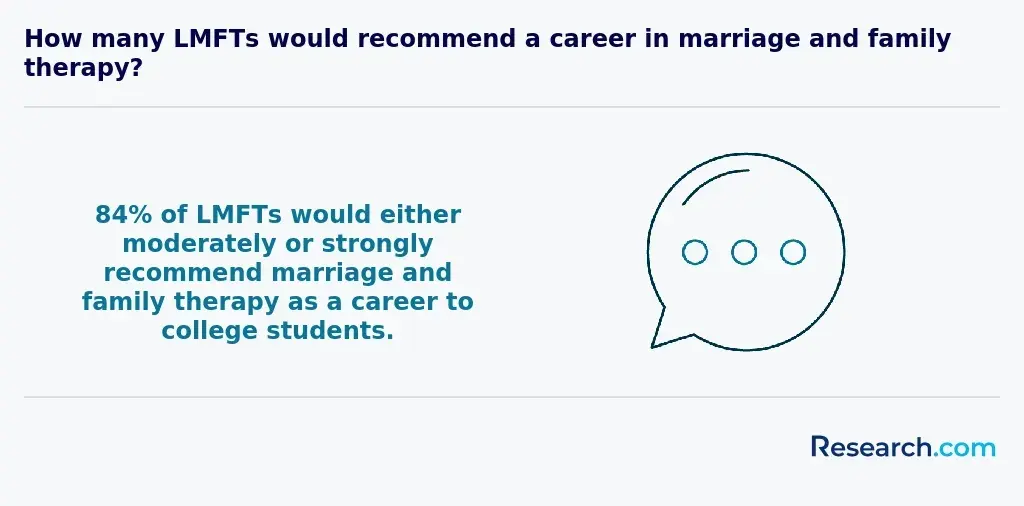
Many students first learn about the marriage and family therapy profession during college or while comparing graduate counseling programs.
What education do Maryland MFT applicants need?
Maryland MFT applicants generally need a master’s or doctoral degree in marriage and family therapy or a closely related field. The safest academic route is a program accredited by the Commission on Accreditation for Marriage and Family Therapy Education (COAMFTE) or a program otherwise recognized by the Maryland Board of Professional Counselors and Therapists.
Program choice matters. A graduate degree that sounds related may not automatically satisfy Maryland’s coursework and clinical-preparation standards. Before enrolling, students should ask the program director whether graduates have historically been eligible for Maryland MFT licensure and whether the curriculum meets current Board expectations.
Examples of Maryland-based academic options discussed in relation to MFT preparation include the University of Maryland’s COAMFTE-accredited Master of Science in Couple and Family Therapy, Towson University’s Master of Science in Family Studies with a marriage and family therapy focus, and Loyola University Maryland’s Master of Arts in Counseling with a marriage and family therapy specialization.
Professional organizations can also help students understand the field before they apply to graduate school. The Maryland Association for Marriage and Family Therapy and the American Association for Marriage and Family Therapy provide professional development, networking, research, and continuing education resources for students and clinicians.
| Program factor | What to ask before enrolling | Red flag |
| Accreditation or Board recognition | Is the program COAMFTE-accredited or accepted by the Maryland Board? | The school cannot clearly explain licensure alignment. |
| Clinical training | Does the program include supervised practicum or internship experience with couples and families? | Clinical placements are left mostly to students without support. |
| Licensure outcomes | Do graduates commonly pursue MFT licensure in Maryland? | The program mainly prepares students for a different credential. |
| Format | Can online, hybrid, or campus requirements fit your schedule and placement needs? | The delivery format conflicts with required clinical hours. |
| Total cost | What is the full cost after tuition, fees, books, travel, and unpaid clinical hours? | The school advertises only per-credit tuition and avoids total-cost estimates. |
What steps are required for Maryland MFT licensure?
The Maryland MFT licensing process is designed to confirm that applicants have the education, supervised clinical training, and examination readiness needed for independent practice. While applicants should always use the Maryland Board’s current instructions, the pathway generally includes the following stages.
- Complete a qualifying graduate degree. Applicants need a master’s or doctoral degree in marriage and family therapy or a closely related field from an accredited institution, with COAMFTE accreditation strongly emphasized in many licensing discussions.
- Accumulate supervised clinical experience. Maryland licensing summaries reference substantial post-degree clinical training, including at least 3,000 supervised clinical hours with at least 1,500 hours of direct client contact in one description.
- Pass the required examination. Candidates must pass the Examination in Marital and Family Therapy administered by the Association of Marital and Family Therapy Regulatory Boards.
- Apply through the Maryland Board. The Maryland Board of Professional Counselors and Therapists reviews applications, education, supervision documentation, and exam completion before issuing licensure.
- Maintain professional development. Joining organizations such as the Maryland Association for Marriage and Family Therapy can help new clinicians stay current on continuing education, ethics, and practice expectations.
Because supervised-hour figures can be presented differently across Maryland licensing materials and career guides, applicants should not rely on a single summary. Confirm the exact requirement that applies to your license type before you start counting hours.
| Requirement area | Figure cited in this guide | Applicant action |
| Supervised clinical experience | 3,000 hours | Ask the Board whether this applies to your application pathway. |
| Direct client contact | 1,500 hours | Track client-facing work separately from administrative or indirect hours. |
| Alternative supervised-experience description | 2,000 clinical hours with 1,000 direct client contact hours | Verify whether this figure applies to a specific credential category or licensing stage. |
| Clinical supervision | 100 hours of face-to-face clinical supervision | Document supervisor credentials, dates, format, and content of supervision. |
How does Maryland MFT license renewal work?
Maryland MFT licenses typically must be renewed every two years through the Maryland Board of Professional Counselors and Therapists. Renewal is not just a payment step; it is also a professional-development requirement intended to keep clinicians current on ethics, culture, law, and clinical practice.
Maryland renewal requirements described in this guide include:
- Continuing education: 40 continuing education hours every two years, including at least 3 hours in ethics and 3 hours in cultural competency.
- Online renewal: Submission through the Maryland Department of Health licensing portal.
- Renewal fee: A current renewal fee of $300.
- Background check: A criminal background check may be required if it has not already been submitted.
A practical renewal plan should start well before the expiration date. Waiting until the final month can create problems if you are missing an ethics course, cannot access documentation, or need time to resolve portal or payment issues.
- Review your license expiration date and Board renewal instructions.
- Complete the required continuing education hours, including ethics and cultural competency.
- Save certificates and other proof of completion in one secure location.
- Complete the online renewal application.
- Pay the renewal fee and submit the application before your license expires.
One cited Maryland Board figure indicates that approximately 90% of MFTs renew on time. Still, individual licensees should not assume renewal is automatic. Continuing education documentation and deadlines remain the clinician’s responsibility.
-
: "
“The hardest part was not the online form; it was making sure I had the right continuing education completed before the deadline. Planning the ethics and cultural competency hours early made the process much less stressful.”
"
How long does Maryland MFT licensing usually take?
The full Maryland MFT pathway commonly takes about four to five years when graduate school and supervised clinical training are combined. The exact timeline depends on your degree format, whether you attend full time or part time, how quickly you secure approved supervision, and how long it takes to pass required exams.
The graduate degree portion often takes about two to three years. After graduation, candidates must complete supervised clinical experience. One Maryland timeline described in this guide references at least 2,000 hours of supervised clinical experience over no less than two years, including 1,000 hours of direct client contact and 100 hours of face-to-face clinical supervision.
Applicants should treat the timeline as a planning estimate rather than a guarantee. Delays can happen if you change supervisors, move to a different clinical site, work part time, pause for personal reasons, or discover that some hours do not meet Board documentation standards.
| Stage | Typical time estimate stated in this guide | What can extend the timeline |
| Graduate education | About two to three years | Part-time enrollment, prerequisite gaps, delayed practicum placement, or program changes |
| Supervised clinical experience | No less than two years in one described pathway | Limited client hours, supervisor changes, documentation errors, or reduced work schedule |
| Examination and application | Varies by applicant | Testing availability, exam retakes, incomplete paperwork, or Board review timelines |
| Overall path | Approximately four to five years | Any delay in education, supervised practice, exam completion, or application approval |
People who later decide they want a more medical or nursing-oriented patient-care role can compare the counseling route with healthcare licensure pathways such as becoming a licensed practical nurse.
What costs should Maryland MFT applicants budget for?
The Maryland MFT licensing application fee cited in this guide is $200, but that fee is only a small part of the total cost of becoming licensed. The largest expense is usually graduate education, followed by exam-related fees, supervision costs, background checks, professional memberships, liability insurance, and continuing education.
- Graduate tuition and fees: Costs vary widely by institution, program length, residency status, and delivery format.
- Books and materials: Therapy programs may require textbooks, assessment materials, software, and professional resources.
- Supervision: Some clinical workplaces include supervision as part of employment, while other arrangements may require separate payment.
- Examination fees: Candidates must budget for the national MFT examination and any related testing expenses.
- Licensing application: The application fee described here is $200.
- Renewal: The renewal fee cited in this guide is $300, with continuing education costs added separately.
Applicants should build a full budget before enrolling in graduate school. A low tuition rate may still lead to higher total costs if the program requires travel, offers limited placement support, or delays clinical training. Conversely, a higher-cost program may be a better investment if it has clear licensure alignment and reliable clinical placement systems.
| Cost category | Questions to ask | Cost-control strategy |
| Degree program | What is the total program cost, not just cost per credit? | Compare public, private, online, hybrid, and transfer-credit options. |
| Clinical placement | Does the school help place students in approved sites? | Favor programs with documented placement support. |
| Supervision | Is supervision included at your workplace or billed separately? | Ask potential employers about supervision before accepting a role. |
| Exams and application | When are fees due, and are retake costs possible? | Budget for exam preparation and avoid last-minute testing. |
| Renewal and CE | How much will continuing education cost every two years? | Use employer-sponsored CE or professional association discounts when available. |
If you are comparing counseling markets before settling in Maryland, it may be useful to review how another state handles licensure and careers, such as this guide to licensed professional counselor careers in Iowa.
What supervised experience is required for Maryland MFT licensure?
Supervised experience is the bridge between graduate training and independent clinical practice. It gives new therapists structured feedback while they learn how to manage cases, build treatment plans, respond to risk, document services, and apply ethical standards in real client situations.
One Maryland supervised-experience description in this guide states that applicants must complete at least 2,000 hours of clinical work under supervision. That experience should occur in a professional setting that provides counseling or therapy services, with at least 1,000 hours involving direct client contact through therapy with individuals, couples, or families.
The same description notes that candidates need at least 100 hours of clinical supervision, with supervision used to review cases, strengthen clinical judgment, address ethical concerns, and monitor professional growth. Applicants should maintain detailed records of client-contact hours, indirect hours, supervision meetings, supervisor credentials, dates, and settings.
Because supervision is heavily regulated, do not begin counting hours casually. Before accepting a position, confirm whether the supervisor, setting, and duties will count toward Maryland MFT licensure. If you are considering other counseling credentials in the same state, compare this pathway with Maryland mental health counselor requirements.
What legal and ethical duties apply to Maryland MFTs?
Maryland MFTs must practice within a legal and ethical framework that protects clients and reduces professional risk. Core responsibilities include confidentiality, informed consent, accurate records, appropriate boundaries, mandatory reporting, secure handling of client information, and careful management of conflicts of interest.
Clinicians should also keep liability coverage current, use written policies for telehealth and records, seek consultation when cases raise ethical concerns, and follow updates from the Maryland Board of Professional Counselors and Therapists. Legal and ethical obligations can change, so continuing education should include Maryland-specific law and ethics rather than only general clinical topics.
For a broader overview of the state pathway, see this guide on how to become a marriage and family therapist in Maryland.
Which certifications and specializations can strengthen an MFT career?
Specialization can help Maryland MFTs build deeper expertise, but it should be chosen strategically. Useful focus areas may include trauma-informed care, child and adolescent therapy, couples therapy, family systems, addiction counseling, perinatal mental health, grief, or work with military families. The right specialization depends on your client population, work setting, and long-term career goals.
Before investing in a certificate, ask whether it is respected by employers, whether it provides supervised skill development, and whether it fits within your MFT scope of practice. If you are still choosing a graduate pathway, comparing different types of counseling degrees can help you understand how MFT training differs from counseling, psychology, social work, and addiction-focused programs.
Is dual certification in MFT and substance abuse counseling worth considering?
Dual preparation in marriage and family therapy and substance abuse counseling can be valuable when you want to treat clients whose relationship difficulties are connected with addiction, recovery, relapse, family stress, or co-occurring mental health concerns. This combination may be especially useful in community behavioral health, integrated care, private practice, and family-centered treatment programs.
The trade-off is time and cost. A second credential may require extra coursework, supervised hours, exams, and renewal obligations. It makes the most sense if substance use treatment will be a regular part of your practice rather than an occasional referral issue. To compare requirements, review the pathway for becoming a substance abuse counselor in Maryland.
Where can Maryland MFTs work?
Maryland MFTs are not limited to one workplace. The license can support clinical roles across private, nonprofit, healthcare, education, and community settings. The best fit depends on how much independence you want, how much risk you can manage, and which client populations you prefer to serve.
Common MFT and counseling career options include:
- Private practice: MFTs may work independently or in group practices, often focusing on couples therapy, family therapy, trauma, or relationship challenges. This path offers autonomy but also requires business skills, marketing, billing knowledge, and risk management.
- Community mental health centers: These roles often serve clients with high needs and limited access to care. They can provide strong clinical experience, though caseloads may be demanding.
- Hospitals and healthcare facilities: MFTs in healthcare settings may collaborate with physicians, nurses, psychiatrists, and social workers to support patients whose mental health and relationships affect medical care.
- Schools and educational organizations: Some MFTs support students and families around behavioral concerns, crisis situations, bullying, family stress, and mental health awareness.
- Research and higher education: MFTs with doctoral training or research interests may teach, supervise, publish, or contribute to the development of therapy models and family-systems research.
| Work setting | Best for MFTs who want... | Potential drawback |
| Private practice | Autonomy, specialization, flexible scheduling, and long-term client relationships | Business responsibilities and income variability |
| Community mental health | Mission-driven work and broad clinical exposure | High caseloads and administrative demands |
| Healthcare facilities | Team-based care and integration with medical services | Less control over scheduling and clinical systems |
| Schools | Work with youth, families, and educational systems | May require understanding separate school credential rules |
| Academia or research | Teaching, supervision, research, and program development | Often requires advanced graduate training and publication experience |

Can Maryland MFTs move toward criminal psychology?
MFTs who are interested in criminal behavior, trauma, family violence, court-involved families, or forensic populations may find criminal psychology concepts useful. This does not mean an MFT automatically becomes a criminal psychologist; it means the therapist may pursue additional education or training that helps them understand behavioral patterns connected to legal systems and family functioning.
This direction can be relevant for clinicians working with domestic conflict, incarceration-related family stress, victim support, juvenile justice, or court-referred clients. Because forensic work involves legal, ethical, and documentation risks, Maryland MFTs should seek formal training and consultation before moving into this area. To explore the field further, review information on criminal psychology education in Maryland.
What is the demand for MFTs in Maryland?
The national employment outlook for marriage and family therapists is favorable. Employment of MFTs in the United States is projected to grow 16% from 2023 to 2033, which is much faster than the average for all occupations. The guide also cites an earlier BLS-based projection of about 22% growth from 2021 to 2031.
In Maryland, demand is influenced by rising awareness of mental health needs, broader acceptance of therapy, shortages in parts of the behavioral health workforce, and the use of therapy in healthcare, school, and community settings. The need is not identical across the state; rural communities and underserved populations may have different access gaps than large metro areas.
Common employers for Maryland MFTs include:
- Mental health clinics
- Private practice offices
- Hospitals and healthcare organizations
- Community service agencies
- Schools and educational institutions
Nationally, average annual openings for marriage and family therapists are expected to be around 7,500, largely because of workforce turnover, retirements, and new demand. Maryland applicants should interpret demand carefully: strong projections do not guarantee a specific job, salary, caseload, or practice income.
If you are open to addiction-focused work and want to compare lower-cost undergraduate preparation options, see this resource on affordable online bachelor’s programs in substance abuse counseling.
What counseling alternatives should aspiring therapists compare?
The MFT license is not the only way to become a therapist in Maryland. Students who are unsure about focusing on couples and family systems should compare MFT training with licensed professional counseling, social work, school counseling, school psychology, addiction counseling, and other behavioral health credentials.
Licensed professional counseling may be a better fit for people who want a broader counseling identity centered on individual mental health treatment across many populations. If you are comparing the LPC route with the MFT route, review this guide on how to become a licensed counselor in Maryland.
| Path | Main focus | May fit you if... |
| LMFT | Couples, families, relational systems, and systemic therapy | You want relationships and family dynamics at the center of your clinical work. |
| LPC | Broad mental health counseling | You want flexibility across individual counseling, groups, and varied clinical issues. |
| Substance abuse counseling | Addiction, recovery, relapse prevention, and substance-related treatment | You want to specialize in addiction services or co-occurring concerns. |
| School counseling | Student academic, social, emotional, and career development | You want to work primarily in K-12 educational environments. |
| Social work | Clinical care, case management, community systems, and social determinants of health | You want a broader human-services framework with clinical and nonclinical options. |
How can Maryland counseling professionals advance faster?
There is no ethical shortcut around required education, supervision, or examinations. However, you can reduce delays by planning your career path early, selecting a licensure-aligned program, choosing approved supervision, preparing for exams before the last minute, and joining professional networks that connect you with mentors and job opportunities.
Practical acceleration strategies include:
- Choose a graduate program that clearly maps coursework and clinical training to Maryland licensure.
- Start documenting clinical hours from the first eligible day in the format the Board expects.
- Work in settings that provide steady direct-client hours and qualified supervision.
- Use continuing education strategically to build a specialty rather than collecting random credits.
- Ask supervisors for feedback on readiness for independent practice, not just hour completion.
To compare realistic timelines and route planning, see Research.com’s guide to the fastest way to become a counselor in Maryland.
Could school psychology complement an MFT practice?
School psychology can complement MFT training for professionals interested in children, adolescents, learning environments, behavioral assessment, family-school collaboration, and mental health support within educational systems. The combination can be useful, but it usually involves separate training and credential requirements.
This path makes the most sense if you want to work closely with schools, assessments, student support teams, and educational interventions. It may not be necessary if your primary goal is private practice with couples and families. Before pursuing this direction, review Maryland school psychologist certification requirements.
Can school counseling expand opportunities for MFTs?
School counseling can open additional doors for MFTs who want to work with students and families in educational settings. However, school counseling is not the same as MFT practice. It has its own preparation standards, certification rules, role expectations, and school-system responsibilities.
MFTs considering this expansion should determine whether they want clinical family therapy that intersects with schools or a dedicated school counseling role focused on student development, academic planning, crisis response, and school-based support. To compare requirements, review school counselor requirements in Maryland.
How much can MFTs earn in Maryland?
As of May 2023, the average annual income for marriage and family therapists in Maryland is approximately $87,090, equal to about $41.87 per hour. This places Maryland as the second-highest paying state for MFTs in the country, behind New Jersey. Another salary estimate cited in this guide lists the average salary for Maryland MFTs at approximately $66,000 per year, which shows why applicants should always compare salary sources, job settings, and geographic markets.
Pay can differ by metro area, practice setting, experience, specialization, employer type, and whether the therapist works in private practice or salaried employment. The Baltimore-Columbia-Towson region is identified here as one of the higher-paying areas for MFTs, with an average annual salary of about $98,520. Silver Spring is also noted as a market with competitive pay and possible job opportunities.
Salary figures are useful for planning, but they are not promises. New graduates, associate-level clinicians, rural practitioners, part-time therapists, and private-practice owners can experience very different earnings. If you are considering additional counseling education to expand your options, compare MA versus MS counseling programs before choosing a degree format.
Maryland ranks among the stronger-paying states for MFTs, as shown below.
Can added certifications improve an MFT career?
Supplementary certifications can help Maryland MFTs broaden their clinical tools, but they should be chosen for a clear purpose. A certification is most useful when it improves your competence with the clients you already serve or supports a deliberate move into a new specialty area.
Examples may include trauma-focused training, behavior analysis, addiction-related education, child and adolescent treatment, or advanced couples therapy methods. For clinicians interested in behavior analysis, reviewing BCBA certification requirements in Maryland can clarify whether that path complements your MFT work.
Before paying for any credential, ask whether it is recognized by employers, whether it includes supervised practice or only coursework, whether it affects your scope of practice, and whether it adds renewal requirements.
How is an LMFT different from an LCSW in Maryland?
LMFT and LCSW credentials can both lead to clinical work, but they are built around different professional frameworks. LMFTs are trained to treat mental health and emotional concerns through relationships, family systems, and interaction patterns. LCSWs are trained within the social work model, which often combines clinical care with attention to social systems, resources, advocacy, case management, and community context.
The better choice depends on your preferred lens. Choose the MFT route if couples and family systems are central to your work. Consider social work if you want a broader clinical and social-services framework with more emphasis on systems of care and community resources. For a direct comparison, review LMFT and LCSW differences.
Can social work training expand an MFT career?
Social work knowledge can strengthen an MFT’s understanding of the external pressures that affect families, including housing, income, healthcare access, trauma exposure, education, disability, and community resources. This perspective can make treatment planning more practical, especially for families facing complex social or economic barriers.
However, adding social work as a second professional direction requires careful planning. It may involve additional education, supervised experience, and licensure obligations. If you are considering that broader route, examine social worker education requirements in Maryland before committing.
Common mistakes to avoid when pursuing Maryland MFT licensure
- Choosing a graduate program before checking licensure alignment. A counseling-related degree may not automatically meet MFT requirements.
- Counting supervised hours without confirming eligibility. Make sure your supervisor, setting, duties, and documentation format meet Board expectations.
- Focusing only on tuition. Total cost includes fees, books, supervision, exam expenses, applications, travel, and unpaid clinical time.
- Assuming online programs are automatically accepted. Online or hybrid delivery can be legitimate, but the curriculum and clinical placements still must meet Maryland standards.
- Waiting too long to prepare for the exam. Build exam preparation into your supervised-practice timeline.
- Ignoring renewal requirements until the deadline. Ethics and cultural competency hours should be planned early in each renewal cycle.
- Assuming salary averages predict your income. Earnings vary by region, experience, employer, hours worked, and private-practice performance.
Questions to ask before choosing the Maryland MFT path
- Do I want relationship and family systems to be the center of my clinical identity?
- Is my intended graduate program COAMFTE-accredited or accepted by the Maryland Board?
- How will I complete and document supervised clinical hours?
- Will I have access to qualified supervision without paying unaffordable out-of-pocket fees?
- Can I manage the financial commitment of graduate school, exams, applications, and renewal?
- Which Maryland settings hire MFTs in the population or specialty I care about most?
- Would LPC, LCSW, school counseling, school psychology, or substance abuse counseling be a better fit?
What recent Maryland MFT applicants often report
- New clinicians often describe the licensing process as demanding but valuable because the structure forces them to build clinical judgment before independent practice.
- Many graduates appreciate Maryland’s diverse communities because working with different family structures, cultures, and stressors can deepen clinical skill.
- Applicants commonly emphasize that organized documentation, early exam planning, and strong supervision make the licensing process easier to manage.
Related Articles for Nearby States
- 2027 Virginia MFT Licensing, Certifications, Careers and Requirements
- 2027 West Virginia MFT Licensing, Certifications, Careers and Requirements
- 2027 Pennsylvania MFT Licensing, Certifications, Careers and Requirements
- 2027 Delaware MFT Licensing, Certifications, Careers and Requirements
- 2027 New Jersey MFT Licensing, Certifications, Careers and Requirements
- 2027 New York MFT Licensing, Certifications, Careers and Requirements
- 2027 Ohio MFT Licensing, Certifications, Careers and Requirements
- 2027 North Carolina MFT Licensing, Certifications, Careers and Requirements
- 2027 Kentucky MFT Licensing, Certifications, Careers and Requirements
- 2027 Connecticut MFT Licensing, Certifications, Careers, and Requirements
Key Insights
- Maryland can be an attractive state for MFTs because salary prospects are strong and mental health access needs remain significant, but licensure requires careful planning.
- The core pathway includes a qualifying graduate degree, supervised clinical experience, national examination, Board approval, and ongoing renewal.
- Applicants should verify supervised-hour requirements directly with the Maryland Board because different summaries cite figures such as 3,000 hours with 1,500 direct client contact hours and 2,000 hours with 1,000 direct client contact hours.
- Program choice is one of the biggest decisions. Confirm COAMFTE accreditation or Board recognition before enrolling.
- The $200 application fee and $300 renewal fee are only part of the financial picture; tuition, supervision, exams, and continuing education can substantially increase total cost.
- The LMFT credential is strongest for professionals who want to specialize in couples, families, and relational systems. Students who want broader counseling, school-based, addiction-focused, or social-service roles should compare alternative credentials before committing.
References:
- BLS (2024, April 3). 21-1013 Marriage and family therapists. BLS occupational employment data
- BLS (2024, August 29). Marriage and family therapists. BLS Occupational Outlook Handbook
- Census Reporter (2022). Maryland. Census Reporter Maryland profile
- Maryland Department of Health. Marriage and family therapy licensure requirements (LCMFT). Maryland Department of Health licensing information
- Maryland OneStop. Licensed clinical marriage and family therapists details. Maryland OneStop license details
Other Things You Should Know About Maryland MFT Licensing
Maryland MFT applicants must complete the state’s required criminal history check before licensure is issued. The Maryland Board of Professional Counselors and Therapists reviews the results during the application process, and applicants should follow all fingerprinting and disclosure instructions exactly to avoid delays.
To obtain MFT licensure in Maryland in 2027, candidates must complete at least 100 supervised practice hours. This includes 50 hours of direct supervision by a licensed MFT or approved supervisor. These hours ensure competency in marriage and family therapy practice.


