2027 From Student Services to Higher Education Administration: When Does a BS in Business Administration Make Sense?
Audited and Verified:
Our Editorial and Data Verification Process
Research.com uses government datasets, official education statistics and primary institutional information to support its career and degree guides. Our review process checks factual accuracy, occupational definitions, source dates and the requirements associated with the credentials discussed.
How This Article Was Fact-Checked
Our editorial team verifies salary estimates, employment projections, education requirements and program information against original data providers and official organizations. Salary figures are checked against the relevant occupational definitions and reporting periods. Information about licensure, accreditation and required in-person training is reviewed separately.
Fact-checked and verified on:

Co-Founder and Chief Data Scientist
If you work in student services, you may already coordinate people, solve operational problems, or help manage a program without holding a business degree. A BS in Business Administration can strengthen those skills, but its value depends on the campus role you want next.
This guide connects degree content to higher education jobs, explains where experience or graduate study matters more, and shows how to compare the time and cost of finishing a bachelor's degree. The goal is to help you choose a path that addresses an actual hiring requirement or skill gap.
Key Things You Should Know
- A BS in Business Administration is most useful when a target campus role requires a bachelor's degree and involves budgets, operations, staffing, or program management; it does not automatically qualify you to manage a department.
- Student-facing advising and counseling roles may favor education, counseling, or student affairs preparation instead. Compare several actual job postings before choosing a degree.
- For context, the U.S. median annual wage for human resources specialists was $75,940 in May 2025, with 6% projected employment growth from 2025 to 2035. Those occupation-wide figures are not a salary forecast for campus employees or new graduates.
What Is a BS in Business Administration, and Can It Lead to Higher Education Administration?
A Bachelor of Science in Business Administration is an undergraduate degree built around functions such as accounting, finance, management, operations, and organizational decision-making. "Higher education administration" covers many jobs, from running enrollment processes to overseeing a college's budget. The degree can be relevant to those jobs, particularly when the work centers on systems and resources rather than specialized student counseling.
It is not an academic shortcut into a director position. Hiring committees also assess campus experience, policy knowledge, supervision, and results. A BS, BBA, and BA in business may cover similar ground, but their requirements differ by school; compare courses and transfer rules rather than relying on the degree abbreviation. If you already have college credits, ranked online business bachelor's completion routes can provide options to investigate, but only an official degree audit can establish what you still need to graduate.
What Careers Can You Pursue in Student Services With a Business Administration Degree?
Student services includes both direct student support and the operations behind it. The table distinguishes plausible entry or advancement routes by the evidence employers are likely to seek; titles and requirements vary across institutions.
| Role or pathway | Typical work | What strengthens an application |
| Admissions or enrollment operations coordinator | Tracks application workflows, schedules staff, and resolves process issues | Customer service, accurate records, reporting, and process improvements |
| Financial aid operations specialist | Processes records and explains procedures within institutional and federal rules | Policy training, attention to detail, and relevant office experience |
| Student services program coordinator | Organizes events, purchasing, schedules, and program communications | Budget basics, project coordination, and stakeholder communication |
| Administrative or business office supervisor | Oversees workflows, staff, or expenditures | Documented supervisory responsibility and institution-specific systems knowledge |
For a current student services employee, the most credible transition may be into operations within the same office: you can pair knowledge of student needs with evidence that you improved a workflow or managed a defined budget. If project coordination is the real goal, compare business study with online project management degrees with lower tuition; check each program's actual costs and whether its narrower curriculum suits the positions you want.
When Does a BS in Business Administration Make Sense for Higher Education Careers?
The strongest case is a specific gap: you need a bachelor's degree for advancement, and your target jobs repeatedly ask for financial, operational, analytical, or supervisory skills. Existing campus experience makes the degree more useful because you can apply coursework to problems you understand and explain that work to hiring managers.
Before enrolling, compare these alternatives against the requirements in several job postings:
- Finish a business bachelor's: A strong fit if you lack a bachelor's and want access to several administrative functions, not just one specialty.
- Seek targeted training or a stretch assignment: Often more direct if you already hold a bachelor's and need experience with budgets, reporting software, or supervision rather than another undergraduate degree.
- Choose a specialized degree or graduate pathway: Consider accounting or public administration for a defined function, or counseling or student affairs graduate study for positions that explicitly require that preparation.
A campus procurement role, for example, may reward purchasing experience more than a general management concentration. If that is your aim, compare supply chain degrees by cost and length alongside the BS, then check which curriculum matches the institution's purchasing rules. The decision changes if your employer requires only any accredited bachelor's: the degree that accepts more of your existing credits may be the better completion route.
Programs commonly combine general education with accounting, economics, finance, marketing, management, statistics, and operations. For higher education work, prioritize financial statements and budgeting if you handle resources; statistics and information systems if you report enrollment or service data; and organizational behavior and HR coursework if you hope to supervise staff. A business course teaches a framework, not the institution's policies or permission to access student records.
Look for assignments that produce evidence you can discuss ethically: a process map, an operating-budget analysis using permitted data, or a proposal evaluated by faculty. An internship, simulation, and employer-approved capstone are different experiences; confirm which the program requires and whether your workplace can participate. Flexible fast-track routes in business education may shorten the calendar, but check prerequisite chains and required course availability before assuming you can accelerate.
Requirements depend on the institution and whether you apply as a first-year, transfer, returning, or second-degree student. Schools commonly request prior transcripts and may set GPA or quantitative-course requirements. Admission to the university, admission to its business major, and application of transferred credits to that major can be separate decisions.
For a student services employee with prior college study, obtain an official transcript review and ask which credits satisfy general education, the business core, electives, and residency requirements. A completed associate degree does not establish that accounting or statistics prerequisites have been met. If scheduling is the obstacle, short-term classes toward a bachelor's degree offer formats to compare; confirm that the specific course and credit will apply before enrolling.
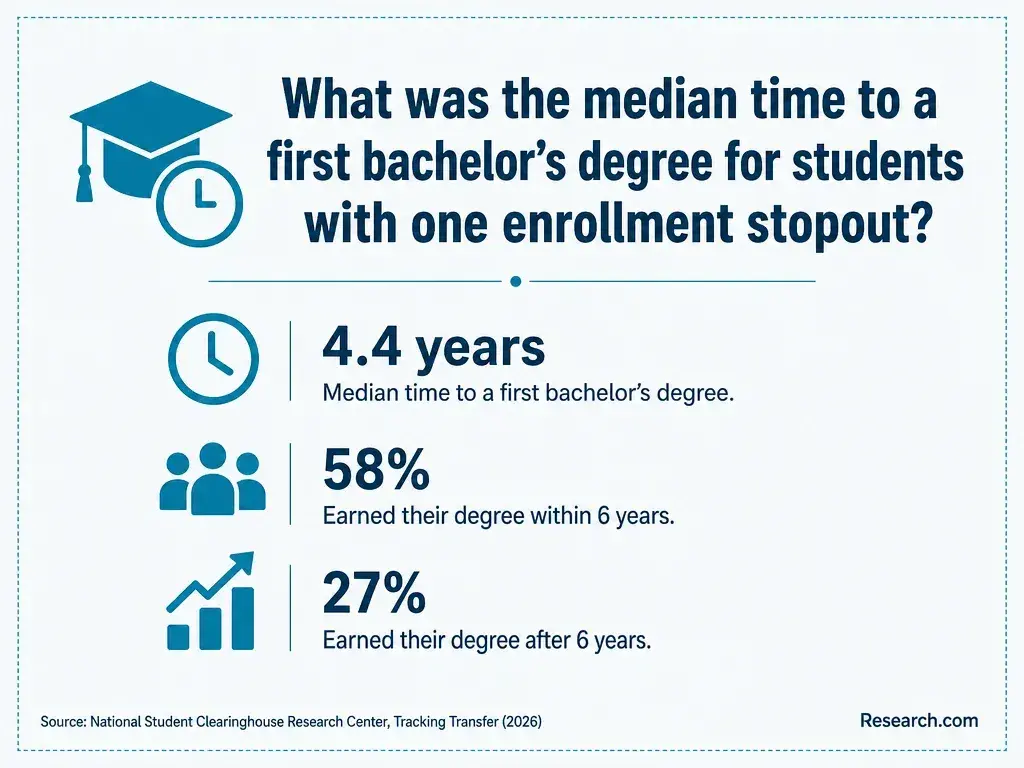
A traditional full-time bachelor's path is commonly planned across four academic years. Your remaining time depends on credits applied to requirements, course sequencing, enrollment pace, and whether your college offers required classes when you need them. Part-time study can preserve employment but extend the calendar; an accelerated schedule can increase weekly demands without reducing the number of credits owed.
Compare the total remaining bill, not just the advertised tuition rate: include mandatory fees, materials, technology, travel, and any courses that will not transfer. Ask your employer whether education assistance covers this degree, when reimbursement occurs, and whether a grade or continued-employment condition applies. A business degree tuition comparison guide can help identify schools to price, but request a personalized degree audit and aid estimate before judging affordability.
Neither format is inherently better for campus administration. Online study may let a working employee remain in a student services job while finishing the degree. Campus study may make it easier to use local advising, faculty relationships, and internships. Both can develop relevant skills if the coursework and support fit your circumstances.
Check live-session times, group-project meetings, exam proctoring, internship rules, and any required campus visits. "Online" does not necessarily mean self-paced. When reviewing budget-conscious online business administration education, weigh those scheduling requirements alongside tuition: a low-priced program that conflicts with your office's peak enrollment periods may be difficult to finish.
Start by confirming that the institution holds recognized institutional accreditation. That is distinct from business-school or programmatic accreditation through organizations such as AACSB, ACBSP, or IACBE; if a school advertises the latter, verify whether the particular degree is within its scope. Accreditation is an important quality and eligibility check, not proof of a promotion or a particular salary.
If you expect to use federal student aid, verify the institution's eligibility and your own aid status with its financial aid office rather than assuming that every accredited program participates. The guide to business administration college affordability and FAFSA participation can help frame that check. Also ask a prospective employer or graduate program about any degree-specific requirements it applies.
There is no single license or graduate-degree requirement for all higher education administrators. Many operations and coordinator jobs assess a bachelor's degree and relevant experience; some student affairs leadership, counseling, or specialized positions require or prefer graduate preparation. A counseling role may have separate state licensure requirements that a business bachelor's does not satisfy. Read the requirements for the particular job, including any distinction between "required" and "preferred."
If you are considering project-focused work instead of broad administration, a project management credential is separate from an academic degree and has its own eligibility rules. Likewise, information about paying for project management bachelor's study with grants is relevant only if that alternative degree better fits your target role; aid eligibility and awards require individual verification.
What Are the Salary and Job Outlook for Higher Education Administration Careers?
"Higher education administrator" spans too many responsibilities to support one realistic pay expectation for a student services employee. Compare a prospective job's published pay range with its duties, location, and experience requirements. Campus pay structures may also limit the immediate financial return from a new degree.
For occupational context, the U.S. Bureau of Labor Statistics reports a May 2025 median annual wage of $91,640 for budget analysts and projects 2% employment growth from 2025 to 2035. A university budget analyst is one possible role in that occupation, but the figures cover analysts across industries and experience levels - not beginning campus salaries or BS graduates' outcomes. Use the role's posted range, your likely remaining education cost, and whether the degree removes a hiring barrier when assessing value. A business administration degree affordability duration and value guide can inform the cost comparison, but it cannot predict your promotion or earnings.
Other Things You Should Know About Business Administration
It can, especially if you handled records, events, service requests, or office processes. Describe your actual responsibilities and results rather than presenting work-study alone as management experience.
Do not assume so. Ask your institution about privacy rules, data access, and academic approval first; a project using public, fictional, or properly approved de-identified information may be more feasible.
No. Internal postings may have experience requirements, competitive selection processes, and established pay ranges. Discuss the target role and development opportunities with your supervisor before committing to a degree.
Staying can help you build institutional knowledge, but compare openings at other colleges if advancement is limited. Evaluate duties and qualifications, not just whether the job carries a higher title.
- General Schedule Qualification Policies | U.S. Office of Personnel Management https://www.opm.gov/policy-data-oversight/classification-qualifications/general-schedule-qualification-policies/
- Higher Ed Administration Careers: Roles, Salaries & Degrees | Arkansas State University Online https://degree.astate.edu/online-programs/education/edd/higher-education-administration-careers/
- What Career Paths Exist in Higher Education Administration? | WPUNJ https://online.wpunj.edu/degrees/education/masters-higher-education-administration-leadership/career-paths/
- Exploring Salary Ranges for Student Affairs Professionals | Binghamton University, State University of New York https://careertools.binghamton.edu/blog/2025/03/04/exploring-salary-ranges-for-student-affairs-professionals/
- Business School Internships: Gaining Practical Experience | Pepperdine Graziadio Business School https://bschool.pepperdine.edu/personal-growth/article/business-school-internships-gaining-practical-experience.htm
- Job Family: Student & Academic Services - TEAMS Titles https://teams-titles.hr.ufl.edu/job-family/student-academic-services/
- Career Paths in Higher Education | Southeast Missouri State University https://semo.edu/blog/blog-posts/career-paths-higher-education