2027 Should You Choose a BS in Business Administration or A Cybersecurity Awareness Credential for Your Next Career Step?
Audited and Verified:
Our Editorial and Data Verification Process
Research.com uses government datasets, official education statistics and primary institutional information to support its career and degree guides. Our review process checks factual accuracy, occupational definitions, source dates and the requirements associated with the credentials discussed.
How This Article Was Fact-Checked
Our editorial team verifies salary estimates, employment projections, education requirements and program information against original data providers and official organizations. Salary figures are checked against the relevant occupational definitions and reporting periods. Information about licensure, accreditation and required in-person training is reviewed separately.
Fact-checked and verified on:

Co-Founder and Chief Data Scientist
A business degree and a cybersecurity awareness credential solve different career problems. One can build broad preparation for business roles; the other can help you recognize and respond to everyday digital risks at work. If you are deciding how to advance, change fields, or meet an employer's training requirement, the distinction matters more than the word "credential."
This comparison explains what each pathway teaches, what it may cost you in time and money, and which evidence to check before enrolling.
Key Things You Should Know
- Choose a BS in Business Administration when your target roles call for a bachelor's degree and broad business skills; choose awareness training for a specific workplace security skill or requirement.
- A cybersecurity awareness badge is not a technical cybersecurity qualification. Neither pathway, by itself, qualifies you for a security analyst or management job.
- The Bureau of Labor Statistics reports a $75,940 May 2025 median annual wage for human resources specialists, a potential business-related occupation - not an expected starting salary for degree graduates.
Should you choose a business administration degree or cybersecurity awareness credential?
Start with the requirement for your next role, not the appeal of either credential. If postings consistently require a bachelor's degree and the work involves operations, HR, marketing, or business analysis, a BS in Business Administration may address a qualification gap. If you already have the education your role requires but need to handle phishing, sensitive information, or reporting procedures more confidently, awareness training is the more direct step.
These pathways are not substitutes: the degree develops a broad academic foundation, while awareness training addresses a narrow workplace responsibility. A career changer seeking a technical cybersecurity role may need neither as a first choice; they should compare the role's technical requirements with an IT or cybersecurity learning pathway. If the degree fits your goal, ranked school options for studying business online can provide a starting list, but verify each program's curriculum and outcomes yourself.
What is a business administration degree, and what does it teach?
A BS in Business Administration is an undergraduate degree covering how organizations make financial, operational, marketing, and people-related decisions. Programs may offer concentrations, but an elective or informal focus is not necessarily an officially awarded concentration. A BS, BBA, and specialized business bachelor's may have different requirements even when their course titles overlap.
For an early-career employee, the degree's value is strongest when coursework connects to evidence: a spreadsheet analysis, a supervised project, relevant employment, or an internship. Introductory management courses do not confer managerial authority. If you already hold a bachelor's degree, check whether a second bachelor's is necessary before committing; targeted coursework or experience may close the gap faster. A business administration education length and salary outlook guide can help frame that comparison, but your remaining requirements depend on an official degree audit.
What is a cybersecurity awareness credential, and what can it prepare you for?
Cybersecurity awareness training teaches non-specialists to recognize risks such as phishing, unsafe authentication practices, suspicious requests, and improper handling of organizational information. Depending on the provider, completion might produce a course certificate, digital badge, or employer training record. Check what was assessed: attendance or a short quiz is different from a separately administered professional certification.
This training is useful for employees who handle customer, financial, or personnel information, including business professionals. It does not normally establish competence in network defense, incident investigation, or security engineering. If your interest lies in managing vendor, inventory, or logistics risks rather than performing technical security work, compare that goal with a relevant business specialty; fast-track online supply chain bachelor's options illustrate a distinct degree pathway, not an alternative name for awareness training.
Awareness training is generally a smaller commitment than completing a bachelor's degree, but providers vary in course length, fees, renewal rules, and whether an employer pays. Degree completion depends on credits that apply to requirements, course sequencing, enrollment pace, and residency rules - not merely how many prior credits a school accepts.
For a fair cost comparison, request an itemized degree estimate covering remaining tuition, required fees, materials, and any time away from work. Separately check the awareness provider's full charge and whether the training satisfies your employer's policy. If you need the degree, compare tuition for online business colleges, then ask each school for a program-specific estimate; a low advertised rate does not establish your total completion cost. If you only need awareness training, paying for a degree solely to obtain that skill is difficult to justify.
Business coursework commonly addresses accounting, finance, operations, marketing, organizational behavior, and quantitative decision-making. An awareness course instead concentrates on recognizing threats, using protective practices, and following an organization's reporting procedures. The overlap is responsible handling of information - not equivalent depth in technology or business management.
Compare actual assignments, not just course names. A business student might analyze a purchasing process while considering vendor-data risks; an awareness learner might practice identifying a fraudulent vendor email. Neither exercise proves the learner can run a procurement function or investigate a breach. If purchasing and logistics are the career goal, budget-friendly supply chain degrees with shorter schedules offer another curriculum to compare against a general business degree.
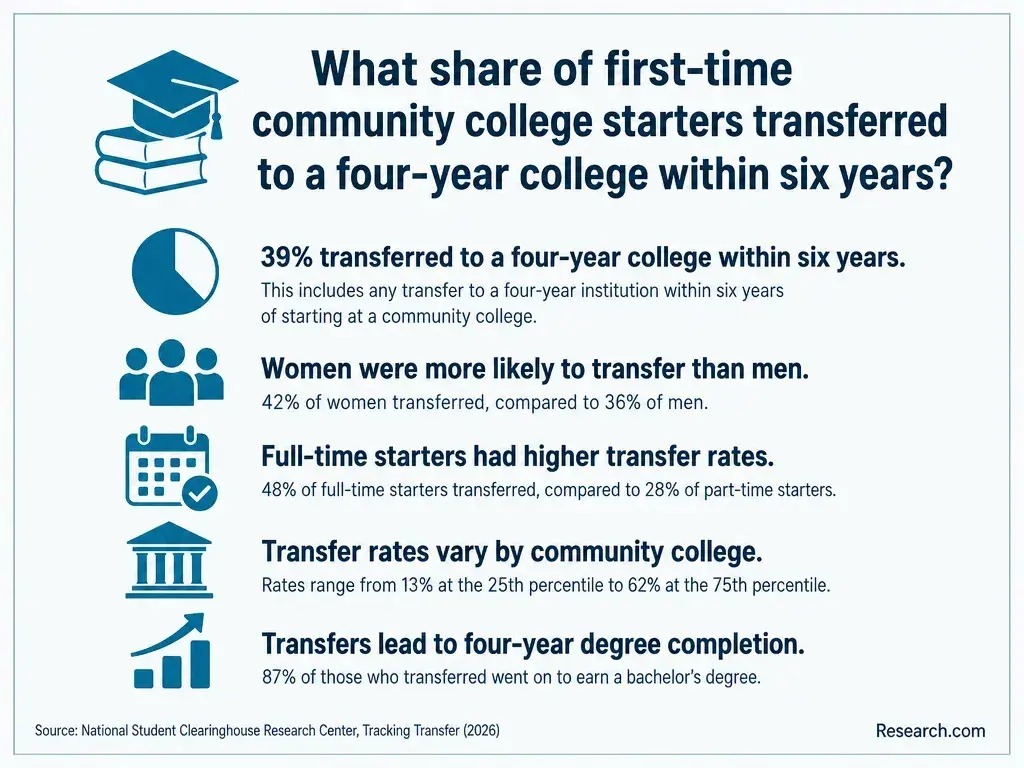
A business bachelor's program may review prior school records, transfer coursework, and prerequisites; admission to the institution does not necessarily mean admission to the major or satisfaction of its requirements. Applicants from non-business backgrounds should ask whether their mathematics, statistics, accounting, or economics work meets the specific program's rules. The school makes the final credit and equivalency decisions. See required credits before entering business administration study for questions to bring to an admissions or transfer adviser.
Awareness courses may allow direct enrollment, while employer-issued training may be restricted to staff. Requirements vary by provider. Before paying, confirm whether the course accepts outside learners and whether your employer recognizes its completion record.
For awareness training, online delivery can be practical if the material is accessible, the assessment is clear, and the training matches your workplace procedures. Employer-specific reporting instructions may still require internal instruction. A campus workshop may be useful when discussion or guided practice matters, but the format alone does not determine quality.
For a business degree, check live sessions, group projects, exam arrangements, internships, and required campus visits before assuming online means self-paced. Working students should compare those obligations with their actual weekly schedule. Online business administration programs with work-compatible schedules are worth investigating, but confirm course-level deadlines and support directly with the school.
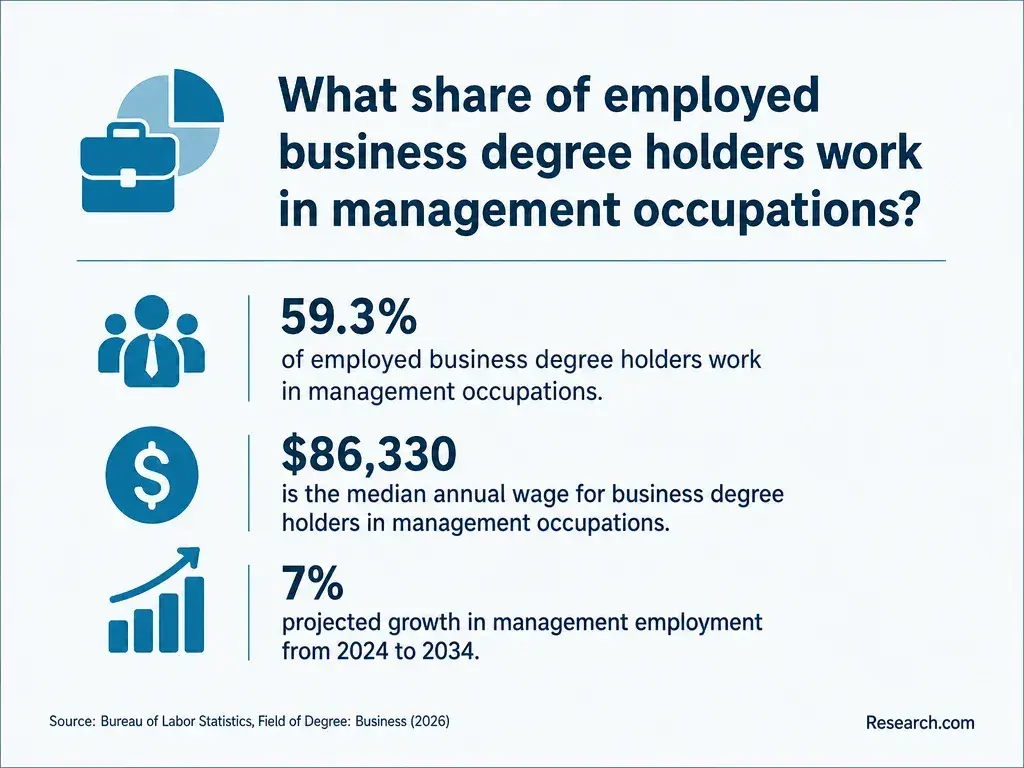
A business graduate might pursue roles such as HR specialist, marketing coordinator, operations coordinator, or project coordinator, depending on experience and employer requirements. The Bureau of Labor Statistics reports a $78,760 May 2025 median annual wage for market research analysts. That occupation-wide figure includes experienced workers; it is not a starting salary or a predicted return on a business degree.
Awareness training can strengthen performance in an existing job, but it is rarely a stand-alone hiring qualification for a dedicated cybersecurity role. For a move into HR, compare the target postings with your experience and coursework; returning students can also compare HR bachelor's transfer policies if a specialized degree better fits the work. For technical security work, investigate the required technical skills and experience rather than treating an awareness badge as an entry ticket.
There is no single job outlook for "business administration graduates" or awareness credential holders. Outlook figures describe occupations, not education programs. For example, the Bureau of Labor Statistics projects employment of logisticians to grow 18% from 2025 to 2035. That signals demand in a specific occupation, not that a general business degree - or a cybersecurity awareness course - qualifies someone for every logistics opening.
Likewise, interest in cybersecurity does not make every security job accessible through short awareness training. Identify a target occupation, read current postings for its technical and experience requirements, and compare those requirements with the training's assessed skills. If business is your route, weigh the occupational fit against an achievable education budget; lower-tuition online business administration programs are possible candidates to evaluate, not evidence of a job outcome.
How can you verify accreditation, certifications, and program quality?
For a degree, verify the institution's accreditation with its recognized accreditor and confirm the exact program, delivery format, catalog requirements, and transfer evaluation with the school. If the school advertises AACSB, ACBSP, or IACBE accreditation, check whether it covers the business program you intend to take. Accreditation does not itself prove job placement or that every course is available when you need it.
For awareness training, identify the issuer, learning outcomes, assessment, expiration or renewal policy, and employer acceptance. Do not confuse a completion badge with a technical professional certification. Ask the degree program for a written estimate of remaining requirements and costs; business administration degree costs after FAFSA-based assistance can inform your questions, but only the school's financial-aid office can explain your applicable aid package.
Other Things You Should Know About Business Administration
Not necessarily. Employers set training policies according to job duties, organizational risks, and applicable requirements. Ask your employer which course and completion record it accepts.
Yes, if it is relevant and you name the issuer and training accurately. Describe it as awareness training, not as proof of technical cybersecurity certification.
Only if the college formally awards credit for that learning and applies it to your degree requirements. Obtain a written evaluation before counting on it.
Follow your organization's reporting procedure rather than investigating it yourself. If you do not know the procedure, ask your IT or security team before an incident occurs.
- Certifying Training Programs | texas.gov https://dir.texas.gov/information-security/education-training/certifying-training-programs
- Understanding College Costs | studentaid.gov https://studentaid.gov/resources/prepare-for-college/students/choosing-schools/consider-costs
- Cost of Attendance (Budget) | 2025-2026 Federal Student Aid Handbook https://fsapartners.ed.gov/knowledge-center/fsa-handbook/2025-2026/vol3/ch2-cost-attendance-budget
- Requirements for the Bachelor of Business Administration | sulross.edu https://catalog.sulross.edu/content.php
- B.S. Business Administration - Bachelor's Degrees | Franklin University https://www.franklin.edu/degrees/bachelors/business-administration
- A systematic review of current cybersecurity training methods | sciencedirect.com https://www.sciencedirect.com/science/article/pii/S0167404823004959
- Online Bachelor's Degree in Business Administration | Purdue Global https://www.purdueglobal.edu/degree-programs/business/bachelor-business-administration/
- How to Start a Career in Cybersecurity | University at Albany https://www.albany.edu/cehc/communications/start-a-cybersecurity-career
- Business Administration Course & Degree Requirements | ohiodominican.edu https://www.ohiodominican.edu/academics/bachelors-degrees/business-administration/course-requirements.html
- Top Transferable Skills Employers Want Across Industries | Missouri Baptist University Online https://online.mobap.edu/about/news/essential-transferable-skills-for-modern-career-success/