2027 Supply Chain Management and Logistics vs. Construction Management for a Business Administration BS: Which Fits?
Audited and Verified:
Our Editorial and Data Verification Process
Research.com uses government datasets, official education statistics and primary institutional information to support its career and degree guides. Our review process checks factual accuracy, occupational definitions, source dates and the requirements associated with the credentials discussed.
How This Article Was Fact-Checked
Our editorial team verifies salary estimates, employment projections, education requirements and program information against original data providers and official organizations. Salary figures are checked against the relevant occupational definitions and reporting periods. Information about licensure, accreditation and required in-person training is reviewed separately.
Fact-checked and verified on:

Co-Founder and Chief Data Scientist
A BS in Business Administration can point toward two different kinds of operations work: moving goods through a supply network or helping deliver construction projects. The choice matters because shared business courses do not provide the same industry knowledge, practical experience, or recruiting connections.
This comparison is for students choosing a concentration and for working adults considering a career change. It explains what each path teaches, where graduates might start, and which program details to verify before committing time and money.
Key Things You Should Know
- Choose supply chain management for purchasing, inventory, transportation, and distribution work across industries; choose construction management if you want to work with project schedules, costs, contracts, and jobsite teams.
- The U.S. Bureau of Labor Statistics reports a $82,320 median annual wage for logisticians in May 2025 and projects 18% employment growth from 2025 to 2035. Neither figure is a starting salary or a forecast for every supply chain job.
- A construction concentration within a business degree may offer less technical construction preparation than a dedicated construction management degree. Compare required courses and supervised project access before treating the credentials as interchangeable.
What are the differences between supply chain management and construction management degrees?
Both fields coordinate people, budgets, suppliers, and deadlines, but they optimize different work. Supply chain management concerns how organizations source materials or products and move them through production, storage, and delivery. Construction management concerns the planning and execution of building or infrastructure projects, including subcontractor coordination, schedules, costs, contracts, and site conditions.
The degree title matters as much as the concentration name. A BS in Business Administration with either concentration retains a general business core. A specialized construction management bachelor's may devote more required coursework to estimating, building systems, plans, and field practice; a specialized supply chain degree may go deeper into logistics analytics and sourcing. Neither difference can be assumed without comparing catalogs. The table shows the main distinction to test.
| Decision point | Supply chain concentration | Construction concentration |
| Primary operating setting | Purchasing, production, warehousing, transportation, or distribution | Construction projects involving owners, contractors, trades, and sites |
| Typical decisions | Supplier selection, inventory levels, delivery reliability, and logistics costs | Project sequencing, estimates, subcontractor coordination, and change control |
| Most valuable applied access | Purchasing or logistics work and operational data | Construction employers, project documents, and appropriately supervised site exposure |
If your interests cross both fields, consider the employer rather than the label: construction firms also purchase materials and manage deliveries. A supply chain concentration plus construction-sector experience can fit that work, while site leadership generally calls for stronger construction-specific preparation. To examine specialized alternatives, compare supply chain degrees by cost and length, then inspect their actual course requirements.
Which career paths can a business administration degree prepare you for?
For an early-career student, the useful question is which first responsibilities a program and relevant experience can support - not whether graduation confers a manager title. On the supply chain side, possible starting roles include purchasing assistant, inventory analyst, logistics coordinator, or transportation coordinator. Work may involve tracking orders, checking stock and shipment data, communicating with vendors, and resolving delays.
On the construction side, possibilities include project coordinator, estimator assistant, purchasing coordinator for a contractor, or assistant project manager where the employer accepts the applicant's preparation. These jobs may involve updating schedules, documenting costs, tracking submittals, and communicating with subcontractors. Employers may expect plan-reading ability, construction experience, or site familiarity that a general business core alone does not establish.
Someone already working in a warehouse, procurement office, trade, or construction firm may have a more direct transition than a student without industry exposure. For construction-oriented students who have prior college credit, transfer-friendly project management bachelor's degrees are another option to compare - but a project management degree is not automatically a substitute for construction-specific training.
How do salaries and job outlook compare for both management fields?
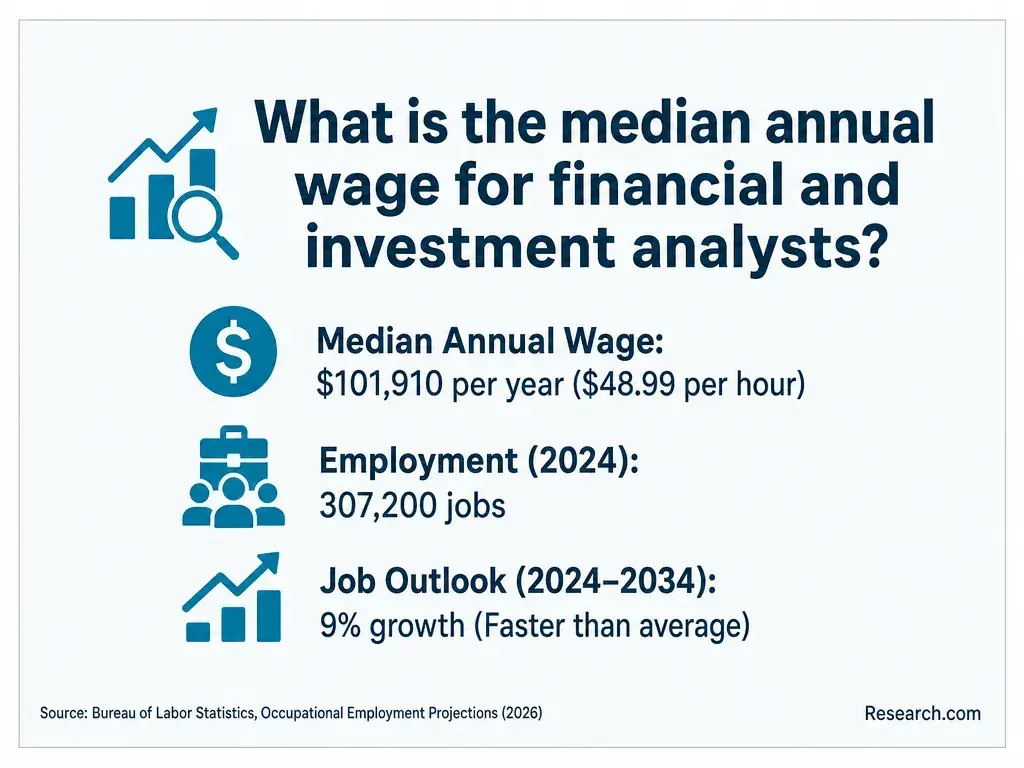
Use occupation-specific labor data, not a concentration name, to frame earnings. The Bureau of Labor Statistics reports the following national figures. These occupations illustrate potential directions, but neither represents all jobs in its field or the pay of a newly hired graduate.
| Occupation | Median annual wage, May 2025 | Projected U.S. employment growth, 2025-2035 |
| Logistician | $82,320 | 18% |
| Project management specialist | $102,320 | 7% |
Logistician is a relevant supply chain occupation. Project management specialist is not a construction-only category, so its higher median does not establish that construction management graduates earn more. Both medians include experienced workers, and actual offers depend on location, employer, responsibilities, and experience. Compare local postings for the specific entry roles you could pursue, including their technical requirements. If finishing sooner is part of the earnings decision, weigh shorter business administration study options and career prospects against the applied courses you might give up.
A BS in Business Administration commonly combines accounting, finance, management, statistics, and operations coursework with concentration courses. Supply chain offerings may include procurement, inventory management, transportation, forecasting, operations analytics, and supplier relationships. Look for assignments that require students to interpret demand, cost, and service trade-offs rather than merely learn terminology.
Construction-focused offerings may include estimating, scheduling, construction contracts, project controls, safety, and construction operations. Check whether students also learn to read plans, use relevant scheduling or estimating tools, and apply their work to realistic project documentation. A course called "project management" alone does not demonstrate that depth.
Confirm whether the focus is an official concentration recorded under the degree requirements, an elective cluster, or a separately awarded major. Also check course prerequisites and how often required classes run. For students studying while employed, business administration study alongside full-time employment is most workable when required courses and group assignments fit a predictable schedule.
Requirements depend on the institution and whether you are applying as a first-year student, transfer student, or returning student. Schools typically review prior education and transcripts; some business majors also have separate entry or progression requirements, such as completion of introductory accounting, economics, or quantitative coursework. A construction-focused program may have different preparatory expectations from a general business major.
If you have college credit, request an official evaluation showing where each course applies: general education, business core, concentration, or elective credit. Acceptance of credits alone does not prove that you have shortened the concentration sequence. Ask admissions and the business adviser which prerequisites must be finished before upper-level courses and whether your proposed entry term allows you to take them on time. For a fuller starting checklist, review academic eligibility for business administration degree study.
A student starting without college credit should plan around the school's full bachelor's curriculum; a transfer student's remaining time depends on an approved degree audit, prerequisite sequencing, and course availability. An accelerated calendar can shorten elapsed time without reducing the work or required credits. Construction internships or site-based activities may add scheduling and travel demands; supply chain projects may also require access to an employer or suitable data.
There is no reliable universal price difference between the two concentrations. Compare each school's tuition charging method, mandatory fees, remaining required credits, books and software, travel, and potential lost work hours. Then check whether changing concentrations would add courses or delay graduation. The same caution applies when considering funding sources for a bachelor's in project management as an alternative: confirm your own program's aid eligibility and net cost rather than assuming another degree has the same terms.
Neither format is inherently better. Online study can suit students already employed in procurement, logistics, or construction because they may be able to connect coursework to supervised work. Campus study may make it easier to access local recruiters, equipment demonstrations, team projects, and industry events. The decisive factor is whether the format provides the practical exposure your intended role requires.
For a construction-focused online program, ask exactly how students complete any site visits, internships, or project-based assessments and whether local placements are available. For either focus, check live meetings, exam arrangements, team deadlines, and software access; "online" does not necessarily mean self-paced. Online bachelor's programs with short sessions may offer a different calendar, but students should verify that required concentration courses run in the sessions they need.
First, confirm that the institution holds recognized institutional accreditation. Then check whether the business school or the exact program is within the stated scope of any AACSB, ACBSP, or IACBE accreditation. These are distinct from institutional accreditation, and a school's general claim about business accreditation does not establish coverage of every degree or concentration.
If construction training is central to your goal, also examine how the school documents the quality and industry relevance of that specific curriculum; do not assume business-school accreditation verifies technical construction content. Accreditation is a baseline check, not proof of placement or value. This remains important when using a business administration degree tuition savings guide: verify accreditation and the exact curriculum before comparing prices.
Neither concentration automatically awards an occupational certification or professional license. Supply chain employers may value voluntary credentials in logistics, procurement, or inventory management, but requirements and experience expectations vary by credential and role. Construction employers may value safety training or project and construction management credentials; site responsibilities and any applicable licensing rules depend on the work and jurisdiction.
Before paying for a credential, identify the job you want, check the credential issuer's eligibility and examination rules, and review local employer postings. A business degree or a project management course does not itself confer construction licensure or qualify someone to run a site. The same distinction applies when comparing affordable online project management degrees: an academic degree and a professional designation serve different purposes.
How can you choose a reputable program for your career goals?
Start with a target role and a realistic entry route. A student aiming for purchasing or logistics coordination should prioritize supply chain courses, analytical assignments, and access to operations employers. Someone aiming for construction project coordination should scrutinize technical course depth, construction-industry faculty or partners, and opportunities to work with project documentation under appropriate supervision. If those elements are missing from a business concentration, a specialized degree, trade experience, or employer training may be the stronger route.
Before enrolling, use this sequence to compare the finalists on evidence rather than program labels:
- Ask each school for its current degree plan, official concentration status, and a written evaluation of any transfer work.
- Map required courses and applied experiences to tasks in several local job postings for your intended first role.
- Confirm accreditation scope, course rotation, internship or project rules, and access to relevant employers.
- Calculate remaining tuition and fees alongside travel, work-schedule constraints, and possible delays.
If speed is a deciding factor, compare American fast-paced business bachelor's degrees only after checking whether their schedules preserve the concentration courses and practical experience your goal calls for.
Other Things You Should Know About Business Administration
Yes. Construction companies need purchasing, inventory, and materials coordination. Moving from those functions into site or project leadership would usually require additional construction knowledge and relevant experience.
No. Project management methods apply across industries; construction management also involves building processes, contractors, site conditions, and construction-specific documentation.
If both fields remain plausible, compare the schools' elective flexibility and the point at which you must declare. Relevant internships or introductory courses may help you decide before committing to a narrow sequence.
That depends on the institution. Ask whether it appears on the diploma, transcript, both, or neither, and confirm the official degree title you will earn.
- Supply Chain Careers: Jobs, Salaries & Outlook | Arkansas State University Online https://degree.astate.edu/online-programs/undergraduate/organizational-leadership/global-supply-chain-management/logistics-roles-salary-guide/
- Addressing Construction Labor Shortages Post-Pandemic | unc.edu https://ced.sog.unc.edu/2021/09/07/addressing-construction-labor-shortages-post-pandemic/
- Logistics vs. Supply Chain Management: What's the Difference? | The University of Texas at Dallas https://jindal.utdallas.edu/blog/logistics-vs-supply-chain-management/
- Business Administration vs. Management: Key Differences and Career Fit | post.edu https://post.edu/blog/business-administration-vs-management/
- What Is Supply Chain Management? A Guide to Careers, Salaries & Certifications | UW-Stout Polytechnic https://www.uwstout.edu/programs/bs-supply-chain-management/what-is-supply-chain-management-guide
- What is Supply Chain Management? Components and Careers | SCU https://www.scu.edu/business/blog/business-concepts/what-is-supply-chain-management/
- Operations vs Project Management: Which Career Path For You? | CourseCareers https://coursecareers.com/blog-posts/operations-vs-project-management-which-career-path-is-right-for-you