
2027 Best Accelerated Online Master's Degree in Supply Chain Management

Co-Founder and Chief Data Scientist
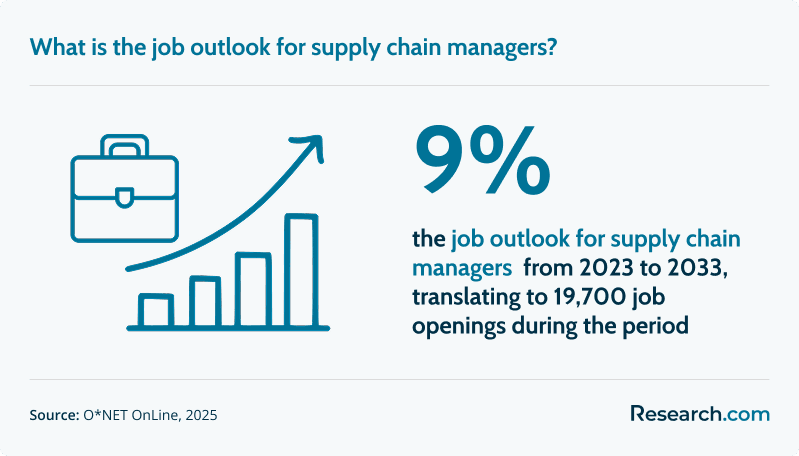
Supply chain leadership has become a higher-stakes career path because companies now need professionals who can do more than move products efficiently. They need leaders who can manage disruption, use analytics, control costs, coordinate suppliers, and build resilient global operations. The U.S. Bureau of Labor Statistics projects about 19,700 openings for supply chain managers from 2023 through 2033, which shows why experienced operations, logistics, procurement, analytics, and business professionals are considering graduate training in this field.
An accelerated online master’s degree in supply chain management is designed for people who want to move faster into advanced roles without stepping away from work for two years. It can help a mid-career manager break through a promotion ceiling, help an analyst move into operations strategy, or help a business professional specialize in procurement, logistics, demand planning, or supply chain analytics.
This guide explains what accelerated online supply chain management programs involve, how long they take, what they cost, how they compare with campus programs, which schools offer strong options, and how to evaluate whether the degree fits your career goals. It also covers admissions, curriculum, specializations, career paths, job outlook, accreditation, financial aid, and mistakes to avoid before enrolling.
Quick Answer: Is an Accelerated Online Master’s in Supply Chain Management Worth It?
An accelerated online master’s in supply chain management can be worth it for working professionals who already have business, logistics, operations, engineering, analytics, procurement, or management experience and want to qualify for more strategic roles. The degree is especially useful when it is accredited, aligned with your target career path, affordable relative to your expected salary growth, and flexible enough to complete while you continue working.
What are the benefits of getting an accelerated online master's degree in supply chain management?
- It can prepare you for leadership roles such as Global Sourcing Manager, Demand Planning Director, Supply Chain Analytics Manager, Director of Logistics, or Vice President of Supply Chain.
- It helps you move from tactical execution into strategic decision-making, including supplier risk, demand forecasting, sustainability, digital operations, and global logistics planning.
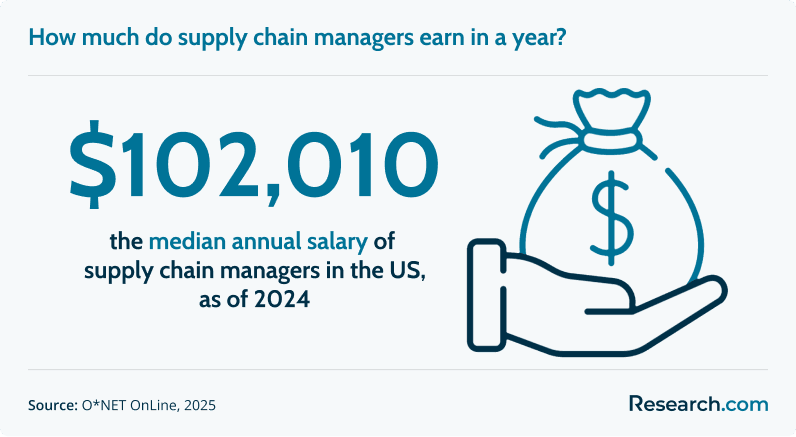
- The median annual wage for supply chain managers is around $102,010, which gives prospective students a useful benchmark when comparing tuition, debt, and long-term return on investment.
- The online format allows many students to keep their jobs, apply course concepts immediately, and avoid relocation or commuting costs.
- Accelerated pacing can shorten the time between enrollment and career impact, but it also requires strong time management and a realistic weekly study schedule.
What can I expect from an accelerated online master's degree in supply chain management?
An accelerated online master’s in supply chain management compresses graduate-level business and operations training into a shorter schedule than a traditional two-year program. Most programs focus on practical, decision-oriented skills: forecasting demand, managing suppliers, optimizing transportation, evaluating risk, using data models, and improving end-to-end supply chain performance.
You should expect a demanding pace. Accelerated does not mean easier; it usually means fewer breaks, shorter terms, heavier weekly workloads, and faster movement through quantitative and strategic material. Students often complete case studies, simulations, group projects, analytics assignments, and applied capstone work tied to real supply chain problems.
The strongest programs teach you to see the supply chain as an integrated business system rather than a set of isolated functions. Instead of focusing only on warehousing, shipping, or purchasing, you learn how sourcing decisions affect inventory, how demand forecasts affect production, how logistics affects customer experience, and how disruption in one region can affect the entire organization.
What you will typically gain
| Area of Growth | What It Means in Practice | Why It Matters for Career Advancement |
| Strategic perspective | You learn to evaluate supply chain decisions in terms of cost, speed, risk, customer service, sustainability, and business continuity. | Senior roles require trade-off analysis, not just functional expertise. |
| Analytics capability | You use data to forecast demand, measure performance, evaluate suppliers, and support operational decisions. | Employers increasingly expect supply chain leaders to work confidently with data. |
| Risk and resilience planning | You study how to identify vulnerabilities and design backup sourcing, inventory, logistics, and production strategies. | Supply chain disruptions have made resilience a board-level concern. |
| Leadership readiness | You practice communicating recommendations, leading cross-functional projects, and making decisions under uncertainty. | Promotion into director-level and executive roles often depends on influence across departments. |
Where can I work with an accelerated online master's degree in supply chain management?
Supply chain expertise is useful in any organization that sources materials, produces goods, manages inventory, coordinates vendors, distributes products, or relies on complex service operations. Graduates may work in manufacturing, retail, e-commerce, healthcare, technology, food and beverage, energy, transportation, aerospace, government, defense, consulting, and nonprofit logistics.
The degree is not limited to warehouse or transportation roles. Many graduates move into corporate strategy, procurement leadership, analytics, supplier management, digital transformation, operations consulting, or global trade roles. The right path depends on your prior experience and the specialization you choose.
| Work Setting | Common Supply Chain Needs | Good Fit For |
| Manufacturing | Production planning, supplier coordination, quality control, inventory optimization, and cost reduction. | Professionals interested in operations, lean systems, procurement, or plant-to-customer coordination. |
| Retail and e-commerce | Demand forecasting, fulfillment, returns management, last-mile delivery, and inventory visibility. | Students who want fast-moving, customer-facing supply chain roles. |
| Healthcare and life sciences | Regulated sourcing, cold chain logistics, medical inventory, resilience, and compliance. | Professionals who want mission-driven operations work with high reliability requirements. |
| Technology companies | Hardware sourcing, vendor management, platform implementation, supply chain software, and analytics. | Students with data, systems, engineering, or digital transformation interests. |
| Consulting and advisory firms | Operational redesign, network optimization, cost analysis, and risk assessment for clients. | Experienced professionals who enjoy solving varied business problems across industries. |
How much can I make with an accelerated online master's degree in supply chain management?
The U.S. Bureau of Labor Statistics reports that the median annual wage for supply chain managers is around $102,010. This figure is a helpful reference point, but it is not a guarantee. Your actual compensation will depend on your experience, industry, employer size, geographic market, technical skills, leadership scope, and whether you move into a management, director, or executive position.
Professionals who use the degree to qualify for roles such as Director of Global Logistics, Director of Procurement, Supply Chain Analytics Manager, or Vice President of Supply Chain may pursue higher compensation packages than entry-level or mid-level operations professionals. However, salary growth usually depends on combining the graduate credential with measurable business results, such as cost savings, improved service levels, better forecast accuracy, supplier risk reduction, or successful technology implementation.
- List of 10 Accelerated Online Master's Degrees in Supply Management for 2027
- How long does it take to complete an accelerated online master's degree in supply chain management program?
- How does an accelerated online master's degree in supply chain management compare to an on-campus program?
- What is the average cost of a DEGREE program?
- What are the financial aid options for students enrolling in an accelerated online master's degree in supply chain management program?
- What are the prerequisites for enrolling in an accelerated online master's degree in supply chain management program?
- What courses are typically in an accelerated online master's degree in supply chain management program?
- What types of specializations are available in accelerated online master's degree in supply chain management programs?
- How to choose the best accelerated online master's degree in supply chain management program?
- What career paths are available for graduates of accelerated online master's degree in supply chain management programs?
- What is the job market for graduates with an accelerated online master's degree in supply chain management?
- How do accelerated online programs facilitate professional networking and mentorship opportunities?
- How Does Accreditation Influence the Value of an Accelerated Online Master's Degree in Supply Chain Management?
- Do Accelerated Online Master's Programs Provide Robust Career Development Support?
List of 10 Accelerated Online Master's Degrees in Supply Management for 2027
The programs below are designed for students who want graduate-level supply chain training in a shortened or flexible online format. When reviewing them, compare more than tuition and completion time. Look at accreditation, delivery format, STEM designation when relevant, curriculum focus, faculty expertise, employer connections, career services, and whether the degree is an MS, MBA, or specialized business program.
How do we rank schools?
Research.com evaluates accelerated online master’s programs in supply chain management using a research-driven process that considers program availability, institutional information, affordability indicators, and outcome-related data where available. Readers can review our full ranking methodology for additional detail about how Research.com approaches school and program evaluation.
Our analysis uses several established data sources. The IPEDS database provides institution-level college and university information. Peterson’s database, including its Distance Learning Licensed Data Set, helps identify online program offerings. The College Scorecard database contributes information related to affordability and outcomes. Institutional information from the National Center for Education Statistics also supports program review and data verification.
1. Adelphi University - Master of Science in Supply Chain Management
Adelphi University offers a Master of Science in Supply Chain Management that students may complete online or on campus. The program is built for professionals who want to understand modern supply chain systems at an advanced level and finish quickly through one year of full-time study. Its STEM-designated curriculum emphasizes analytics, modeling, simulation software, and practical problem-solving for logistics and operations challenges.
- Program Length: 1 year (full-time); part-time option available
- Required Credits to Graduate: 30
- Cost per Credit: $1,495
- Accreditation: The Association to Advance Collegiate Schools of Business (AACSB) International
2. Marquette University - Master of Science in Supply Chain Management
Marquette University offers a Master of Science in Supply Chain Management in 100% online and blended formats. The curriculum is suited to professionals interested in the transition from physical supply chains to digital networks. Students study Industry 4.0, blockchain, digital network design, and technology-enabled supply chain decision-making.
- Program Length: As little as 1 year
- Required Credits to Graduate: 30
- Cost per Credit: $1,325
- Accreditation: The Association to Advance Collegiate Schools of Business (AACSB) International
3. Texas A&M International University - MBA in International Trade and Logistics
Texas A&M International University provides a fully online Master of Business Administration with a specialization in International Trade and Logistics. This option is especially relevant for students who want a broad MBA foundation combined with global commerce, import/export operations, customs regulations, and international logistics strategy.
- Program Length: As few as 12 months
- Required Credits to Graduate: 30
- Total Tuition (In-State): $11,010
- Total Tuition (Out-of-State): $30,900
- Accreditation: The Association to Advance Collegiate Schools of Business (AACSB) International
4. University of West Florida - MBA with emphasis in Supply Chain Logistics Management
The University of West Florida offers an online MBA with an emphasis in Supply Chain Logistics Management. The program is designed for professionals who want to strengthen analytical, managerial, and global logistics skills while building broader business knowledge. Coursework covers business process integration, quantitative analysis, and logistics strategy for complex supply chains.
- Program Length: As few as 16 months
- Required Credits to Graduate: 36
- Cost per Credit: $456.50
- Accreditation: The Association to Advance Collegiate Schools of Business (AACSB) International
5. Boston University - Master of Science in Supply Chain Management
Boston University offers an online Master of Science in Supply Chain Management with a strong quantitative and analytical orientation. The program prepares students to design, manage, and improve global supply chains through coursework in optimization, data analytics, simulation, demand forecasting, risk mitigation, and logistics.
- Program Length: 8–16 months
- Concentrations: Analytics; Logistics Management; and Risk Management
- Required Credits to Graduate: 32
- Estimated Tuition & Fees: $28,956-$30,708
- Accreditation: The Association to Advance Collegiate Schools of Business (AACSB) International
6. Portland State University - Master of Science in Global Supply Chain Management
Portland State University offers a Master of Science in Global Supply Chain Management in an online format for working professionals. The program emphasizes systems thinking, global commercial networks, analytics, sustainability, and the integration of supply chain functions from end to end.
- Program Length: 18 months
- Required Quarter Credits to Graduate: 45
- Cost per Credit (Resident): $701
- Cost per Credit (Non-Resident): $861
- Accreditation: The Association to Advance Collegiate Schools of Business (AACSB) International
7. Governors State University - MBA in Supply Chain Management
Governors State University offers a 100% online MBA in Supply Chain Management. The program is intended for professionals who want executive-oriented business training with specialized study in production, manufacturing, delivery systems, operations, and organizational strategy.
- Program Length: As little as 18 months
- Required Credits to Graduate: 36
- Cost per Credit: $557 (Online)
- Accreditation: The Association to Advance Collegiate Schools of Business (AACSB) International
8. University of Texas at Dallas - Master of Science in Supply Chain Management
The University of Texas at Dallas offers a Master of Science in Supply Chain Management that may be completed online, on campus, or in a hybrid format. This STEM-designated program focuses on supply chain strategy, current industry practices, data-informed operations, and emerging technologies such as AI.
- Program Length: 1 to 2 years
- Required Credits to Graduate: 36
- Cost per Credit (Resident): $1,631 (approx.)
- Cost per Credit (Non-Resident): $2,684 (approx.)
- Accreditation: The Association to Advance Collegiate Schools of Business (AACSB) International
9. Kettering University - Master of Science in Supply Chain Management
Kettering University offers an online Master of Science in Supply Chain Management with customizable certificate options. Its “Learn Today-Use Tomorrow” approach is designed for professionals who want to apply graduate concepts quickly in areas such as strategic procurement, logistics, operations, leadership, and customer relationship management.
- Program Length: As few as 18 months
- Graduate Certificate Options: Global Leadership; Operations Management; Lean Principles for Healthcare; Management & Leadership; and Foundations of Data Science
- Required Credits to Graduate: 40
- Cost per Credit: $949
- Accreditation: The Higher Learning Commission (HLC)
10. Nova Southeastern University - MBA in Supply Chain Management and Operational Systems
Nova Southeastern University offers a STEM-designated MBA in Supply Chain Management and Operational Systems. The program combines the business core of an MBA with specialized coursework in sourcing, logistics, information systems, operations, and the efficient movement and storage of goods across domestic and international networks.
- Program Length: 12-21 months
- Required Credits to Graduate: 37-46
- Cost per Credit: $1,045
- Accreditation: The Association to Advance Collegiate Schools of Business (AACSB) International
How long does it take to complete an accelerated online master's degree in supply chain management program?
Most accelerated online master’s programs in supply chain management can be completed in about 10 to 24 months. The programs listed here generally require 30 to 36 credit hours, though some use quarter credits or require additional credits depending on the degree structure, concentration, or MBA core.
The timeline depends on several factors: full-time versus part-time enrollment, course length, transfer credit policies, start dates, prerequisite requirements, and whether the program uses asynchronous or live online classes. Some students can finish quickly because they take back-to-back terms, while others slow down to balance work travel, family responsibilities, or demanding job cycles.
For mid-career professionals, time-to-impact matters. Similar to professionals evaluating whether an MBA makes sense after 30, supply chain students should ask whether a shorter program will accelerate promotion opportunities enough to justify the workload.
| Program Pace | Typical Fit | Trade-Off |
| Accelerated full-time | Students who can commit significant weekly study time and want the fastest completion route. | Fast progress, but less room for work emergencies or personal obligations. |
| Accelerated part-time | Working professionals who want speed but cannot carry a full graduate load. | More manageable schedule, but a longer completion timeline. |
| Traditional pace | Students who prefer deeper pacing, more breaks, or lighter course loads. | Lower weekly intensity, but career benefits may take longer to materialize. |
The chart below illustrates the projected growth of the supply chain management market and helps explain why many professionals want to earn advanced credentials sooner rather than later.
How does an accelerated online master's degree in supply chain management compare to an on-campus program?
The best format depends on your schedule, learning style, networking preferences, and career goals. Accredited online programs can offer the same academic credibility as campus programs, especially when they use the same faculty, curriculum, learning outcomes, and degree title. The question is not whether online is automatically better or worse; it is whether the structure supports how you learn and work.
Students comparing formats should review the flexibility of fast-track online programs carefully, because the same advantages that help working adults study remotely can also create challenges for students who need frequent in-person structure.
| Factor | Accelerated Online Program | On-Campus Program |
| Schedule | Often better for full-time employees, especially when coursework is asynchronous or offered during evenings. | May require commuting, relocation, daytime attendance, or a more fixed weekly schedule. |
| Networking | Can include virtual cohorts, group projects, online events, alumni panels, and faculty interaction. | Provides easier access to in-person relationships, campus events, and informal peer interaction. |
| Cost considerations | May reduce commuting, housing, relocation, and time-away-from-work expenses. | May offer campus resources, assistantships, or local employer connections that offset costs for some students. |
| Learning experience | Works well for disciplined students who can manage deadlines independently. | Works well for students who prefer face-to-face discussion and structured classroom routines. |
| Employer perception | Strong when the institution is accredited, reputable, and transparent about program quality. | Strong when the program has industry recognition, faculty strength, and employer relationships. |
For many working professionals, the online format is the more practical route because it allows them to stay employed while earning the degree. However, students who value in-person discussion, campus recruiting, and local networking may still prefer a campus-based option.
What is the average cost of an accelerated online master's degree in supply chain management program?
The total cost of an accelerated online master’s in supply chain management typically ranges from $20,000 to over $60,000. Public universities may offer lower tuition than private institutions, but total cost depends on far more than the advertised per-credit price.
As with the fastest online MBA in healthcare administration programs, many supply chain graduate programs charge tuition by the credit. Since many programs require 30 to 36 credits, a simple tuition estimate can be calculated by multiplying cost per credit by required credits. Still, students should also review fees, books, technology charges, residency requirements, travel costs for any in-person components, and interest if using loans.
How to estimate your true cost
| Cost Item | Why It Matters | Question to Ask |
| Tuition | This is the largest expense and may vary by residency status, program type, or university. | Is tuition charged per credit, per term, or as a flat program rate? |
| Fees | Online programs may include technology, graduation, student service, or course-specific fees. | Are all mandatory fees included in the published cost estimate? |
| Books and software | Analytics and simulation courses may require platforms, textbooks, or digital tools. | What should I budget beyond tuition? |
| Employer support | Tuition reimbursement can significantly lower out-of-pocket costs. | Does my employer cover graduate study in supply chain management? |
| Opportunity cost | Accelerated coursework may affect overtime, consulting work, travel availability, or personal obligations. | Will the program’s pace interfere with my income or work performance? |
Calculating Your Return on Investment (ROI)
ROI should be estimated by comparing total program cost with realistic career outcomes. The median annual wage of around $102,010 for supply chain managers provides one benchmark, but your ROI depends on whether the degree helps you access higher-responsibility roles, secure promotions, change industries, or negotiate stronger compensation.
Students comparing options may also look at adjacent business programs, such as an affordable online MBA in project management, to decide whether a specialized supply chain degree or broader management degree offers the better return for their goals.
What are the financial aid options for students enrolling in an accelerated online master's degree in supply chain management program?
Financial planning should begin before you apply. Accelerated programs can move quickly, so students should understand funding deadlines, employer reimbursement rules, billing schedules, loan options, and scholarship requirements early in the process.
Many funding routes available to business graduate students, including those in a fast-track online entrepreneurship master's degree, may also apply to supply chain management students.
- Free Application for Federal Student Aid (FAFSA): Graduate students commonly submit the FAFSA to determine eligibility for federal loan programs such as Direct Unsubsidized Loans and Grad PLUS Loans.
- Employer tuition assistance: Many companies support education that improves employee performance in relevant business areas. Ask human resources about annual caps, grade requirements, repayment clauses, and eligible institutions.
- Institutional scholarships and grants: Some universities offer merit-based, need-based, program-specific, or graduate business scholarships. These awards may require separate applications or early admission deadlines.
- Professional association scholarships: Supply chain, logistics, procurement, and operations organizations may provide awards for students pursuing related education.
- Military and veteran education benefits: Eligible service members, veterans, and dependents may be able to use benefits such as the Post-9/11 GI Bill® or Tuition Assistance.
Questions to ask before borrowing
- What is the total program cost after scholarships, employer reimbursement, and fees?
- How much debt would I need to take on, and what would the monthly repayment look like?
- Does the program publish career outcomes, employer partnerships, or alumni examples relevant to my goals?
- Will I be able to continue working full-time while enrolled?
- Is a less expensive program likely to deliver similar career value?
What are the prerequisites for enrolling in an accelerated online master's degree in supply chain management program?
Admissions requirements vary, but most accelerated online master’s programs in supply chain management look for evidence that applicants can handle graduate-level business, quantitative, and analytical work. Programs may be especially interested in candidates with professional experience because accelerated formats often assume students can connect coursework to workplace problems.
Common Admission Requirements
- Bachelor's Degree: Applicants usually need a bachelor’s degree from an accredited institution. Students who completed one of the shortest online bachelor’s programs in supply chain management may already have relevant preparation in logistics, procurement, and operations.
- Minimum GPA: Many programs prefer an undergraduate GPA of 3.0 or higher, though professional experience, strong recommendations, or quantitative coursework may strengthen an application.
- GMAT or GRE: Some programs require test scores, while others offer waivers based on work experience, prior academic performance, or advanced degrees.
- Professional Experience: Accelerated programs often target working professionals and may prefer or require at least two to five years of relevant experience.
- Resume: A current resume should show progression, leadership, analytical responsibilities, process improvement, operations exposure, or supply chain-related work.
- Recommendations: Letters from supervisors, faculty, or professional mentors can help demonstrate readiness for graduate study and leadership potential.
- Statement of Purpose: This essay should explain why supply chain management fits your career plan and why the specific program is a good match.
Do you have the right background? Common Paths to Admission
Students often enter these programs from business, engineering, economics, operations, logistics, procurement, information systems, data analytics, finance, or military logistics backgrounds. Applicants who completed one of the fastest online economics degree programs may have useful preparation in modeling, quantitative reasoning, and market analysis.
You do not necessarily need an undergraduate degree in supply chain management. What matters is whether you can show analytical ability, professional maturity, and a clear reason for pursuing the degree. The decision is similar to comparing a master’s in accounting vs. an MBA: the best option depends on the role you want, the skills you already have, and the credentials employers expect in your target field.
How to strengthen your application
- Highlight measurable work achievements, such as cost savings, process improvements, vendor performance gains, inventory reductions, or analytics projects.
- Explain any quantitative preparation, including statistics, economics, accounting, analytics, operations research, or professional software experience.
- Use your statement of purpose to connect past experience with specific program features, not generic interest in business.
- If your GPA is below the preferred level, address readiness through work results, certifications, recent coursework, or strong recommendations.
What courses are typically in an accelerated online master's degree in supply chain management program?
Accelerated online supply chain management programs usually cover the full supply chain, from supplier selection and production planning to transportation, inventory, analytics, and risk management. The strongest curricula combine technical analysis with leadership, communication, and cross-functional decision-making.
Students should review course descriptions carefully. Two programs may use similar titles but differ in depth, software tools, quantitative rigor, and business application.
| Course Area | What You Study | Career Relevance |
| Global Logistics Management | Transportation modes, distribution networks, customs, trade compliance, and cross-border movement of goods. | Useful for logistics, transportation, import/export, and global operations roles. |
| Strategic Procurement and Sourcing | Supplier selection, contract strategy, negotiation, vendor risk, sourcing markets, and supplier relationship management. | Relevant for procurement manager, sourcing director, and supplier management roles. |
| Operations and Production Management | Process improvement, capacity planning, quality, lean systems, production scheduling, and operational efficiency. | Prepares students for plant, operations, manufacturing, and process leadership positions. |
| Supply Chain Analytics | Forecasting, performance metrics, statistical tools, data visualization, optimization, and decision modeling. | Important for analytics, demand planning, inventory optimization, and digital supply chain roles. |
| Risk Management and Mitigation | Disruption planning, supplier risk, geopolitical uncertainty, resilience strategies, and continuity planning. | Supports leadership roles that require preparation for volatility and business interruption. |
| Sustainable Supply Chains | Environmental and social responsibility, ethical sourcing, ESG goals, circular economy concepts, and sustainable operations. | Useful for companies that must balance efficiency, compliance, stakeholder expectations, and responsible sourcing. |
Students who have completed a fast-track master's in data analytics online program may be especially prepared for analytics-heavy supply chain coursework. Likewise, programs such as an accelerated online master’s in sports analytics show how applied analytics can be adapted across industries, including logistics, operations, and business performance measurement.
The chart below highlights important skills for supply chain managers identified by O*NET, many of which are developed through the core curriculum outlined above.
What types of specializations are available in an accelerated online master's degree in supply chain management?
Specializations help students turn a broad supply chain degree into a more targeted career asset. The right concentration depends on the roles you want after graduation, the industry you want to enter, and the technical depth you need.
| Specialization | Best For | Possible Roles |
| Sustainable Supply Chains | Students interested in ESG goals, responsible sourcing, circular economy models, and environmentally aware operations. Students can also explore the most affordable online bachelor’s degree options in sustainability for related background study. | Sustainability Supply Chain Manager, Responsible Sourcing Lead, ESG Operations Manager. |
| Digital Supply Chain Management | Professionals who want to work with AI, blockchain, digital twins, automation, visibility platforms, and connected supply networks. | Supply Chain Technology Manager, Digital Transformation Lead, Supply Chain Systems Manager. |
| Global Procurement | Students focused on international sourcing, supplier negotiations, contract strategy, and vendor risk management. | Global Sourcing Director, Procurement Manager, Supplier Relationship Manager. |
| Supply Chain Analytics | Students with strong quantitative interests who want to use data to improve forecasting, inventory, service levels, and planning. Graduates of an accelerated online bachelor’s in analytics may have useful preparation for this track. | Demand Planning Manager, Supply Chain Analytics Manager, Inventory Optimization Lead. |
| Risk and Resilience | Professionals who want to design supply chains that can withstand disruptions, shortages, transportation breakdowns, and supplier failures. | Supply Chain Risk Manager, Resilience Strategy Lead, Business Continuity Manager. |
| Logistics and Transportation Management | Students interested in freight, distribution networks, warehousing, carrier strategy, and last-mile delivery. This path differs from broader finance-oriented business study; understanding what an MBA in finance does can help clarify the distinction. | Logistics Director, Transportation Manager, Distribution Network Manager. |
Specialization is valuable, but it should not replace core competency. Government data shows that foundational transportation knowledge has an importance score of 75 out of 100 for supply chain managers. That means employers still value leaders who understand practical operations, even when they also need analytics, sustainability, or technology skills.
How to choose the best accelerated online master's degree in supply chain management program?
The best program is the one that fits your professional target, budget, academic background, and learning needs. A high ranking can help you build a shortlist, but it should not be the only factor. Use the questions below to compare programs more carefully.
MS in Supply Chain Management vs. MBA with Supply Chain Concentration
| Degree Type | Choose This If | Be Careful If |
| Master of Science in Supply Chain Management | You want deep specialization in logistics, procurement, operations, analytics, global supply chains, or supply chain technology. | You want a broader general management credential that covers many business functions equally. |
| MBA with Supply Chain Concentration | You want leadership training across finance, marketing, strategy, accounting, and management, with supply chain as a focus area. | You need highly technical supply chain analytics, advanced logistics modeling, or specialized procurement depth. |
Program selection checklist
- Accreditation: Confirm institutional accreditation and, when relevant, business school accreditation such as AACSB.
- Curriculum fit: Match required courses and electives to your target role, not just to general interest.
- Delivery format: Decide whether you need asynchronous flexibility or live online structure.
- Completion pace: Make sure the accelerated schedule is realistic with your job, travel, and family responsibilities.
- Faculty and industry connections: Look for instructors, advisors, alumni, and employer relationships tied to your desired sector.
- Total cost: Compare tuition, fees, software, books, travel, and expected debt.
- Career support: Review coaching, employer events, alumni access, resume help, and internship or project opportunities.
- Long-term goals: If you eventually want executive consulting, teaching, or doctoral study, understanding the difference between DBA and EDD degrees may help with future planning.
Common mistakes to avoid
- Choosing the fastest program without checking whether the workload is manageable.
- Comparing tuition only by credit price and ignoring fees or total required credits.
- Assuming every online program offers strong networking or career services.
- Choosing an MBA when you need specialized supply chain depth, or choosing an MS when you need broader executive training.
- Ignoring accreditation, employer recognition, and faculty qualifications.
- Assuming salary outcomes are guaranteed just because the field has strong demand.
- Failing to ask whether analytics courses use current tools and real business cases.
What career paths are available for graduates of accelerated online master's degree in supply chain management programs?
A graduate supply chain degree can support advancement into strategic, analytical, operational, and executive-facing roles. The strongest career outcomes usually come when students combine the degree with prior work experience, technical capability, and measurable achievements.
Strategic Operations Leadership
This path focuses on improving how an organization produces, stores, moves, and delivers goods or services. Graduates may pursue roles such as Director of Operations, Vice President of Supply Chain, or Chief Operating Officer. These roles require cross-functional leadership, financial awareness, process improvement skills, and the ability to balance efficiency with resilience.
Global Procurement and Sourcing
Procurement leaders manage supplier strategy, negotiate contracts, evaluate vendor risk, and protect continuity of supply. This pathway can lead to positions such as Director of Global Sourcing, Procurement Manager, Supplier Relationship Manager, or Chief Procurement Officer.
Supply Chain Analytics and Digitalization
Analytics-focused professionals use data, forecasting, optimization models, and platforms to improve planning and performance. Many organizations are also exploring AI and machine learning in demand forecasting, which makes data literacy increasingly important for supply chain leaders.
Consulting and Advisory Roles
Consultants help companies redesign networks, reduce costs, assess suppliers, implement technology, improve service levels, or prepare for disruption. This path suits professionals who enjoy varied projects, client communication, data analysis, and high-pressure problem-solving.
Technology, Software, and Systems Roles
Supply chain software vendors and technology companies need professionals who understand both operational realities and digital tools. Graduates may work on implementation, product strategy, customer solutions, systems integration, or business process redesign.
Industry Leadership and Professional Influence
Experienced graduates may build credibility through professional associations, conference presentations, publishing, training, or advisory work. This route can strengthen a long-term professional brand and support advancement into executive or consulting opportunities.
What is the job market for graduates with an accelerated online master's degree in supply chain management?
The job market for supply chain professionals is strong because supply chains have become central to profitability, customer satisfaction, risk management, and corporate strategy. Companies need leaders who can respond to supplier disruption, transportation delays, demand volatility, cost pressure, technology adoption, and sustainability expectations.
The U.S. Bureau of Labor Statistics projects that employment for supply chain managers will grow by 9% over the next decade, with about 19,700 openings projected each year. This demand can benefit experienced professionals who want to move into senior leadership as well as career changers who bring relevant analytical, operational, engineering, military, or business backgrounds.
Current trends shaping supply chain careers
- Resilience over pure efficiency: Organizations are paying more attention to redundancy, supplier diversification, risk visibility, and continuity planning.
- AI and analytics adoption: Forecasting, inventory optimization, route planning, and supplier monitoring increasingly rely on data-driven tools.
- Digital supply chain visibility: Employers value professionals who can connect systems, interpret dashboards, and improve transparency across suppliers and logistics partners.
- Sustainability and responsible sourcing: Many companies must evaluate environmental impact, labor practices, supplier ethics, and regulatory expectations.
- Global complexity: Trade rules, geopolitical uncertainty, tariffs, customs requirements, and regional disruptions make international supply chain knowledge more valuable.
Graduates who stay competitive usually continue learning after the degree through certifications, software skills, industry events, analytics training, and experience leading measurable supply chain improvements.
How do accelerated online programs facilitate professional networking and mentorship opportunities?
Online programs can create strong networks when they are intentionally designed around interaction. Look for cohort models, live discussions, team consulting projects, faculty office hours, alumni panels, virtual industry events, employer webinars, and mentorship programs that connect students with experienced supply chain professionals.
Networking quality varies widely, so students should ask direct questions before enrolling. Who will be in the cohort? How much group work is required? Are alumni active? Are there industry speakers? Does the program help online students meet employers? Are mentorship opportunities structured or informal? Related graduate business programs, including the best affordable online MBA options, can also provide useful comparisons for online networking design.
How Does Accreditation Influence the Value of an Accelerated Online Master's Degree in Supply Chain Management?
Accreditation is one of the first quality checks students should complete. Institutional accreditation helps confirm that a college or university meets recognized academic standards. Business school accreditation, such as AACSB when applicable, can add another layer of credibility for graduate business programs.
Accreditation matters because it may affect credit transfer, employer recognition, federal financial aid eligibility, and confidence in program quality. Students should verify accreditation directly through the institution and recognized accrediting bodies rather than relying only on marketing pages. This same caution applies across fields, including accelerated online bachelor’s programs in sports management and other online degree options.
Accreditation questions to ask
- Is the university institutionally accredited?
- Does the business school or program hold specialized accreditation?
- Is the online program covered under the same accreditation as the campus program?
- Will the degree title or transcript differ for online students?
- Does the program disclose outcomes, faculty credentials, and curriculum requirements clearly?
Do Accelerated Online Master's Programs Provide Robust Career Development Support?
Many accelerated online master’s programs offer career services, but the depth of support can vary. Strong programs may provide career coaching, resume reviews, LinkedIn profile feedback, interview preparation, employer webinars, alumni introductions, job boards, virtual recruiting events, and project opportunities tied to real supply chain problems.
Students should not assume that online career support is equal across schools. Ask whether services are available to online students in all time zones, whether career coaches understand supply chain roles, and whether employer relationships include companies in your target industry. Comparing support with broader business programs, such as the top online MBA programs, can help you identify what a strong career services model looks like.
Questions to Ask Before You Enroll
- Is this degree an MS, MBA, or another graduate business credential, and which one is better for my target role?
- Can I realistically handle the accelerated workload while working?
- Does the curriculum include analytics, procurement, logistics, risk, and technology content relevant to current employer needs?
- Is the program accredited, and does it have respected business school accreditation where applicable?
- What is the total cost after tuition, fees, books, software, and financing?
- Will my employer provide tuition assistance or reimbursement?
- What career services are available specifically to online students?
- Do faculty and alumni have experience in the industries where I want to work?
- Does the program provide live interaction, cohort support, mentorship, or industry networking?
- How will I measure whether the degree has paid off after graduation?
Key Insights
- An accelerated online master’s in supply chain management is best suited for professionals who want faster movement into strategic operations, logistics, procurement, analytics, or supply chain leadership roles.
- The U.S. Bureau of Labor Statistics projects 9% employment growth for supply chain managers over the next decade and about 19,700 openings each year, making advanced supply chain skills relevant in a strong labor market.
- The median annual wage for supply chain managers is around $102,010, but individual outcomes depend on experience, industry, location, leadership scope, and measurable business impact.
- Most accelerated online programs take about 10 to 24 months and often require 30 to 36 credits, but the shorter timeline comes with a heavier weekly workload.
- Online programs can be academically credible when they are accredited, use rigorous curricula, provide qualified faculty, and offer meaningful student support.
- Choosing between an MS and an MBA matters: an MS is usually better for deep supply chain specialization, while an MBA may fit students seeking broader executive management training.
- Students should evaluate total cost, accreditation, curriculum fit, networking, career services, and employer support before enrolling rather than relying only on rankings or speed.
- The strongest career value comes from combining the degree with applied experience, analytics skills, leadership ability, and a clear plan for advancement.
References:
- Adelphi University. (n.d.). Master's Degree in Supply Chain Management Online & On Campus. adelphi.edu
- Michigan State University. (n.d.). Master of Science in Supply Chain Management. broad.msu.edu
- O*NET OnLine. (n.d.). 11-3071.04 – Supply chain managers. onetonline.org
- Precedence Research. (n.d.). Supply chain management market size, share, trends 2024 to 2033. precedenceresearch.com
- Supply Chain Management Review. (2025). May-June 2025. scmr.com
Other Things You Should Know About Accelerated Online Master's Degree in Supply Chain Management Programs
To enroll in an accelerated online master's degree in supply chain management in 2027, you'll typically need a bachelor's degree, a minimum GPA, and GRE/GMAT scores (though some programs waive this). Relevant work experience can bolster an application, and a personal statement or recommendation letters may also be required.
Yes, many programs accept up to 6–12 transfer credits, but only from regionally accredited graduate coursework with grades of B or better. Schools also set limits on how old the credits can be, and some require approval before enrollment begins.


