2027 Best Online Logistics Degree Programs

Co-Founder and Chief Data Scientist
Choosing an online logistics degree is not just a question of convenience. It is a decision about how you want to enter a field that keeps businesses, government agencies, manufacturers, retailers, and global supply chains moving. The right program should teach you how goods are sourced, transported, stored, tracked, delivered, and improved through data, technology, and management strategy.
This guide is designed for prospective students comparing online logistics, supply chain management, and operations-focused bachelor’s programs. It explains what you can expect from an online logistics degree, how much it may cost, what jobs it can lead to, how to compare programs, and which mistakes to avoid before enrolling.
Quick answer: Is an online logistics degree worth considering?
An online logistics degree can be a practical option if you want a flexible bachelor’s program that prepares you for roles in logistics, supply chain management, procurement, operations, transportation, inventory control, and business analysis. Graduates may qualify for positions such as logistician, management analyst, business operations specialist, buyer, purchasing agent, or supply chain coordinator.
- An online logistics degree can support career paths in logistics operations, supply chain management, procurement, and management analysis.
- Logisticians had a median annual wage of $77,520 as of May 2022.
- Online study can make a bachelor’s degree more accessible for students balancing work, family, military service, or location constraints.
What can I expect from an online logistics degree?
An online logistics degree teaches students how organizations move products, materials, information, and resources from suppliers to customers. Most programs combine business fundamentals with courses in transportation, warehousing, purchasing, inventory management, analytics, operations, and supply chain strategy.
Students typically learn how to evaluate suppliers, forecast demand, manage inventory levels, improve distribution systems, reduce delays, use logistics software, and make data-informed operational decisions. Because logistics affects cost, customer satisfaction, and business continuity, many programs also include management, finance, information systems, and quality assurance coursework.
After graduation, students may pursue entry-level roles such as logistician, business operations specialist, cost estimator, buyer, purchasing agent, inventory analyst, supply chain associate, or transportation coordinator. With experience, the degree can also support movement into leadership positions such as purchasing manager, operations manager, quality assurance manager, chief logistics officer, or chief operations officer.
| What you study | Why it matters in logistics | Common career use |
| Transportation and distribution | Helps students understand how products move through domestic and global networks. | Routing, carrier management, delivery planning, and freight coordination. |
| Inventory and warehouse management | Builds skills in stock control, storage systems, fulfillment, and warehouse efficiency. | Warehouse supervision, inventory analysis, and operations planning. |
| Procurement and sourcing | Explains how organizations select suppliers, negotiate purchases, and manage vendor relationships. | Buyer, purchasing agent, procurement analyst, or sourcing specialist roles. |
| Business analytics and information systems | Prepares students to use data, dashboards, and software to improve decisions. | Forecasting, process improvement, reporting, and supply chain analysis. |
| Operations and quality management | Connects logistics decisions to efficiency, compliance, customer expectations, and product quality. | Operations management, quality assurance, and process improvement roles. |
Where can I work with an online logistics degree?
Logistics graduates can work in many settings because nearly every organization depends on reliable movement of goods, equipment, supplies, or information. Opportunities exist in private companies, public agencies, manufacturers, wholesalers, retailers, transportation providers, consulting firms, defense contractors, and technical services organizations.
Manufacturing is the largest employer of logisticians, accounting for 24% of employment opportunities. Other major employment sectors include:
- Federal government: 17%
- Professional, scientific, and technical services: 16%
- Management of companies and enterprises: 10%
- Wholesale trade: 10%
The best sector for you depends on your interests. Manufacturing may suit students who like production systems and inventory control. Federal government roles may appeal to those interested in large-scale procurement, defense logistics, or public-sector operations. Professional and technical services can be a strong fit for students who want consulting, analytics, or process improvement work.
How much can I make with an online logistics degree?
Salary depends on role, industry, experience, location, employer size, and whether the position requires specialized technical knowledge. As of May 2022, logisticians had a median annual wage of $77,520. According to 2023 data from the US Bureau of Labor Statistics, pay varied by industry:
- Federal government logisticians earned a median annual wage of $91,330.
- Manufacturing logisticians earned $80,550 per year.
- Logisticians in management of companies and enterprises earned an average annual salary of $80,200.
- Logisticians in professional, scientific, and technical services earned $73,760 annually.
- Wholesale trade logisticians reported a median annual wage of $67,130.
A logistics degree can also lead to related business roles. Business operations specialists earned an average annual pay of $76,050. Purchasing managers had a median annual wage of $131,350, while management analysts earned an average of $95,290 annually, according to US BLS 2023 data.
These figures are helpful benchmarks, but they are not guarantees. Graduates who build internship experience, software skills, analytics ability, and industry contacts are usually better positioned than those who complete coursework without practical experience.
- Best online logistics degree programs for 2027
- Online logistics degree cost
- Financial aid options
- Admission requirements
- Career opportunities
- Program length
- Accreditation
- Job market outlook
- Core courses
- How to choose the right online logistics program
- Online vs. on-campus logistics degrees
- Student engagement in online logistics programs
- Sustainability in supply chain management
- Is an online logistics degree a sound financial investment?
- Technology trends shaping logistics
- Return on investment
- What makes an online logistics degree respected?
- Business management skills in logistics programs
- Career services and alumni networks
- Executive business pathways
- Advanced study options
- Industry partnerships
- Key insights
Best Online Logistics Degree Programs for 2027
How do we rank schools?
Research.com evaluates online degree options with the understanding that a bachelor’s program is a major financial and career decision. The goal is to give prospective students clear, comparable information rather than a generic school list.
To create this list of online logistics degree programs, Research.com used current data from IPEDS and Peterson’s database, including the Distance Learning Licensed Data Set. Additional information came from the College Scorecard database and the National Center for Education Statistics. For more detail on the ranking process, review Research.com’s methodology section.
1. Central Washington University
Central Washington University offers an online Bachelor of Applied Science in Supply Chain Management. The program requires 92 credits and can be completed in three years by full-time students. It is accredited by the Northwest Commission on Colleges and Universities (NWCCU). Coursework includes Contemporary Approaches to Personal and Professional Development, Introductory Financial Management, Organizational Management, Business Process Analysis and Systems, and Management Information Systems. The program is also noted for graduates who have gone on to employment with major companies such as Starbucks, Microsoft, and Boeing.
2. East Carolina University
East Carolina University provides an online Bachelor of Science degree in Industrial Distribution and Logistics. Students complete 120 credits, which typically takes four years. The ATMAE-accredited curriculum includes Intro to Logistics, Transport Logistics, Supply Chain, Warehousing, and ERP Systems. Students may also participate in PAID, an organization that connects learners with regional companies through visits and networking activities. Faculty members support internship and co-op opportunities for course credit while bringing practical industry perspective into the program.
3. McKendree University
McKendree University offers an online Bachelor of Business Administration with a concentration in Supply Chain Management and Logistics. Online BBA courses are delivered in eight-week sessions. Students complete 120 credit hours and study Supply Chain Management, Logistics, Operations Management, Project Management, and Management Information Systems. The program is accredited by the International Accreditation Council for Business Education (IACBE). McKendree emphasizes teaching, learning, and professional development through its “Make It McKendree” approach.
4. Baker College
Baker College offers an online BBA in Supply Chain Management that requires 120 credit hours. Full-time students in this IACBE-accredited program usually finish in four years. Courses include Warehousing and Inventory Management, Transportation and Logistics, Procurement and Sourcing, Global Supply Chain Management, and Supply Chain Analytics and Technology. The program also gives students access to internship and networking opportunities with logistics employers.
5. Park University
Park University offers an online BAS in Management/Logistics through the Robert W. Plaster School of Business. Accredited by the Higher Learning Commission, the program includes 63 credit hours and takes four years to complete. Courses include Transportation and Distribution Systems, Quality Control, Purchasing and Vendor Management, Logistics Management, and Production and Operations Management. The curriculum is designed to prepare students for professional certification through the American Production and Inventory Control Society and the National Association of Purchasing Management.
6. Brenau University
Brenau University offers a BBA in Logistics and Supply Chain Management. Students complete 120 credit hours over four years. Brenau is accredited by the Southern Association of Colleges and Schools Commission on Colleges (SACSCOC). Courses include Management Principles, Marketing Principles, Business Statistics, Managerial Finance, Business Ethics, and Value Chain Management. Smaller class sizes allow students to build relationships with faculty members, receive mentorship, and expand their professional networks.
7. Embry-Riddle Aeronautical University-Worldwide
Embry-Riddle Aeronautical University-Worldwide offers an online BAS in Logistics and Supply Chain Management. The 120-credit program typically takes four years. Students study Business Quantitative Methods, Introduction to Supply Chain Management and the Profession, Principles of Procurement Management, Transportation Principles, Business Process Integration, and Business Process Configuration. The university is accredited by SACSCOC, and its faculty bring professional experience across aviation, aerospace, and business fields.
8. Florida State College at Jacksonville
Florida State College at Jacksonville provides an online BAS in Logistics. The program requires 120 credits and usually takes four years. It is accredited by the Accreditation Council for Business Schools and Programs (ACBSP). Students complete courses such as Spreadsheet Concepts and Practices, Inventory Management, Transportation, Warehouse Management, and Purchasing. The school also maintains affiliations with professional groups such as APICS and the Council of Supply Chain Management Professionals.
9. Georgia Military College
Georgia Military College offers a BAS in Supply Chain Management and Logistics. Coursework includes Operations Management, Managerial Accounting, Purchasing and Global Sourcing, Management Information Systems, Financial Management, and Quality Management Systems. Georgia Military College is accredited by SACSCOC. Its military heritage contributes to a structured academic environment that may appeal to students who prefer discipline, organization, and clear expectations.
10. Athens State University
Athens State University offers an online BS in Logistics and Supply Chain Management. The program requires 124 credits and typically takes four years. Accredited by ACBSP, the curriculum includes Introduction to Logistics and Supply Chain Management, Logistics and Distribution, Enterprise Systems and Business Processes, Operations Management, Logistics and Supply Chain Strategy, and Logistics and Supply Chain Integration Techniques. Faculty members bring hands-on field experience and may involve students in research projects and logistics planning work.
What students often value in an online logistics degree
- Flexibility is one of the biggest advantages. Students who work while enrolled often value being able to study logistics without leaving their jobs or relocating. Eliza
- Online discussion, group projects, and virtual collaboration can expose students to classmates with different professional and geographic backgrounds. Anthony
- Students who succeed online often point to faculty access, digital resources, self-discipline, and the ability to align coursework with career goals. Jeremy
Key Findings
- Online logistics degree programs commonly require between 92 and 120 credit hours.
- Most online logistics bachelor’s programs take three to four years to complete.
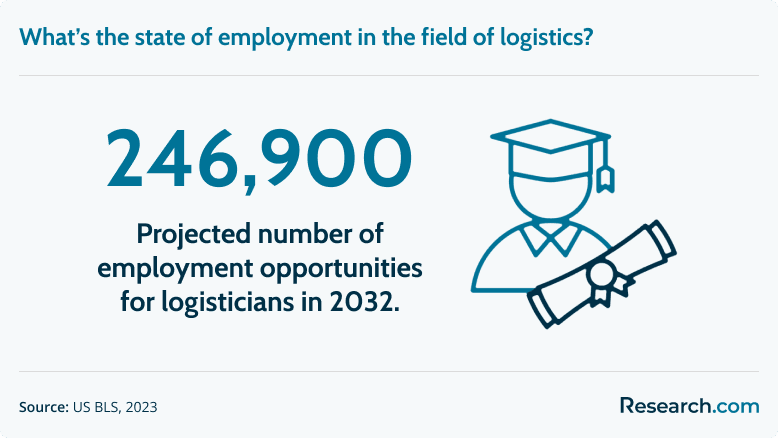
- Projected employment for logisticians is expected to reach 246,900 by 2032.
- In Fall 2021, institutions primarily offering online programs represented 5.3% of institutions and totaled 824,678.
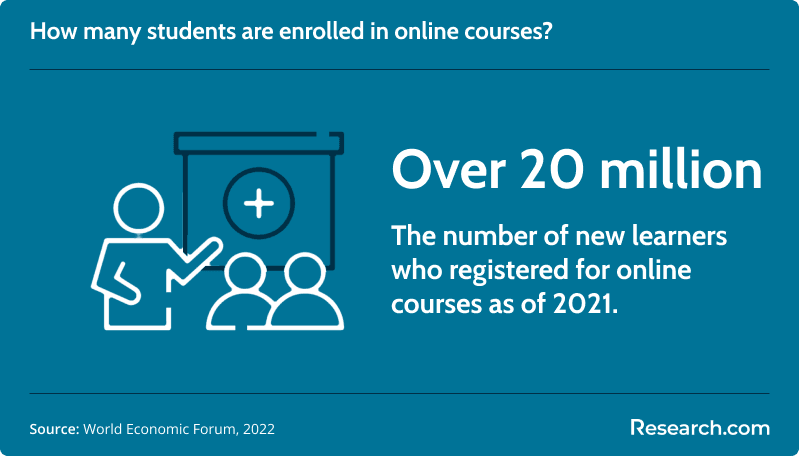
- More than 20 million new learners registered for online courses in 2021, showing continued global interest in online education.
What is the average cost of an online logistics degree program?
The cost of an online logistics degree depends on the institution, residency rules, transfer credits, program format, and fees. Students should compare total cost, not just the advertised per-credit tuition.
- NCES data for the 2020 to 2021 school year reported average undergraduate tuition and fees of $9,375 for in-state students at public four-year institutions and $27,091 for out-of-state students.
- For an online bachelor’s degree in logistics from a top-ranked school, tuition may range from $100 to $800 per credit.
- Using a standard 30-credit academic year, annual tuition can range from $3,000 to $24,000.
- Some online schools charge out-of-state students higher tuition, while others offer discounted or flat-rate tuition for distance learners.
Students comparing logistics career paths should ask about technology fees, online course fees, textbooks, software access, proctoring fees, graduation fees, and any logistics certification online preparation costs. A low tuition rate can become less affordable if required fees are high or if transfer credits are not accepted.
| Cost factor | Why it matters | Question to ask |
| Per-credit tuition | This is usually the largest direct cost. | Is tuition different for in-state, out-of-state, and online students? |
| Transfer credit policy | Accepted credits can shorten the program and reduce total tuition. | How many credits can I transfer, and which courses will count toward the major? |
| Fees | Online, technology, course, and graduation fees can add up. | What fees are required each term beyond tuition? |
| Books and software | Logistics courses may require analytics tools, simulations, or textbooks. | Are software licenses included in tuition or billed separately? |
| Time to completion | Longer enrollment can increase opportunity costs and living expenses. | Can I study full-time, part-time, or in an accelerated format? |
What are the financial aid options for students enrolling in an online logistics program?
Students pursuing logistics, accounting, business, or an engineering major should begin financial aid planning early. Aid deadlines, scholarship applications, school forms, and military benefit documentation can take time, and missing a deadline may reduce available options.
Common financial aid options include:
- Free Application for Federal Student Aid (FAFSA). The FAFSA is used to determine eligibility for federal grants, loans, and work-study. Students complete it online at studentaid.gov.
- Federal Pell Grant. This need-based grant is available to undergraduates with significant financial need. The amount depends on financial need and the cost of attendance at the selected school.
- Scholarships and Grants. Schools, employers, professional associations, foundations, and private organizations may offer awards for business, logistics, supply chain, military, adult learner, or transfer students.
- Military/Veterans Benefits. Active-duty service members, veterans, and eligible family members may qualify for military education benefits, scholarships, or grants. Students using GI Bill benefits should review official eligibility criteria.
Before enrolling, ask the financial aid office whether online students are eligible for the same aid as campus students and whether the program’s accreditation supports federal aid eligibility.
What are the admission requirements for online logistics degree programs?
Admission standards vary by school and program. Requirements for an online logistics degree may resemble those for an online supply chain management degree, but applicants should confirm details directly with each university.
Typical admission requirements include:
- High School Diploma or GED. Most bachelor’s programs require a high school diploma or equivalent. Some schools may also review GPA, college-prep coursework, or prior academic performance.
- Official Transcripts. Applicants usually submit transcripts from high school and any colleges previously attended. Transfer students should request an official transfer credit evaluation before committing.
- Personal Statement or Essay. Some programs ask applicants to explain why they want to study logistics and how the degree connects to their career goals.
- Letters of Recommendation. Recommendations from teachers, supervisors, mentors, or professional contacts may strengthen the application, especially for students with work experience.
- Interview. A program may use an interview to learn more about the applicant’s communication skills, goals, and readiness for online study.
- Application Fee. Many schools charge an application fee to process admission materials.
NCES 2023 data show that degree-granting postsecondary institutions primarily offering online programs made up 5.3% of all institutions, totaling 824,678, in Fall 2021. Online education is now a common option, but students still need to check each school’s requirements carefully.
The chart below from NCES shows the distribution and prevalence of degree-granting postsecondary institutions that primarily offered online programs in Fall 2021.
What are the career opportunities for graduates of online logistics degree programs?
Logistics and transportation remain central to business operations, especially as companies manage supplier risk, delivery expectations, inventory costs, global trade complexity, and e-commerce demand. Many employers prefer candidates with a bachelor’s degree, relevant experience, and familiarity with logistics systems or analytics tools.
- An online logistics degree can help students build transferable skills for transportation, procurement, warehousing, operations, inventory control, and process improvement roles.
- Possible job titles include logistician, purchasing manager, business operations specialist, management analyst, buyer, purchasing agent, inventory analyst, supply chain coordinator, and transportation planner.
- Online business degree programs may complement logistics education for students who want broader training in management, finance, accounting, or entrepreneurship.
Job landscape in 2032
- Projected employment for logisticians is expected to reach 246,900.
- Graduates with strong logistics knowledge, technology skills, and business judgment may be well positioned to help organizations improve efficiency, reduce disruptions, and manage complex supply chains.
| Career path | Typical focus | How a logistics degree helps |
| Logistician | Coordinates the life cycle of products, materials, or services. | Builds knowledge of transportation, inventory, procurement, and supply chain systems. |
| Business operations specialist | Improves processes, workflows, and organizational efficiency. | Connects logistics decisions with business performance and data analysis. |
| Purchasing manager | Oversees buying strategies, supplier relationships, and procurement teams. | Develops sourcing, negotiation, vendor management, and cost-control skills. |
| Management analyst | Studies organizational problems and recommends improvements. | Provides a foundation in process analysis, systems thinking, and operations strategy. |
How long does it take to complete an online logistics program?
A bachelor’s degree in logistics typically takes about four years when students complete 120 credits full time, similar to many engineering degrees and marketing degrees. Some programs are shorter or longer depending on transfer credits, course load, and academic calendar.
Common completion timelines:
- Four years. This is the standard timeline for full-time students in a traditional 120-credit bachelor’s program.
- 24 months. Some accelerated programs may allow students to finish in two years through heavier course loads, shorter terms, or accepted transfer credits.
Factors that can change your timeline:
- Transfer Credits. Prior college coursework can reduce the number of credits you need to complete.
- Pace of Study. Part-time enrollment may extend completion to six to eight years.
- Personal Circumstances. Work schedules, family responsibilities, military service, and time management can affect progress.
Before applying, ask admissions for a degree plan that shows exactly how many credits you need, which courses are offered each term, and whether your preferred pace is realistic.
What are the different types of accreditation for online logistics degree programs?
Accreditation is one of the most important quality checks for an online logistics degree. Institutional accreditation helps confirm that the school meets recognized academic standards and may affect federal financial aid eligibility, transfer credit acceptance, and graduate school admission.
Some business and logistics-related programs also hold programmatic accreditation. Logistics programs may be connected to business accrediting bodies such as the Association to Advance Collegiate Schools of Business (AACSB) or the Accreditation Council for Business Schools and Programs (ACBSP). These organizations focus on academic quality, continuous improvement, and business-relevant learning outcomes.
In 2021, more than 20 million new learners enrolled in courses, reflecting growing interest in online skill development. However, popularity does not replace accreditation. Students should verify a school’s accreditation status through official sources such as Ed.gov.
| Accreditation question | Why it matters |
| Is the institution accredited? | Institutional accreditation can affect financial aid, transfer credits, and employer recognition. |
| Does the business school or program have programmatic accreditation? | Programmatic accreditation can signal added review of business curriculum and outcomes. |
| Will credits transfer to another school? | Transfer policies vary, even among accredited institutions. |
| Will the degree support graduate study? | Some graduate programs require degrees from appropriately accredited schools. |
What is the job market for graduates with an online logistics degree?
The job market for logistics graduates is shaped by e-commerce growth, supply chain complexity, demand for faster delivery, global sourcing risks, inventory planning, and the need for cost control. Students who understand both logistics operations and data-driven decision-making can pursue roles across entry-level, specialist, and management tracks.
In 2022, logisticians held around 208,700 jobs. Logistician positions are projected to grow 18% from 2022 to 2032, while management analyst positions are projected to grow 10% during the same period.
To compete effectively, students should look for programs that include internships, case projects, analytics coursework, career coaching, and employer connections. Location, specialization, software skills, and prior work experience can all affect job prospects.
The US BLS chart below shows projected employment growth rates for key logistics-related careers.
What are the core courses in online logistics degree programs?
Coursework varies by school, but most online logistics programs combine business administration with specialized supply chain training. A local distributor, a federal agency, and a global manufacturer may use different tools and systems, so strong programs teach both logistics fundamentals and adaptable problem-solving.
Common course areas include:
- Information Technology and Business Analytics. Students learn how to analyze business data, identify trends, and apply data management techniques to order fulfillment, manufacturing, transportation, and inventory decisions.
- Manufacturing Planning and Control. This course area covers production planning, demand management, inventory issues, enterprise resource planning, and production activity control.
- Simulation, Modeling, and Optimization. Students learn how to use models, spreadsheets, and software tools to evaluate planning problems and improve logistics decisions.
| Course area | Skills developed | Best for students interested in |
| Procurement and sourcing | Supplier evaluation, purchasing, negotiation, and global sourcing. | Buying, vendor management, and procurement leadership. |
| Transportation management | Carrier selection, routing, distribution strategy, and delivery performance. | Freight, distribution, fleet operations, and transportation planning. |
| Warehouse and inventory management | Storage systems, stock control, fulfillment, and warehouse performance. | Warehousing, inventory analysis, and fulfillment operations. |
| Supply chain analytics | Forecasting, reporting, dashboards, modeling, and performance measurement. | Analytics, process improvement, and supply chain planning. |
How to Choose the Right Online Logistics Program for Career Advancement
The best online logistics program is the one that matches your career goal, budget, schedule, transfer background, and preferred learning format. A program with a strong ranking is not automatically the best fit if it lacks the specialization, flexibility, or employer connections you need.
Start with accreditation. Look for institutionally accredited schools and, when relevant, business programs with recognized programmatic accreditation such as AACSB or ACBSP. Accreditation helps protect the value of your degree and may affect financial aid, transferability, and future graduate study.
Next, examine industry connections. Programs with employer partnerships, internships, guest lectures, capstone projects, or mentorship opportunities can help online students build experience while studying. This matters because logistics employers often value applied problem-solving, not coursework alone.
Curriculum depth is another deciding factor. Students who want analytics-heavy roles should look for courses in business analytics, ERP systems, simulation, and optimization. Students interested in sustainability should look for green logistics, circular economy, or sustainable supply chain content. Students who want leadership roles should consider programs with management, finance, and strategy courses. Exploring complementary and popular majors can also help students build career flexibility.
| If your goal is... | Look for programs with... | Be cautious if... |
| Entry-level logistics employment | Internships, applied projects, transportation, inventory, and procurement courses. | The curriculum is mostly general business with limited logistics content. |
| Supply chain analytics | Analytics, ERP systems, modeling, optimization, and spreadsheet-based decision tools. | The program does not list software, analytics, or data-focused coursework. |
| Management advancement | Operations management, leadership, finance, strategy, and project management. | The program has few business management courses beyond the major. |
| Low-cost completion | Transfer-friendly policies, flat online tuition, financial aid access, and clear fee disclosures. | The school advertises low tuition but charges significant mandatory fees. |
How do online logistics degree programs compare to traditional on-campus programs?
Online and on-campus logistics degrees can cover similar academic content, but the student experience differs. The better choice depends on your schedule, learning style, access to campus, need for flexibility, and preference for in-person networking.
| Factor | Online logistics degree | On-campus logistics degree |
| Schedule | Often more flexible and better suited for working adults or students with family responsibilities. | Usually follows fixed class times and campus-based schedules. |
| Location | Allows students to enroll without relocating, depending on state authorization and program rules. | Requires regular campus attendance. |
| Networking | Uses virtual discussions, online events, group projects, and digital career services. | Offers face-to-face access to classmates, faculty, clubs, and campus events. |
| Learning environment | Works well for self-directed students who manage deadlines independently. | May be better for students who prefer classroom structure and immediate in-person support. |
| Technology | Requires comfort with learning platforms, video tools, online testing, and digital collaboration. | May use technology but still relies more heavily on in-person instruction. |
| Cost considerations | May reduce commuting, housing, and relocation expenses, though tuition varies. | May involve housing, transportation, parking, and campus-based fees. |
How do online logistics degree programs ensure student engagement and interaction?
Strong online logistics programs do more than upload readings. They create structured ways for students to interact with faculty, classmates, and industry examples. This is especially important in logistics, where teamwork, communication, and cross-functional problem-solving are part of the job.
- Live Classes. Some programs use video meetings for real-time lectures, discussions, guest speakers, or review sessions.
- Discussion Boards. Online forums allow students to analyze case studies, ask questions, and respond to classmates.
- Group Projects. Collaborative assignments help students practice teamwork, project planning, and virtual communication.
- Virtual Simulations. Some programs use simulations to model logistics decisions, supply chain disruptions, inventory choices, or transportation planning.
- Faculty Access. Email, video meetings, office hours, and learning platform messaging help online students receive academic support.
Before enrolling, ask whether classes are asynchronous, synchronous, or a mix of both. Also ask how group work is managed for students in different time zones.
How do logistics programs address sustainability in supply chain management?
Sustainability is increasingly relevant in logistics because transportation, packaging, energy use, sourcing, and waste affect both costs and environmental impact. Many logistics programs now introduce students to green supply chain management, energy-efficient transportation, waste reduction, circular economy principles, and responsible procurement.
Students may learn how companies reduce carbon footprints, optimize routes, cut packaging waste, improve resource use, and evaluate suppliers through sustainability criteria. These topics can prepare graduates to support organizations facing regulatory pressure, cost constraints, and consumer expectations for more responsible supply chain practices.
Is an Online Logistics Degree a Sound Financial Investment?
An online logistics degree can be a sound investment when the program is affordable, accredited, career-aligned, and completed within a reasonable timeframe. The degree is less likely to pay off if students overborrow, choose a weakly aligned curriculum, ignore transfer credit options, or graduate without practical experience.
To evaluate value, compare the total cost of attendance with likely career paths, salary benchmarks, local job availability, and the strength of the program’s career support. Students who already work in operations, warehousing, transportation, procurement, or military logistics may benefit from applying coursework immediately on the job.
Professionals who want broader leadership preparation may eventually consider graduate business education. For example, comparing options such as the most affordable online MBA can help logistics professionals plan a cost-conscious path toward management roles.
What are the emerging trends and technologies shaping the future of logistics?
Logistics is being reshaped by technology, consumer expectations, global supply chain risk, and sustainability goals. Students should look for programs that teach durable logistics fundamentals while introducing current tools and trends.
- Automation and Robotics: Warehouses and transportation networks increasingly use automated systems, robotics, autonomous vehicles, drones, and related tools to improve speed, consistency, and efficiency.
- Artificial Intelligence (AI) and Machine Learning: AI can support routing, demand forecasting, inventory planning, and supply chain visibility. Graduates who understand data-driven decision-making may have an advantage in analytics-focused roles.
- Blockchain Technology: Blockchain can support supply chain transparency, traceability, and transaction integrity, especially when goods move through multiple parties.
- Sustainability and Green Logistics: Organizations are paying more attention to emissions, packaging, energy use, transportation choices, and waste reduction.
- E-commerce and Last-Mile Delivery Innovations: Online shopping has increased pressure on fast, reliable delivery. Smart lockers, crowdsourced delivery, and micro-warehouses are examples of last-mile innovation.
Students who want to keep costs manageable while studying these areas can compare most affordable online colleges that offer logistics or supply chain-related degrees.
What is the Return on Investment of an Online Logistics Degree?
Return on investment depends on what you pay, how quickly you finish, how much debt you take on, and whether the degree helps you move into a better role. A useful ROI review should include tuition, fees, books, software, lost work time, transfer credits, financial aid, and expected career outcomes.
Students already working in logistics may see value sooner if they can apply new skills at work, qualify for promotion, or move into a higher-paying specialty. Students seeking leadership roles may later compare graduate options such as accelerated online MBA programs to determine whether additional business education fits their career timeline.
What Makes a Logistics Program a Most Respected Online Degree?
A respected online logistics degree usually has recognized accreditation, a relevant curriculum, qualified faculty, transparent outcomes, strong student support, and meaningful employer connections. Reputation should be evaluated through evidence, not marketing language.
Look for programs that clearly list course requirements, faculty credentials, internship opportunities, career services, transfer policies, and student support resources. Industry partnerships, capstone projects, and alumni outcomes can also help show whether the program connects classroom learning with logistics practice. Students comparing reputable online programs can review Research.com’s guide to the most respected online degree options.
How Do Online Logistics Programs Incorporate Business Management Skills into Their Curriculum?
Logistics is not only a technical field. Professionals often need to manage budgets, lead teams, negotiate with vendors, analyze performance, and align operations with business strategy. For that reason, many online logistics programs include finance, organizational behavior, project management, strategic planning, ethics, and operations management.
This blend helps graduates understand how logistics decisions affect profitability, customer experience, compliance, and organizational performance. Students who want broader managerial preparation may also compare programs such as the best online business administration degree.
How do online logistics degree programs enhance career services and alumni networks?
Career support can make a major difference for online logistics students. Strong programs provide resume reviews, interview preparation, job boards, internship guidance, employer webinars, virtual career fairs, and alumni networking opportunities.
Students should ask whether online learners receive the same career services as campus students. They should also ask how often logistics employers recruit from the program, whether internships are available remotely or locally, and whether alumni work in roles that match the student’s goals. Students comparing degree levels and education costs may also benefit from understanding how much does an associate's degree cost before deciding whether to start with an associate degree or enter a bachelor’s program directly.
Can an Online Logistics Degree Accelerate Your Journey to Executive Business Roles?
An online logistics degree can support advancement into leadership, but executive roles usually require more than a bachelor’s credential. Employers often look for experience managing teams, budgets, systems, suppliers, compliance, and cross-functional operations.
The degree can help students build the operational foundation needed for supervisory and management roles. Over time, professionals may strengthen their leadership profile through certifications, project experience, employer-sponsored training, or graduate study. Some may compare accelerated MBA programs in USA if they want a faster route to advanced business education.
How Can an Online Logistics Degree Pave the Way to Advanced Studies?
A bachelor’s degree in logistics can prepare graduates for advanced study in supply chain management, business administration, operations management, analytics, project management, or doctoral-level business programs. Students interested in graduate school should choose an accredited bachelor’s program and maintain strong academic records.
Advanced study may be useful for professionals who want research, consulting, teaching, senior leadership, or specialized analytics roles. Cost-conscious students exploring doctoral business education can compare options such as cheap DBA programs.
The Role of Industry Partnerships in Online Logistics Programs
Industry partnerships can strengthen an online logistics program by connecting coursework to current employer needs. These relationships may involve businesses, government agencies, professional associations, logistics providers, manufacturers, transportation companies, or supply chain technology firms.
Partnerships can support internships, externships, job placement assistance, guest lectures, capstone projects, case studies, mentorship programs, career fairs, and webinars. For online students, these connections can be especially valuable because they create professional access beyond the virtual classroom.
When comparing programs, ask which employers or organizations are actively involved, whether students complete applied projects, and whether online learners can participate in the same networking opportunities as campus students.
Common mistakes to avoid when choosing an online logistics degree
- Choosing a program without checking accreditation. Always verify institutional accreditation and review any programmatic accreditation claims.
- Looking only at tuition. Fees, books, software, transfer credit limits, and time to completion can change the real cost.
- Assuming all online programs offer strong career support. Ask specifically about internships, employer connections, alumni networks, and online student access to career services.
- Ignoring curriculum fit. A student interested in analytics needs different coursework than a student focused on procurement or warehouse operations.
- Relying only on rankings. Rankings can help with discovery, but the best program is the one that fits your goals, schedule, budget, and learning style.
- Assuming salary outcomes are guaranteed. Pay depends on role, location, industry, experience, and individual performance.
Questions to ask before enrolling
- Is the institution accredited, and by which agency?
- Does the program have business or programmatic accreditation such as AACSB, ACBSP, IACBE, or another relevant body?
- How many transfer credits will the school accept toward the logistics major?
- What is the total cost, including fees, books, software, and graduation charges?
- Are courses asynchronous, synchronous, or a mix of both?
- Does the program include internships, simulations, capstone projects, or employer-sponsored projects?
- What logistics software, analytics tools, or ERP systems will students use?
- What career services are available specifically to online students?
- Where do graduates work, and what roles do they commonly pursue?
- Can the degree support graduate school admission if you decide to continue studying?
Key Insights
- An online logistics degree is best for students who want flexible preparation for supply chain, transportation, procurement, inventory, operations, or business analysis roles.
- Program quality depends on accreditation, curriculum relevance, career support, transfer policies, faculty expertise, and employer connections.
- Online logistics bachelor’s programs commonly require 92 to 120 credits and usually take three to four years, though transfer credits and accelerated formats can change the timeline.
- Cost varies widely. Students should compare total cost, not only tuition, and should complete financial aid planning early.
- Logistics careers can offer strong opportunities, but salaries are not automatic. Practical experience, analytics skills, software knowledge, and networking can improve outcomes.
- The strongest programs prepare students for current logistics realities, including AI, automation, e-commerce, sustainability, data analytics, and global supply chain complexity.
References:
- NCES. (2024). Average Undergraduate Tuition, Fees, Room, and Board Charges for Full-time Students in Degree-granting Postsecondary Institutions, by Control and Level of Institution and State or Jurisdiction: 2019-20 and 2020-21. https://nces.ed.gov/programs/digest/d21/tables/dt21_330.20.asp
- NCES. (2024). Selected Statistics for Degree-Granting Postsecondary Institutions that Primarily Offer Online Programs, by Control of Institution and Selected Characteristics: Fall 2021 and 2020-21. https://nces.ed.gov/programs/digest/d22/tables/dt22_311.33.asp
- US BLS. (2024). Logisticians. https://www.bls.gov/ooh/business-and-financial/logisticians.htm
- US BLS. (2024). Management Analysts. https://www.bls.gov/ooh/business-and-financial/management-analysts.htm
- US BLS. (2024). Purchasing Managers. https://www.bls.gov/oes/current/oes113061.htm
- World Economic Forum. (2022). These 3 Charts Show the Global Growth in Online Learning. https://www.weforum.org/agenda/2022/01/online-learning-courses-reskill-skills-gap/
Other things you should know about online logistics degree programs
Top online logistics degree programs in 2027 should be accredited by recognized bodies such as the Association to Advance Collegiate Schools of Business (AACSB) or Accreditation Council for Business Schools and Programs (ACBSP). Accreditation ensures quality and enhances the program's credibility and acceptance in the industry.
In 2027, top online logistics degree programs emphasize technical skills like supply chain analysis and logistics software proficiency, including tools like SAP and Oracle Transportation Management. These skills ensure graduates can navigate complex logistics operations effectively.
Most accredited online logistics programs do not require internships for graduation, but many include a 3-credit or 6-credit practicum, co-op, or capstone tied to employer projects. Schools may also accept an approved job in supply chain, transportation, or warehousing as field experience.