2027 Can a BS in Business Administration Prepare You for a Category Analyst Role? Skills and Entry Requirements
Audited and Verified:
Our Editorial and Data Verification Process
Research.com uses government datasets, official education statistics and primary institutional information to support its career and degree guides. Our review process checks factual accuracy, occupational definitions, source dates and the requirements associated with the credentials discussed.
How This Article Was Fact-Checked
Our editorial team verifies salary estimates, employment projections, education requirements and program information against original data providers and official organizations. Salary figures are checked against the relevant occupational definitions and reporting periods. Information about licensure, accreditation and required in-person training is reviewed separately.
Fact-checked and verified on:

Co-Founder and Chief Data Scientist
A category analyst turns sales, pricing, and customer data into recommendations about what a retailer or supplier should stock and promote. If you are considering a BS in Business Administration, the decision is whether its broad curriculum will give you enough analytical practice to compete for that work. This guide connects the job's tasks to degree courses, hiring requirements, and work samples. It also explains when a more specialized degree - or targeted training alongside experience - may be the better route.
Key Things You Should Know
- Yes, with the right preparation: A BS in Business Administration can provide the marketing, finance, operations, and quantitative foundation for category analysis, but employers will also want evidence that you can work with data and explain recommendations.
- There is no single required major: Entry routes vary by employer; business, marketing, economics, analytics, and supply chain degrees can all be relevant. A degree alone does not replace retail, supplier, or analytical experience.
- Use salary figures carefully: The U.S. Bureau of Labor Statistics reports a May 2025 median annual wage of $78,760 for market research analysts, a related occupation - not a starting salary or a category-analyst-specific median.
What Does a Category Analyst Do, and Is a Business Administration Degree Relevant?
A category analyst studies a group of products - such as beverages, household supplies, or electronics - to help a retailer or supplier make assortment, pricing, promotion, and shelf-space decisions. The analyst may compare sales trends, margins, inventory, and customer behavior, then present a recommendation to merchants, sales teams, or category managers. The precise job differs: a retailer may emphasize store-level assortment, while a supplier may emphasize recommendations to retail accounts.
A BS in Business Administration is relevant because these decisions cross several business functions. Marketing helps explain customer demand; accounting and finance help distinguish sales growth from profitable growth; and operations helps connect a proposed assortment to inventory and replenishment. An analyst still needs to test those ideas against usable data rather than rely on broad business concepts alone.
If the work that interests you is primarily forecasting inventory movement or coordinating distribution, compare category analysis with supply chain roles before choosing a major. A guide to supply chain education costs and career prospects can help frame that alternative, but the deciding factor should be which role's tasks you want to perform.
What Skills Do Category Analysts Need to Succeed?
Employers need analysts who can move from a business question to a defensible recommendation. The following comparison shows what to practice and what a student or early-career applicant could show in an interview; it does not imply that every employer uses the same tools.
| Job task | Skill to develop | Possible evidence of readiness |
| Compare product and store performance | Spreadsheet analysis, data cleaning, and clear metric definitions | A documented analysis using public or appropriately authorized data |
| Evaluate a pricing or promotion proposal | Margin awareness, basic statistics, and interpretation of trade-offs | A case explaining assumptions, uncertainty, and possible effects on profit |
| Recommend assortment changes | Customer research, inventory awareness, and commercial judgment | A concise presentation connecting evidence to a specific decision |
| Work with merchants or sales teams | Communication, questioning, and revision of recommendations | An internship example or supervised team project |
Spreadsheet proficiency is often a practical starting point. Depending on the employer, familiarity with SQL, dashboards, syndicated retail data, or retailer-specific systems may also help. Learn what the job posting names before paying for software training: knowing one tool is less valuable if you cannot explain where the data came from, what it omits, and why your conclusion follows.
If you find that organizing projects appeals to you more than analyzing product categories, online project management degrees with lower tuition offer a different educational comparison. Project coordination and category analysis can share communication skills, but they are not interchangeable jobs.
What Education and Entry Requirements Apply to Category Analyst Jobs?
There is no universal category analyst credential or required major. Employers commonly evaluate a combination of relevant education, quantitative ability, and exposure to retail, consumer products, merchandising, sales, or supply chain work. Some positions are suitable for new graduates with internships or strong projects; others expect prior analyst or industry experience. Read each posting for the required degree level, named tools, data sources, and years of relevant work rather than relying on the title alone.
For a student or employee early in their career, a practical entry route is a merchandising, retail operations, sales-support, inventory, or junior analyst position with access to supervised analytical tasks. A career changer should first inventory transferable experience: tracking product performance, preparing reports, explaining customer trends, or working with buyers may matter more than an unrelated job title suggests. Where those tasks are missing, seek a project or internship that lets you practice them.
A BS in Business Administration is one route, not an admission ticket to every posting. If you are choosing a degree from scratch and want deeper study of forecasting, inventory, and procurement, compare its requirements with a supply chain program. Three-year supply chain undergraduate degree routes may be worth examining, but confirm their transfer rules and course sequence before assuming the advertised timeline applies to you.
Look beyond the degree title to the assignments you can complete. A useful course plan combines statistics or business analytics with marketing research, managerial accounting, operations or supply chain, and information systems. Economics can help with demand and pricing; communication courses can sharpen the short presentations analysts give to decision-makers. Check prerequisites and course availability so that quantitative electives fit into your graduation plan.
An effective applied assignment might ask you to define a product category, compare performance across locations or periods, calculate relevant sales and margin measures, and recommend a change with stated limitations. Public datasets or instructor-provided cases can support this work. An employer-based project requires permission to use company data, and any portfolio version must respect confidentiality and intellectual-property rules. A completed course is useful preparation, but the work sample shows what you can actually do.
Choose a concentration only if its required courses add meaningful depth without unwanted extra credits or delays. Analytics, marketing, and supply chain concentrations may each fit different versions of the role. By contrast, fast-track undergraduate organizational leadership study is more relevant if your goal is leading teams than building product-level analyses.
Yes - if the online program offers substantive quantitative coursework, feedback on applied work, and feasible access to the tools its courses require. Online delivery does not make an analytics assignment less valuable, but it can change how you receive instruction, collaborate, and find internships. An asynchronous lecture may still come with fixed deadlines, live team meetings, proctored exams, or presentations.
Before enrolling, ask for syllabi for analytics, marketing research, and operations courses. Confirm which software students use, whether datasets are supplied, how faculty assess individual contributions to group projects, and whether career services can help you pursue relevant work. If you need to keep your job, compare those obligations with online business administration programs with work-compatible schedules; verify the schedule of the courses you will actually take, not just the program's general description.
A bachelor's degree commonly takes about four years of full-time study from the beginning, but your remaining time depends on accepted credits, how those credits apply to requirements, course sequencing, and enrollment pace. Accelerated terms can shorten the calendar without reducing the work required. For a returning student, an official degree audit is more useful than a general completion-time estimate.
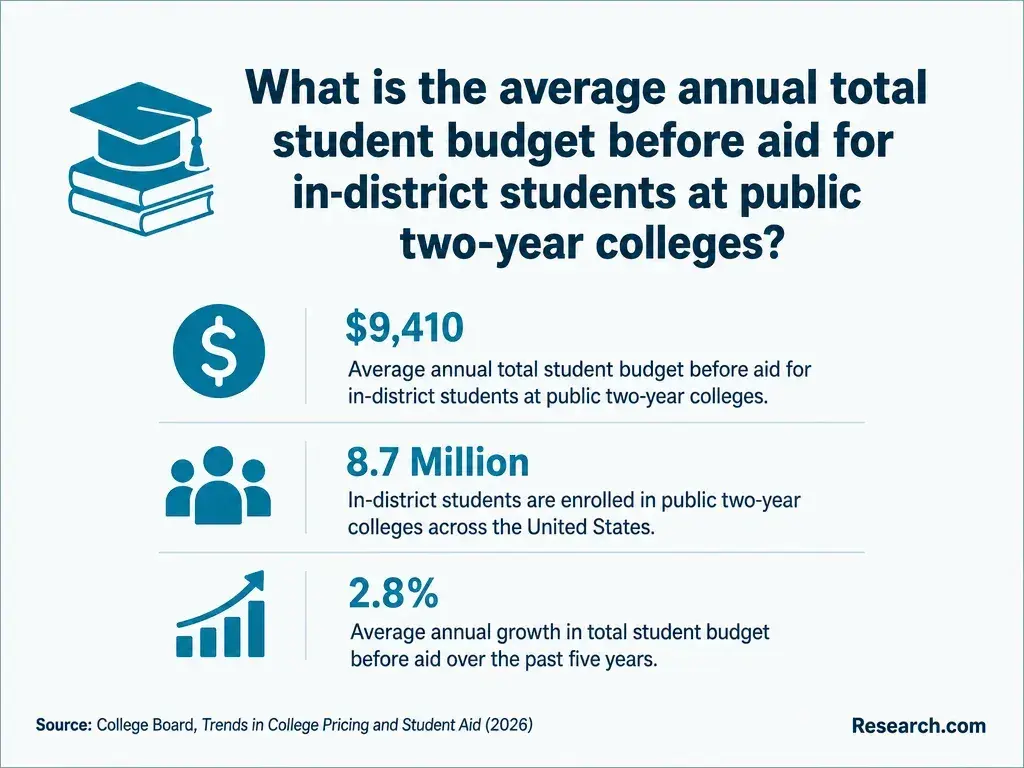
There is no responsible single price for this decision without a school and a credit evaluation. Compare tuition under the school's actual billing model, required fees, books and software, any travel or proctoring costs, and the courses you still need. Then consider borrowing costs and any work hours you would have to give up. Financial aid or employer reimbursement may change your out-of-pocket cost, but confirm eligibility, payment timing, and conditions before counting on either.
To compare options consistently, use the same remaining-credit assumptions and request a school-specific estimate. A comparison of how to evaluate price duration and outcomes of business administration degrees can help you identify questions to ask; it cannot substitute for your own audit and aid offer.
First, confirm that the institution holds recognized institutional accreditation and that the credential is the bachelor's degree you intend to earn. Then inspect the program catalog: a BS in Business Administration, a BBA, and a specialized bachelor's degree may have different quantitative requirements even when their names sound similar. AACSB, ACBSP, or IACBE recognition, where applicable, has a specific business-school or program scope; do not assume it covers every program at an institution.
For category analysis, give extra weight to course content and evidence of applied learning. Ask whether students can take marketing research and analytics electives, what kinds of datasets and projects are available, and whether internships or capstones require separate approval. Request information about advising, course frequency, career support, and relevant graduate outcomes, including how the school collected them.
If you are also considering a different occupation, compare programs on that occupation's requirements rather than treating all business-related degrees as substitutes. An accredited online project management tuition guide, for example, is useful for a project-focused alternative, not evidence that project management coursework will provide category-analysis depth.
Category analysis is not generally a licensed occupation in the United States. Employers may value training in analytics tools, retail data platforms, or category-management practices, but no single professional certificate replaces the degree, experience, or demonstrated analytical skills specified in a job posting. Check a credential provider's prerequisites, assessment, renewal rules, and employer recognition before paying for it.
Use the job you want to guide the investment. If postings repeatedly request a tool you lack, a focused course and a defensible work sample may be more direct than another degree. If you are considering a move into project management instead, compare the full-degree commitment and its financing separately; information on funding an online project management bachelor's degree addresses that alternative, not a certification requirement for category analysts.
A possible path runs from retail, merchandising, sales-support, or junior analyst work into category analyst responsibilities, then toward senior analysis or category management. Progression depends on results and the scope of decisions you can handle; a category manager may own supplier relationships or commercial decisions that an entry-level analyst only supports. Category analysis can also lead toward market research or supply chain analysis, but those roles have different emphases.
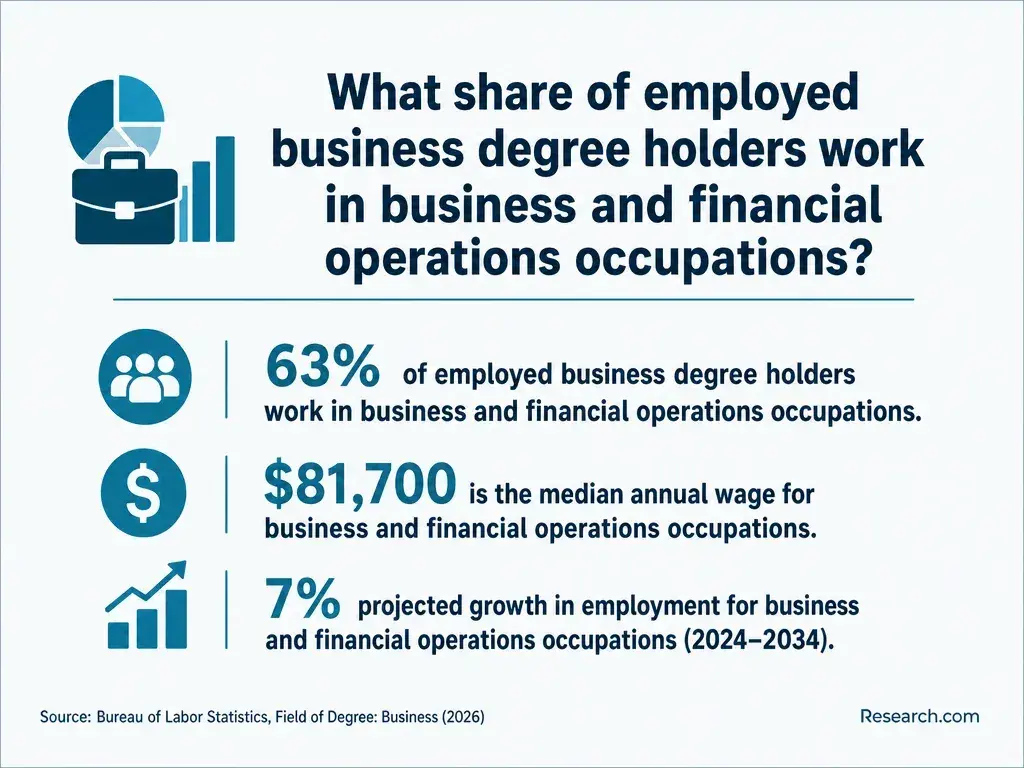
The Bureau of Labor Statistics does not publish a separate category analyst wage series. Its closest comparison depends on the job's tasks: market research analysts study customers and markets, while logisticians focus on supply chains. The May 2025 median annual wage for market research analysts was $78,760. That occupation-wide midpoint includes experienced workers and should not be treated as a category analyst offer or a new graduate's expected pay. Compare actual postings by location, employer, and required experience before estimating your prospects.
If you already have substantial college credit, shorter routes to an online bachelor's may help you reach degree-required postings sooner. Weigh that potential time saving against the analytical electives and work experience you would need to compete for them.
What Is the Job Outlook for Category Analysts and Related Roles?
There is no federal job-growth projection specifically for category analysts. For a related occupation, the Bureau of Labor Statistics projects 7% growth in U.S. market research analyst employment from 2025 to 2035. That suggests continued demand for market and customer analysis, but it does not measure category analyst openings. Positions centered on inventory and distribution may align more closely with logistician work, so use the duties in a posting - not its title alone - to choose an outlook comparison.
Your strongest response to this outlook is practical: build evidence that you can define a commercial question, check data quality, weigh margin and customer considerations, and communicate a recommendation. If a faster degree schedule would free time for relevant work, explore online colleges with accelerated business programs. Confirm that acceleration will not crowd out the projects or experience that make you a credible applicant.
Other Things You Should Know About Business Administration
Usually, if you have the right to share its data and materials. Label it as academic work, describe your own contribution, and remove confidential information or replace it with an authorized example.
Not always. Follow the posting's requirements, but be ready to show sound spreadsheet analysis and explain how you would learn a new system without confusing tool familiarity with analytical judgment.
Some analytical work can be done remotely, but an employer may require store visits, retailer meetings, or in-person collaboration. Confirm the arrangement in the specific posting.
AI tools may speed up reporting or drafting, but analysts still need to verify inputs, interpret business context, protect sensitive data, and take responsibility for recommendations. Learn to check tool outputs rather than present them unexamined.
- What Is the Best Degree for a Data Analyst Career? | About the University of Cincinnati https://www.uc.edu/blog/what-is-the-best-degree-for-a-data-analyst-career.html
- What Does a Data Analyst Do? Roles, Skills & Tools Explained | Syracuse University https://ischool.syracuse.edu/what-does-a-data-analyst-do/
- 10 Key Skills for Data Analysts | Johns Hopkins AAP https://advanced.jhu.edu/about/on-the-advance/mastering-your-future/10-key-skills-for-data-analysts/
- 4 Types of Data Analytics to Improve Decision-Making | Harvard Business School https://online.hbs.edu/blog/post/types-of-data-analysis
- 10 Key Subjects Taught in a Bachelor of Business Administration Program | Carson-Newman University https://www.cn.edu/cps-blog/10-key-subjects-taught-in-a-bachelor-of-business-administration-program/
- What Can You Do With a Business Administration Degree? | snhu.edu https://www.snhu.edu/about-us/newsroom/business/what-can-you-do-with-a-business-administration-degree
- How to Land Your First Job - Even With No Experience | Harvard Summer School https://summer.harvard.edu/blog/how-to-land-your-first-job-even-with-no-experience/
- Top Excel Skills Employers Look For in Business Graduates | SCU https://www.scu.edu/business/blog/business-concepts/excel-skills/
- Opportunities With a Business Administration Degree | Saint Mary's University of Minnesota https://www.smumn.edu/blog/what-doors-can-a-business-administration-degree-open/
- Investigation of Essential Skills for Data Analysts | sciencedirect.com https://www.sciencedirect.com/org/science/article/pii/S1062737523000240