2027 Choosing a BS in Business Administration When You Need a Bachelor's for Promotion but Have No Target Concentration
Audited and Verified:
Our Editorial and Data Verification Process
Research.com uses government datasets, official education statistics and primary institutional information to support its career and degree guides. Our review process checks factual accuracy, occupational definitions, source dates and the requirements associated with the credentials discussed.
How This Article Was Fact-Checked
Our editorial team verifies salary estimates, employment projections, education requirements and program information against original data providers and official organizations. Salary figures are checked against the relevant occupational definitions and reporting periods. Information about licensure, accreditation and required in-person training is reviewed separately.
Fact-checked and verified on:

Co-Founder and Chief Data Scientist
Your employer says a bachelor's degree would make you eligible for promotion, but you have no reason to specialize in accounting, marketing, or another business function. A general BS in Business Administration may fit: it can meet a degree requirement while building skills you can use across roles. The important questions are whether your employer accepts the degree, how much of your previous coursework applies, and whether a concentration would add value or delay graduation. This guide helps experienced employees compare those trade-offs before committing time and money.
Key Things You Should Know
- If the promotion requires a bachelor's but no particular major, a general BS in Business Administration may be more efficient than choosing a concentration you do not need; confirm the employer's exact rule first.
- Compare programs by credits that satisfy graduation requirements—not merely credits accepted—and by remaining cost, course availability, and time away from work.
- A degree can clear an eligibility hurdle without securing the promotion. For context, the U.S. Bureau of Labor Statistics reports a May 2025 median annual wage of $75,940 for human resources specialists, not an expected salary for business graduates or newly promoted employees.
What Is a General Business Administration Bachelor's Degree?
A general BS in Business Administration is an undergraduate degree covering several business functions rather than concentrating on required upper-level study in one specialty. Programs typically combine general education with accounting, finance, marketing, management, operations, quantitative work, and a culminating assignment. The exact mix varies by school.
"General" does not mean less legitimate than a named concentration. For an employee whose next role spans budgets, people, processes, and communication, breadth may be the point. It also does not mean every business bachelor's is interchangeable: a BBA, BA in Business, or BS in Management may have different requirements. Ask your employer whether its policy specifies a bachelor's degree, a business-related bachelor's degree, or an exact degree title.
If speed is your main concern, compare fast-track business bachelor's schools as a starting point, then request an individual degree audit. An advertised completion time cannot account for your transfer credits or the courses you still need.
Is a Business Administration Degree Worth It for Career Advancement?
It can be worth it when the bachelor's requirement is a real barrier, the school can show a feasible completion path, and the likely benefit justifies your net cost and effort. It is less compelling if the employer will waive the requirement, accepts an existing bachelor's in another field, or actually needs a specific qualification the general degree will not provide.
Start with the promotion decision, not a projected salary. Ask HR or the hiring manager whether the degree is mandatory or preferred, which majors qualify, when it must be completed, and what responsibilities distinguish successful candidates. Compare those responsibilities with results you can already document—such as supervising shifts, improving a process, handling a budget, or coordinating a project. The degree may establish eligibility; those results help establish readiness.
For a financial decision, compare remaining tuition and fees, borrowing costs, and study time with the verified value of the opportunity. Do not assume a raise or a promotion date. The discussion of business administration tuition time commitment and career value can help frame that comparison, but your employer's policy and your own degree audit are decisive.
How Do You Choose a Business Administration Concentration - or Go Without One?
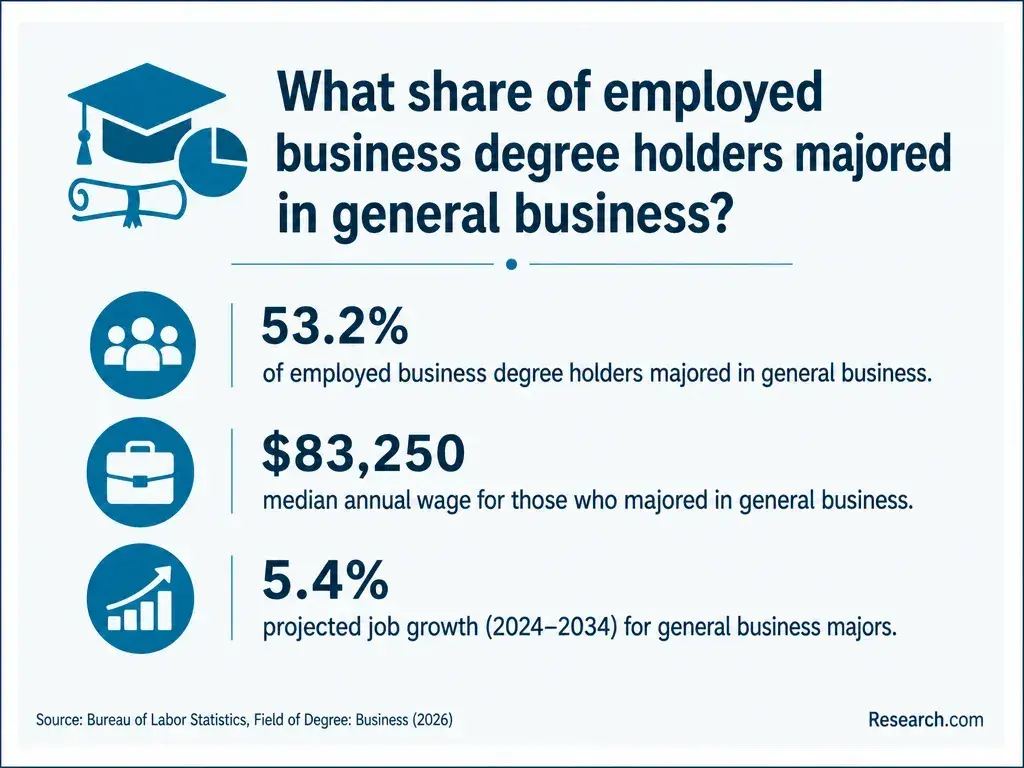
Choose a concentration only if it addresses a credible next-role skill gap or is required by the employer. If the promotion is broadly administrative or operational and you have no target function, the general path can preserve elective choice and may avoid additional prerequisites. A concentration is an official set of program requirements; a few related electives are not necessarily a concentration.
The comparison below separates the value of specialization from its possible completion cost. Confirm each option against the same school's catalog and your degree audit.
| Path | Potential value for promotion | Main trade-off to check |
| General business administration | Broad preparation for cross-functional responsibilities | Less depth in a particular function |
| Formal concentration | Focused coursework aligned with an identifiable role | Prerequisites or limited course availability may extend study |
| General degree plus targeted electives or training | Addresses a specific gap without committing to a formal concentration | Electives or training may not appear as a separate credential |
If HR becomes your target, compare the general degree with a focused pathway such as online HR degrees for transfer students. The better choice depends on which prior credits apply and whether the desired role calls for HR-specific preparation—not on the concentration's name alone.
First, verify the institution's accreditation through the accreditor and the U.S. Department of Education's recognized-accreditation information. This matters for the standing of the degree and can affect credit transfer and financial-aid eligibility. Then check whether the business school or program holds separate AACSB, ACBSP, or IACBE accreditation and whether the particular degree is within its stated scope.
Business-specific accreditation can be useful evidence about a program's review processes, but it does not establish that the curriculum fits your promotion or that graduates receive promotions. If comparing online business programs in US college rankings, verify accreditation and program details independently rather than treating rank as a substitute for an employer-policy check and degree audit.
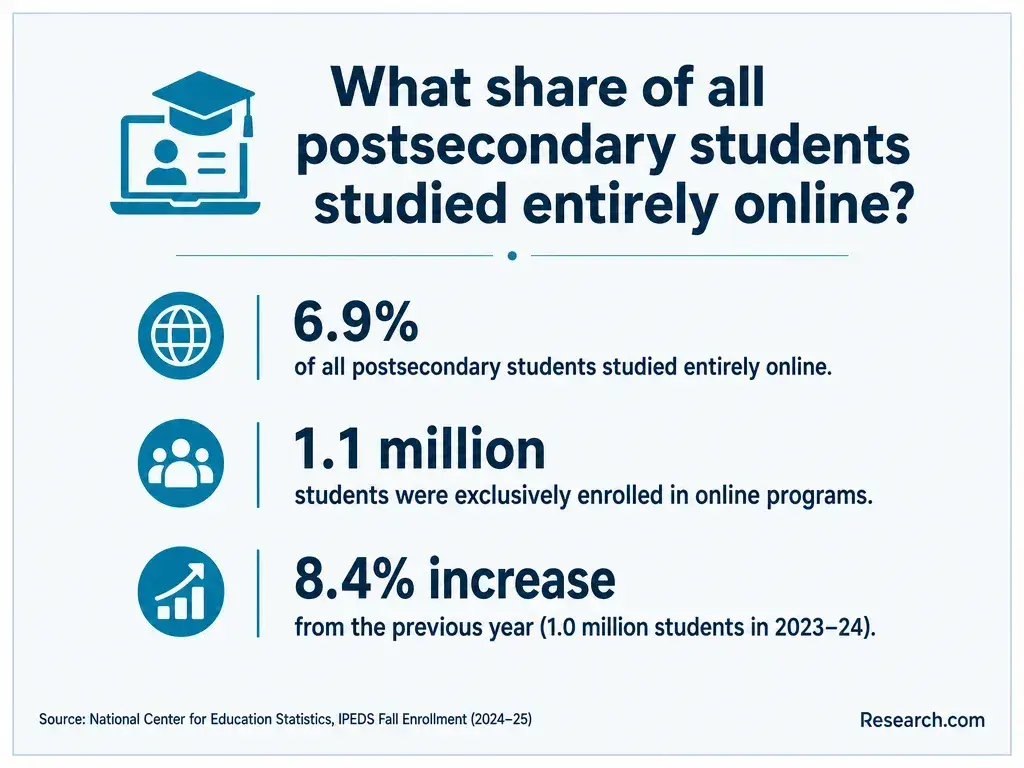
Choose the format that lets you reliably finish while maintaining your job. Online study can remove commuting, but courses may still require scheduled meetings, timed exams, group presentations, or fixed weekly deadlines. Campus study may offer easier in-person access to faculty and classmates, but travel and class times can conflict with work.
Before selecting a format, obtain sample schedules for required upper-level courses and ask about live attendance, proctoring, campus visits, technology needs, leaves of absence, and whether the required courses run every term. Review accelerated online pathways for business students only if their actual weekly workload and sequence fit your schedule. A shorter calendar does not necessarily mean fewer hours of work or a lower total cost.
Expect a business core that introduces financial statements, managerial decisions, marketing, management, economics, business law, operations, and quantitative reasoning. Programs may also require communication, general education, electives, and a capstone. Read course descriptions and prerequisites: a broadly titled degree can still require substantial accounting or statistics work.
For a promotion, prioritize coursework that strengthens responsibilities you already hold or are likely to assume. A budget assignment could support financial communication; an operations course could help you evaluate a workflow. Ask whether a capstone may examine an approved workplace problem, and obtain both academic and employer permission before using company information.
If your intended advancement is specifically into project management, compare that curriculum with transfer admission options for project management undergraduates. A general business course in projects is not the same as a degree with sustained project-focused requirements.
Requirements depend on the institution and on whether you apply as a first-time or transfer student. Schools commonly request academic transcripts and may set minimum academic standing or prerequisite rules; admission to the institution does not always equal admission to its business major. An employment record may strengthen an application without replacing required coursework.
For an experienced employee returning to school, the key document is an official evaluation showing where previous credits apply: general education, business core, electives, or other requirements. Ask the admissions or transfer office whether prior mathematics, accounting, and economics courses meet current rules, then ask an academic adviser for a graduation plan. Review the prerequisites for a business administration degree before assuming an older or differently named course will count.
Your timeline depends on requirements still outstanding, prerequisite order, course availability, and the number of courses you can manage while working. Accepted transfer credits help only to the extent they satisfy requirements in the final degree audit. A concentration that adds a hard-to-schedule course may matter more than its credit count suggests.
Request a term-by-term plan and an itemized estimate of tuition, mandatory fees, books, software, and any travel or exam costs. Then subtract only aid or employer assistance for which you have confirmed eligibility. Ask when reimbursement arrives, whether grades affect payment, and whether the benefit requires continued employment. FAFSA planning for affordable business administration study is useful when comparing financing options, but submitting the FAFSA does not guarantee a particular award.
For this reader, the most relevant job may be the next position at the current employer, not a new entry-level occupation. A general degree can support consideration for operations, administrative, sales-support, project-coordination, or supervisory-track roles when the employee also has relevant accomplishments. Actual duties and hiring standards vary; graduation alone does not confer authority to manage staff or budgets.
Evaluate openings by their tasks. If a role centers on scheduling and process improvement, show evidence of those responsibilities. If it centers on project delivery, document the scope, deadlines, stakeholders, and outcomes of work you were authorized to perform. A dedicated project management degree may provide more focused coursework, but compare its additional requirements and project management tuition fees and financial aid before switching paths solely because the job title includes "project."
What Salaries, Job Outlook, and Certifications Apply to Business Graduates?
There is no single salary or job-growth figure for a general BS in business administration: labor data tracks occupations, not everyone holding a degree. For one possible function, the U.S. Bureau of Labor Statistics reports a May 2025 median annual wage of $75,940 for human resources specialists and projects 6% employment growth from 2025 to 2035. Those occupation-wide figures include workers with different experience and education; they do not forecast your promotion pay.
Use your employer's pay range for the target position as the primary financial reference. Compare that range with your remaining education costs, including any borrowing, and the possibility that you complete the degree without receiving the promotion. Reviewing online business education on a smaller budget may help identify options, but the lowest advertised tuition is not necessarily the lowest cost to finish your degree.
Certifications are separate from a bachelor's degree. If a posting names an HR, project-management, accounting, or other professional credential, check the issuing organization's eligibility rules; business coursework alone does not award certification or professional licensure.
Other Things You Should Know About Business Administration
Ask HR whether any accredited bachelor's satisfies the promotion rule. If it does, a second degree may be unnecessary; targeted training could address remaining skill gaps.
Diploma and transcript practices vary. Ask the registrar how the degree and any concentration appear on official records, especially if your employer requests proof.
Not automatically. Ask the academic department whether it offers an approved prior-learning route or permits a workplace-based capstone; each has its own assessment and permission requirements.
Possibly. Read the benefit agreement for repayment terms, eligible expenses, grade rules, and any required period of continued employment before enrolling.
- Cost of Attendance (Budget) | 2025-2026 Federal Student Aid Handbook https://fsapartners.ed.gov/knowledge-center/fsa-handbook/2025-2026/vol3/ch2-cost-attendance-budget
- Credit for Prior Learning | Transfer Credit Ohio https://transfercredit.ohio.gov/students/student-programs/Prior-Learning-Assessments
- What Financial Aid Offers Don't Tell You About the Cost of College | U.S. GAO https://www.gao.gov/blog/what-financial-aid-offers-dont-tell-you-about-cost-college
- TNReconnect | Prior Learning Assessment Information https://tnreconnect.gov/Choose-a-Degree-College-Path/Prior-Learning-Assessment-Information
- Accreditation in the U.S. | ed.gov http://www.ed.gov/laws-and-policy/higher-education-laws-and-policy/college-accreditation/accreditation-in-the-us
- What is a business administration degree? | Northwest Media Center https://www.nwmissouri.edu/media/news/2025/07/what-is-a-business-administration-degree.htm
- Requirements for the Bachelor of Business Administration | msutexas.edu https://catalog.msutexas.edu/preview_program.php
- Prior Learning Assessment | The University of Memphis https://www.memphis.edu/uofmglobal/students/prior-learning-assessment.php
- 9 Things No One Tells You About Choosing College Electives | Thomas Edison State University https://www.tesu.edu/about/blog/2014/9-things-no-one-tells-you-about-choosing-college-electives.php
- BBA vs. BS in Business Administration | National University https://www.nu.edu/blog/bba-vs-bs-business-administration/