2027 BS in Business Administration and Supply Chain Management and Logistics: Choosing a Focus Without Direct Experience in the Field
Audited and Verified:
Our Editorial and Data Verification Process
Research.com uses government datasets, official education statistics and primary institutional information to support its career and degree guides. Our review process checks factual accuracy, occupational definitions, source dates and the requirements associated with the credentials discussed.
How This Article Was Fact-Checked
Our editorial team verifies salary estimates, employment projections, education requirements and program information against original data providers and official organizations. Salary figures are checked against the relevant occupational definitions and reporting periods. Information about licensure, accreditation and required in-person training is reviewed separately.
Fact-checked and verified on:

Co-Founder and Chief Data Scientist
You do not need a warehouse, transportation, or procurement job on your résumé to consider a supply chain focus. You do need a way to test your interest and build evidence that you can handle the work. For students entering business from another field, the choice matters because a concentration may shape electives, projects, and the first jobs they can pursue. This guide explains what the degree teaches, where beginners can gain experience, and how to compare it with broader business or more specialized options before committing.
Key Things You Should Know
- Direct industry experience is generally not required to begin undergraduate supply chain study; check the individual program's admission and internship rules.
- Choose the focus for its operations, purchasing, inventory, and analytical coursework - not because it promises an immediate management job.
- The U.S. Bureau of Labor Statistics projects 18% employment growth for logisticians from 2025 to 2035, but that occupation-wide outlook does not predict an individual graduate's prospects.
What Is a BS in Business Administration With Supply Chain Management and Logistics?
A BS in Business Administration usually combines a general business core with a designated concentration or set of electives. Supply chain management concerns how organizations source materials, coordinate suppliers, plan inventory, and deliver goods or services. Logistics is the related work of moving, storing, and distributing them. A supply chain focus can therefore prepare you to examine decisions across an entire process, not just transportation.
Check the exact credential on the school's catalog and transcript. One institution may award a BS in Business Administration with a formal concentration; another may offer only supply chain electives or a separate supply chain bachelor's degree. A broad business degree may suit someone who wants room to change functions, while a specialized degree may offer greater technical depth. If you are still testing your interest, compare the concentration's required courses with shorter pathways to an online business degree, but verify whether a faster general-business route actually includes the supply chain work you want.
Can You Study Supply Chain Management Without Direct Industry Experience?
Yes. Undergraduate courses are intended to teach foundations, although a particular school may set prerequisites for advanced courses or an internship. Experience from retail, customer service, healthcare, manufacturing, military service, or office administration can also be relevant: tracking orders, resolving shortages, scheduling work, or explaining delays all involve operational decisions. Describe what you actually did rather than relabeling it as supply chain management.
Your best starting route depends on how certain you are about the field. The comparison below separates ways to explore the work from ways to demonstrate readiness for an entry-level role.
| Starting position | Useful next move | What to verify |
| No related work experience | Take an introductory operations or logistics course and complete a supervised case or simulation. | Whether the concentration offers an applied course before advanced prerequisites. |
| Experience in another function | Connect documented ordering, scheduling, service, or data tasks to a supply chain project. | Whether a faculty member approves the project and any use of workplace information. |
| Ready to seek field experience | Apply for internships or entry-level purchasing, inventory, or logistics support work. | Site requirements, supervision, schedule, and whether academic credit is available. |
For an independent work sample, use public or fictional data to explain a reorder decision, process map, or delivery trade-off. Label assumptions and limitations; do not present a simulation as an employer result. If completion speed matters, online colleges with accelerated supply chain bachelor's study are worth comparing, but confirm that their schedules leave time for practical work.
What Careers Can You Pursue With This Business Administration Degree?
For someone without direct industry experience, the realistic first target is usually a role with defined analytical or coordination tasks, not ownership of a supply chain. Purchasing assistants help process orders and communicate with vendors; inventory coordinators monitor stock records; logistics coordinators track shipments and resolve exceptions. Some employers also hire entry-level logisticians or supply chain analysts, but they may expect stronger spreadsheet, systems, or internship experience.
Read job descriptions for tasks rather than relying on titles. Match your coursework and work samples to the employer's tools, accuracy requirements, and communication needs. Supervisory purchasing, operations, and logistics roles generally require demonstrated responsibility beyond the degree. If the work you enjoy is chiefly staffing or employee relations rather than sourcing and movement of goods, education options for future HR professionals may be a better comparison than another logistics elective.
The business core commonly introduces accounting, economics, management, statistics, and information systems. A supply chain focus may add operations management, procurement, inventory planning, transportation, forecasting, and supplier relationships. Course names alone do not show depth: examine prerequisites, assignments, software access, and whether students must interpret uncertain data and explain recommendations.
For a beginner, a useful sequence builds spreadsheet and quantitative confidence before advanced forecasting or optimization. Look for an assignment in which you justify a purchasing or inventory decision using stated costs and service goals; a course that only defines terminology offers less evidence of practical ability. If you have transfer credit or are comparing a project-management pathway, review project management bachelor's residency and transfer requirements as a reminder to ask your own school which prior courses satisfy its specific supply chain concentration, rather than merely transferring as electives.
Both formats can teach the underlying business concepts. The more important difference for a newcomer may be access to feedback, teammates, employers, and applied assignments. Campus programs can make in-person events and local recruiting easier to attend; online programs can reduce commuting but may still require live meetings, group projects, proctored exams, or internships with fixed hours.
Request a sample course schedule and ask how online students obtain internship support and faculty feedback on projects. Compare required attendance - not just advertised flexibility - when reviewing US rankings for accelerated business bachelor's degrees. An accelerated calendar is useful only if you can keep up with quantitative work and still build relevant experience.
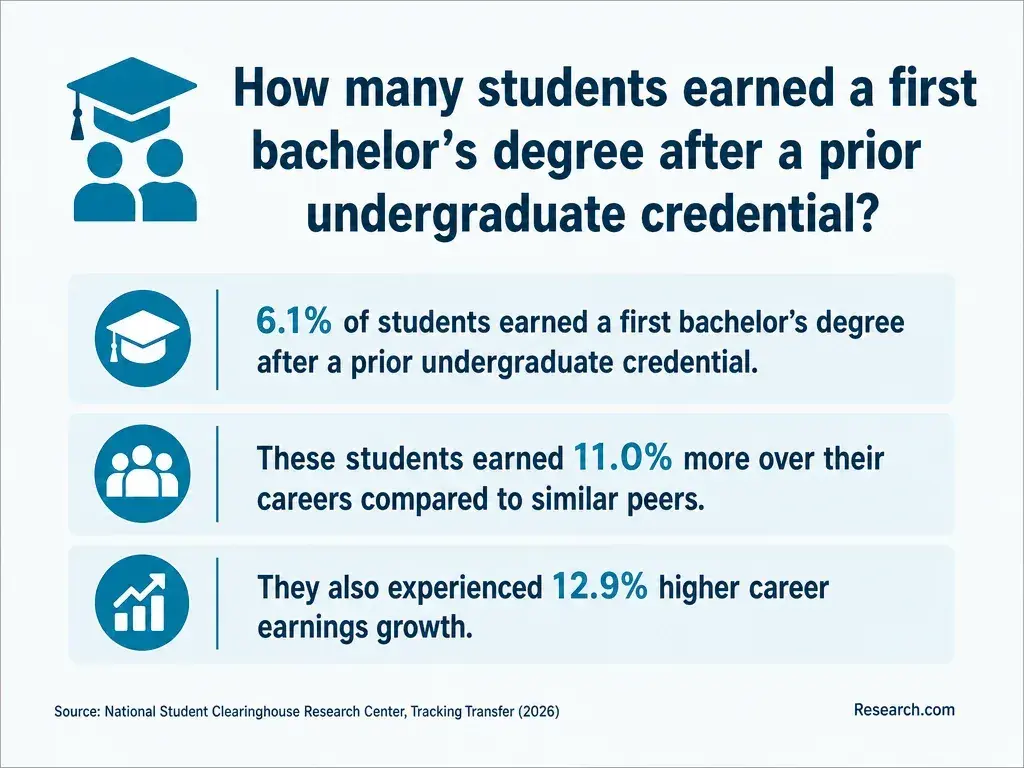
Requirements vary by institution and by whether you are entering as a first-year or transfer student. Schools may consider a high school credential or prior college transcripts and may require particular math or introductory business courses before upper-level study. Some admit students to the university first and to the business major later. Lack of supply chain employment is not, by itself, a standard undergraduate prerequisite.
Before applying, send admissions your academic record and ask separately about university admission, entry to the business major, and prerequisites for the concentration. Transfer applicants should request an official evaluation showing where accepted credits apply. For questions to bring to an adviser, see business administration admissions eligibility rules; the receiving institution has final authority over its own requirements.
A bachelor's program is commonly planned around four years of full-time undergraduate study, but your remaining time depends on accepted credits, course sequencing, enrollment pace, and when required supply chain courses run. A shorter advertised timeline is not a personalized graduation estimate. Ask for a degree audit and a term-by-term plan before budgeting.
Compare total completion cost, not tuition alone: include mandatory fees, books, software, possible travel or proctoring, and the cost of taking longer than planned. Financial aid and employer assistance can change what you pay, but eligibility and payment timing require individual confirmation. Faster undergraduate completion pathways may reduce time away from full-time work; they do not automatically reduce the price of the credits you still need.
First, confirm that the institution holds accreditation recognized by the U.S. Department of Education. Then check whether any advertised business accreditation - such as AACSB, ACBSP, or IACBE - covers the school or program you would actually attend. Institutional and business accreditation serve different purposes; neither guarantees internship placement or a job.
Ask the school to identify the accreditor, the accredited entity, and whether the online offering and your degree fall within the stated scope. Institutional eligibility also matters when evaluating federal aid. Guidance on federal aid for undergraduate project management study illustrates aid questions for an adjacent online business field, but only your prospective school can confirm its programs' eligibility and your aid offer.
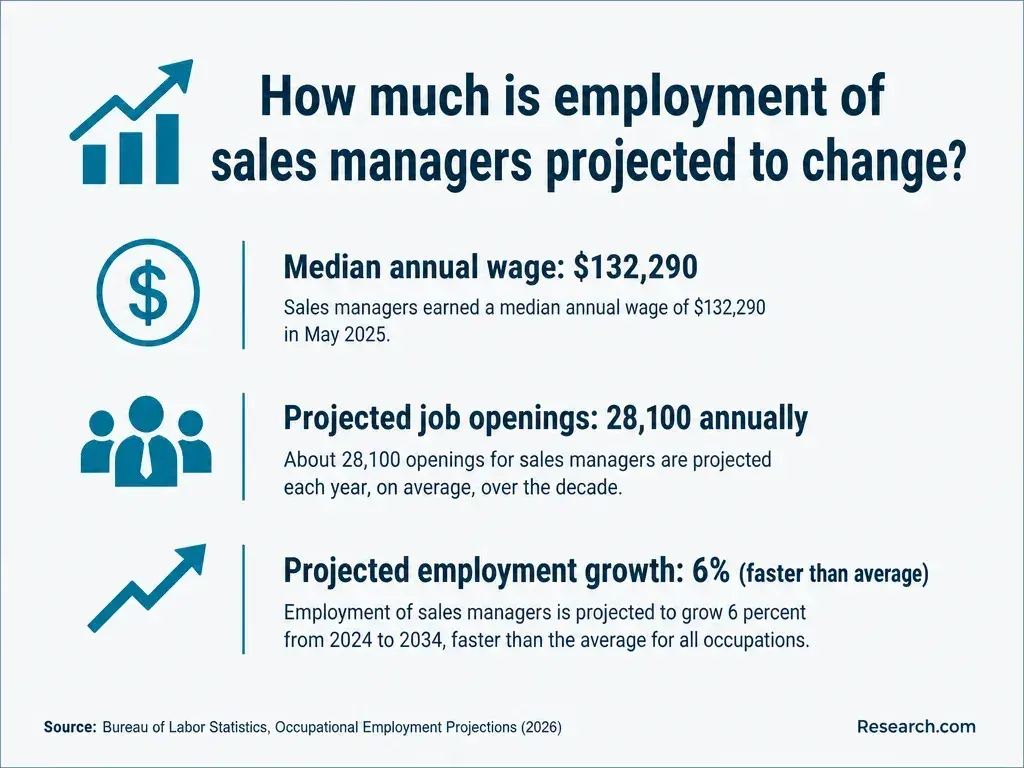
The U.S. Bureau of Labor Statistics reports a May 2025 median annual wage of $82,320 for logisticians and projects 18% employment growth from 2025 to 2035. The median covers workers across experience levels; it is not a starting salary or a forecast for everyone with a business administration degree. Your first offer will depend on the occupation, location, employer, and evidence of relevant skills.
Use local postings to compare duties and pay for coordinator, assistant, analyst, and logistician openings you could plausibly pursue. If the positions that appeal to you are primarily project-coordination roles, compare their requirements and education costs separately; affordable college choices for aspiring project managers address a different career target than a supply chain concentration. Do not choose between the two by comparing occupation-wide medians alone.
Which Certifications Can Strengthen a Supply Chain Management Career?
Voluntary credentials can signal focused learning, but they do not replace the experience an employer requires. ASCM offers supply chain certifications, and the Institute for Supply Management offers procurement-related credentials. Their exams, eligibility policies, maintenance requirements, and costs differ. Check the certifying organization's current rules before treating any course as certification preparation or assuming you qualify immediately.
Without field experience, prioritize a project, internship, or entry-level role before paying for a credential whose value depends on applying its concepts. Ask employers which certifications they recognize for your target job, then compare the full expense - including preparation and renewal - with the skills you still need. The same cost discipline applies when weighing another degree: project management study costs beyond tuition show why a different formal program should be evaluated as a separate investment, not as a substitute certification.
Other Things You Should Know About Business Administration
Not necessarily. Check the program's math prerequisites; statistics and quantitative reasoning may matter more for its required courses. Ask an adviser which courses you must finish before forecasting or analytics classes.
Some planning and analytical tasks can be done remotely, but many entry-level roles involve facilities, shipments, or on-site teams. Check each posting's location and experience requirements rather than assuming an online degree leads to remote work.
It can provide relevant business preparation, but public-sector hiring follows the agency's stated qualifications and procedures. Review the duties and eligibility rules for the specific purchasing, logistics, or administrative opening.
Ask an adviser how completed courses would apply to another concentration or to general electives. Get an updated degree audit before switching so you can see any added courses, cost, or delay.
- Quality Improvement Methods (LEAN, PDSA, SIX SIGMA) - NCBI https://www.ncbi.nlm.nih.gov/books/NBK599556/
- Sprints & Competitions - Experiential Learning https://exl.cns.utexas.edu/build-skills/sprints-competitions
- Choosing the Right Format for Your Supply Chain Degree | University of the Cumberlands https://www.ucumberlands.edu/blog/online-vs-on-campus-choose-your-supply-chain-degree-format
- 8 Things You'll Learn in a Bachelor's Concentration in Supply Chain Management | Walden University https://www.waldenu.edu/online-bachelors-programs/concentrations/supply-chain-management/resources/things-youll-learn-when-choosing-a-bachelors-concentration-in-supply-chain-management
- Supply Chain and Logistics Management Concentration | Kettering University https://www.kettering.edu/academics-research/programs/supply-chain-and-logistics-management-concentration
- Entry-Level Supply Chain Jobs and Internships | ascm.org https://jobs.ascm.org/career-resources/on-the-job-3/entry-level-supply-chain-jobs-and-internships-2026-78