2027 BS in Business Administration Curriculum: How to Evaluate Preparation in Power BI
Audited and Verified:
Our Editorial and Data Verification Process
Research.com uses government datasets, official education statistics and primary institutional information to support its career and degree guides. Our review process checks factual accuracy, occupational definitions, source dates and the requirements associated with the credentials discussed.
How This Article Was Fact-Checked
Our editorial team verifies salary estimates, employment projections, education requirements and program information against original data providers and official organizations. Salary figures are checked against the relevant occupational definitions and reporting periods. Information about licensure, accreditation and required in-person training is reviewed separately.
Fact-checked and verified on:

Co-Founder and Chief Data Scientist
A business administration program may advertise analytics while offering little hands-on Power BI practice. That difference matters if you want to turn business data into dashboards that help people make decisions. This guide is for prospective students and employees comparing BS in Business Administration curricula. It explains which courses and assignments develop useful Power BI skills, what evidence to request from schools, and when a narrower training option may be a better investment.
Key Things You Should Know
- Prioritize programs that assess data preparation, modeling, measures, dashboard interpretation, and communication - not merely software exposure.
- Request recent syllabi and a sample assignment; an "analytics" course title does not establish that Power BI is taught or required. Power BI can support several business roles, but it does not replace functional knowledge or experience.
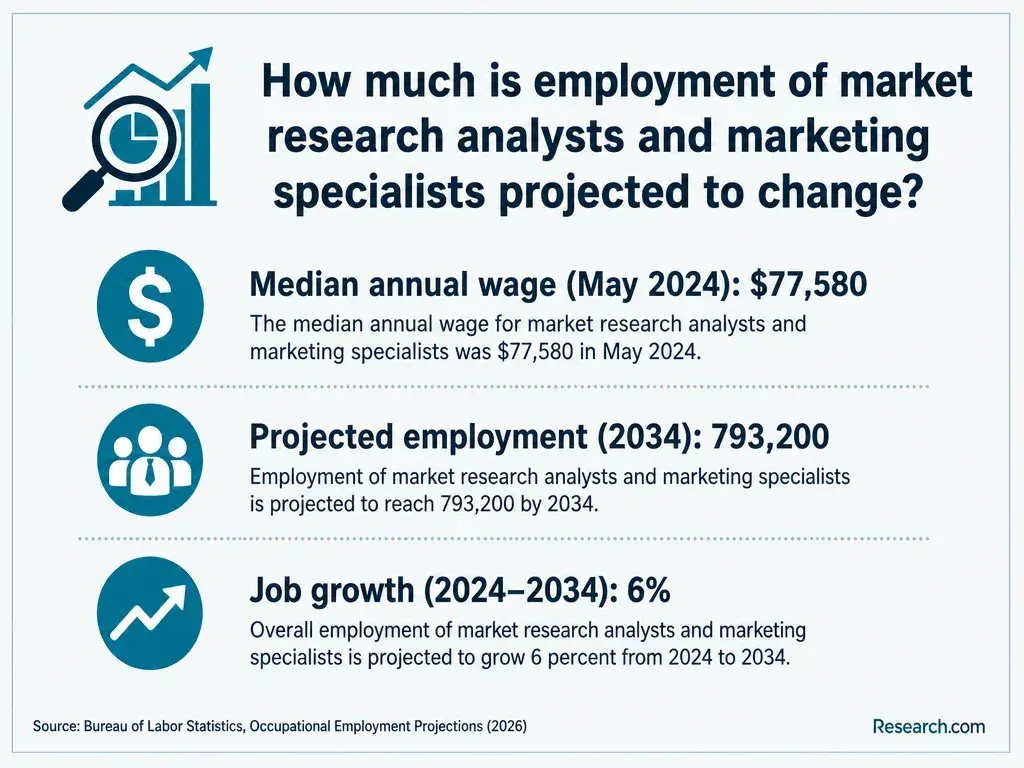
- The U.S. Bureau of Labor Statistics projects 7% growth for market research analysts from 2025 to 2035; that is an occupation-wide projection, not a degree outcome.
What Is Power BI's Role in a Business Administration Degree?
Microsoft Power BI is a business intelligence platform used to prepare data, create models and visualizations, and share reports. In a BS in Business Administration, its educational value is not the ability to make attractive charts. It is the opportunity to connect accounting, marketing, operations, or other business questions to defensible measures and explain what the evidence can - and cannot - support.
For example, a student might compare order volume and fulfillment time by month. A useful assignment would require the student to define each measure, check missing records, explain seasonal variation, and recommend what a manager should investigate next. The dashboard is an output; sound business reasoning is the skill being assessed.
Power BI is one possible tool, not a universal degree requirement or a substitute for a business concentration. If your goal is primarily logistics or procurement analysis, compare the curriculum with a specialized path using supply chain degree duration and salary considerations. The better choice depends on whether you need broad business preparation, deeper subject expertise, or simply software training.
Which Power BI Skills Should a Business Administration Curriculum Teach?
A strong undergraduate sequence moves from reliable inputs to a decision-ready report. Students should learn to import and clean data, relate tables without double-counting, define measures and time periods, select readable visuals, and check whether a result changes when filters or assumptions change. Introductory use of Power Query and DAX - the expression language used for calculations - can be valuable, but an advanced technical syllabus is not necessary for every business student.
Look for assignments that test interpretation as well as construction. A student should be able to explain the denominator behind a conversion rate, distinguish revenue from profit, flag incomplete data, and tell an intended audience what remains uncertain. Role-specific measures matter: workforce reporting, for instance, calls for different definitions and privacy safeguards than sales reporting. Students interested in that function can compare the broader coursework in a human resources degree subject guide.
Finally, assess responsible use. Students should know when company or customer data requires permission, when small groups could reveal individuals, and why a dashboard showing an association does not prove that a policy caused an outcome.
How Can You Evaluate Power BI Preparation Across Business Administration Programs?
Compare evidence of assessed student work, not just catalog language. The distinctions below help separate a program that names analytics from one that gives students repeated opportunities to practice it.
| Curriculum evidence | What it establishes | What it does not establish |
| Power BI appears in a course description | The tool is identified in published course material | That every student uses it or builds a complete report |
| A recent syllabus requires a dashboard assignment | Students are expected to produce a Power BI-related deliverable | That data cleaning, interpretation, or revision is assessed |
| A rubric assesses data quality, measures, interpretation, and communication | The assignment tests a fuller analytical workflow | That graduates have professional-level experience |
Ask the department for a recent syllabus and assignment rubric, then confirm whether the course is required for your degree plan, available in your intended term, and taught in your delivery format. If you are transferring, ask for a written evaluation showing whether prior analytics work satisfies a business-core, concentration, or elective requirement. Credit accepted by the institution may not meet the requirement you expect; the same distinction matters when examining HR bachelor's transfer credit evaluation for a different business pathway.
Give extra weight to a project that requires students to revise their work after feedback. A single guided demonstration is useful exposure, but it is weaker evidence of independent preparation than a documented assignment with an explanation of business assumptions and limitations.
Either format can teach Power BI effectively if students have reliable software access, instructor feedback, and time to complete practical assignments. Online delivery may make a degree feasible around work or caregiving, but it does not guarantee self-paced lessons. Live demonstrations, group meetings, proctored assessments, and fixed project deadlines can still shape your week.
Before choosing, ask how students access Power BI Desktop and any required virtual lab, whether the school supplies usable practice data, how technical problems are handled, and whether presentations require live attendance. Campus students should check lab hours and whether assignments can be completed on a personal computer. Online students comparing shorter schedules can review business programs with accelerated online classes, then verify the actual weekly workload and course sequence rather than assuming a faster calendar means less work.
Choose the format in which you can complete and revise a substantial project - not simply the one with the most convenient advertising.
Statistics and spreadsheet courses build the foundation for checking data and interpreting variation. Accounting teaches what financial measures mean; marketing, operations, and finance courses supply the business questions a dashboard should answer. Information systems or business analytics courses are the most likely places for explicit work in databases, data modeling, and Power BI, but titles alone cannot confirm their content.
Sequencing matters. A dashboard elective taken before statistics or introductory accounting may leave a student able to operate the tool but unable to evaluate its measures. Check prerequisites, course rotation, and whether an analytics elective counts toward an official concentration or only as a general elective. Transfer students should also confirm requirement-by-requirement applicability; a comparison of project management bachelor's credit transfer rules illustrates why accepted credits and credits that fulfill a major are different questions.
When possible, choose a capstone or supervised assignment tied to your intended function. Use public, synthetic, or explicitly approved organizational data, and verify what may appear in a portfolio. An employer-based project requires appropriate academic approval and permission to use the underlying information.
Start by verifying the institution's recognized accreditation and confirming that it applies to the school awarding the degree. Then determine whether any advertised business accreditation - such as AACSB, ACBSP, or IACBE - covers the relevant business unit or program. Institutional accreditation and specialized business accreditation answer different questions; neither guarantees that a particular course teaches Power BI well.
Check the accreditor's listing and the school's current program information rather than relying on an undated promotional page. If you are comparing a business administration degree with a different credential, apply the same checks to each option. For example, organizational leadership degrees with faster completion options may differ in both curriculum and accreditation scope. Evaluate their analytics assignments separately from their degree labels.
Requirements vary by institution and by entry route. First-year applicants commonly submit evidence of secondary-school completion; transfer applicants generally provide transcripts from previous colleges. Some schools admit students to the university before they can enter the business major, which may have its own GPA or prerequisite rules. Ask whether mathematics, statistics, accounting, or economics must be completed before admission to the major or can be taken afterward.
If you have previous coursework, request an official evaluation and degree audit rather than relying on an informal credit estimate. Ask admissions which documents are required, the business department which prerequisites apply, and an adviser how accepted credits fit your intended Power BI-related courses. If application charges are a concern, online universities with no application charge can provide a starting point for comparison; confirm each institution's current policy before applying.
A BS in Business Administration is commonly designed as a four-year undergraduate degree, but an individual completion plan depends on transferred coursework, enrollment pace, prerequisites, and when required courses are offered. Power BI preparation may be built into required courses, offered through electives, or require separate training. An elective that delays graduation has a different cost from a tool used in a course you already need.
Compare the remaining tuition and mandatory fees alongside software access, a suitable computer or virtual lab, books, and any campus travel. Request a term-by-term degree plan and an itemized estimate based on your official credit evaluation. To benchmark advertised rates, review business administration online programs with competitive tuition, but do not treat a posted rate as your final completion cost.
Financial aid and employer benefits can change what you pay and when you pay it. Ask the financial-aid office about your eligibility and borrowing obligations; ask an employer whether reimbursement covers electives or software-related costs. If you are comparing this degree with a specialized one, guidance on paying for project management bachelor's study with grants can help frame the questions, but aid must be checked for the specific school and student.
Power BI can strengthen applications for reporting-heavy work in marketing, operations, finance, and project coordination. The relevant evidence is a work sample showing that you can define a business question, prepare data, explain measures, and communicate a finding - not a claim that the software alone qualifies you for an analyst title. Entry requirements vary by employer, and substantial financial, technical, or managerial responsibilities often require additional subject knowledge and experience.
For salary context, the U.S. Bureau of Labor Statistics reports a May 2025 median annual wage of $78,760 for market research analysts and projects 7% employment growth for that occupation from 2025 to 2035. The median covers workers across experience levels and is not an expected starting salary for a new business graduate or a return on Power BI training.
Target your projects to the role you want: campaign measures for marketing, process measures for operations, or schedule and resource measures for project support. If project work is your primary goal, compare the business curriculum with online project management degrees with lower tuition and examine which option offers the more relevant assignments and entry-level opportunities.
Which Power BI Certifications Complement a Business Administration Degree?
Microsoft's Power BI-related credentials, including its Power BI Data Analyst certification, can provide a separate way to demonstrate tool-specific knowledge. A degree provides broader business and quantitative context; a certification assesses a defined set of technical skills. Neither substitutes for evidence that you can apply those skills to an appropriate business decision. Verify the current exam, objectives, fees, and renewal rules with Microsoft before committing.
If you already have a bachelor's degree or relevant business experience and only lack Power BI practice, targeted training and a carefully documented project may be more direct than another undergraduate degree. If you need the bachelor's credential or foundations in accounting, statistics, and business functions, certification alone will not fill that gap. Compare the full cost of each route - including any remaining degree requirements - using options such as business administration online programs with competitive tuition only if a degree is necessary for your goal.
Other Things You Should Know About Business Administration
Check the course's software requirements before enrolling. If a required desktop application is unavailable for your computer, ask whether the school provides a supported virtual Windows environment or lab access and whether that access works for every assignment.
Usually only if you have the right to share its data, visuals, and underlying work. Check course and employer rules first; public or synthetic data is often a simpler choice than confidential organizational records.
No. A dashboard can show patterns, but other factors may explain a change. State the comparison period, data limitations, and alternative explanations before attributing an outcome to an action.
A classroom project can demonstrate skills, but it should be labeled as academic work. Describe your own contribution and methods accurately; do not present a simulated assignment as an implemented employer project.
- The future of feedback: Motivating performance improvement through future-focused feedback - PMC https://pmc.ncbi.nlm.nih.gov/articles/PMC7304587/
- Microsoft Power BI Training | University of Cincinnati https://www.business.uc.edu/about/centers-partnerships/business-analytics/training/ms-powerbi-training.html
- How is Data Analytics Used in Accounting? | Michigan Technological University https://www.mtu.edu/business/undergraduate/accounting/how-data-analytics/
- Virtual internships as alternative work-based learning | sciencedirect.com https://www.sciencedirect.com/science/article/pii/S0360131525002076
- Understanding Power BI Licenses - 4Help.vt.edu - Virginia Tech https://4help.vt.edu/sp
- Creating better internships by understanding mentor challenges | springer.com https://link.springer.com/article/10.1186/s40594-024-00518-y
- 9 Real-World Power BI Projects with Datasets | Great Learning Blog https://www.mygreatlearning.com/blog/power-bi-projects-with-datasets/
- 86 Best Master's Degrees in Business Analytics Programs | DiscoverDataScience.org https://www.discoverdatascience.org/related-programs/masters-in-business-analytics/
- The Future of Business Data Analytics and Accounting Automation - The CPA Journal https://www.cpajournal.com/2024/01/31/the-future-of-business-data-analytics-and-accounting-automation/
- Microsoft Data Analysis with SQL, Excel & Power BI | Coursera https://www.coursera.org/specializations/microsoft-data-analysis-sql-excel-powerbi