2027 From Veterinary Practice Work to Business Management: When Does a BS in Business Administration Make Sense?
Audited and Verified:
Our Editorial and Data Verification Process
Research.com uses government datasets, official education statistics and primary institutional information to support its career and degree guides. Our review process checks factual accuracy, occupational definitions, source dates and the requirements associated with the credentials discussed.
How This Article Was Fact-Checked
Our editorial team verifies salary estimates, employment projections, education requirements and program information against original data providers and official organizations. Salary figures are checked against the relevant occupational definitions and reporting periods. Information about licensure, accreditation and required in-person training is reviewed separately.
Fact-checked and verified on:

Co-Founder and Chief Data Scientist
Veterinary technicians, receptionists, and practice leads often learn scheduling, purchasing, and client service on the job - then discover that managing a clinic also means understanding budgets, staffing, and operations. A BS in Business Administration can help bridge that gap, but it is not the only route. This guide shows which veterinary career goals justify a full degree, which skills employers may value more, and how to compare programs without assuming a diploma will lead directly to a management job.
Key Things You Should Know
- A business administration degree makes the most sense when you want broader responsibility - such as budgets, staffing, or multi-site operations - and need both business training and a bachelor's credential for your target roles.
- It does not replace veterinary clinical qualifications or management experience. For a narrower skill gap, employer training, mentorship, or targeted coursework may be faster and less costly.
- For salary context, the U.S. median for administrative services managers was $114,130 in May 2025; that occupation-wide figure is not a starting salary or a veterinary practice manager salary.
What Is a BS in Business Administration for Veterinary Practice Professionals?
A BS in Business Administration is an undergraduate degree covering how organizations manage money, people, customers, and operations. It is usually a general business degree, not a veterinary credential. A veterinary worker might apply its lessons to appointment capacity, inventory purchasing, payroll planning, or client-service processes, while relying on veterinarians and credentialed clinical staff for medical decisions.
The exact curriculum matters more than the initials. A BS, BBA, or BS in Management may have overlapping courses but different quantitative requirements, electives, and transfer rules. If your main goal is supervising people rather than managing the financial and operational sides of a clinic, compare the actual coursework with organizational leadership bachelor's routes of three years or less. A shorter advertised timeline is useful only if your credits apply and the schedule works around practice shifts.
When Does a Business Administration Degree Make Sense for Veterinary Workers?
The strongest case is a defined next role with responsibilities you cannot yet demonstrate. A lead receptionist already handling complaints and schedules, for example, may need accounting, employment-practice knowledge, and documented budget work before competing for broader operations roles. A credentialed technician seeking to remain primarily in patient care may get less value from a general business degree.
Use your target job postings and current responsibilities to distinguish a degree requirement from a skill gap. These situations call for different investments:
| Goal | Likely best first move | When a BS becomes more compelling |
| Run one clinic's daily schedule and front desk | Seek supervised scheduling, purchasing, and staff-coordination duties | Target employers require a bachelor's, or the role includes substantial financial and personnel accountability |
| Move into regional or multi-site operations | Document process improvements and learn to interpret operating reports | You need broad business preparation and a credential for roles beyond one practice |
| Manage a defined implementation project | Build project experience and close specific planning gaps | Postings consistently require a bachelor's and you want broader operations options |
| Stay in clinical practice while strengthening one business skill | Take a focused course or pursue employer training | Your longer-term goal changes toward management |
For a project-focused goal, compare the full business degree with economical project management degree programs. Neither path substitutes for evidence that you have planned work, coordinated stakeholders, and handled setbacks. If you already hold a bachelor's degree, also ask whether a second undergraduate degree adds more value than targeted study and relevant experience.
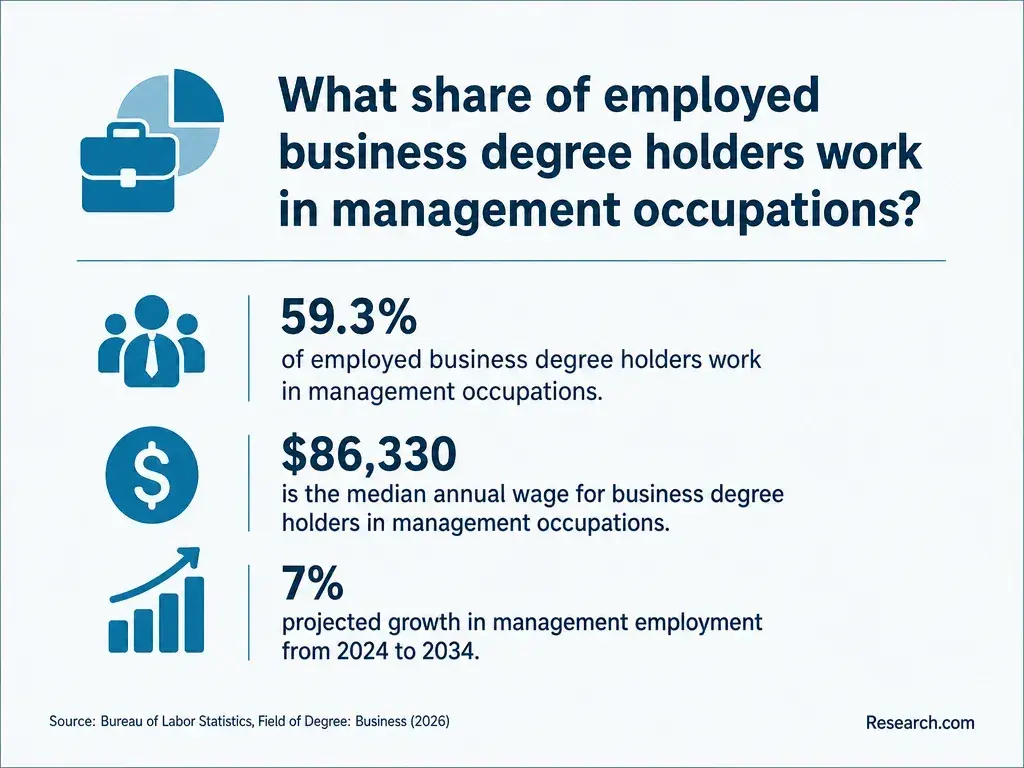
What Career Paths Can a BS in Business Administration Open in Veterinary Medicine?
The most direct path is often advancement within a practice: from client-service or clinical support work into a lead, assistant manager, or practice manager role. Responsibilities can include staffing schedules, vendor relationships, revenue-cycle oversight, client experience, and performance reporting. A larger veterinary organization may separate those duties into recruiting, purchasing, training, project coordination, or regional operations positions.
Entry routes depend on what you have already done. Someone who has supervised a shift and tracked inventory can present that evidence alongside coursework; someone with limited administrative experience may need a coordinator role before managing a site. Employers may also expect familiarity with practice-management software and veterinary workflows, which a general business degree does not necessarily teach.
Project coordination is one possible adjacent route, but it is not interchangeable with practice management. If you are comparing degree-completion options for that direction, a project management bachelor's transfer planning guide can help frame questions about whether prior credits satisfy major requirements rather than merely count as electives. Whichever route you choose, compare actual job duties - not just titles - before committing to a program.
Useful coursework typically includes accounting, finance, management, marketing, operations, statistics, and business communication. For a veterinary worker, the test is whether assignments let you practice decisions you may face: interpreting a budget, evaluating a purchasing choice, improving appointment flow, or presenting a staffing proposal. Introductory exposure is not proof that you can independently manage a clinic's finances or employment obligations.
An operations or management concentration may add relevant depth; an HR concentration may be useful if hiring, onboarding, and staff development are central to your goal. Check whether a concentration is formally recorded, which courses are actually offered, and whether it adds credits. If you are considering a separate HR bachelor's instead, review human resources bachelor's residency and transfer rules alongside the curriculum: a specialized title does not help if completing it requires substantially more coursework than your goal warrants.
Ask whether a capstone can address a veterinary operations question using approved, appropriately protected information. A proposal based on public information or anonymized examples can be valuable; enrollment alone does not authorize access to client, employee, or financial records.
There is no universal U.S. business-degree or standalone practice-manager license requirement. Employers set their own education and experience criteria, and duties may be divided differently across clinics. Veterinary medical practice is a separate matter: a business degree does not authorize diagnosis, treatment, prescribing, or work reserved for licensed veterinary professionals under state law.
Optional management credentials and employer training may help demonstrate specific knowledge, but check their eligibility rules and whether target employers recognize them. If the job is mainly coordinating technology changes or opening a new location, compare relevant experience and targeted training with the full cost of a degree; you can also find project management programs with lower total costs as a specialized comparison. Do not assume a project management degree - or a business degree - confers a professional certification.
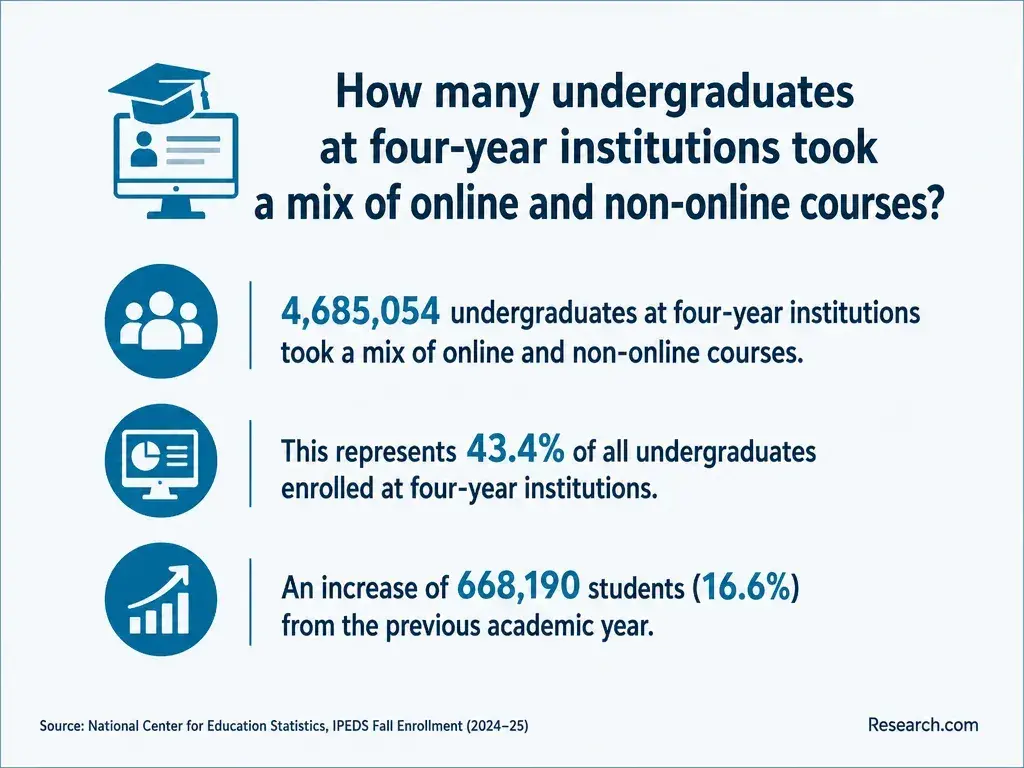
Online study can reduce travel after a clinic shift, while campus classes may make it easier to meet faculty and classmates in person. Neither format is automatically more flexible: an online program can still require live sessions, group meetings, proctored exams, fixed deadlines, or an in-person experience. Campus schedules may also fit a worker who has predictable days off.
Before applying, request a sample term schedule and ask how often required courses run, whether exams have fixed windows, and how group projects are coordinated. Compare those obligations with your busiest practice weeks, not an ideal week. US business college rankings for online learners can help you identify programs to investigate, but scheduling policies and degree requirements should control your choice more than a ranking.
A bachelor's degree is commonly planned as four years of full-time study, but your remaining time depends on accepted credits, where those credits apply, required course sequences, and how many courses you can take while working. An accelerated calendar does not remove coursework. Compare accelerated online pathways for business students against the number of terms you can realistically sustain during clinic hours.
There is no responsible single price for this decision without a school-specific degree audit. Compare the remaining tuition and required fees at each school, then add books, software, travel or proctoring, and any income you would give up by reducing work hours. Employer reimbursement can lower your eventual expense but may not cover your upfront bill; confirm caps, grade rules, and repayment conditions in writing.
Ask each school for an evaluation showing which prior courses fulfill general education, business core, and elective requirements. An accepted course that fills only an elective slot may save less time than its credit count suggests. Use that evaluation and a term-by-term plan to estimate total completion cost, rather than comparing advertised tuition alone.
Requirements vary by school and by whether you apply as a first-year, transfer, or second-degree student. Schools generally review prior education and official transcripts; a business major may have separate entry standards or require mathematics, accounting, economics, or statistics courses. Veterinary work can strengthen your application and clarify your goals, but it does not automatically replace a prerequisite or earn academic credit.
If you have veterinary technology, community-college, or earlier university coursework, send transcripts for an official review and ask which requirements each course satisfies. Confirm whether admission to the university also means admission to the business major. Application charges are a smaller cost than tuition, but if you are applying to several schools, a guide to online colleges without application fees can help you identify options to verify directly.
There is no single national wage for everyone called a veterinary practice manager, and a BS in Business Administration does not carry a standard graduate salary. Practice size, location, ownership structure, duties, and prior experience all affect pay. Compare local postings for roles with the responsibilities you want, rather than treating every manager title as equivalent.
For context, the U.S. Bureau of Labor Statistics reports a May 2025 median annual wage of $114,130 for administrative services managers. That occupation covers many industries and experienced workers; it should not be read as the expected pay for a new graduate or a veterinary clinic manager. Before borrowing for school, compare credible local pay ranges and advancement opportunities with your remaining education cost. A faster degree route, including quick online bachelor's pathways, only improves that calculation if you can complete it without taking on unsuitable costs or sacrificing needed work experience.
How Do You Choose an Accredited Business Administration Program?
Start by confirming the institution's recognized accreditation and the exact degree it awards. Then check whether any advertised AACSB, ACBSP, or IACBE accreditation applies to the relevant business school or program; institutional and business-specific accreditation are different claims. Neither is a substitute for examining course access, costs, and support for working students.
For a veterinary career goal, request the curriculum, an official transfer evaluation, a realistic course schedule, and the rules for internships or workplace projects. Ask career services whether it supports students pursuing healthcare or veterinary operations roles, rather than assuming general business recruiting will cover that niche. Finally, compare written financial-aid offers and employer benefits using your remaining courses. If a specialized project management degree is also under consideration, FAFSA planning for project management bachelor's students can help organize the same aid questions - but only each school can confirm your eligibility and actual award.
Other Things You Should Know About Business Administration
Ownership and control rules vary by state and by business structure. A business degree does not override veterinary practice laws; consult the relevant state veterinary board and qualified legal counsel before making ownership plans.
No. A professional certification assesses eligibility and knowledge under its issuing organization's rules; a bachelor's is an academic degree. Check the certification's current requirements separately.
Possibly, but employment alone does not award academic credit. Ask the program whether your duties, supervision, learning objectives, and documentation meet its internship requirements before relying on that option.
Only with appropriate employer permission and compliance with school rules and privacy obligations. When access is not approved, use public information, a clearly hypothetical case, or properly authorized de-identified material.
- Understanding competency development of the management workforce in veterinary clinical practice: A scoping review - PMC https://pmc.ncbi.nlm.nih.gov/articles/PMC12089072/
- Is a Business Degree Worth it: Separating Fact From Fiction | Franklin University https://www.franklin.edu/blog/is-a-business-degree-worth-it
- Taking Care of Business in Veterinary Medicine | VetCat Insider https://vetmed.arizona.edu/news/taking-care-business-veterinary-medicine
- What's the Difference Between Business Administration and Business Management? | Husson University https://www.husson.edu/online/blog/2022/02/business-administration-vs-business-management
- Jobs You Can Get With a Business Administration Degree | AUM Online https://online.aum.edu/resources/article/what-jobs-can-you-get-with-a-business-administration-degree/
- Finishing Your Business Degree: Cost and Considerations | regiscollege.edu https://www.regiscollege.edu/blog/completing-your-degree/how-much-does-a-business-degree-cost
- Five Essential Business Management Skills Every Leader Should Master | The University of Scranton https://gradadmissions.scranton.edu/blog/articles/business/business-management-skills.shtml
- Applied Management vs Business Administration | Missouri Baptist University (Mobap) https://www.mobap.edu/news/applied-management-vs-business-administration/
- What Can You Do With a Business Administration Degree? | snhu.edu https://www.snhu.edu/about-us/newsroom/business/what-can-you-do-with-a-business-administration-degree
- What Is Veterinary Practice Management? | Carrington College https://carrington.edu/blog/what-is-veterinary-practice-management/