2027 Management Information Systems vs. Customer Experience for a Business Administration BS: Which Fits?
Audited and Verified:
Our Editorial and Data Verification Process
Research.com uses government datasets, official education statistics and primary institutional information to support its career and degree guides. Our review process checks factual accuracy, occupational definitions, source dates and the requirements associated with the credentials discussed.
How This Article Was Fact-Checked
Our editorial team verifies salary estimates, employment projections, education requirements and program information against original data providers and official organizations. Salary figures are checked against the relevant occupational definitions and reporting periods. Information about licensure, accreditation and required in-person training is reviewed separately.
Fact-checked and verified on:

Co-Founder and Chief Data Scientist
Choosing between Management Information Systems (MIS) and Customer Experience (CX) changes which business problems you learn to solve—and which work samples you can show employers. MIS emphasizes the systems and data behind operations; CX emphasizes how customers experience a company's products and services. For a student choosing a BS in Business Administration concentration, the distinction matters more than the concentration's name.
This comparison connects coursework to realistic entry roles, examines salary evidence without promising outcomes, and identifies the program details to check before committing.
Key Things You Should Know
- Choose MIS if you want to improve business systems, data flows, or technology-supported processes; choose CX if you want to research and improve customer interactions.
- Compare required courses and approved projects, not labels: an MIS track may be business-focused rather than technical, while CX may emphasize service, marketing, or both.
- Neither concentration guarantees a management job. For context, BLS projects 7% employment growth from 2025 to 2035 for both project management specialists and market research analysts—related occupations, not outcomes for concentration graduates.
What is the difference between Management Information Systems and Customer Experience in business administration?
MIS studies how organizations select, use, and improve information systems to support decisions and operations. CX studies the customer's interactions with an organization across channels and how to identify and reduce friction in those interactions. Both can use data, but they usually start with different problems.
This comparison shows the typical emphasis of each concentration. Individual curricula may differ substantially, so use it to frame questions for a program adviser rather than assume these courses are required everywhere.
| Decision point | MIS | Customer Experience |
| Primary question | How should information and systems support the business? | What is happening across the customer journey, and what should improve? |
| Likely work | Map processes, document requirements, examine data flows | Analyze feedback, map journeys, assess service or marketing touchpoints |
| Common collaborators | Operations staff, analysts, IT teams, system users | Customers, service teams, marketers, product or operations staff |
| Important limit | Business MIS coursework may not provide deep programming preparation | CX coursework may not provide deep statistical or marketing-research preparation |
A student drawn to motivating employees and leading teams may compare accelerated organizational leadership degrees more relevant than either concentration. Leadership, system design, and customer research are related, but they are not interchangeable specialties.
Which business administration concentration is better for your career goals?
Choose MIS when your target work involves translating business needs into system requirements, improving workflows, or making organizational data more usable. It is particularly sensible if you enjoy spreadsheets and process diagrams and are willing to build technical skills beyond the business core. Choose CX when you want to investigate customer needs, improve service delivery, or coordinate changes across marketing, product, and support teams. Your communication and research skills will matter as much as your ability to interpret measures.
For an early-career student, the deciding factor should be the evidence you can produce. An MIS project might document an approved workflow and propose system requirements; a CX project might map a journey using permitted, anonymized feedback and explain where the evidence is incomplete. Neither classroom proposal proves that an employer implemented the change.
Compare the remaining credits, prerequisites, and project access for both tracks. If neither matches your actual goal—for example, coordinating inventory and distribution—compare shorter online supply chain bachelor's pathways rather than choose MIS solely because logistics uses software.
What do you learn in MIS and Customer Experience degree programs?
Both concentrations generally sit alongside a business core that may include accounting, marketing, management, statistics, and operations. The concentration's incremental value comes from its required upper-level courses and applied assignments, not from core courses every business student takes.
An MIS sequence might cover business systems analysis, databases, analytics, information security principles, and technology project coordination. Check whether students actually practice querying data, writing requirements, or testing a proposed process; a systems overview alone is different preparation. If coordinating implementation is your main interest, affordable online study routes in project management provide a separate option to compare against the MIS course sequence.
A CX sequence might include customer research, service design, journey mapping, feedback analysis, and retention or service measures. Ask whether assignments distinguish a customer complaint from a representative finding and whether students learn to protect personal information. A strong project in either track states its data source, assumptions, limitations, and recommendation; access to a workplace's customer or system records requires permission.
MIS-related starting points can include business systems support, operations analysis assistance, implementation coordination, or junior business analyst work. Tasks may involve documenting user needs, checking reports, or helping teams adopt a system. Jobs requiring substantial programming, cybersecurity, or database administration typically need additional technical preparation.
CX-related starting points can include customer insights assistance, service operations coordination, marketing research support, or customer success support. The work may involve organizing feedback, reporting patterns, and coordinating improvements. "Customer success manager" and similar titles vary widely; some employers expect prior account ownership or sales experience rather than a newly earned concentration.
Look at the tasks and required experience in local postings, then match them to coursework, an internship, or a permitted portfolio sample. If your preferred work is recruiting or employee relations rather than customer-facing improvement, choosing a degree in human resources is a more direct comparison.
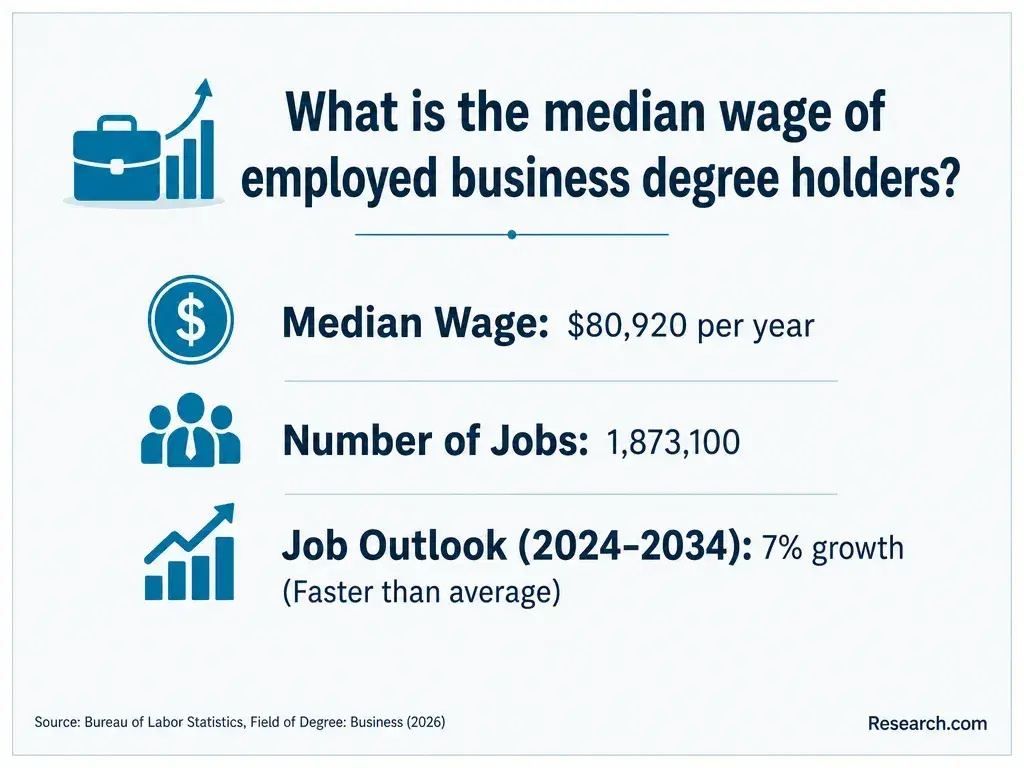
There is no reliable national salary for "MIS concentration graduate" or "CX concentration graduate." The following US Bureau of Labor Statistics figures describe occupations with some related work, not starting pay or guaranteed destinations for BS graduates. They help put possible longer-term pathways in context.
| Related occupation | May 2025 median annual pay | Projected US employment growth, 2025-2035 | Why the comparison is limited |
| Project management specialist, sometimes related to MIS implementation work | $102,320 | 7% | Project responsibility and experience vary; this is not a general MIS salary. |
| Market research analyst, sometimes related to CX research work | $78,760 | 7% | Research roles may demand stronger methods skills than a CX concentration provides. |
The pay difference does not establish that MIS is the better financial choice: these occupations have different duties and experience profiles. Compare the qualifications and posted pay for roles you could realistically pursue in your location. If your target is logistics instead, assess shorter supply chain degrees and career value on their own terms rather than borrowing MIS or CX salary figures.
Business administration degrees can be delivered online, on campus, or in hybrid formats, but the availability of a particular concentration depends on the school and enrollment term. CX content may also appear under marketing, service management, or selected electives rather than an officially named concentration. An online BS does not necessarily offer every concentration its campus version offers.
Check the delivery mode of each required concentration course, not just the degree's advertised format. Ask about live meetings, group-project scheduling, software access, proctored assessments, campus visits, and whether required courses run often enough for your planned pace. US business college rankings for online learners can help generate options, but the current catalog and course schedule determine whether a specific track is feasible.
Requirements vary by institution and by whether you are entering college, transferring, or applying separately to the business major. Schools commonly review prior transcripts and may require particular grades or completion of mathematics, statistics, or introductory business courses before upper-level work. MIS courses may have additional quantitative or information systems prerequisites; a CX track may require marketing or research coursework.
Ask admissions which requirements apply to entry, and ask a business adviser which must be completed before concentration courses. If you have prior college work, request an evaluation showing where accepted credits apply; admission and credit toward a concentration are separate decisions. Financial aid eligibility is separate again. Students considering a different project management pathway can consult an online project management undergraduate funding guide, then confirm aid details with each school.
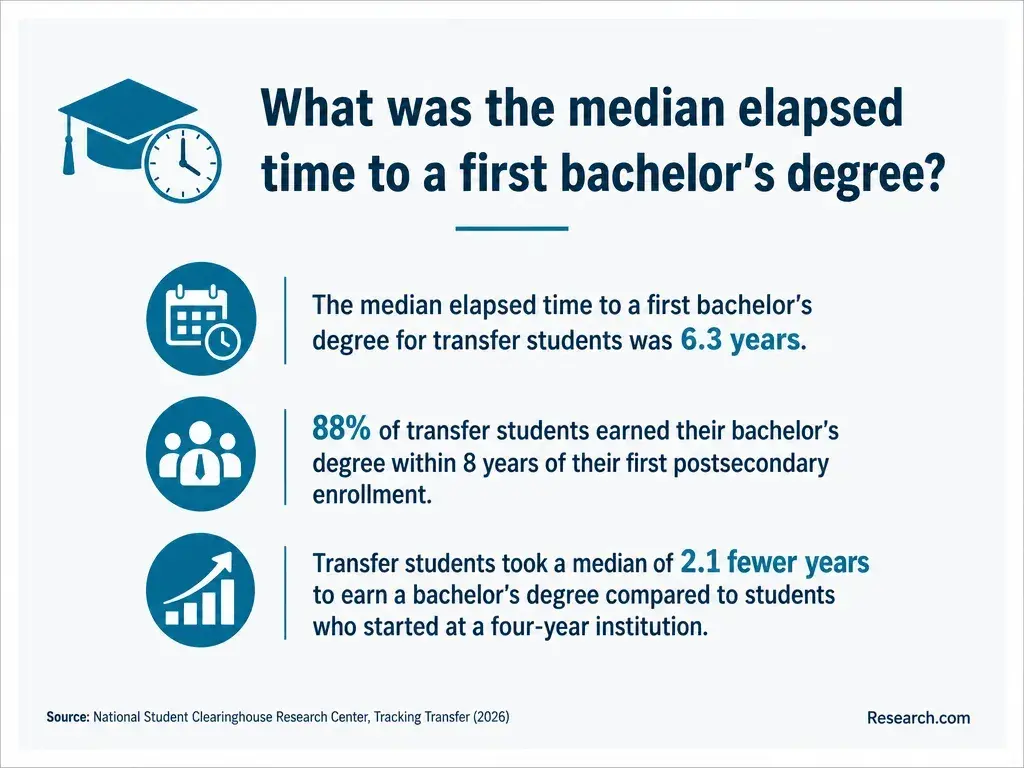
A bachelor's degree is commonly planned as four years of full-time study, but the time you need depends on applicable transfer credit, enrollment pace, prerequisites, and when required courses are offered. Switching concentrations late may add time if completed electives do not satisfy the new track.
Request a term-by-term plan for each option, including business core, concentration, capstone, and any residency requirements. Compare the remaining required courses and total charges, not just an advertised completion window. Shorter undergraduate business programs across the US can provide alternatives to investigate, but a faster timeline does not establish that your credits will apply or that the workload is manageable.
Verify the institution's recognized accreditation first. Then check whether its business school or the particular program falls within any claimed AACSB, ACBSP, or IACBE accreditation; these organizations' scopes are not interchangeable with institution-level accreditation. Accreditation alone does not establish that MIS or CX is offered, that a concentration appears on the transcript, or that graduates obtain particular jobs.
Ask the school to identify the exact degree and concentration in its current catalog and explain how each credential is recorded. When comparing price alongside accreditation, compare business administration tuition and FAFSA eligibility, then obtain a school-specific estimate based on your remaining requirements and aid status.
Do MIS or Customer Experience careers require licenses or certifications?
Neither concentration itself confers an occupational license, and many related business roles have no universal licensing requirement. Employers may prefer particular software skills or voluntary credentials, but eligibility rules and the value of a certificate depend on the role and credential provider. A course in project management, analytics, or customer service does not automatically qualify you for a professional certification.
Start with the qualifications in postings for your target role. If they emphasize one tool or method, a focused course and a credible work sample may be more efficient than changing concentrations. If they require a bachelor's degree you have not completed, compare whether business degree options with shorter sessions offer the necessary courses in a workable sequence; shorter sessions are not the same as fewer requirements.
Other Things You Should Know About Business Administration
Possibly. Some schools permit electives, a minor, or a second concentration, but scheduling and credit rules differ. Ask whether courses can count toward both and whether combining them adds credits.
No. They may overlap in customer research, but marketing can also focus on campaigns, pricing, and acquisition, while CX considers interactions throughout the customer relationship. Compare required courses rather than names.
Not necessarily. Business-focused MIS programs vary in technical depth. Check prerequisites and assignments to see whether coding is required, taught, or largely outside the curriculum.
Yes. It can demonstrate familiarity with customer problems and service processes. Pair that experience with evidence that you can analyze patterns and propose improvements without disclosing customer information.
- Entry-Level Jobs With a Business Administration Degree | Warner Pacific University http://www.warnerpacific.edu/blog/top-entry-level-jobs-ba-business-administration/
- Management Information Systems - Department of Business | Mississippi University for Women https://www.muw.edu/business/bba/mis/
- How Employers Evaluate Entry-Level Tech Candidates - CIAT https://www.ciat.edu/blog/how-do-employers-evaluate-entry-level-tech-candidates-today/
- Top Transferable Skills Employers Want Across Industries | Missouri Baptist University Online https://online.mobap.edu/about/news/essential-transferable-skills-for-modern-career-success/
- What Can I Do With a Management Information Systems Major? | Eller College of Management https://eller.arizona.edu/programs/undergraduate/professional-development/majors/mis
- What Is a Customer Journey Map? Examples & Process | Harvard Business School https://online.hbs.edu/blog/post/customer-journey-map
- 25 Transferable Skills Employers Look For | Business Career Center https://careerconnections.smeal.psu.edu/blog/2022/10/28/25-transferable-skills-employers-look-for/
- College of Business Administration - Academic Catalog https://catalog.uic.edu/ucat/colleges-depts/business-administration/
- What Is a Capstone Project? Types, Examples, and Tips | SCU https://www.scu.edu/business/blog/business-concepts/what-is-a-capstone-project/
- Tips for Choosing Your Business Concentration | fullerton.edu https://business.fullerton.edu/news/story/tips-for-choosing-your-business-concentration