2027 Can a BS in Business Administration Prepare You for a Risk Operations Analyst Role? Skills and Entry Requirements
Audited and Verified:
Our Editorial and Data Verification Process
Research.com uses government datasets, official education statistics and primary institutional information to support its career and degree guides. Our review process checks factual accuracy, occupational definitions, source dates and the requirements associated with the credentials discussed.
How This Article Was Fact-Checked
Our editorial team verifies salary estimates, employment projections, education requirements and program information against original data providers and official organizations. Salary figures are checked against the relevant occupational definitions and reporting periods. Information about licensure, accreditation and required in-person training is reviewed separately.
Fact-checked and verified on:

Co-Founder and Chief Data Scientist
A risk operations analyst helps an organization spot, investigate, and reduce problems in its everyday processes. A BS in Business Administration can provide a useful foundation, but employers also need evidence that you can work with data, follow controls, and explain findings clearly.
If you are choosing a major or trying to move from an operations job into risk work, this guide connects degree coursework to actual tasks. It also explains where the degree falls short, what entry-level experience can close the gap, and how to judge whether another pathway would serve you better.
Key Things You Should Know
- Yes. A BS in Business Administration can prepare you for entry-level risk operations work when it includes analytics, accounting, operations, and opportunities to document real or simulated control problems; the degree alone does not establish job readiness.
- Entry requirements vary by employer and industry. Some roles emphasize transaction review and process controls, while others expect experience with fraud, banking compliance, data tools, or a specific operating system.
- There is no single reliable national salary figure for "risk operations analyst." The closest published occupation depends on the job's actual duties, so compare vacancies by responsibilities rather than title alone.
Can a BS in Business Administration prepare you for a risk operations analyst role?
Yes, as a foundation - not as a stand-alone qualification. Risk operations is the practical side of identifying and managing losses, errors, fraud, compliance failures, and process breakdowns. A business administration degree can teach you how transactions, budgets, information systems, and organizational controls fit together. An employer will still want to know whether you can investigate an exception, assess its significance, and document a defensible next step.
The degree is a particularly sensible choice if you want flexibility across operations roles or already have customer service, banking, logistics, or administrative experience to build on. A specialized finance, accounting, information systems, or supply chain degree may be more direct when you know the industry and its technical requirements. If you already hold a bachelor's degree, targeted training plus relevant work experience may cost less than earning a second one.
Before enrolling, compare the program's course sequence and applied opportunities with actual local job postings. If you are still establishing whether you can enter the program, review accredited colleges offering free online applications; avoiding an application fee helps only after you confirm that the degree fits your goal.
What education and skills do risk operations analysts need?
Job requirements depend on the employer. A bachelor's degree in business or a related field may be requested for analyst positions, but some teams hire people who first gained experience in transaction operations, fraud review, quality assurance, or compliance support. More technical roles may require stronger statistics, SQL, industry knowledge, or familiarity with a particular regulatory framework.
The clearest way to assess readiness is to match each common task with evidence you could show in an interview. The table distinguishes classroom preparation from work an employer can evaluate.
| Employer need | Useful evidence of readiness |
| Find unusual activity or recurring errors | A documented spreadsheet analysis showing checks for missing data, patterns, and false alarms |
| Understand a process and its controls | A process map identifying where an error could occur and who verifies or resolves it |
| Communicate an investigation | A concise, appropriately redacted summary separating observations, assumptions, and recommendations |
| Handle sensitive information | Examples of following access rules, escalating concerns, and protecting customer or employee data |
Excel or comparable spreadsheet skills are a practical starting point; SQL and dashboard tools can broaden your options where postings request them. If you are new to undergraduate business study, check the school's business administration admissions eligibility rules separately from employers' hiring requirements. Admission to a degree does not establish eligibility for a particular analyst job.
What does a risk operations analyst do each day?
A risk operations analyst may review flagged transactions or process exceptions, verify records against procedures, investigate why a control failed, and route cases that require a specialist's decision. They may also maintain case notes, track recurring issues, prepare reports, and work with operations, compliance, fraud, or technology teams to improve a workflow.
The mix changes by industry. In payments, the work might center on suspicious transactions; in logistics, it might involve supplier or delivery exceptions. An analyst generally documents and escalates findings under established authority rather than independently setting company risk policy or making every final compliance decision.
If you already work shifts in an operations team, ask whether your employer offers supervised exposure to quality reviews or exception reporting. That can produce more relevant evidence than a classroom exercise alone. It also affects degree planning: compare degree options for working business administration students against your actual shift pattern, not just a program's "online" label.
Look beyond course titles to assignments and prerequisites. Financial and managerial accounting help you follow transactions and reconcile discrepancies. Operations management and information systems explain process flows and control points. Statistics and business analytics help you distinguish a meaningful pattern from a data-quality problem. Business law and ethics provide context for escalation, documentation, and responsible data use.
For this role, the strongest elective combination is often analytics plus the function where you want to work - for example, finance for banking operations or supply chain for procurement risk. A risk, fraud, or compliance course can add depth if the school actually offers it. An elective cluster is not necessarily a formal concentration, and an introductory class does not prove specialist competence.
If your interest is mainly in project delivery risks rather than ongoing transaction controls, compare the business curriculum with specialized options, including transfer admission options for project management undergraduates. Check which prior credits satisfy major requirements before assuming a switch would shorten the path.
Both formats can cover the coursework needed for risk operations. The more important difference is how readily you can practice it. Campus programs may make scheduled group work and local recruiting easier to access. Online programs can reduce travel, but may still require live presentations, fixed deadlines, proctored exams, or group meetings.
Ask each program how students complete analytics assignments, obtain software access, receive feedback on written analyses, and find internships or approved projects. An online student already working in operations may have a strong source of practical questions - but must obtain permission before using workplace data in coursework. Neither format gives automatic access to confidential records.
For a faster schedule, examine bachelor's degrees with compressed schedules alongside the actual weekly workload and course sequence. A shorter calendar is helpful only if you can complete the quantitative work and applied assignments without sacrificing learning or employment.
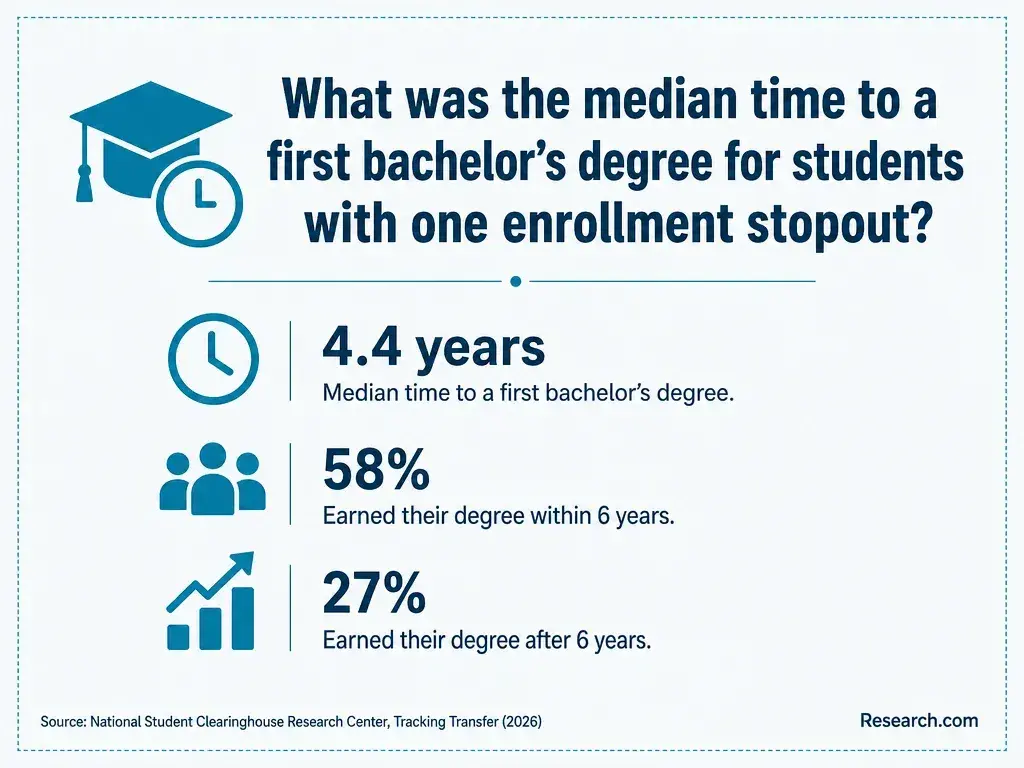
A bachelor's degree commonly requires about four academic years of full-time study, but the time remaining depends on accepted transfer credits, how those credits apply to the major, course availability, and enrollment pace. Tuition also varies by school and residency status. A credible cost comparison must include required fees, software, books, travel if applicable, and any wages you might forgo.
Request an official degree audit and an itemized estimate before making a financial decision. A preliminary transfer total is not enough: credits accepted as electives may leave accounting, statistics, or upper-level business requirements unfinished. Compare the same remaining requirements across schools, not advertised program prices for different starting points.
Resources on business administration program length and salary context can help frame the comparison, but neither a shorter degree nor an occupation-wide wage figure establishes your personal return on investment.
First, confirm that the institution holds accreditation recognized by the U.S. Department of Education or the Council for Higher Education Accreditation. Then check whether any advertised business accreditation - such as AACSB, ACBSP, or IACBE - actually covers the business school or program you would enter. These are distinct questions; business accreditation does not replace institution-level review.
Accreditation is a screening tool, not proof that graduates obtain risk jobs. Compare the curriculum, student support, applied work, and published outcomes where available. If affordability matters, research affordable accredited business administration programs accepting FAFSA, then verify the institution's current aid eligibility and your own aid offer. "Accepts FAFSA" does not mean a particular student will receive a grant.
There is no universal U.S. license for the job title "risk operations analyst." An employer may value training in fraud, compliance, internal controls, analytics, or its own systems, but a voluntary certification is not interchangeable with a degree or experience. Some specialized activities - particularly regulated financial services work - can have separate requirements tied to the duties performed, not merely the analyst title.
Read several target job postings before paying for a credential. Check its eligibility rules, examination and renewal requirements, and whether local employers request it for entry-level applicants. If the work you want is project risk rather than ongoing operations risk, compare a focused course or certification with a full project management degree; financial aid at low-cost project management schools is relevant only if that broader degree genuinely advances your goal.
Risk operations analyst is one possible destination, not an automatic first job. Depending on your experience, realistic entry routes include operations coordinator, transaction or fraud review associate, quality assurance associate, compliance support specialist, and reporting assistant. These positions can provide supervised practice with procedures, exceptions, documentation, and escalation.
Choose an adjacent role based on the risk function you want to enter. Transaction operations can lead toward payment or fraud investigations; procurement support can build supplier-process knowledge; HR operations can introduce sensitive-record controls. If employee-data and HR-process risks are your main interest, compare business coursework with transfer pathways into online human resources programs rather than assuming a general business major is always the best fit.
When applying, describe the controls you followed, the discrepancies you investigated, and what you escalated - with confidential details removed. Supervisory and policy-setting positions usually require additional responsibility and demonstrated judgment.
What are risk operations analyst salaries and job outlooks?
The U.S. Bureau of Labor Statistics does not publish a single wage and growth series for the title "risk operations analyst." Classification depends on duties: a process-improvement position may resemble a management analyst, while a finance-focused risk position may fall nearer a financial analyst occupation. Neither category is a dependable starting-salary estimate for every risk operations job.
For context, BLS reports a May 2025 median annual wage of $101,860 for management analysts and projects 10% employment growth from 2025 to 2035. That occupation includes experienced consultants and other analysts; its median should not be presented as the expected pay of a new business graduate reviewing operational exceptions. Use local postings with comparable duties and experience requirements to assess likely pay.
Faster graduation may reduce time out of the workforce, but it does not guarantee earlier entry into this role. If speed matters, compare ranked US colleges for faster business degree completion using your official remaining-credit evaluations and the access each program offers to relevant work experience.
Other Things You Should Know About Business Administration
Yes, especially if you handled disputes, verified records, followed escalation procedures, or documented recurring issues. Describe those tasks accurately; customer service experience alone is not the same as conducting a risk investigation.
Not always. Some teams use spreadsheets and case-management tools; others require SQL to retrieve and check data. Let the postings for your target employers determine which skill to learn first.
Only with appropriate employer permission and within its privacy and intellectual-property rules. Otherwise, build a clearly labeled exercise using public or synthetic data, and explain its assumptions and limitations.
Read the duties and required experience, not just the title. A posting that asks you to design controls, lead investigations, or own regulatory decisions may call for experience beyond an undergraduate degree.
- What's the Deal With Entry-Level Job Experience Requirements? The | Rasmussen University https://www.rasmussen.edu/student-experience/college-life/entry-level-job-requirements/
- How to Become a Quantitative Analyst - UCB-UMT | UC Berkeley School of Information's Online Master's Programs https://ischoolonline.berkeley.edu/blog/become-quantitative-analyst/
- Areas of Business BBA Grads Can Work In | North Carolina Central University https://online.nccu.edu/blog/areas-of-business/
- Risk Analyst Career Guide: Insights and Advice | American College of Education https://ace.edu/student-success/career-guides/risk-analyst/
- 10 Key Skills for Data Analysts | Johns Hopkins AAP https://advanced.jhu.edu/about/on-the-advance/mastering-your-future/10-key-skills-for-data-analysts/
- 17 types of business degrees and the jobs they can lead to | ASU Online https://asuonline.asu.edu/newsroom/online-learning-tips/types-business-degrees-jobs/
- Which Business Major Has the Best Career Opportunities? | Lasell University https://www.lasell.edu/academics/lasell-insights/which-business-major-has-the-best-career-opportunities.html
- Data Analyst Career Guide: Skills, Salary & More | SIUE https://online.siue.edu/degrees/undergraduate/bsba/data-analytics-spec/analyst-job-description-and-skills/
- What Does a Data Analyst Do? Roles, Skills & Tools Explained | Syracuse University https://ischool.syracuse.edu/what-does-a-data-analyst-do/
- How to Become a Risk Manager [Career & Salary Guide] | University of San Diego Online Degrees https://onlinedegrees.sandiego.edu/risk-manager-career-guide/