2027 Can a BS in Business Administration Prepare You for a College Enrollment Operations Manager Role? Skills and Entry Requirements
Audited and Verified:
Our Editorial and Data Verification Process
Research.com uses government datasets, official education statistics and primary institutional information to support its career and degree guides. Our review process checks factual accuracy, occupational definitions, source dates and the requirements associated with the credentials discussed.
How This Article Was Fact-Checked
Our editorial team verifies salary estimates, employment projections, education requirements and program information against original data providers and official organizations. Salary figures are checked against the relevant occupational definitions and reporting periods. Information about licensure, accreditation and required in-person training is reviewed separately.
Fact-checked and verified on:

Co-Founder and Chief Data Scientist
A college enrollment operations manager keeps admissions processes, student records, and enrollment systems working together. If you are considering a BS in Business Administration for that role, the key issue is whether broad business training will complement the higher education experience employers usually expect. This guide connects degree coursework to actual responsibilities, explains realistic entry routes, and shows how to assess program format, cost, and career prospects before enrolling.
Key Things You Should Know
- A BS in Business Administration can build useful operations, analytics, and management skills, but it does not replace experience with college enrollment processes and systems.
- Coordinator or specialist work in admissions, registration, or enrollment systems is often a more realistic first step than moving directly from graduation into management.
- The BLS reports a May 2025 median wage of $114,130 for administrative services managers; that broad occupation is not a salary estimate for enrollment operations managers.
What does a college enrollment operations manager do?
An enrollment operations manager oversees the processes that move prospective and admitted students through application review, decisions, registration, and related records work. The precise scope varies: one college may place the role in admissions, while another may combine admissions operations with registrar or enrollment management functions.
Typical responsibilities include maintaining application workflows, coordinating staff and deadlines, checking data quality, preparing reports, resolving process bottlenecks, and working with information technology and student-facing teams. The manager may help implement policies, but does not independently set admissions standards or override institutional rules. Unlike a project manager who owns a defined initiative, this role also has recurring responsibilities tied to each enrollment cycle. If discrete projects appeal more than ongoing college operations, low-cost project management degree options represent a different path to compare.
Can a BS in Business Administration prepare you for enrollment operations?
Yes, as a foundation - not as a complete qualification. A BS in Business Administration can teach process design, budgeting, data interpretation, supervision, and cross-functional communication. Those skills transfer to enrollment work, particularly when paired with employment or an approved project in a college office.
The degree generally provides less direct instruction in student information systems, admissions policies, academic calendars, and the handoffs among admissions, financial aid, and the registrar. A student with higher education work experience may benefit from the broad degree; someone without it should plan how to gain sector experience alongside coursework. If your main interest is supervising teams rather than enrollment systems, fast-track online colleges for leadership majors offer a curriculum comparison, though a different major would not remove the need for relevant work experience.
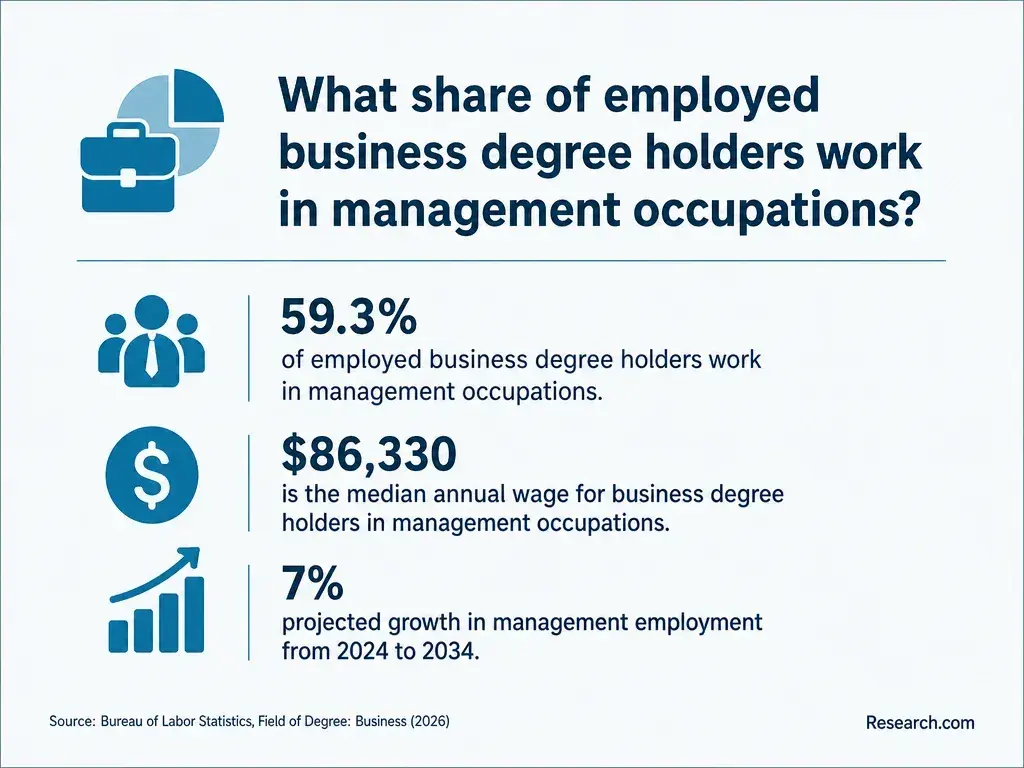
What education and experience are required for enrollment operations managers?
There is no universal degree or experience requirement for this job title. Employers set their own criteria, often seeking a bachelor's degree plus progressively responsible work in admissions, enrollment services, records, or a related operation. A master's degree may be preferred for some positions, particularly those with broader leadership or policy responsibilities, but should not be assumed necessary for every operations role.
A realistic route for a new graduate is to seek an admissions operations, enrollment services, or registrar-office specialist position, then document responsibility for workflows, reporting, system changes, or staff coordination. Existing college employees should compare their actual duties with postings: processing applications differs from owning a process, training colleagues, or managing a team. Applicants with an associate degree who are comparing specialized people-operations roles can review online human resources programs for associate degree holders; HR training is most relevant when the target job emphasizes staffing rather than enrollment workflows.
Course names vary, so compare assignments and learning outcomes rather than assuming every business core covers the same tools. The most useful coursework connects a business concept to an enrollment task:
| Course area | Application to enrollment operations |
| Operations or process management | Map application steps, handoffs, queues, and recurring delays. |
| Statistics and business analytics | Interpret application and enrollment reports without mistaking association for cause. |
| Information systems | Understand system requirements, data quality, access controls, and changes to workflows. |
| Management and organizational behavior | Coordinate staff, communicate changes, and address service problems. |
| Accounting or budgeting | Assess staffing and technology costs within an approved budget. |
A suitable elective or capstone could analyze a hypothetical enrollment workflow using synthetic data; real student records require institutional permission and appropriate privacy safeguards. Choose a formal concentration only if its additional courses deepen skills you need without adding unjustified time or cost. For example, online colleges with accelerated supply chain bachelor's study emphasize a different kind of operations expertise; their courses should not be assumed to cover higher education systems.
Choose the format that lets you complete relevant coursework while gaining or keeping access to college operations work. Online study can help an employee remain in a full-time campus job, but online does not necessarily mean self-paced. Ask about live meetings, group projects, exam proctoring, internship rules, and required campus visits before committing.
Campus study may make it easier to meet college staff, pursue student employment, or arrange a supervised project. Neither format guarantees those opportunities. When comparing American business schools offering online degree study, verify institutional accreditation, the exact degree requirements, and whether career services can support your higher education job search.
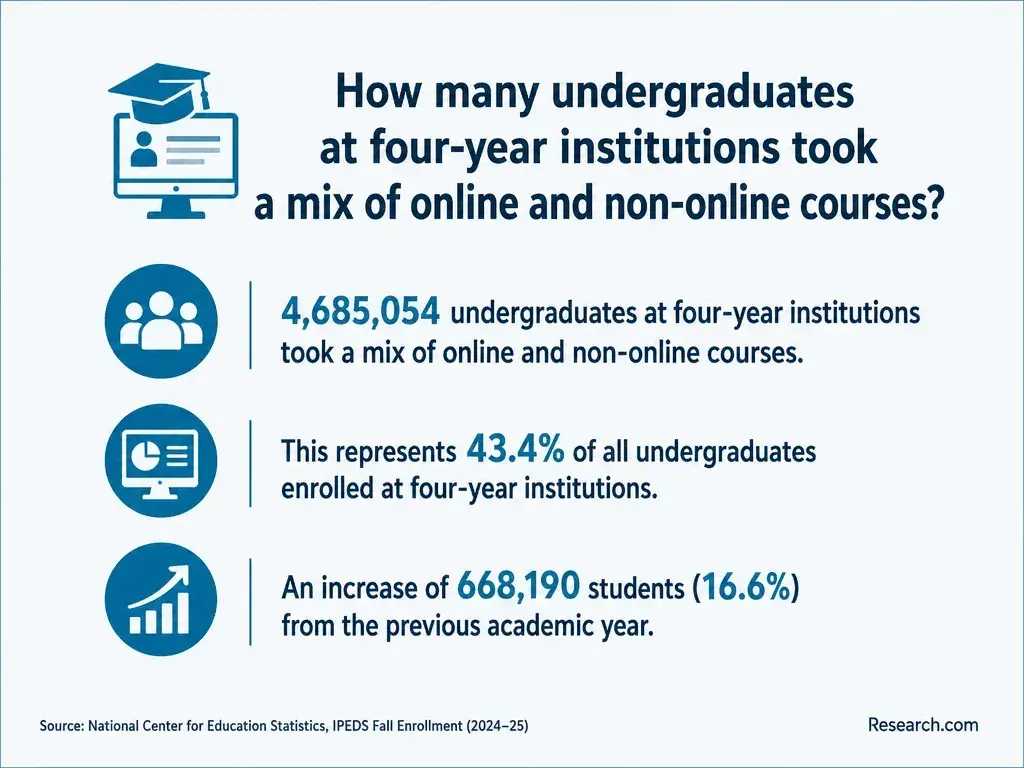
A bachelor's degree commonly takes about four years of full-time study from the start of college. Your remaining time depends on accepted credits and whether those credits satisfy general education, business core, elective, and residency requirements. Part-time study or a required course offered infrequently can extend the schedule; shorter sessions do not reduce the work required.
There is no reliable single price for this pathway. Compare each school's written estimate for remaining tuition, mandatory fees, books and software, travel or proctoring, and any income you would forgo. Include aid eligibility and employer reimbursement timing in your cash-flow plan. A preliminary transfer estimate is not a final degree audit. A national comparison of accelerated business bachelor's schools can help identify formats to investigate, but request a course-by-course completion plan before treating an advertised timeline as your own.
Requirements depend on whether you are entering as a first-year student, transferring, or returning with previous college credit. Schools may review secondary-school or college transcripts, academic standing, and readiness for quantitative coursework; some have separate requirements for entry to the business major. Admission to the university does not establish that prior courses satisfy business requirements.
Ask admissions which documents are required, then ask an academic adviser or transfer office how accounting, statistics, economics, and general education work would apply to the degree. Request the current catalog and an official degree audit when available. For a closer look at varying prerequisites, see academic eligibility for business administration degree study. Do not enroll in a replacement course until the school has evaluated a possible equivalent or substitution.
Employers may use different student information systems and customer relationship management platforms, so durable skills matter more than assuming one software package is universal. Managers need to understand how records move between systems, define useful reports, test workflow changes, and limit access to sensitive student information. They also need to explain procedures clearly to staff and resolve problems across departments.
For job applications, prepare evidence rather than a software list: describe a process you documented, a report you checked for errors, or a change you helped coordinate. State your own contribution and omit identifiable student data and confidential materials. If project scheduling and implementation are your principal gaps, compare targeted training with the full-degree route; project management program fees explained provides a starting point for checking the cost of more specialized study.
The U.S. Bureau of Labor Statistics does not publish a wage or growth figure for the exact title "college enrollment operations manager." Its broader administrative services managers occupation had a May 2025 median annual wage of $114,130 and projected employment growth of 5% from 2025 to 2035. That category spans industries and responsibilities, so neither figure predicts pay or openings in a particular college enrollment office - especially for someone entering the field.
For a useful comparison, inspect current postings for the same level of responsibility at colleges in your target region, including any published public-institution pay ranges. Weigh the likely role and local compensation against your remaining education cost, not against the occupation-wide median. If time to completion is central to that calculation, business degree options with shorter sessions are worth reviewing only after checking total cost and course availability.
Do enrollment operations managers need certification or licensure?
There is no general professional license required solely to hold an enrollment operations manager title. Employers may prefer experience with particular systems or offer training in reporting, project management, or higher education administration. A voluntary certificate can demonstrate focused learning, but it does not substitute for a degree when one is required or for experience managing enrollment work.
Before paying for a credential, compare its syllabus with the skills named in target job postings and ask whether your employer offers training. If a bachelor's degree is the missing qualification, application costs are a separate consideration; explore fee-free online university applications, then verify each institution's current fees and admission policies directly.
Other Things You Should Know About Business Administration
Yes, if the work exposes you to documented processes, reporting, or cross-department coordination. Confirm academic approval and supervision requirements before assuming it will earn degree credit.
It can, especially if you can show responsibility for records, service workflows, data quality, or staff coordination. Explain those duties rather than relying on the job title alone.
A short, clearly labeled process map or synthetic-data dashboard can show how you think. Do not present a classroom exercise as an implemented college project or disclose student information.
First check target postings and your existing credentials. If you already meet the degree requirement, a specific systems skill, supervised project, or internal advancement opportunity may address the gap more directly.
- FERPA | Protecting Student Privacy - Department of Education https://studentprivacy.ed.gov/ferpa
- DESCRIPTION, DUTIES, & EXPECTATIONS OF POSITION | Monmouth College https://www.monmouthcollege.edu/live/files/937-assistantassociate-director-of-enrollment
- Admission and Registration Manager | People Strategy, Equity, and Culture at PCC https://www.pcc.edu/hr/employment/management-jobs/admission-reg-mgr/
- AVP, Enrollment Management - UNM Job Descriptions https://jobdescriptions.unm.edu/detail.php
- 6 BS in Business Skills Employers Seek | University of Bridgeport https://www.bridgeport.edu/news/bs-in-business-administration-skills-employers-seek/
- Op-ed: If Employers No Longer Train Entry-level Hires, What Is Higher Education's Role? | NACE https://www.naceweb.org/career-development/trends-and-predictions/op-ed-if-employers-no-longer-train-entry-level-hires-what-is-higher-educations-role
- What Employers Report About Education in Management Roles | National Black MBA Association (NBMBAA) https://jobs.nbmbaa.org/career-resources/build-the-career-4/what-employers-report-about-education-in-management-roles-68
- What Is an Entry-Level Job? | Coursera https://www.coursera.org/articles/what-is-an-entry-level-job
- EXPECTING TOO MUCH FOR ENTRY LEVEL POSITIONS | researchgate.net https://www.researchgate.net/publication/344655391_THE_EXPERIENCE_GAP_IN_HIRING_NEW_GRADUATES_EXPECTING_TOO_MUCH_FOR_ENTRY_LEVEL_POSITIONS