2027 Paying for an Online BS in Business Administration: An Annual Employer Tuition Cap
Audited and Verified:
Our Editorial and Data Verification Process
Research.com uses government datasets, official education statistics and primary institutional information to support its career and degree guides. Our review process checks factual accuracy, occupational definitions, source dates and the requirements associated with the credentials discussed.
How This Article Was Fact-Checked
Our editorial team verifies salary estimates, employment projections, education requirements and program information against original data providers and official organizations. Salary figures are checked against the relevant occupational definitions and reporting periods. Information about licensure, accreditation and required in-person training is reviewed separately.
Fact-checked and verified on:

Co-Founder and Chief Data Scientist
An annual employer tuition cap can make an online BS in Business Administration more affordable, but it does not necessarily cover every bill - or provide cash when tuition is due. For employees planning to finish a degree while working, the decision depends on remaining credits, eligible charges, reimbursement rules, and how many courses fit within each benefit year. This guide shows you how to build a realistic completion budget, compare pacing options, and identify the questions to settle with your school and benefits office before enrolling.
Key Things You Should Know
- An annual cap limits what your employer will pay during a benefit year; it is not a promise to cover your full degree or every education expense.
- Compare eligible course charges with your cap, then separately budget for uncovered fees, books, software, and any tuition due before reimbursement.
- Taking fewer courses may keep annual charges under the cap but extend graduation; a faster schedule may require you to pay the excess yourself.
What is an online BS in Business Administration?
An online BS in Business Administration is an undergraduate degree covering several business functions rather than training for one occupation. Online describes how coursework is delivered, not a uniform schedule: classes may have weekly deadlines, live meetings, group assignments, or proctored exams. A BS, BBA, and BA in Business can differ in required courses, so compare the actual degree audit rather than their names alone.
If your employer limits annual payments, course scheduling matters almost as much as tuition. When reviewing American business schools offering online degree study, ask whether the courses you still need are offered often enough to use the benefit each year.
How much does an online business administration degree cost?
There is no reliable single price for your degree without a school-specific evaluation. Calculate the remaining completion cost, not the advertised price of a full program: include required credits that apply to your degree, the school's charging method, mandatory fees, materials, and any required travel or technology. An accepted transfer course may count only as an elective, leaving a business requirement - and its cost - outstanding.
The following cost categories help separate charges an employer might cover from expenses you may still owe. Eligibility depends on your employer's written policy.
| Cost category | What to verify |
| Tuition | Price per credit, course, term, or subscription period; rates for online students |
| Required fees | Technology, assessment, graduation, and other charges; employer eligibility |
| Learning materials | Books, software, and access codes; whether reimbursement includes them |
| Completion risks | Repeated courses, unused subscription time, travel, or delayed required classes |
Use a written degree audit and itemized estimate to compare lower-priced accredited business administration study options. A lower rate is not necessarily a lower completion cost if fewer credits apply or additional terms are needed.
How can an annual employer tuition cap pay for your degree?
An annual cap is the maximum benefit available within your employer's defined year, subject to its eligibility rules. It may reset on a calendar year, a company benefit year, or another schedule. Payment method matters: direct billing can reduce cash needed upfront, while reimbursement may require you to pay the school first and wait until grades are posted.
Build a course-by-course plan before relying on the cap. These checks determine both your eventual out-of-pocket cost and whether you can meet the tuition deadline:
- Get an official degree audit, a course sequence, and an itemized estimate for each planned term.
- Ask HR which tuition, fees, and materials qualify; confirm the cap's reset date, approval deadline, grade rule, and any service or repayment obligation.
- Match each term's eligible charges to the benefit year in which your employer counts them, and identify any excess you would pay.
- Confirm when the school requires payment and when your employer pays you or the school; arrange affordable financing for any gap rather than assuming reimbursement arrives first.
- Ask financial aid and payroll how grants, scholarships, employer payments, and any applicable tax rules interact in your particular case.
For a simple planning test, let C be eligible charges assigned to one benefit year and A your available annual cap. The amount above the cap is C − A when C exceeds A; ineligible expenses are additional. Spreading courses across reset dates could reduce that excess, but only if required classes are available and the extra time is worthwhile. Compare online business administration options balancing price and duration using your own audit and employer policy, not an advertised pace.
Check the institution's recognized accreditation and confirm that the online degree is awarded by that institution. Separate business-school or program accreditation, such as AACSB, ACBSP, or IACBE, has its own scope; do not assume it covers every program. Accreditation supports an important quality check, but it does not establish that an employer will approve a particular school, pay every charge, or hire a graduate.
Request written confirmation of your employer's school-eligibility rule before enrollment. If you also intend to use federal student aid, check the school's aid eligibility and your own application status; federal aid options at accredited business administration colleges can help you frame the comparison, but aid is not an automatic substitute for delayed reimbursement.
Programs commonly combine general education with accounting, economics, finance, marketing, management, operations, quantitative coursework, and a culminating assignment. The required mix, prerequisites, and available electives vary. For tuition-cap planning, a required course offered only occasionally can be more consequential than an appealing concentration: missing it could add a term without adding employer benefit.
If your goal is specifically project coordination rather than broad business preparation, compare the relevant coursework and total cost with online project management programs for smaller budgets. Neither path alone establishes eligibility for a project-management certification or a manager position.
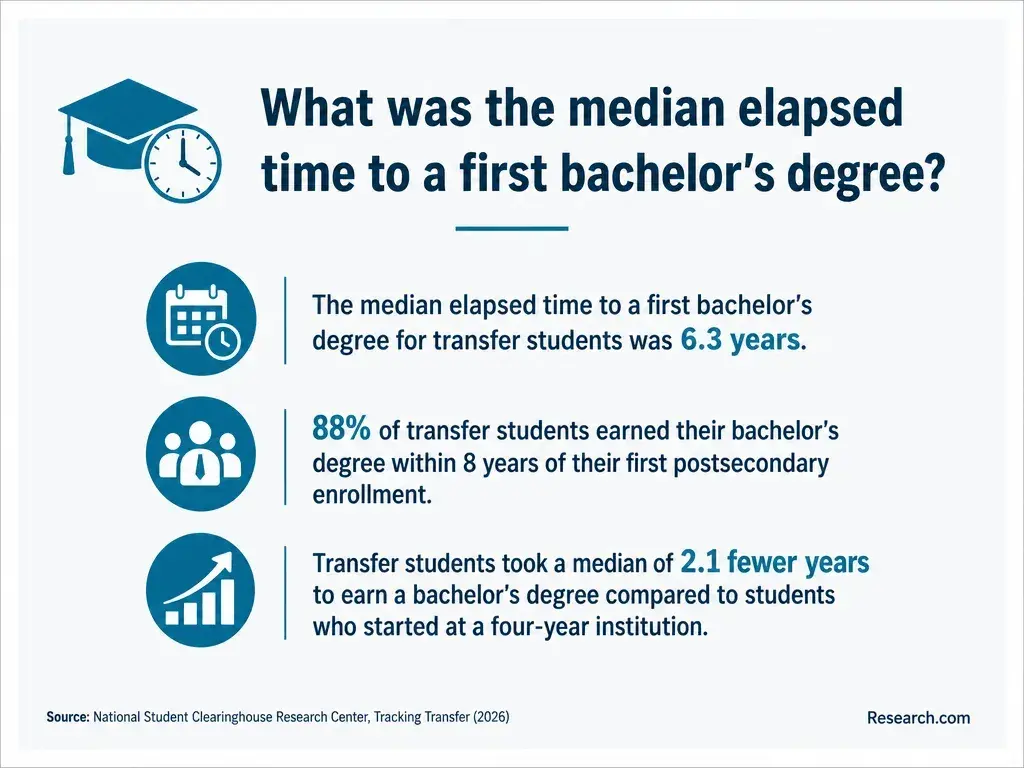
Schools may request prior transcripts and apply different rules to first-year, transfer, returning, or second-degree applicants. Some business majors also require particular introductory or quantitative courses. Admission does not settle which previous credits satisfy the business core, so request a formal transfer evaluation and degree audit before calculating how much of your employer benefit the degree will require.
If substantial coursework already applies to another field, compare the credits remaining in business administration with a more targeted option, such as HR bachelor's completion with transferred coursework. The better financial fit depends on the school's actual credit decisions and your intended role.
Your timeline depends on applicable transfer credit, course availability, prerequisites, and the workload you can sustain alongside employment. A cap creates a pacing trade-off: lighter enrollment may maximize covered tuition across benefit years, while heavier enrollment may finish sooner but produce charges above the cap. Extra terms can also bring fees and delay the career benefits you hope to gain.
When you explore US business bachelor's fast-track rankings, test the advertised schedule against your remaining required courses and your employer's reset date. Confirm whether accelerated classes still have fixed deadlines, live sessions, or group work.
The degree can support applications for business functions such as operations, sales support, procurement, HR, or project coordination. The attainable role depends on your existing experience and evidence of relevant skills; graduating does not automatically qualify you to supervise people or budgets. If you already handle purchasing or logistics at work, document that responsibility and consider whether a specialized affordable supply chain degree planning guide points to a closer match for your goal.
There is no single salary attached to the degree. As one occupation-specific reference, the U.S. Bureau of Labor Statistics reports a $75,940 median annual wage for human resources specialists in May 2025. That is a median for workers across the occupation - not the starting pay of business administration graduates - and relevant experience, location, and employer requirements affect access to the role.
For a financial decision, compare your likely incremental career benefit with uncovered degree costs, possible borrowing, and time to completion. A quicker route may be worth paying above the cap if it advances a realistic opportunity; it may not be if your target employer chiefly wants experience. Compare flexible accelerated bachelor's degrees on total cost and workable scheduling, not speed alone.
Do business administration graduates need licenses or certifications?
A general business administration degree does not itself award an occupational license or professional certification. Requirements depend on the work: regulated accounting and financial-services activities have separate rules, while voluntary credentials may help in a specific function. Check the credential body's eligibility rules before paying for coursework on the assumption that it will qualify you.
If a project-management credential or role is your immediate goal, compare its experience and training requirements with the degree's coursework and the project management programs with lower total costs. Employer funding is valuable, but it does not make an unrelated degree the shortest route to a narrowly defined qualification.
Other Things You Should Know About Business Administration
Possibly, but do not assume so. Ask HR whether it assigns charges to a benefit year by course start date, invoice date, payment date, or reimbursement date.
Future benefits usually depend on continued eligibility, and some policies require repayment after departure. Read the written agreement before accepting funds.
Often, but check readmission rules, course availability, financial-aid consequences, and whether a pause would delay a prerequisite or graduation.
First confirm the reimbursement amount and date and ask the school about payment arrangements. Borrowing can bridge a timing gap, but interest and the risk of denied reimbursement remain yours.
- Frequently asked questions about educational assistance programs | Internal Revenue Service https://www.irs.gov/newsroom/frequently-asked-questions-about-educational-assistance-programs
- Types of Financial Aid: Grants, Work-Study, and Loans | studentaid.gov https://studentaid.gov/understand-aid/types
- and Ask For - Employer Tuition Reimbursement Benefits | Harvard Extension School https://extension.harvard.edu/blog/how-to-use-and-ask-for-employer-tuition-reimbursement-benefits/
- Employer Tuition Reimbursement: How It Works and How to Pay for College | Winston-Salem State University https://ramsonline.wssu.edu/blog/employer-education-benefits/
- Employer Reimbursement Plan: Student Finance | Northwestern University https://www.northwestern.edu/sfs/billing-payment/employer-reimbursement-plan/
- How an Educational Assistance Program Can Strengthen Your Company's Benefits Package | Wheeler Accountants, LLP https://wheelercpa.com/how-an-educational-assistance-program-can-strengthen-your-companys-benefits-package/
- New FAQs on Educational Assistance Programs | Mirick https://www.miricklaw.com/new-faqs-on-educational-assistance-programs-what-employers-need-to-know/
- Accountable Plans: Reimburse Employees the Tax-Smart Way | Isdaner & Company LLC https://www.isdanerllc.com/accountable-plans-reimburse-employees-the-tax-smart-way/
- Tuition Reimbursement Programs [A Guide for HR and Employers] | COMPT https://compt.io/blog/employee-tuition-reimbursement/