2027 Online BS in Business Administration vs. a Human Resources Certificate: Which Route Fits Your Career Plan?
Audited and Verified:
Our Editorial and Data Verification Process
Research.com uses government datasets, official education statistics and primary institutional information to support its career and degree guides. Our review process checks factual accuracy, occupational definitions, source dates and the requirements associated with the credentials discussed.
How This Article Was Fact-Checked
Our editorial team verifies salary estimates, employment projections, education requirements and program information against original data providers and official organizations. Salary figures are checked against the relevant occupational definitions and reporting periods. Information about licensure, accreditation and required in-person training is reviewed separately.
Fact-checked and verified on:

Co-Founder and Chief Data Scientist
If you want to move into human resources, a shorter certificate may look more practical than finishing a business bachelor's degree. But the answer changes if your target jobs require a bachelor's degree, you want options outside HR, or you already have substantial college credit.
This comparison is for career changers, working adults, and students weighing those trade-offs. It explains what each credential teaches, what employers may expect, and how to compare the remaining time and cost before you enroll.
Key Things You Should Know
- Choose an HR certificate for a focused skills gap; choose a BS in Business Administration when you need a bachelor's degree or want broader business options. A certificate does not replace a degree requirement.
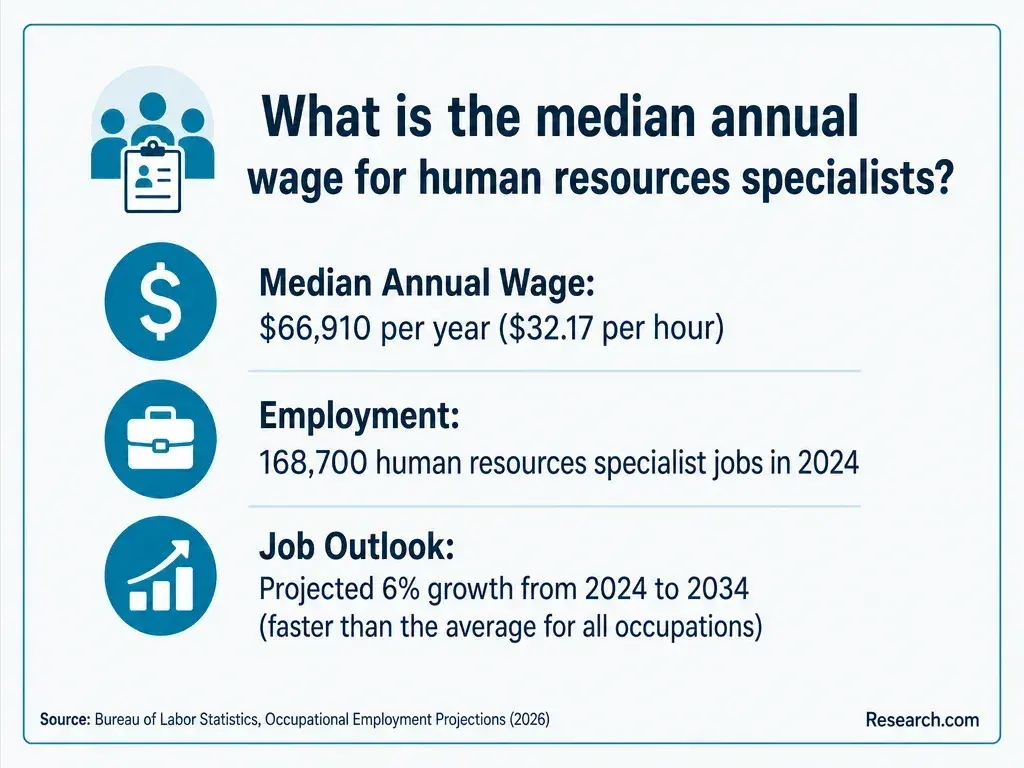
- Career fit matters more than the credential's title: the U.S. median annual wage for human resources specialists was $75,940 in May 2025, but that occupation-wide figure is not a certificate-holder's starting salary.
- Compare the credits you still need, not advertised program length. An official degree audit and a written certificate cost estimate can change which route is faster and less expensive.
What Is the Difference Between an Online Business Degree and an HR Certificate?
An online BS in Business Administration is a bachelor's degree covering multiple business functions. A human resources certificate is a narrower course of study in topics such as hiring, employee relations, and HR operations. "Certificate" can mean a college-issued academic award or a noncredit professional-development program; neither is automatically a professional certification.
The key distinction is the requirement you need to meet. If an employer requires a bachelor's degree, an HR certificate alone ordinarily will not satisfy it. If you already have a degree and need HR-specific knowledge, another bachelor's may add less value than targeted study and relevant work experience. A dedicated HR degree is another option when you want deeper specialization; compare human resources college study options against the general business curriculum before choosing.
Which Career Path Offers Better Opportunities: Business Administration or Human Resources?
Neither path offers better opportunities for everyone. HR is a function with identifiable entry routes, including recruiting coordination, HR administration, and benefits support. Business administration is broader preparation for roles across operations, sales support, purchasing, and other functions; the degree itself is not a job title.
The U.S. Bureau of Labor Statistics projects employment of human resources specialists to grow 6% from 2025 to 2035, compared with approximately 3.5% across all occupations. That signals demand for the occupation, not an advantage guaranteed to either credential. HR employers may also value experience handling confidential records, explaining policies, and working with applicants or employees.
If your existing work is in logistics or purchasing rather than people operations, an HR certificate may be an unnecessary detour. Compare your target role with supply chain education costs and career prospects before paying for an HR-specific credential.
How Do Online Business Administration Degrees Compare With HR Certificates?
This comparison focuses on what you receive and what you must still prove to an employer. Program names and requirements vary, so check the specific school's catalog rather than assuming that every online option works the same way.
| Decision factor | Online BS in Business Administration | HR certificate |
| Credential awarded | Bachelor's degree | Academic or noncredit certificate, depending on the provider |
| Primary scope | General business knowledge; possible HR electives or concentration | Focused HR knowledge, with depth determined by the curriculum |
| Best fit | Someone needing a bachelor's degree or flexibility across business functions | Someone targeting an HR skills gap without needing another degree |
| Main limitation | More coursework, time, and potential expense | May not meet bachelor's-degree hiring requirements |
| Experience still needed | Evidence of relevant business or HR tasks | Evidence that HR concepts can be applied at work |
Online delivery does not necessarily mean self-paced study. Ask about live classes, group projects, exam scheduling, and fixed deadlines, especially if you will remain employed. Guidance on how to earn a business administration degree while keeping your job can help frame the scheduling questions to put to each school.
A business administration degree typically connects accounting, finance, marketing, operations, management, and quantitative reasoning. An HR course or concentration may introduce staffing and organizational behavior, but its presence does not make the degree equivalent to specialized HR training.
An HR certificate should be judged by its actual assignments, not just its course titles. Look for practice with job descriptions, recruiting workflows, employee communication, HR information systems, and the responsible handling of personnel data. Check whether employment-law material explains applicable rules and their limits; a course does not qualify someone to provide legal advice.
Your existing experience should determine the gap you fill. A customer-service supervisor may already have evidence of coaching and conflict resolution but need HR operations knowledge. Someone aiming instead for project coordination may get more relevant practice from affordable pathways to study project management than from an HR certificate.
A bachelor's applicant generally needs to meet the institution's undergraduate admission rules and submit records of prior study. Transfer applicants should ask a separate question: which accepted credits actually satisfy general education, business core, and any HR concentration requirements? Admission and credit applicability are different decisions.
Certificate entry rules differ more widely. Some academic certificates require college standing or prerequisites; noncredit programs may allow open enrollment. Before applying to a BS program, review business administration admissions coursework and credit requirements, then request the prospective school's own requirements and official transfer evaluation.
If you already hold a bachelor's degree, ask whether you can enroll in the HR certificate without pursuing a second degree. Also ask whether certificate courses could later count toward a degree; do not assume that they will.
A bachelor's degree generally requires substantially more coursework than a certificate, but your remaining requirements determine your personal timeline. Prior college credit may shorten a degree path only if it applies to required courses. Prerequisites, course rotation, and institutional residency rules can still delay completion.
A focused HR certificate may be completed in months, while some programs take longer because of course sequencing or part-time scheduling. Accelerated terms can shorten the calendar without reducing the work. When reviewing online degrees with accelerated terms, ask which required classes are offered when you need them and whether their weekly workload fits your job and other commitments.
There is no reliable single price for either route. A degree's total depends on tuition per credit or term, remaining required credits, fees, materials, and possible extra terms. A certificate may cost less overall yet still be a poor purchase if it does not address a hiring requirement or a demonstrable skills gap.
Request written, itemized estimates for both choices. For the degree, use an official audit to identify courses still needed; for the certificate, confirm whether the quoted charge includes materials, assessments, and any required software. Compare employer reimbursement rules and payment timing as well as total cost.
If you are considering a third route, such as project management, resources for comparing aid and tuition at online project management schools can help you ask consistent cost questions across options. A lower sticker price is not the same as a lower net cost. Confirm your own financial-aid eligibility, employer benefits, and likely borrowing before deciding.
For a BS, verify the institution's recognized institutional accreditation and whether any claimed business accreditation - such as AACSB, ACBSP, or IACBE - actually covers the program. For a college HR certificate, check who awards it, whether courses carry academic credit, and whether they can apply to further study. A noncredit provider's certificate should be evaluated for instructional quality and employer relevance, not mistaken for an accredited degree.
A certificate of completion is also different from a voluntary HR professional certification. Certifying organizations set their own eligibility, examination, and renewal rules; completing a course does not automatically award or establish eligibility for one. This distinction applies to adjacent fields too: if you are weighing transfer-friendly undergraduate project management schools, verify both the school's credit decisions and any separate professional-credential rules.
For an HR target, relevant entry routes may include recruiting coordinator or HR assistant work, followed by specialist responsibilities as skills and experience develop. A business graduate may also pursue roles outside HR, such as marketing or project coordination. Employers set their own degree and experience requirements, so neither credential alone establishes readiness for these jobs.
The table shows U.S. occupation-wide median annual wages from May 2025 and projected employment growth from 2025 to 2035. These are benchmarks for evaluating a target occupation - not expected starting salaries or outcomes attributable to a particular program.
| Occupation | Median annual wage | Projected growth | How to interpret it |
| Human resources specialist | $75,940 | 6% | Relevant HR destination; hiring requirements and experience vary |
| Training and development specialist | $69,280 | 11% | People-focused alternative requiring training and communication skills |
| Market research analyst | $78,760 | 7% | Business-path alternative requiring stronger research and analytical evidence |
Do not use a manager's wage to estimate what you would earn immediately after either program. If your goal is a different function, compare its actual tasks and qualifications first; lists of affordable colleges for online business degrees are useful only after you know which education requirement you need to meet.
How Can You Choose the Right Program for Your Career Plan?
Start with the work you want to do next and the qualifications employers ask for - not with the fastest advertised credential. A certificate is often the more direct choice when you already meet degree requirements and need focused HR preparation. A BS is more defensible when a bachelor's requirement blocks your target roles, substantial prior credit applies, or you want credible preparation across several business functions.
Use this sequence to test that initial judgment before committing money or time:
- Collect target job postings and separate required degrees, preferred credentials, HR tasks, and experience expectations.
- Inventory evidence from your work - such as scheduling, interviewing, policy communication, reporting, or supervision - and identify the specific gap.
- Ask degree programs for an official credit evaluation and remaining-course plan; ask certificate providers for the award type, curriculum, schedule, and complete cost.
- Compare the paths against your available study time, employer support, and a realistic way to gain relevant experience.
If the degree remains your best fit, use resources to compare inexpensive business administration degree options, then verify each school's current charges and requirements directly. If neither program fills the gap identified in job postings, targeted training or a move into an adjacent role may be the better next step.
Other Things You Should Know About Business Administration
Possibly, if they carry college credit and the degree-granting school accepts and applies them. Get written confirmation before enrolling; noncredit courses generally should not be assumed to transfer.
No. List a completed academic or training certificate under education or professional development, using its exact awarded name. Reserve "certification" for a separately earned professional designation.
Only if the school approves the role and its learning, supervision, and assessment requirements. Employment by itself does not award internship credit.
Check target employers' requirements before pursuing a second bachelor's. Your existing degree, an HR certificate, and relevant experience may be a more direct combination, though some roles require particular coursework or experience.
- Annual Earnings by Educational Attainment - COE https://nces.ed.gov/programs/coe/indicator/cba/annual-earnings
- Cost of Attendance (Budget) | 2025-2026 Federal Student Aid Handbook https://fsapartners.ed.gov/knowledge-center/fsa-handbook/2025-2026/vol3/ch2-cost-attendance-budget
- Which HR Certification to Pursue? | University of Phoenix https://www.phoenix.edu/articles/hr/which-hr-certification-should-you-pursue.html
- Top Jobs in Business Administration & Career Paths | CityU of Seattle https://cityu.edu/what-can-you-do-with-a-business-administration-degree/
- Online Human Resource Management Degree | Western Governors University https://www.wgu.edu/online-business-degrees/human-resources-bachelors-program.html
- Online Business Administration Bachelor Degree Program | Charter College https://chartercollege.edu/programs/business/business-administration-bs/
- Which HR Career Path Is Right for You? | Explore the Options | Tulane University https://online.law.tulane.edu/blog/finding-your-hr-career-path
- Transfer Credit - Academics - iMpact Web Portal | Ross IT https://rossweb.bus.umich.edu/academics/studentresources/transfer-credit/
- BS in Business Administration | Online Bachelor's Degree | Capella University https://www.capella.edu/online-business-degrees/bs-business-program/bachelors-business-administration/
- How to Choose an Accredited Online Business Degree Program with HR Focus | Colorado Technical University https://www.coloradotech.edu/degrees/studies/businesss-and-management/articles/online-business-degree-hr-options