2027 From Construction Estimating to Business Management: When Does a BS in Business Administration Make Sense?
Audited and Verified:
Our Editorial and Data Verification Process
Research.com uses government datasets, official education statistics and primary institutional information to support its career and degree guides. Our review process checks factual accuracy, occupational definitions, source dates and the requirements associated with the credentials discussed.
How This Article Was Fact-Checked
Our editorial team verifies salary estimates, employment projections, education requirements and program information against original data providers and official organizations. Salary figures are checked against the relevant occupational definitions and reporting periods. Information about licensure, accreditation and required in-person training is reviewed separately.
Fact-checked and verified on:

Co-Founder and Chief Data Scientist
Construction estimators already make decisions that affect bids, costs, and project risk. Moving into business management adds a different set of responsibilities: overseeing people, budgets, operations, and results beyond a single estimate. For an estimator considering a BS in Business Administration, the decision is whether that broader education fills a real gap or delays a more direct move.
This guide compares degree and experience pathways, shows how to build evidence of management readiness, and identifies the program details to check before enrolling.
Key Things You Should Know
- A BS in Business Administration makes the most sense when your target role requires a bachelor's degree or broader financial, operational, and people-management skills that estimating experience has not supplied.
- If the goal is preconstruction leadership, deeper construction experience or a specialized project-management pathway may be more direct than a general business degree.
- The U.S. Bureau of Labor Statistics projects 7% employment growth for project management specialists from 2025 to 2035, but that outlook does not mean a business graduate can move directly into the role.
What Is a Business Administration Degree for Construction Estimators?
A BS in Business Administration is an undergraduate degree covering how organizations manage money, people, customers, and operations. For an estimator, its value is not teaching takeoffs or bid software. It is connecting project-level cost knowledge to company-level decisions, such as cash flow, staffing, purchasing, and which work to pursue.
Programs with similar names can differ. A BS in Business Administration, BBA, or BS in Management may emphasize different courses and quantitative work; none is automatically a construction-management degree. Compare required courses and applied projects, not just the credential's title. National online business program rankings can help build a shortlist, but each school's current catalog determines what its degree actually teaches.
When Does a Business Administration Degree Make Sense?
The strongest case is a specific next role for which your estimating record is valuable but incomplete. A BS may be worth pursuing if an employer requires a bachelor's degree for advancement, you want responsibility across several business functions, or you need structured study in accounting, finance, operations, and supervision. First, ask which qualification your target employer values and whether you could gain the missing responsibility at work.
The routes below serve different goals. The distinction is whether you need breadth, deeper construction-specific expertise, or evidence that you can already lead.
| Primary goal | Potentially better-fit route | Key limitation to check |
| Manage budgets, staff, and operations across a construction business | BS in Business Administration plus progressively broader workplace responsibility | A degree does not substitute for supervisory results or construction judgment |
| Lead estimating or preconstruction teams | Mentorship, bid ownership, and construction-specific training; a specialized degree if required | General business coursework may offer limited technical depth |
| Coordinate project delivery | Project-management study and documented scheduling, procurement, and stakeholder work | Employers may expect construction project experience |
| Qualify for an internal promotion with a degree requirement | An accredited bachelor's completion route that meets the employer's policy | Transfer-credit applicability and remaining cost require confirmation |
If scheduling is the main obstacle rather than curriculum, online leadership bachelor's programs with compressed schedules offer another option to examine. A shorter advertised timeline is useful only if the required courses, workload, and credential meet your goal.
What Careers Can a Business Administration Degree Lead To?
An estimator's most plausible moves are usually adjacent ones: senior estimator, preconstruction coordinator or manager, project coordinator, purchasing or procurement specialist, and operations-support roles. These jobs use different portions of estimating experience. A preconstruction lead may oversee bid strategy and estimators; a procurement specialist may evaluate suppliers and purchasing terms; an operations manager may be accountable for staffing, budgets, and performance across projects.
The degree can support these moves, but job readiness depends on the work you have performed. For example, producing accurate estimates is not the same as owning a department budget or managing employee performance. If your goal is human resources rather than construction operations, compare the employer's requirements with HR degree coursework and entry requirements before assuming a general business program provides enough functional preparation.
The most relevant coursework helps an estimator interpret decisions beyond the bid. Managerial accounting can clarify cost behavior and margins; finance can introduce cash-flow and investment decisions; operations and supply chain courses can frame capacity and purchasing; management courses can address delegation and employee performance. Statistics and spreadsheets help test assumptions rather than treating every forecast as a certain outcome.
Look for assignments that let you connect those subjects to construction without exposing confidential bids. A useful classroom project might compare hypothetical equipment-purchase options, stating financing assumptions and uncertainty. If you want to specialize in staffing or employee relations, compare the general degree's electives with online HR bachelor's programs accepting transfer credits. An HR elective alone is not a formal concentration or professional credential.
Start by naming the responsibility you want: managing a preconstruction team, coordinating delivery, overseeing purchasing, or running a business unit. Then compare a target job description with tasks you can document. Employers can evaluate evidence of responsibility more readily than a statement that estimating skills are "transferable."
A practical transition can proceed in stages:
- Document estimates and bids you were accountable for, including your decision authority, collaboration, and risk analysis; omit confidential figures unless disclosure is authorized.
- Ask to participate in an adjacent task, such as supplier evaluation, schedule coordination, budget reviews, or onboarding a junior estimator.
- Record the decisions you made, who approved them, and what you learned; distinguish team outcomes from results you personally caused.
- Choose coursework or a credential only after identifying the remaining gap in the roles you plan to pursue.
For an estimator with an associate degree, project management bachelor's routes for associate degree graduates may be worth comparing with a general business BS. Ask each school which prior credits satisfy requirements, not merely how many it will accept.
For an employed estimator, online study may avoid commuting, but it may still include fixed deadlines, live presentations, group work, proctored exams, or an approved internship. Campus study may offer easier in-person access to faculty and classmates but can conflict with bid deadlines, site visits, or travel. Neither format is inherently more flexible in every course.
Before choosing, request a sample course schedule and confirm live-session requirements, group-project expectations, exam arrangements, and whether required courses run when you need them. Compare those obligations with peak bidding periods at work. Online business administration degrees for employed adults can provide options to investigate, but the actual course policies should control the decision.
Requirements depend on the school and on whether you apply as a first-year or transfer student. Institutions may request secondary-school records, prior college transcripts, and evidence that you meet their academic standards. Entry to the university, entry to the business major, and application of prior credits to degree requirements can be separate decisions.
Estimators with trade, applied associate, or previous college coursework should request a written degree evaluation. Ask specifically whether mathematics, accounting, economics, and communication courses meet prerequisites or business-core requirements, and which courses must be taken at the new institution. For a closer look at school-specific preparation, see academic eligibility for business administration degree study. Do not budget around a preliminary credit estimate as though it were an approved graduation plan.
A bachelor's degree commonly requires substantial general education and major coursework, but an estimator's remaining time depends on the official degree audit, course sequencing, enrollment pace, and accepted credits that apply to requirements. An accelerated calendar does not necessarily reduce the work required. Compare schools using the courses you would still need, rather than a published completion claim.
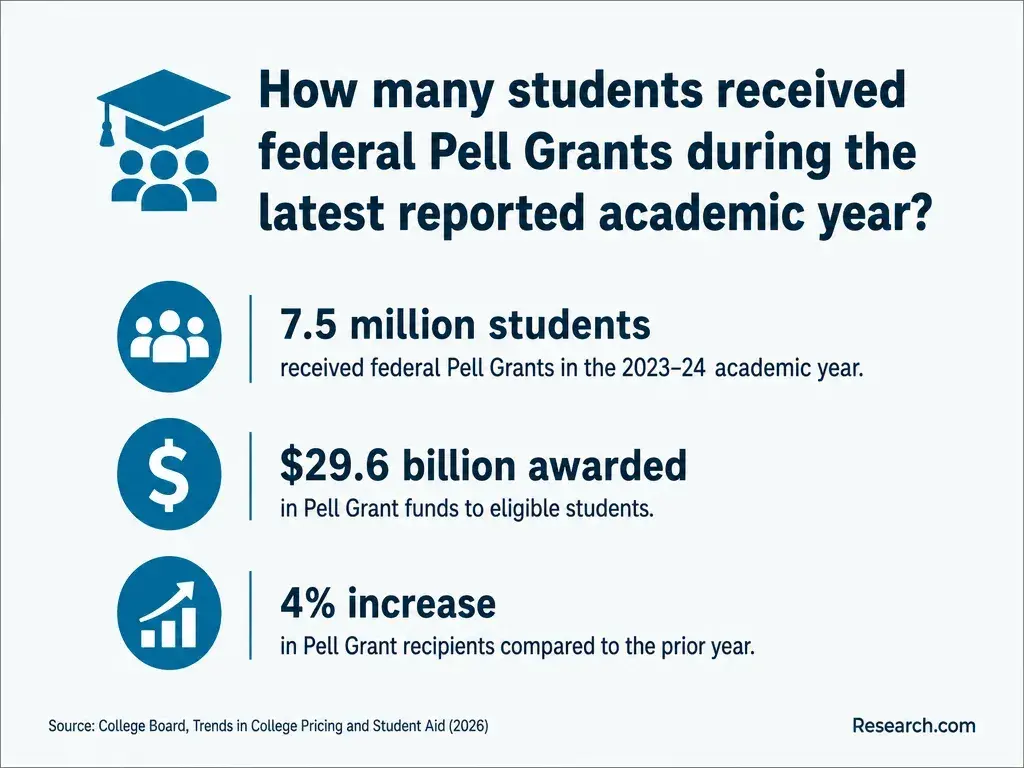
For cost, request a term-by-term estimate covering tuition, mandatory fees, books or software, travel or proctoring, and any earnings lost to a reduced work schedule. Check employer tuition assistance for reimbursement timing and eligibility conditions. FAFSA planning for affordable business administration study can help frame aid questions, but grants, loans, and employer benefits should be counted only after eligibility is confirmed.
Choose a school with recognized institutional accreditation and verify its status with the accreditor or the U.S. Department of Education's accreditation records. Institutional accreditation matters for degree recognition and can affect aid and future study. Separately, AACSB, ACBSP, or IACBE accreditation may apply to a business school or particular programs; check the accreditor's listing for the exact scope rather than assuming every degree at the institution is covered.
Accreditation alone does not establish that a program fits construction management or that credits will transfer elsewhere. When reviewing ranked online business bachelor's completion routes, verify accreditation, degree requirements, residency rules, and employer acceptance directly before applying.
What Are the Salaries and Job Outlook for Business Graduates?
There is no single salary for a business administration graduate. Pay depends on the occupation, location, employer, and experience brought to the job. For context, the U.S. Bureau of Labor Statistics reports a May 2025 median annual wage of $102,320 for project management specialists and projects 7% employment growth in that occupation from 2025 to 2035. That occupation-wide median includes experienced workers; it is not an expected starting salary for an estimator who earns a BS.
Use local job postings and conversations with employers to test whether the roles you want require a bachelor's degree, project-delivery experience, or both. Compare likely opportunities with your remaining education cost and time away from work. Online colleges with accelerated business programs may offer a faster route to completion, but speed improves the financial case only if the schedule is sustainable and the degree addresses an actual hiring or advancement requirement.
Other Things You Should Know About Business Administration
Only with appropriate employer permission and in compliance with school rules. If approval is unavailable, use public information or clearly labeled hypothetical figures, and do not disclose client details, pricing, or proprietary methods.
No. Contractor licensing is governed by applicable state and local rules. A business degree does not by itself satisfy licensing, examination, insurance, or experience requirements.
Not necessarily. Licensing, financing, insurance, and operational competence matter more immediately. A degree may help fill management gaps, but targeted accounting support or mentorship may be a more direct first step.
No. An estimating certification addresses a narrower professional skill set, while a business degree covers broader undergraduate study. Check what a target employer values before choosing between them.
- How to Become a Construction Manager | Texas A&M University College of Architecture https://www.arch.tamu.edu/news/2024/11/13/how-to-become-a-construction-manager/
- Home - A Guide to Construction Management | Research Guides at Northern Arizona University https://libraryguides.nau.edu/CM
- Business Administration vs. Management Degrees | CMU https://www.calmu.edu/news/business-administration-vs-management
- How to Become a Construction Manager - Fitchburg State Blog https://blog.fitchburgstate.edu/gce/how-to-become-a-construction-manager
- What is a business administration degree? | Northwest Media Center https://www.nwmissouri.edu/media/news/2025/07/what-is-a-business-administration-degree.htm
- Business Administration vs. Business Management | Warner Pacific University https://www.warnerpacific.edu/blog/business-administration-vs-business-management/
- What Can You Do With a Business Administration Degree? | American Military University https://www.amu.apus.edu/area-of-study/business-administration-and-management/resources/what-can-you-do-with-a-business-administration-degree-exploring-options/
- Business Administration vs. Management: Key Differences and Career Fit | post.edu https://post.edu/blog/business-administration-vs-management/
- How to Become a Construction Estimator in the Carolinas | ABC Carolinas https://abccarolinas.org/how-to-become-a-construction-estimator-in-the-carolinas/
- What Does a Construction Estimator Do? | Square Takeoff https://squaretakeoff.com/blog/construction-estimator-career-guide/