2027 Is a Business Analytics Focus Worth Adding to a BS in Business Administration If You Already Work as a business operations analyst?
Audited and Verified:
Our Editorial and Data Verification Process
Research.com uses government datasets, official education statistics and primary institutional information to support its career and degree guides. Our review process checks factual accuracy, occupational definitions, source dates and the requirements associated with the credentials discussed.
How This Article Was Fact-Checked
Our editorial team verifies salary estimates, employment projections, education requirements and program information against original data providers and official organizations. Salary figures are checked against the relevant occupational definitions and reporting periods. Information about licensure, accreditation and required in-person training is reviewed separately.
Fact-checked and verified on:

Co-Founder and Chief Data Scientist
If you already analyze business operations, an analytics focus should build on your experience—not make you pay to repeat it. The decision matters as you plan a BS in Business Administration: the right courses could strengthen your statistical reasoning and help you pursue more complex work, while the wrong ones could add cost without changing what you can do.
This article compares the focus with other learning paths and shows how to check its curriculum, time, cost, and career value against your next role.
Key Things You Should Know
- An analytics focus is most worthwhile when it fills a specific gap—such as statistics, database querying, or forecasting—and lets you demonstrate that skill in an approved project.
- Check whether the focus is formally recorded and whether its courses add credits or delay graduation; existing analyst experience may make targeted training the better investment.
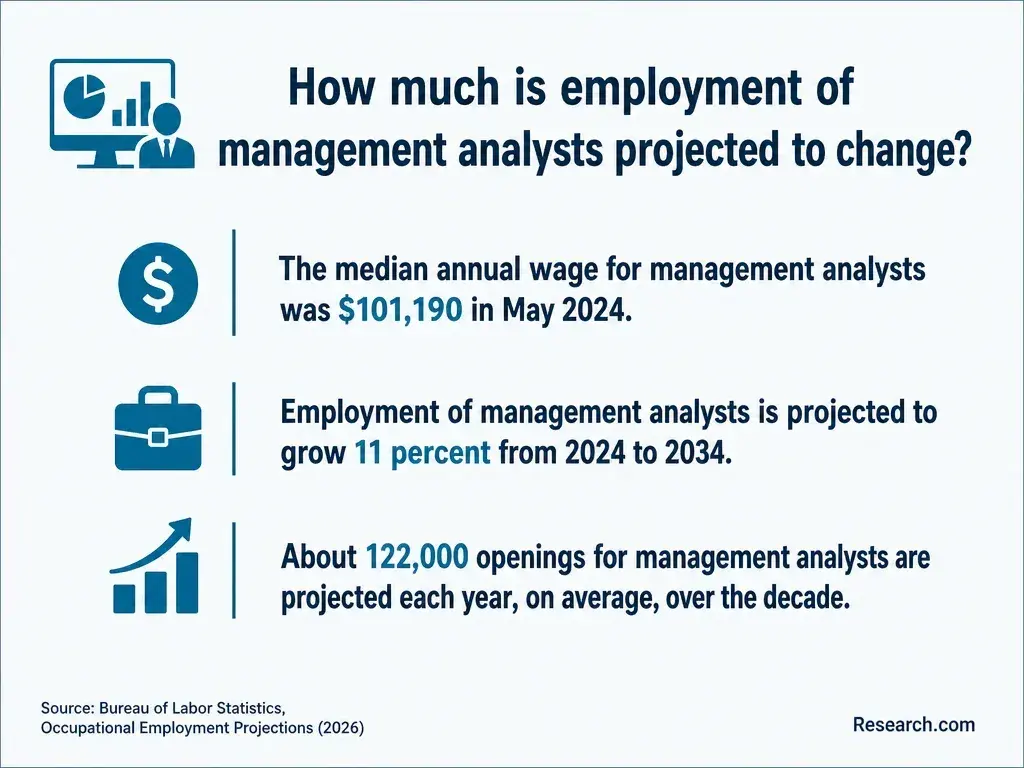
- The U.S. Bureau of Labor Statistics reports a $101,860 median annual wage for management analysts in May 2025 and projects 10% employment growth from 2025 to 2035; neither figure predicts your pay or promotion.
Is a business analytics focus worth adding to a BS in Business Administration for operations analysts?
Usually, yes—if it adds measurable skills without materially extending your degree. A business analytics focus is a defined set of analytics courses within the BSBA, although schools differ on whether they award a formal concentration, offer an elective cluster, or simply allow analytics electives. For someone already working as a business operations analyst, the value comes from learning methods and producing evidence of competence, not from adding the word "analytics" to a résumé.
Compare the options against the work you want next. The distinctions below help separate a useful concentration from coursework you could obtain more directly.
| Path | Best fit | Main limitation |
| BSBA with a formal analytics focus | You need the bachelor's degree and want deeper analytical preparation within a broad business curriculum. | Required courses may add time or duplicate skills you already use. |
| BSBA without the focus, plus selected electives | You need the degree but can address a narrow gap through carefully chosen courses. | The transcript may not identify a formal specialization. |
| Targeted training or a certificate | You already have a suitable degree and need a specific method or tool. | It may not satisfy an employer's bachelor's-degree requirement. |
| Specialized analytics degree | Your target role requires substantially more programming, mathematics, or data engineering. | It may require different prerequisites and a longer path. |
If finishing the bachelor's degree is your primary goal, compare the focus against the fastest online business bachelor's programs in the US—but confirm that a faster schedule still includes the analytical depth you need. Ask the school for a degree audit showing exactly which focus courses apply and whether changing paths affects your graduation date.
How does business analytics training complement business operations analyst experience?
Operations experience teaches you where decisions get stuck: inconsistent process measures, unreliable reports, competing stakeholder priorities, or forecasts that do not match capacity. Formal training can help you test those observations. Statistics clarifies whether a change is distinguishable from normal variation; database work helps you trace and clean inputs; modeling makes assumptions explicit before managers act on a forecast.
For example, an analyst might already report weekly order-cycle time. A stronger analysis would define which orders count, examine missing timestamps, separate changes in order mix from changes in process performance, and explain what the data cannot establish. A shorter cycle time alone does not prove a particular intervention caused it.
Choose courses relevant to your operating environment. If your work centers on purchasing, inventory, or fulfillment, a supply chain curriculum may offer more domain depth; budget-friendly supply chain degrees with shorter schedules provide an alternative to compare. Whatever you study, get employer permission before using internal records in assignments, and follow rules governing personal and proprietary data.
What career benefits can a business analytics focus provide operations analysts?
The strongest potential benefit is a more credible case for work with greater analytical responsibility: designing performance measures, evaluating process changes, building defensible forecasts, or explaining uncertainty to decision-makers. A formal focus can make that preparation visible, but employers will still look for relevant responsibilities and work samples. It does not turn an operations analyst into a manager or qualify someone for every technical analytics job.
Match the focus to a target opening. For an internal senior-analyst role, compare the posting's requirements with your current work and proposed courses. For a move toward project coordination or project management, scheduling, stakeholder communication, and delivery experience may matter more than additional dashboard coursework.
If that alternative involves another bachelor's program, check a project management bachelor's residency and transfer requirements before assuming your BSBA credits will apply. Your best evidence of readiness is a permitted, clearly documented analysis that addresses a real business decision and states its limitations.
Course titles vary, but a useful focus typically moves beyond introductory spreadsheets. Look for business statistics, data preparation, database or SQL fundamentals, visualization, forecasting or predictive methods, and an applied course that connects analysis to operations decisions. Check prerequisites: an advanced modeling elective is less useful if it is unavailable when you need it or requires mathematics you have not yet completed.
Read course descriptions and assignments, not just the concentration name. A dashboard class may teach presentation without much statistical analysis; a statistics class may teach inference without working with messy business data. An operations analyst benefits most from a sequence that covers both and requires an explanation of what managers should—and should not—conclude.
If your intended specialty is workforce analysis, compare analytics electives with human resources college study options to see whether you also need employment-practice knowledge. Confirm separately whether an internship or capstone is required and whether your current job can support an approved assignment.
Not necessarily. If you already have a bachelor's degree and your target employer does not require a different one, a focused course, supervised workplace project, or tool-specific training may address the gap faster. If you do not yet have a bachelor's degree and target postings require one, finishing the BSBA may serve two purposes: meeting that education requirement and strengthening your analytics skills. A second bachelor's degree is usually harder to justify when the missing qualification is only one method or software tool.
A certification is separate from a degree concentration and should be chosen for a specific role, not collected as a substitute for experience. If your goal shifts from analytics toward managing projects, compare the course content and total commitment of affordable project management schools with shorter project-focused training. Verify each target employer's requirements and each certification provider's eligibility rules before paying for either path.
Online study can let you keep your analyst job and apply concepts at work; campus study may make it easier to access scheduled labs, faculty, and classmates in person. Neither format guarantees better learning. The deciding factors are access to software and feedback, availability of advanced courses, and whether the schedule fits your work obligations.
Before selecting an online option, ask whether classes have live meetings, timed or proctored exams, group-project meetings, campus visits, or fixed software requirements. Ask campus programs whether required analytics courses meet during working hours and how often they run. You can use American business schools offering online degree study to identify programs to investigate, then verify the exact BSBA and analytics-focus format with each school. An online label does not mean self-paced study.
There is no reliable universal timeline or price: the answer depends on your remaining BSBA requirements, applicable transfer credits, course rotation, tuition structure, and whether analytics courses replace electives or add credits. The difference between "included in my degree" and "extra courses after graduation" can outweigh the apparent appeal of the focus.
Request a written degree audit and term-by-term plan before committing. Ask for the tuition and mandatory fees associated with any additional courses, plus likely software, books, travel, and lost-work-time costs. If your employer offers education assistance, check eligible courses, grade rules, reimbursement timing, and any repayment obligation.
Use resources on business administration program length and salary context as a starting point for comparison, not as a substitute for a personalized completion estimate. A focus is less attractive if one infrequently offered prerequisite delays the entire degree.
First, verify the institution's recognized institutional accreditation and that it covers the institution awarding your BSBA. Then check whether the business school or program holds AACSB, ACBSP, or IACBE accreditation and whether that accreditation covers the specific business program you are considering. These are different questions: business-school accreditation is not a separate professional license for an analytics concentration.
Accreditation helps you assess educational oversight; it does not prove that the analytics courses fit your job or that graduates receive particular offers. Review the current catalog and confirm the formal name and transcript status of the focus. When comparing costs across accredited alternatives, the total costs of project management programs can illustrate why tuition alone is an incomplete comparison—but verify accreditation scope and program charges for the BSBA you actually plan to enter.
There is no single salary for graduates of a BSBA analytics focus. Pay depends on the occupation, location, industry, and the experience and responsibilities you bring to it. The U.S. Bureau of Labor Statistics reports that management analysts had a median annual wage of $101,860 in May 2025, with employment projected to grow 10% from 2025 to 2035. That is an occupation-wide median, not a starting salary or an earnings estimate for people who add this focus.
Management analysts examine organizational problems and recommend improvements, so the occupation may be relevant if you want to move from routine reporting into broader performance or process consulting. Other operations analyst roles may align with different BLS occupations and pay differently. When assessing a program's return, compare actual target-job requirements and your likely remaining education cost rather than assuming a concentration produces a raise. A quicker degree route may improve that calculation; bachelor's programs for faster completion are worth examining if they preserve the courses you need.
Which business analytics certifications are useful for operations analysts?
Choose a credential for the gap in your next role. A recognized tool certificate may help if postings repeatedly ask for a particular visualization or database platform; a process-improvement credential may fit work centered on operational change. Before enrolling, check the issuer's current exam, experience, renewal, and cost requirements. A course completion badge is not necessarily a professional certification, and neither replaces evidence that you can define a business problem and interpret results responsibly.
If your longer-term goal is project leadership rather than deeper analytics, compare certification requirements with the broader education route and its financing. Guidance on funding an online project management bachelor's degree may help with that separate decision. For your current operations-analyst path, start with the qualification named in target postings and pursue it only if your existing work cannot already demonstrate the required skill.
Other Things You Should Know About Business Administration
Possibly, but employment alone does not award credit. Ask the program whether your role meets its learning objectives, supervision rules, and approval deadlines before planning around it.
Only with appropriate permission. Check company data and intellectual-property rules, and use a redacted or independently created example if confidential information cannot be shared.
Review algebra, spreadsheets, basic probability, and interpretation of charts. Then ask the program which quantitative prerequisites are required rather than assuming workplace reporting experience waives them.
Only if the institution formally records it that way. Request the current catalog language and ask the registrar what the completed degree and any concentration will display.
- Semester Course Load and Student Performance - PMC - NIH https://pmc.ncbi.nlm.nih.gov/articles/PMC7568764/
- What Is Business Analytics? Definition, Types & Career Guide | Wake Forest University School of Business https://business.wfu.edu/masters-in-business-analytics/articles/what-is-analytics/
- Data Analyst Career Guide: Skills, Salary & More | SIUE https://online.siue.edu/degrees/undergraduate/bsba/data-analytics-spec/analyst-job-description-and-skills/
- Standards for Awarding Credit for Prior Learning | Midland University Catalog https://undergrad.catalog.midlandu.edu/academicpolicies/cpl
- Can Work Experience Count Toward a College Degree? | Whitworth Online https://online.whitworth.edu/news-articles/can-work-experience-count-toward-a-college-degree/
- What is Business Analytics? | Michigan Technological University https://www.mtu.edu/business/undergraduate/business-analytics/what-is/
- Data Analytics Jobs: Roles, Skills, Salary, and Demand | South Dakota Mines https://www.sdsmt.edu/academics/academic-departments/electrical-engineering-and-computer-science/data-analytics-jobs-guide.html
- CPL Transfer Page | Alamo Colleges https://www.alamo.edu/credit-for-prior-learning/cpl-transfer-page/
- BBA vs. BS in Business Administration | National University https://www.nu.edu/blog/bba-vs-bs-business-administration/
- Credit for Prior Learning | University of Arizona Catalog https://catalog.arizona.edu/policy/courses-credit/credit/credit-prior-learning