2027 BS in Business Administration and Marketing: Questions to Ask About Faculty and Applied Projects
Audited and Verified:
Our Editorial and Data Verification Process
Research.com uses government datasets, official education statistics and primary institutional information to support its career and degree guides. Our review process checks factual accuracy, occupational definitions, source dates and the requirements associated with the credentials discussed.
How This Article Was Fact-Checked
Our editorial team verifies salary estimates, employment projections, education requirements and program information against original data providers and official organizations. Salary figures are checked against the relevant occupational definitions and reporting periods. Information about licensure, accreditation and required in-person training is reviewed separately.
Fact-checked and verified on:

Co-Founder and Chief Data Scientist
A marketing concentration can look compelling in a course catalog, but its value depends on who teaches it and what students actually produce. If you are comparing BS in Business Administration programs, ask whether faculty can connect current marketing practice to sound research methods - and whether applied projects give you useful, ethical work samples.
This guide shows you how to evaluate those claims, distinguish client work from classroom exercises, and weigh accreditation, format, cost, and career fit before enrolling.
Key Things You Should Know
- Ask who teaches each marketing course, what relevant research or industry experience they bring, and how they review and grade student work.
- Request recent project briefs and grading criteria: a campaign proposal, simulation, and employer-approved client project offer different levels of practical evidence.
- The U.S. median annual wage for market research analysts was $78,760 in May 2025, according to the Bureau of Labor Statistics; that occupation-wide figure is not a starting salary for marketing graduates.
What Is a BS in Business Administration and Marketing?
Usually, this means a BS in Business Administration with a formal marketing concentration or emphasis: students complete a general business core alongside designated marketing courses. Some schools instead award a specialized BS in Marketing. Check the exact credential on the catalog and transcript; a few marketing electives do not necessarily constitute an official concentration.
The broad business core may suit someone who wants to connect customer decisions with budgets, operations, and strategy. A specialized marketing degree may offer more room for research, communications, or analytics. If your intended work is employee recruitment or workplace policy rather than customer acquisition, college pathways into human resources may be a closer fit.
How Do You Choose an Accredited Business Administration and Marketing Program?
First, verify the institution's accreditation through its accreditor and confirm that the accreditor is recognized by the U.S. Department of Education or the Council for Higher Education Accreditation. Then check whether the business school or specific program holds applicable AACSB, ACBSP, or IACBE accreditation. These are different questions: business accreditation has its own scope, and neither type proves that a particular marketing project is strong.
Compare the current catalog, course schedule, faculty roster, and a sample project rubric. Ask whether required marketing courses run often enough to finish on your planned schedule, who supervises projects, and whether students can access career advising. Request outcome figures with their reporting period and response rate rather than relying on testimonials. For a cost-sensitive online search, accredited online business administration study with aid eligibility is a starting point, not a substitute for checking the named school's current accreditation and financial-aid status.
What Should You Ask About Faculty Experience and Qualifications?
Marketing faculty can contribute research expertise, professional practice, or both. The useful test is whether their experience matches what you want to learn and whether they have time and a clear method for coaching your work. A practitioner's job title alone does not establish teaching quality; a research publication alone does not show that students receive actionable feedback.
Use the following questions with an adviser or department chair, and ask for course-level examples rather than general assurances:
- Who teaches required marketing research, analytics, and campaign courses, and what work or scholarship informs their teaching?
- Who approves project questions, checks methods and data sources, and gives feedback before final submission?
- How are adjunct instructors supported, and what access do students have to them outside class?
- Can students see an anonymized assignment brief and rubric showing how analysis, ethics, communication, and revision are assessed?
If your intended work is coordinating projects across functions rather than studying customers or campaigns, compare faculty supervision with affordable college choices for aspiring project managers. The best mentor for a marketing research project may not be the best fit for a scheduling or implementation project.
Look for assignments that require students to frame a customer or organizational question, choose appropriate evidence, explain uncertainty, and make a defensible recommendation. A project's value depends less on whether it names a company than on its scope, supervision, revision process, and permissions.
The table distinguishes common project formats so you can compare what each might let you demonstrate. Confirm which formats are actually required or available in the program you are considering.
| Project format | Potential evidence of learning | Important limit |
| Public-data market analysis | Research question, source evaluation, segmentation, and recommendations | Public information may not reveal actual customer behavior. |
| Campaign simulation | Budget choices, messaging, metrics, and explanation of trade-offs | Simulated results are not observed campaign performance. |
| Approved client or workplace project | Stakeholder communication, a scoped deliverable, and documented revisions | Data use, publication, and implementation require appropriate permission. |
| Capstone portfolio piece | A coherent account of methods, assumptions, findings, and limitations | Portfolio display may require redaction or a public-data version. |
Ask who recruits clients, what happens if no placement is available, whether group and individual contributions are assessed separately, and whether students may revise a deliverable after feedback. For workplace projects, confirm faculty approval and employer permission before using customer information, internal metrics, or branding. A proposed campaign is not evidence that a business implemented it or improved sales.
If you primarily want to manage implementation schedules and budgets rather than investigate markets, compare the project requirements and total charges of a specialized route using project management tuition fees and financial aid information.
A business administration core commonly introduces accounting, economics, finance, management, operations, statistics, and business communication. Marketing study may add consumer behavior, marketing research, digital campaigns, sales, or analytics. The crucial comparison is depth: an introductory course may teach terminology, while a later course may require a research design, spreadsheet analysis, and a recommendation supported by evidence.
Inspect course descriptions and prerequisites together. For example, statistics may need to come before marketing research; limited course availability can make that sequence consequential. Ask whether research methods, responsible use of customer data, and a substantial applied assignment are required or merely electives. If you are entering from another academic field, check the school's actual rules against general guidance on prerequisites for a business administration degree.
Either format can support rigorous marketing work. Effectiveness depends on the assignments, faculty feedback, peer collaboration, access to relevant tools, and opportunities to present and revise findings - not the delivery label alone. An online simulation with detailed coaching may be more useful than an unsupervised campus exercise; a campus client project may offer interaction an online program cannot replicate.
Ask whether live meetings, timed presentations, group work, proctored assessments, internships, or campus visits are required. Check software access, technical support, and whether remote students can participate in the same client projects and career services. Online does not necessarily mean self-paced. When comparing affordable business education options online, account for technology fees and any travel or scheduling demands alongside tuition.
Requirements vary by institution and by entry point. A first-year applicant may need secondary-school records; a transfer applicant generally submits previous college transcripts. A school may admit students to the institution before they qualify for the business major or marketing concentration, with separate coursework or academic-standing rules.
Ask admissions which requirements apply to your entry route, and ask the business adviser which accepted credits will satisfy the core, marketing courses, and prerequisites. Do not assume that transferred marketing credits fulfill a concentration requirement without an official evaluation. If you already have substantial HR coursework and are reconsidering your focus, evaluate transfer-friendly online HR colleges as an alternative rather than choosing marketing solely to preserve credits.
A conventional full-time bachelor's pathway is often planned around four academic years, but your completion time depends on accepted credits, credits that actually apply to requirements, course sequencing, and enrollment pace. A transfer student can have many accepted credits yet still need a sequence of business prerequisites and marketing courses.
Request a term-by-term degree plan based on an official audit. Identify when each required marketing course runs and whether a client project or capstone has a prerequisite or fixed term. If you are considering an alternative, project-focused bachelor's program, compare its calendar and financing separately; paying for project management bachelor's study with grants may affect affordability, but available aid does not eliminate course-sequencing delays.
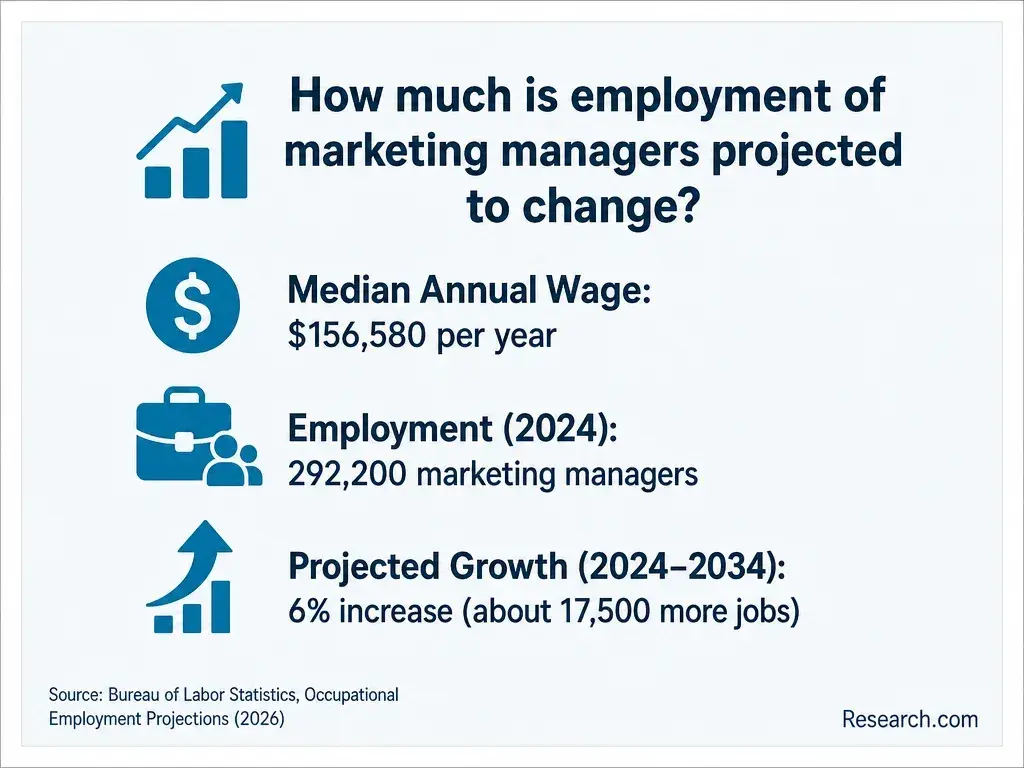
Early-career possibilities include marketing coordinator, research assistant, sales operations assistant, and entry-level roles supporting digital campaigns. Responsibilities vary: research work emphasizes collecting and interpreting evidence, while campaign support may emphasize content, scheduling, and performance reporting. Internships, relevant employment, and clearly documented work samples can help demonstrate those skills. Graduation alone does not qualify someone to manage a department or budget.
The Bureau of Labor Statistics reports a May 2025 median annual wage of $78,760 for market research analysts and projects 7% employment growth from 2025 to 2035. These are occupation-wide figures, not pay or placement forecasts for new graduates. Compare actual entry-level postings in your area with the methods and tools taught in the program.
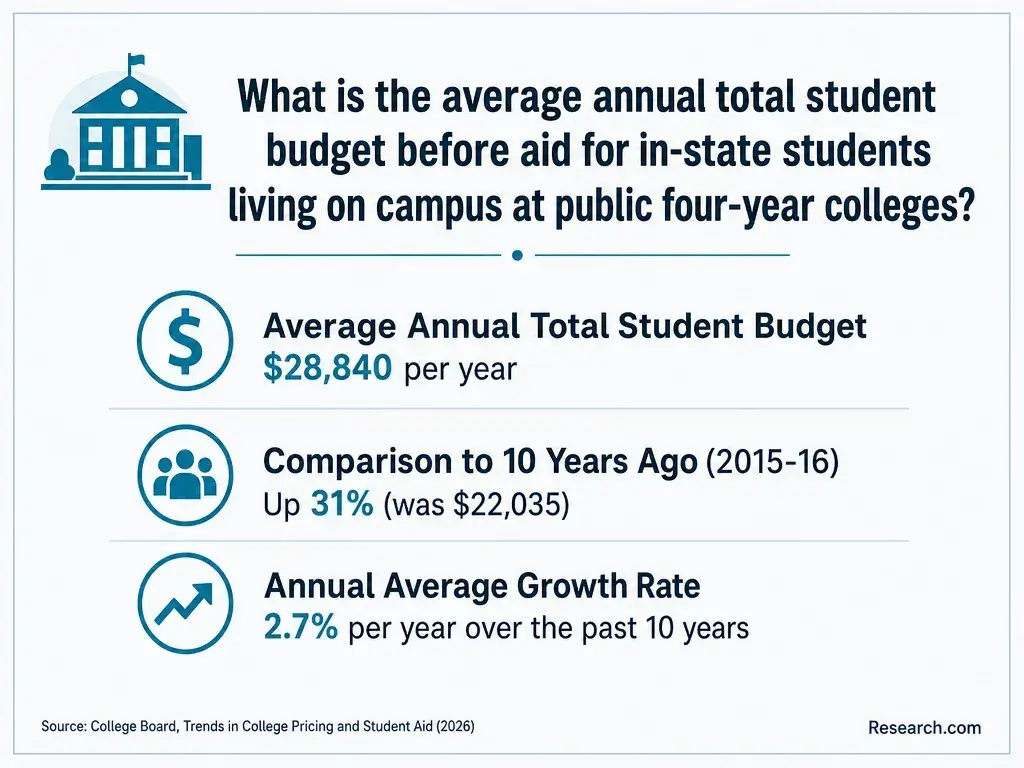
Before borrowing for a degree, compare its remaining cost with your likely entry route and existing experience. Shorter business administration study options and career prospects can inform that comparison, but an accelerated schedule is useful only if it preserves the marketing coursework and project experience you need.
What Certifications or Licenses Do Marketing Professionals Need?
Marketing work generally does not require a single occupation-wide license. Employers may value demonstrated ability with research, analytics, advertising platforms, or customer-relationship systems; a vendor certificate can document training on a particular tool, but it does not replace a degree or prove campaign results. Check individual job postings before paying for a credential.
If your goal is project coordination rather than marketing, assess that occupation's requested experience and credentials separately. A marketing class project does not automatically meet professional certification requirements. Likewise, compare the scope and cost of targeted training with a full degree; A business administration education length and salary outlook guide may help with a specialized degree.
Other Things You Should Know About Business Administration
Only if your school's rules and the client's permissions allow it. Remove confidential information and personal data, and consider a public-data or anonymized version that explains your own contribution.
It can help with customer research and positioning, but compare its courses with sales responsibilities such as prospecting and account management. Relevant sales experience may matter more than the concentration name.
Often, but the school controls the rules. Ask an adviser how the change would affect completed credits, remaining required courses, and your planned graduation term before submitting it.
Not necessarily. A program may offer public-data assignments, simulations, or approved external clients. Confirm the available options and whether any project setting is required for graduation.
- The Power of Partnerships in Experiential Learning | AACSB https://www.aacsb.edu/insights/articles/2025/04/the-power-of-partnerships-in-experiential-learning
- How Projects Work | Ross Action-Based Learning https://actionlearning.bus.umich.edu/how-projects-work
- Example Projects - BlueWork - Butler University https://bluework.butler.edu/example-projects/
- Marketing (MARKETNG) - Guide https://guide.wisc.edu/courses/marketng/
- What Is a Capstone Project? Types, Examples, and Tips | SCU https://www.scu.edu/business/blog/business-concepts/what-is-a-capstone-project/
- Faculty Qualifications Policy | Ancell School of Business | Tutoring Resource Center https://www.wcsu.edu/asb/ancell-policies-and-procedures/faculty-qualifications-policy/
- How can I assess group work? - Eberly Center | Carnegie Mellon University https://www.cmu.edu/teaching/designteach/design/instructionalstrategies/groupprojects/assess.html
- Feedback for Learning | columbia.edu https://ctl.columbia.edu/resources-and-technology/resources/feedback-for-learning/