2027 BS in Business Administration: Estimating Break-Even Cost for a Career Change
Audited and Verified:
Our Editorial and Data Verification Process
Research.com uses government datasets, official education statistics and primary institutional information to support its career and degree guides. Our review process checks factual accuracy, occupational definitions, source dates and the requirements associated with the credentials discussed.
How This Article Was Fact-Checked
Our editorial team verifies salary estimates, employment projections, education requirements and program information against original data providers and official organizations. Salary figures are checked against the relevant occupational definitions and reporting periods. Information about licensure, accreditation and required in-person training is reviewed separately.
Fact-checked and verified on:

Co-Founder and Chief Data Scientist
A career change can make a BS in Business Administration appealing, but the degree's price is only part of the decision. Time away from work, existing credits, and the job you can realistically enter afterward may matter more than advertised tuition.
This guide is for people bringing experience from another field into business. It shows you how to estimate your full cost, calculate a break-even point, and test whether a business degree - or a more targeted route - is likely to move you toward your intended role.
Key Things You Should Know
- Divide your total net career-change cost by the additional annual take-home earnings you can reasonably attribute to the degree; if that earnings gain is uncertain or zero, a reliable payback date is not available.
- Include required fees, remaining credits, borrowing costs, and earnings lost while studying, then subtract only aid or employer payments you are reasonably eligible to receive.
- The U.S. Bureau of Labor Statistics reports a May 2025 median wage of $75,940 for human resources specialists, but that figure covers workers across experience levels - not new business graduates.
What Is a BS in Business Administration Worth for a Career Change?
A BS in Business Administration can be worth its cost when it closes a documented qualification gap and helps you reach a role with better long-term earnings or advancement prospects. Its value depends on the difference between your likely career with the degree and your likely career without it - not on the salary attached to a business job title.
Start with your current responsibilities. A customer service employee who already tracks service metrics may be closer to an operations coordinator role than someone changing from an unrelated field with no business projects. In the first case, coursework could formalize accounting, analytics, and process-improvement skills. In the second, the degree may still help, but relevant work samples, networking, or an entry-level transition could take additional time.
Check job postings for your target role: Does a bachelor's degree appear as a requirement, a preference, or not at all? If experience is the main barrier, a workplace project or targeted training may offer a faster route. If your goal is specifically organizational leadership, compare the curriculum and total completion cost of undergraduate leadership programs with shorter timelines rather than assuming a general business degree is the only option.
How Much Does a Bachelor's Degree in Business Administration Cost?
Your relevant price is the cost to finish, not a school's published price for a full bachelor's degree. Ask each institution for a degree audit showing which previous courses satisfy general education, business core, concentration, elective, and residency requirements. Accepted transfer credit that counts only as an elective may leave an expensive required course outstanding.
The following cost categories help you build a comparable estimate for each school. Obtain amounts and payment dates directly from the institution, employer, and lender before relying on the total.
| Cost category | What to verify | Why it changes your estimate |
| Tuition and required fees | Remaining required courses; charges per credit, course, or term; technology and graduation fees | A lower advertised rate may not mean a lower completion cost. |
| Study-related expenses | Books, software, equipment, proctoring, travel, and any required campus visits | These expenses may not be included in tuition. |
| Financing | Loan amount, interest, repayment terms, and when interest begins | Borrowing can increase the cost beyond the school bill. |
| Opportunity cost | Work hours or benefits you expect to give up | Reduced earnings may outweigh differences in tuition. |
| Cost reductions | Confirmed grants, scholarships, and employer benefits, including their conditions and timing | A promised reimbursement does not necessarily cover an upfront bill. |
For an initial price comparison, compare the least expensive business administration schools, then replace advertised figures with school-specific estimates based on your audit. Keep loans separate from grants: loan proceeds help pay a bill but do not reduce what the degree costs. Confirm employer grade requirements, reimbursement caps, and repayment obligations if you leave your job.
How Can You Calculate the Break-Even Point for a Business Degree?
The break-even point is when additional earnings attributable to your career change have covered its total net cost. A simple estimate divides net cost by an expected annual increase in take-home earnings. This works only if the increase is plausible, reasonably steady, and measured against what you would have earned without enrolling.
Use this sequence to make the estimate more defensible:
- Set your baseline: forecast your likely pay and work schedule if you do not pursue the degree, including raises or advancement you could obtain anyway.
- Add tuition, mandatory fees, study expenses, financing costs, and earnings or benefits you expect to lose; subtract only verified nonrepayable aid and employer payments for which you qualify.
- Estimate the after-tax earnings difference for a specific attainable role, allowing for the possibility of a lower-paid transition job or a search period after graduation.
- Divide net cost by a positive, reasonably steady annual earnings difference; if earnings vary by year, add each year's incremental cash flow until cumulative gains cover the cost.
For example, write your own verified figures as C for net career-change cost and G for the expected annual after-tax gain. The simplified payback time is C ÷ G years. If G is zero or negative, the degree does not break even on earnings under those assumptions. For a longer comparison, account for when tuition is paid, when new earnings begin, and the time value of money; a quick payback calculation is not a complete investment analysis.
Run a cautious scenario as well as an optimistic one. If a project-focused career is your goal, project management tuition fees and financial aid provide another pathway to price - but compare identical remaining-credit, work-hour, and aid assumptions. A specialized degree should not be treated as financially equivalent to a BS in Business Administration merely because both could support project work.
A business administration degree can support a move into operations coordination, administrative services, sales operations, human resources, marketing support, or project coordination. Your prior industry knowledge often determines which move is most feasible. A healthcare employee, for example, may be better positioned for an administrative or operations role in healthcare than for an unrelated finance position.
Compare roles by their daily tasks, not their titles. Operations coordinators may track schedules and improve workflows; HR specialists may handle recruiting or employee processes; marketing coordinators may support campaigns and interpret customer data. Manager positions generally require evidence of responsibility and results beyond coursework. A degree also does not replace any separate license or credential an employer or regulator requires.
For an HR transition, compare the general business core with human resources degree planning basics. If the jobs you want emphasize employment practices and HR systems, a specialized curriculum or relevant HR experience may be more direct. Ask whether the program offers supervised projects or internships that would let you demonstrate the work employers request; current employment does not automatically earn academic credit.
Completion time depends on applicable transfer credit, required course sequencing, enrollment pace, and how often the school offers remaining classes. A previous degree or substantial college coursework may shorten the path, but only an official evaluation can show what still applies to a specific BS program.
Ask an adviser for a term-by-term plan that includes prerequisites, residency rules, and any courses offered infrequently. Compare that schedule with the hours you can study without reducing paid work more than planned. An accelerated calendar could bring forward potential new earnings, but it could also increase lost wages if its workload forces you to cut hours.
A national comparison of accelerated business bachelor's schools can help you identify programs to investigate. Treat a published minimum timeline as a possibility, not your forecast, until the school confirms your credit evaluation and course availability.
Business administration programs commonly combine accounting, finance, marketing, management, operations, economics, and quantitative reasoning. For a career changer, the useful question is which required courses and applied assignments address the skills missing from your résumé. An accounting course may help you read budgets; a statistics course may help you interpret performance measures. Neither alone establishes specialist expertise.
Review the actual course sequence and available electives. If your target work involves procurement or project delivery, look for operations, supply chain, analytics, and project assignments with feedback. Compare those options with cost-conscious project management college options if a more focused degree would avoid paying for coursework less relevant to your goal. Check whether a named focus is an official concentration, an elective cluster, or simply a single course.
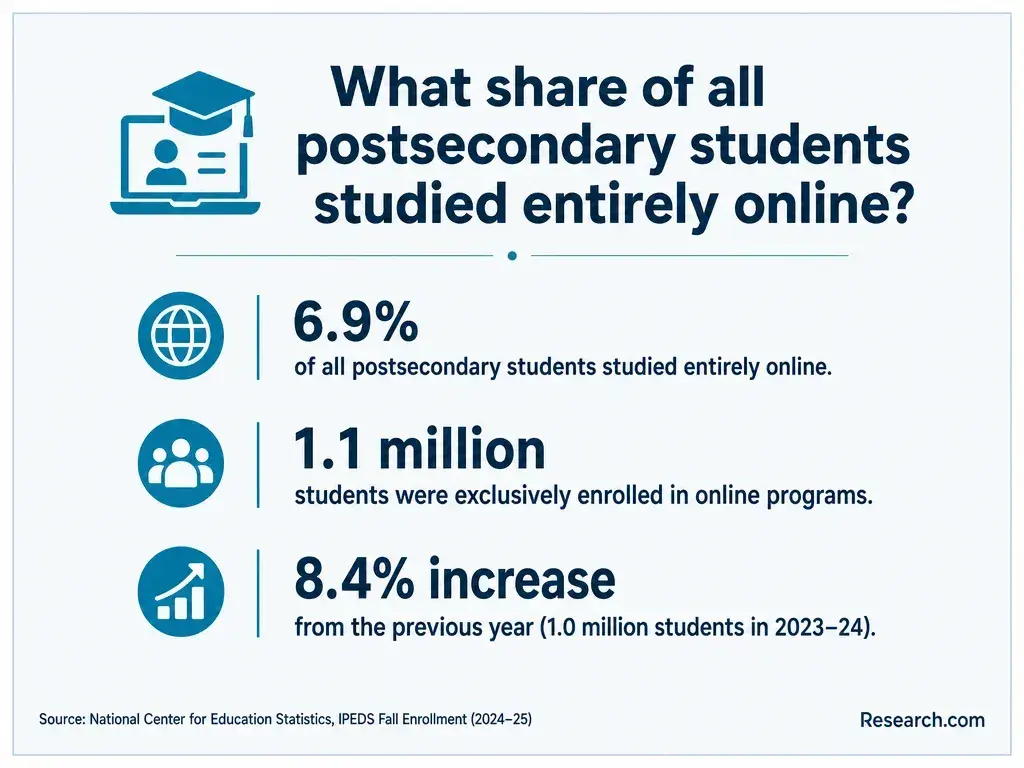
An online program can be financially attractive if it lets you keep working while studying. That advantage disappears if required live classes, group meetings, proctored exams, or an internship conflict with your schedule. Online does not necessarily mean self-paced, and a faster course format does not necessarily reduce total tuition.
Ask for sample schedules and assessment rules for the courses you still need. Confirm evening or weekend commitments, campus visits, software requirements, career services, and whether you can complete an approved project at your current workplace. For a comparison centered on maintaining employment, use business administration degree planning for employed applicants as a starting point, then test each program against your actual work hours and the break-even estimate.
Check that the institution holds recognized institutional accreditation. Then verify separately whether its business school or program has applicable AACSB, ACBSP, or IACBE accreditation. These are different questions: an institution's status does not establish business-program accreditation, and a business school's status should not be assumed to cover every degree it offers.
Accreditation is a screening factor, not proof that graduates secure a particular job or salary. When you compare ranked online business schools in America, confirm the exact degree, accreditation scope, curriculum, completion requirements, and published outcomes with each school. Those details are more useful to your payback estimate than a ranking position alone.
Requirements vary by school and by whether you apply as a first-time student, transfer applicant, returning student, or second-degree candidate. Schools may request prior transcripts and may set separate standards for entering the business major. Admission does not mean every previous credit will satisfy a graduation requirement.
Before applying, send each prospective school your transcripts and ask about mathematics, statistics, accounting, and other prerequisites; transfer limits; residency credits; and any course recency rules. Request a written evaluation showing where each accepted course applies. If HR is your intended destination, transfer-friendly human resources bachelor's degrees offer another program type to evaluate against the same transcript and target-role criteria. The receiving institution has final authority over its credit decisions.
What Salaries and Job Outlook Can Business Administration Graduates Expect?
There is no single salary or job-growth rate for a BS in Business Administration. The degree can lead toward different occupations, and pay depends on the role, location, industry, and experience. For one relevant example, the U.S. Bureau of Labor Statistics reports a May 2025 median annual wage of $75,940 for human resources specialists and projects 6% employment growth from 2025 to 2035. The median covers the occupation as a whole; it is not a starting offer or a predicted return on your degree.
For your break-even calculation, use compensation evidence for jobs you could plausibly obtain at the time you expect to finish - not the wage of an experienced manager. If project work is your goal and you already hold an associate degree, project management bachelor's routes for associate degree graduates may warrant comparison. Confirm transfer applicability and assess job postings for the experience and technical skills they require before assigning either degree an expected earnings gain.
Other Things You Should Know About Business Administration
Possibly, but eligibility depends on the applicable tax rules and your circumstances. Check current IRS guidance or consult a qualified tax professional before counting a credit as a reduction in your degree cost.
No. Ask the program whether your duties qualify, what supervision and learning objectives it requires, and whether approval must be obtained before the work begins.
Only if you have permission to share them. Follow employer confidentiality and intellectual-property rules, remove sensitive information, or create a clearly labeled independent example instead.
Not by itself. CPA licensure requirements are set by state boards and include specific education and other conditions. Check your state's rules before choosing a degree for that purpose.
- Topic no. 456, Student loan interest deduction | Internal Revenue Service https://www.irs.gov/taxtopics/tc456
- Annual Earnings by Educational Attainment - COE https://nces.ed.gov/programs/coe/indicator/cba/annual-earnings
- Break-even point calculator - Small Business Administration https://www.sba.gov/counseling/plan-your-business/break-even-point-calculator/
- Cost of Attendance (Budget) | 2025-2026 Federal Student Aid Handbook https://fsapartners.ed.gov/knowledge-center/fsa-handbook/2025-2026/vol3/ch2-cost-attendance-budget
- Questions and Answers About IDR Plans | studentaid.gov https://studentaid.gov/manage-loans/repayment/plans/income-driven/questions
- Employer Tuition Assistance Plans May Help Pay for College | Campus https://campus.edu/blog/financial-aid/employer-tuition-assistance-programs-can-help-pay-for-college
- Cost of Attendance - Financial Aid and Scholarships | The University of Utah https://financialaid.utah.edu/tuition-and-fees/cost-of-attendance.php
- Undergraduate and Graduate Tuition and Fees | Purdue Global https://www.purdueglobal.edu/tuition-financial-aid/undergraduate-graduate-tuition-and-fees/