2027 Choosing a BS in Business Administration for Business Roles in Growing Founder-Led Companies
Audited and Verified:
Our Editorial and Data Verification Process
Research.com uses government datasets, official education statistics and primary institutional information to support its career and degree guides. Our review process checks factual accuracy, occupational definitions, source dates and the requirements associated with the credentials discussed.
How This Article Was Fact-Checked
Our editorial team verifies salary estimates, employment projections, education requirements and program information against original data providers and official organizations. Salary figures are checked against the relevant occupational definitions and reporting periods. Information about licensure, accreditation and required in-person training is reviewed separately.
Fact-checked and verified on:

Co-Founder and Chief Data Scientist
A growing founder-led company may need someone who can improve a process, explain a budget, and coordinate a launch - sometimes in the same week. A BS in Business Administration can build that range, but the degree alone will not make you ready for every role. This guide is for prospective students, career changers, and employees considering business work in smaller, fast-changing organizations. It shows how to match a program's courses and applied opportunities to the work you want, then weigh the time and cost against more targeted options.
Key Things You Should Know
- Choose for the function you want to own - such as operations, customer growth, or finance - not for a program's entrepreneurship label alone.
- Look for applied work that produces usable evidence of your skills; a degree does not replace experience or automatically qualify you to manage a growing company.
- Use occupation data cautiously: the U.S. median for project management specialists was $102,320 in May 2025, but that occupation-wide figure is not a starting salary for business graduates.
What Is a BS in Business Administration for Founder-Led Companies?
A BS in Business Administration is an undergraduate degree covering several business functions rather than one occupation. For a founder-led company - an organization in which a founder remains closely involved in major decisions - that breadth can be useful. As the company grows, informal practices often need to become repeatable budgets, hiring processes, customer measures, and operating routines.
The degree is not a special founder-led-company credential. Its value depends on whether you can apply the curriculum to a specific responsibility while working with limited staff, changing priorities, and a founder who may still approve decisions directly. A BS, BBA, or specialized business degree can each be appropriate; compare actual requirements rather than assuming the titles signal the same training.
If you already have college credit, compare the courses you still need - not just advertised speed - when reviewing ranked online business bachelor's completion routes. A school must determine which accepted credits satisfy its business core and graduation requirements.
Which Business Roles Can a BS in Business Administration Prepare You For?
Start with what you already know how to do, then identify the responsibility you want next. Someone with customer-service experience may have a route into customer operations; someone who has coordinated schedules and vendors may be closer to an operations or project role.
The table distinguishes plausible starting responsibilities from the evidence an employer would still need to see.
| Role direction | Work in a growing company | Useful evidence beyond the degree |
| Operations or project coordinator | Track handoffs, deadlines, vendors, and process problems | A documented workflow improvement or supervised project schedule |
| Marketing or customer operations coordinator | Support campaigns, customer records, and service measures | Clear writing and a responsibly prepared campaign or customer-analysis sample |
| Finance or administrative associate | Maintain reports, support budgets, and organize purchasing | Spreadsheet work, accounting fundamentals, and careful record handling |
These are role directions, not guaranteed job titles. Founder-led firms may combine functions, while analyst, HR, accounting, and management jobs can require deeper experience or specialized preparation. If your goal is specifically to coordinate complex projects, compare the relevant curriculum and total cost of online project management programs for smaller budgets before choosing a broad business degree.
How Do You Choose an Accredited Business Administration Program?
First, confirm that the institution has recognized institutional accreditation and that the exact BS program is offered in the format you intend to use. Then check whether any claimed AACSB, ACBSP, or IACBE accreditation covers the relevant business school or program. Institutional and business-specific accreditation have different scopes; neither proves that graduates get founder-led-company jobs.
Next, compare the curriculum against a target role, not a promotional description. Ask for the current catalog and sample course sequence. Check whether operations, accounting, analytics, and communication courses are required; whether an entrepreneurship course is merely an elective; and whether an internship or capstone can address a real small-company problem.
Ask career services how students find relevant placements, and request the definitions behind any published employment outcomes. Use online business programs in US college rankings to build a shortlist, then verify each school's accreditation scope, course availability, applied-learning rules, and outcomes directly. A ranking cannot tell you whether the courses you need will run when you need them.
Prioritize courses that help you turn an informal decision into one the company can explain and repeat. Accounting and managerial finance help you distinguish sales from costs and cash needs. Operations and project management help you map work, assign ownership, and spot bottlenecks.
Marketing and customer research help you test demand without treating a few enthusiastic responses as proof of a market. Statistics and spreadsheets help you interpret measures - and recognize weak data.
Look closely at assignments. A useful applied project might propose a purchasing workflow, compare customer-acquisition options using stated assumptions, or build a budget scenario. It should identify a decision-maker, explain limitations, and protect customer, employee, and proprietary information. A classroom proposal is not evidence that a company approved or implemented it.
If your target job is specifically inventory planning or supply chain operations, a specialized program may offer more depth than general business electives. Compare its prerequisites and applied work with three-year supply chain undergraduate degree routes; an advertised timeline is meaningful only if your credits and course sequence support it.
Choose the format that lets you complete meaningful work consistently. Online study may help an employed student keep earning while learning, but it can still require live meetings, group presentations, timed exams, or fixed weekly deadlines. Campus study can make it easier to meet classmates and local employers, but travel and class times may limit its feasibility.
Before enrolling, ask for a recent syllabus from a required course and the capstone. Check live-session times, team-project scheduling, proctoring, required software, campus visits, internship rules, and access to faculty and career services. If you hope to use your current workplace for a project, get the academic requirements and employer's data-use rules before relying on that plan.
Students balancing work with study can use degree options for working business administration students as a comparison starting point. "Online" describes delivery; it does not establish that a program is self-paced.
Requirements vary by school and by whether you apply as a first-year or transfer student. Schools generally review prior academic records; some business majors also have entry or progression requirements involving grades or specified courses. Mathematics, statistics, accounting, and economics may be required before or during the major rather than before admission.
Request separate answers about admission and degree completion. If you have prior credits, submit transcripts for an official evaluation and ask which courses meet general education, business core, elective, and residency requirements.
Do not assume accepted credits replace required business courses. A student returning after employment should also ask whether prior learning can be assessed and whether any quantitative coursework must be retaken under current policy.
Use what to check before applying for a business administration degree to organize questions, then obtain the applicable requirements and credit evaluation from the school itself.
A conventional full-time bachelor's path typically takes several academic years; transfer credit, part-time enrollment, required course sequencing, and available terms change an individual completion date. For someone aiming to join a growing company soon, the relevant measure is time and cost to finish the remaining requirements, not the length advertised for a student starting from scratch.
Ask each school for a degree audit and a term-by-term plan. Compare tuition and mandatory fees for the courses you still need, then account for books, software, travel, borrowing, and any earnings you would give up.
Check whether an employer's education benefit pays upfront or reimburses you later; reimbursement can ease total cost without solving immediate cash-flow needs. Financial aid eligibility and continued enrollment requirements also matter.
When comparing economical online business administration college programs, use the same assumptions for remaining credits and pace. A lower advertised rate may not mean a lower completion cost if more of your previous work applies only as electives.
There is no single salary for BS in Business Administration graduates entering founder-led firms. Pay depends on the job's actual duties, location, industry, company resources, and your prior experience. Small-company titles can be especially misleading: a "manager" title may describe a broad individual-contributor job rather than responsibility for staff and budgets.
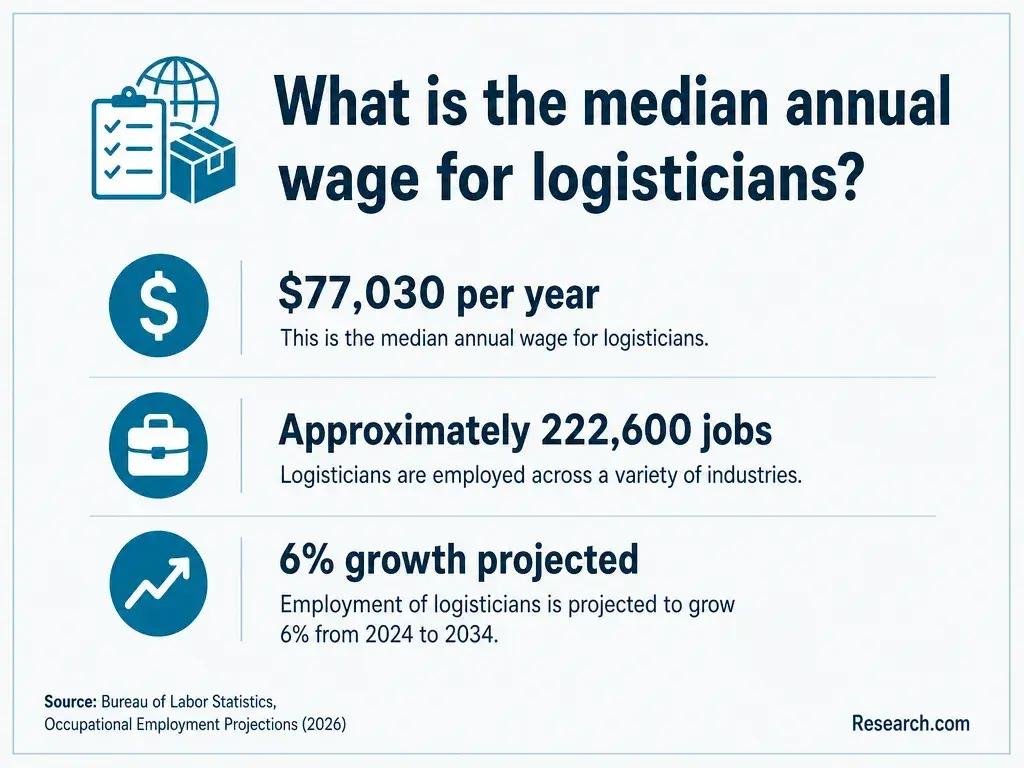
For context, the U.S. Bureau of Labor Statistics reports a May 2025 median annual wage of $102,320 for project management specialists. That is the midpoint for workers across the occupation, not a new graduate's expected offer or a wage specific to founder-led companies. Compare local postings by duties and experience requirements before estimating the return on a degree.
If project work is your target, include financing in that calculation. Project management bachelor's tuition assistance options may be worth investigating alongside a business degree, but confirm eligibility and actual out-of-pocket cost before treating aid as savings.
A business administration degree spans several occupations, so no single growth projection describes its prospects. The better approach is to identify a function and compare openings that match your skills. A founder-led firm hiring its first operations coordinator presents a different opportunity from a mature company recruiting an experienced supply chain specialist.
As one function-specific benchmark, the Bureau of Labor Statistics projects U.S. employment of logisticians to grow 18% from 2025 to 2035. That projection signals demand for the occupation nationally; it does not predict hiring at founder-led companies or imply that a general business graduate meets every logistician job requirement.
If supply chain is your goal, compare the relevant coursework and completion cost using economical supply chain study timelines before relying on broad job-growth figures.
Do Business Administration Graduates Need Certifications or Licenses?
Most general operations, coordination, and business-support roles do not have a license conferred by a BS in Business Administration. Employers may value software proficiency or function-specific certifications, but eligibility and usefulness depend on the credential and job. Accounting licensure and some financial-services activities have separate requirements; business coursework alone does not authorize regulated practice.
Let the target role determine the next qualification. If postings consistently request a specific credential, check its issuing organization's eligibility rules and compare the benefit with gaining supervised experience.
If postings instead ask for a bachelor's degree plus demonstrated work, a short certificate is unlikely to replace the degree. Conversely, someone who already meets employers' degree expectations may benefit more from targeted training than another broad qualification.
For a working employee choosing between a short credential and finishing a bachelor's, online business study with accelerated terms offers another format to examine. Confirm the remaining requirements and weekly workload before assuming faster terms are the better route.
Other Things You Should Know About Business Administration
Ask who approves priorities, how success in the role will be measured, and which processes already have clear owners. The answers reveal how much authority and support the job actually carries.
Do not treat potential equity value as cash compensation. Request the written terms, including vesting and what happens if you leave, and consider independent tax or legal advice before accepting a trade-off.
Not necessarily. Varied work can be valuable early experience, but clarify the primary responsibilities, reporting line, decision authority, and expectations outside normal hours.
Describe the tasks you owned, the people you worked with, and results you can substantiate without disclosing confidential information. Precise responsibilities communicate more than an expansive title.
- Fast Facts: Employment after degree (1157) | ed.gov https://nces.ed.gov/fastfacts/display.asp
- Internships & Career Readiness: What the Research Shows | EWU https://online.ewu.edu/degrees/internship-career-readiness/
- Why snag a startup internship? - Innovate Carolina https://innovate.unc.edu/why-snag-a-startup-internship/
- Hiring entrepreneurs for innovation - Lindbjerg - 2025 - SMS https://sms.onlinelibrary.wiley.com/doi/full/10.1002/smj.70004
- Preparing for scaling: A study on founder role evolution | sciencedirect.com https://www.sciencedirect.com/science/article/abs/pii/S0883902623000290
- The Most Successful Startups Have Hands-On Founders - Baker Library | Harvard Business School https://www.library.hbs.edu/working-knowledge/founders-with-a-hands-on-management-style-grow-stronger-companies
- 17 types of business degrees and the jobs they can lead to | ASU Online https://asuonline.asu.edu/newsroom/online-learning-tips/types-business-degrees-jobs/
- "How Team Size and Roles Change at Each Startup Stage" | Rework https://resources.rework.com/libraries/startup-fundamentals/team-size-by-startup-stage
- Functional Areas of Business | Introduction to Business https://courses.lumenlearning.com/wm-introductiontobusiness/chapter/reading-functional-areas-of-business/
- Founder-Led Growth Playbook | First Round https://review.firstround.com/founder-led-growth-playbook/