2027 Paying for an Online BS in Business Administration: A Scholarship That Cannot Be Combined with an Employer Benefit
Audited and Verified:
Our Editorial and Data Verification Process
Research.com uses government datasets, official education statistics and primary institutional information to support its career and degree guides. Our review process checks factual accuracy, occupational definitions, source dates and the requirements associated with the credentials discussed.
How This Article Was Fact-Checked
Our editorial team verifies salary estimates, employment projections, education requirements and program information against original data providers and official organizations. Salary figures are checked against the relevant occupational definitions and reporting periods. Information about licensure, accreditation and required in-person training is reviewed separately.
Fact-checked and verified on:

Co-Founder and Chief Data Scientist
A scholarship for an online BS in Business Administration may look like the best way to cut tuition until you learn it cannot be combined with your employer's education benefit. If you work while completing a degree, the better choice depends on more than the advertised award: employer caps, reimbursement timing, remaining credits, and restrictions can change what you actually pay.
This guide explains how to compare the two funding routes, what to confirm in writing, and when a different program or payment plan may leave you better off.
Key Things You Should Know
- Do not count both awards. If the scholarship prohibits employer tuition assistance, price the degree once with the scholarship and once with the employer benefit.
- Compare the same degree plan. Remaining required credits, fees, benefit caps, and payment timing matter more than a headline scholarship amount.
- Get the rule in writing. Confirm whether the restriction applies to employer payments, reimbursements, or both before accepting an award or enrolling.
What Is an Online BS in Business Administration?
An online BS in Business Administration is an undergraduate bachelor's degree covering business functions such as accounting, management, marketing, finance, and operations. "Online" describes delivery, not necessarily self-paced study: courses may have fixed deadlines, live meetings, group assignments, or proctored exams.
For a working student, format affects the funding decision. An employer may approve a program but reimburse only successfully completed courses, while a scholarship may require continuous enrollment. Before comparing awards, check the actual calendar and workload. Online business study with accelerated terms may shorten the calendar, but faster terms do not necessarily reduce total tuition or fit a full-time job.
How Does the Scholarship Work With Employer Tuition Benefits?
"Cannot be combined" is a scholarship rule, not a universal financial-aid rule. Because no specific scholarship terms are identified here, you cannot assume whether it bars employer-paid tuition, later reimbursement, or any employer education assistance. The scholarship administrator must explain which payments trigger the restriction and whether it applies by course, term, or entire degree.
Employer benefits have their own rules. Some employers pay a school directly; others reimburse an employee after grades post. Eligible programs, annual caps, minimum grades, continued-employment conditions, and repayment obligations vary.
A reimbursement that arrives months later may lower eventual cost without solving the cash needed at registration. Students comparing alternatives can also investigate cheaper business administration study with FAFSA-based aid; eligibility for federal aid and any interaction with other awards must be determined by the school's financial-aid office.
Can You Use This Scholarship and Employer Assistance Together?
If the scholarship's written terms prohibit combining it with your employer benefit, plan to use one or the other, not both, unless the award administrator grants a written exception. Do not assume that paying tuition yourself and requesting reimbursement later avoids the rule. Likewise, declining reimbursement for one term may not restore scholarship eligibility if the restriction covers the full program.
Make the comparison using your approved degree audit and both written benefit policies. The table separates the questions that determine value from the separate question of when you need cash.
| Decision factor | Scholarship route | Employer-benefit route |
| Coverage | Confirm the award amount and which charges it covers. | Confirm eligible tuition and fees, caps, and excluded courses. |
| Conditions | Check enrollment, grades, renewal, and non-combination terms. | Check approval, grades, employment, and repayment terms. |
| Cash flow | Determine when the award appears on the student bill. | Determine whether payment is direct or reimbursement after the term. |
| Completion risk | Ask what happens if you pause or change enrollment intensity. | Ask what happens if you change jobs or exhaust an annual cap. |
Ask the scholarship administrator and employer benefits team to answer the same concrete scenario: "If my employer reimburses this course after grades post, do I lose the scholarship for this course, this term, or the degree?"
If the scholarship is less valuable but your employer restricts approved majors, a different credential could be worth examining, for example, undergraduate leadership programs with shorter timelines if leadership study, rather than a business administration degree, meets your goal.
Check that the institution holds accreditation recognized by the U.S. Department of Education. Then check whether the business school or program also has AACSB, ACBSP, or IACBE accreditation, if that distinction matters to you or your employer.
Institutional accreditation and business accreditation are different; a school's claim about its business unit does not automatically establish that the particular online BS is covered.
Accreditation does not settle the scholarship question, but an employer may require it for reimbursement. Verify the exact degree name and delivery format against the employer's policy before relying on either funding route.
You can compare nationally ranked online business programs to build a shortlist, then confirm each program's current accreditation scope and benefit eligibility directly.
Online business administration programs generally combine general education with accounting, economics, finance, marketing, management, operations, quantitative coursework, and a culminating project or capstone. Requirements differ by school. An official concentration may add courses; taking a related elective does not create a concentration on your transcript.
Curriculum affects cost when a scholarship applies only to certain courses or an employer excludes electives. Request a degree audit showing which prior credits meet requirements, then identify every course you would still pay for under each funding route.
If your goal is specifically HR, compare the required HR coursework in the BSBA with college pathways into human resources rather than assuming a general business degree offers the same depth.
Admission commonly involves a secondary-school credential and transcripts; transfer applicants also submit records from previous colleges. A school may separately require admission to the business major or completion of prerequisites. Admission, acceptance of transfer credit, and application of that credit to degree requirements are distinct decisions.
For this funding decision, ask for a formal transfer evaluation before estimating scholarship value or employer coverage. If you already have coursework and are considering an HR-focused alternative, transfer pathways into online human resources programs provide another comparison, but only the receiving institution can determine how your credits apply.
Completion time depends on required credits remaining, course availability, prerequisites, and how many classes you can take while working. A shorter term does not mean fewer academic requirements. It can also complicate reimbursement if your employer approves courses one term at a time or pays only after grades are available.
Ask the program for a term-by-term plan at a pace you can sustain, including any required live sessions or group work. Then check whether either benefit expires, renews, or changes if you pause. Online bachelor's programs with short sessions are useful comparisons only if their schedules and remaining-degree requirements work for you.
Without a named school, scholarship, employer policy, and evaluated transcript, no reliable total price can be stated.
Build two estimates from the same remaining-course plan: tuition and required fees, less the scholarship in one estimate and less eligible employer payments in the other. Add books, software, technology or proctoring charges, and any extra terms caused by course sequencing. Keep borrowing costs and lost work hours visible separately.
Compare net cost with cash required up front. A larger employer reimbursement may still be difficult to use if you must pay the bill first; a smaller scholarship credited before the due date may be more manageable.
Ask the financial-aid office how each option changes your aid package and whether either award has refund or satisfactory-academic-progress conditions. To benchmark schools consistently, compare business administration tuition and completion time using your own remaining-credit estimate rather than advertised program totals.
A BSBA can support applications for roles in marketing, operations, HR, sales, and project coordination, depending on your experience and demonstrated skills. It does not itself qualify you to manage staff or guarantee a promotion.
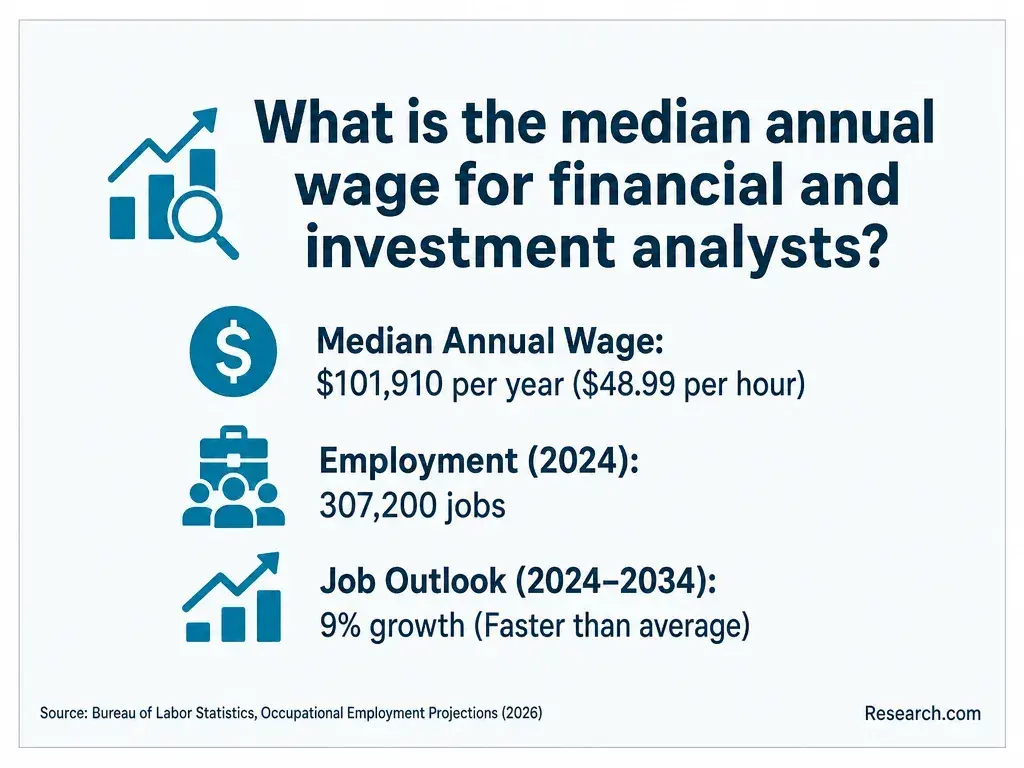
For instance, the U.S. Bureau of Labor Statistics reports a $78,760 median annual wage for market research analysts in May 2025. That is an occupation-wide median, not an expected starting salary for a new business graduate.
Judge the degree's potential value against a specific target role and what you already do at work. Someone seeking project-focused responsibilities may find that documented project experience and targeted study matter more immediately than a general business credential; lower-tuition online programs for project management offer a comparison if that is the intended function.
What Job Outlook and Certifications Apply to Business Graduates?
Job outlook is occupation-specific, not a forecast for everyone with a BSBA. The BLS projects 7% employment growth for market research analysts from 2025 to 2035; that may be relevant if you are building research and data-interpretation skills, but it does not establish your hiring prospects in a particular location.
Certifications also depend on the job. A business degree does not automatically confer an HR credential, project-management certification, accounting license, or financial-services license.
Check each credentialing body's education and experience rules before paying for additional courses. If supply chain is your target, compare the business core with shorter online supply chain bachelor's pathways and the actual skills requested in roles you would pursue.
Other Things You Should Know About Business Administration Programs
Notify the scholarship administrator before using a new employer's education benefit. Ask whether accepting or receiving that benefit changes your award for the current or future terms.
Only if the scholarship's enrollment rules allow it. Confirm the minimum course load and any renewal conditions before reducing your schedule.
It might if eligibility is tied to a named program or approved courses. Obtain written confirmation before changing your academic plan.
Send both offices the relevant written policy and a description of how the payment would work. Request clarification from the scholarship administrator about award eligibility and from your employer about benefit eligibility before committing to either route.
- Finding and Applying for Scholarships | studentaid.gov https://studentaid.gov/understand-aid/types/scholarships
- Frequently asked questions about educational assistance programs | Internal Revenue Service https://www.irs.gov/newsroom/frequently-asked-questions-about-educational-assistance-programs
- Packaging Aid | 2025-2026 Federal Student Aid Handbook https://fsapartners.ed.gov/knowledge-center/fsa-handbook/2025-2026/vol3/ch3-packaging-aid
- Types of Financial Aid | Long Island University https://liu.edu/registration-and-financial-aid/financial-aid/types-of-financial-aid
- Employer education benefits | University of Phoenix https://www.phoenix.edu/tuition-financial-aid/employer-tuition-benefits.html
- Employer Tuition Reimbursement: How It Works and How to Pay for College | Winston-Salem State University https://ramsonline.wssu.edu/blog/employer-education-benefits/
- Earn a CSUF BA in Business Administration Online | fullerton.edu https://extension.fullerton.edu/onlinedegrees/baba/
- Tuition & Fees | National University https://www.nu.edu/admissions/tuition/
- Scholarships for Entering First-Year Students | ucsd.edu https://fas.ucsd.edu/types/scholarships/entering-freshmen.html
- Online Bachelor's Degree in Business Administration | Purdue Global https://www.purdueglobal.edu/degree-programs/business/bachelor-business-administration/