2027 Paying for an Online BS in Business Administration: A New Job with a Waiting Period for Tuition Assistance
Audited and Verified:
Our Editorial and Data Verification Process
Research.com uses government datasets, official education statistics and primary institutional information to support its career and degree guides. Our review process checks factual accuracy, occupational definitions, source dates and the requirements associated with the credentials discussed.
How This Article Was Fact-Checked
Our editorial team verifies salary estimates, employment projections, education requirements and program information against original data providers and official organizations. Salary figures are checked against the relevant occupational definitions and reporting periods. Information about licensure, accreditation and required in-person training is reviewed separately.
Fact-checked and verified on:

Co-Founder and Chief Data Scientist
A new employer may offer tuition assistance, but the benefit might not begin before your next online business administration term. Enrolling immediately could mean covering tuition yourself, while waiting could delay graduation.
This guide is for new employees weighing those choices. It explains how to check eligibility dates, compare the cost of starting now with waiting, and build a payment plan that does not depend on reimbursement arriving sooner than your employer promises.
Key Things You Should Know
- A new hire's start date, course start date, approval date, and reimbursement date can all affect whether a term qualifies; obtain the written policy before enrolling.
- Employer tuition assistance is not the same as upfront payment. Even an eligible course may require you to pay first and wait until grades are posted for reimbursement.
- Federal tax rules generally allow up to $5,250 a year in qualifying employer educational assistance to be excluded from income, but that figure is not a promise of employer funding.
What is an online bachelor's degree in business administration?
An online BS in Business Administration is an undergraduate degree covering several business functions rather than training for one occupation. Students typically study accounting, finance, management, marketing, operations, and business decision-making. "Online" describes delivery, not necessarily pace: courses may have fixed deadlines, live meetings, group work, or proctored exams.
For a new employee, the useful distinction is between academic speed and benefit eligibility. A faster course schedule may help you finish sooner but could place more tuition before your employer's waiting period ends. If speed matters, compare fastest bachelor's-level business study options against the actual benefit start date, workload, and cost - not advertised completion time alone.
How much does an online business administration degree cost?
There is no reliable single price for an online BS in Business Administration. Schools may charge by credit, course, or term; transfer evaluations determine how many requirements remain. The number that matters here is the amount due before employer coverage begins, alongside the total cost to finish.
These cost components help separate the school's bill from expenses an employer may not cover:
| Cost component | Why it matters during a waiting period |
| Tuition and mandatory fees | They may be due before employer eligibility or reimbursement. |
| Books, software, and equipment | Coverage depends on both school charges and employer policy. |
| Remaining required credits | Accepted transfer credits may not satisfy business-core, residency, or graduation requirements. |
| Financing and time costs | Borrowing can add interest; delaying enrollment may extend the time to completion. |
Request a written degree audit and a term-by-term cost estimate. Compare amounts on the same basis - remaining required coursework and likely enrollment pace - rather than comparing per-credit prices alone. A breakdown of project management program fees explained can illustrate why advertised tuition is not always the full cost, although its program prices should not be substituted for a business administration quote.
How can you pay for an online business administration degree?
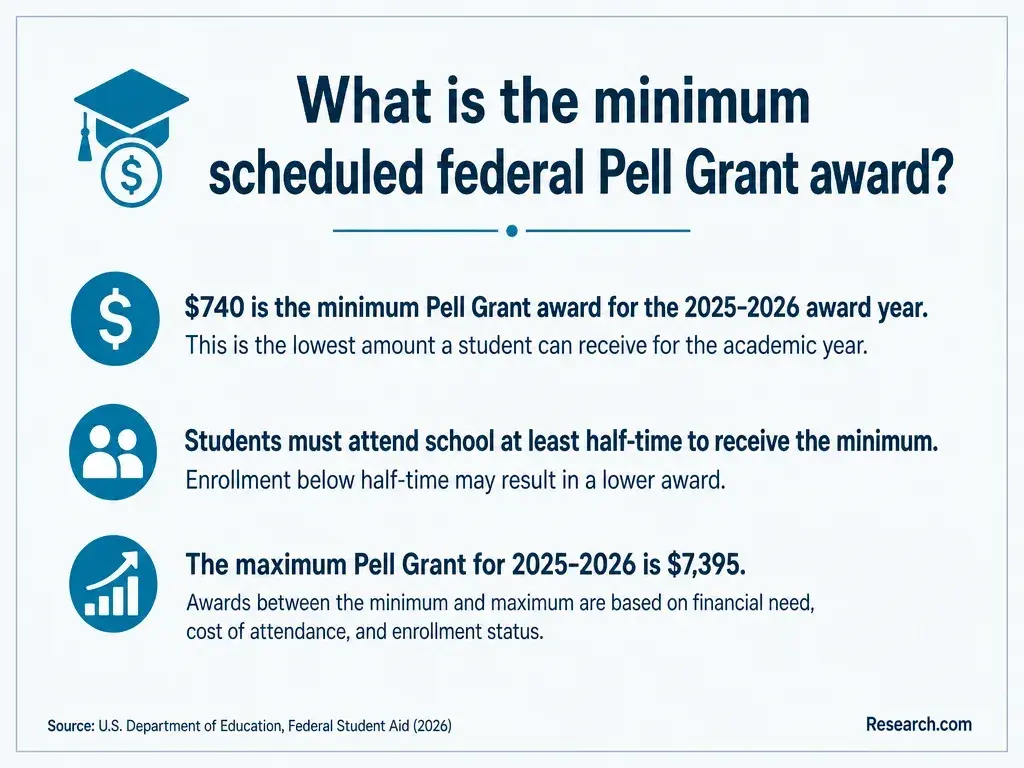
Begin with the school's financial aid offer, then add only employer benefits for which you have confirmed eligibility. Federal student aid may include grants or loans depending on your circumstances and the school's eligibility; institutional and outside scholarships may have separate deadlines. Completing the FAFSA does not guarantee a grant or eliminate a balance due before classes begin.
Use the school's payment deadlines to compare three distinct amounts: net cost after confirmed grants and scholarships, cash needed now, and eventual borrowing if you use loans while awaiting reimbursement. Ask the financial aid office how an employer payment would interact with your aid package and whether withdrawing or changing enrollment intensity could affect aid. For school comparisons, business administration college affordability and FAFSA participation is a starting point, not a substitute for your individual aid offer.
Employer programs commonly use either direct payment, in which an approved school receives payment under the employer's arrangements, or reimbursement, in which you pay the school and submit documentation afterward. A program may restrict eligible employees, schools, degrees, courses, grades, or annual spending. Some employers also require advance approval or repayment if you leave soon after receiving the benefit.
Ask HR for the full policy and an eligibility determination for the specific term - not just confirmation that the company "offers tuition assistance." Also check whether the benefit covers only tuition or includes fees and materials. Under federal tax rules, qualifying employer educational assistance is generally excludable from income up to $5,250 annually when plan requirements are met; an employer can offer a smaller benefit, and tax treatment above that amount depends on the circumstances. Confirm current treatment with payroll or a tax professional.
If you are applying to several schools while waiting for benefits, you may also be able to reduce upfront college application expenses. An application-fee saving is useful, but it should not outweigh a poorer transfer evaluation or higher completion cost.
There is no universal new-hire waiting period. The employer's written policy controls whether eligibility begins after a period of service, on a benefits-enrollment date, or only after another condition is met. Separate rules may govern when a course must start, when approval must be granted, and when reimbursement is paid.
Before choosing a start date, get written answers to these timing questions:
- On what date do I become eligible, and does my employment status affect eligibility?
- Must eligibility and approval be in place before registration, before the course starts, or before tuition is due?
- Can a course that starts before eligibility ever be reimbursed after eligibility begins?
- When must I submit grades and receipts, and when would payment normally reach me?
Build a term-by-term calendar using those answers and the school's billing and refund dates. If the first term falls outside coverage, compare starting with a manageable, aid-supported course against waiting for the first eligible term. Online degrees with accelerated terms may offer another start date, but shorter terms do not change an employer's eligibility rules and can intensify weekly work.
Confirm that the institution holds recognized institutional accreditation; this is the first accreditation check when considering federal aid and transferring credits later. AACSB, ACBSP, or IACBE recognition, where present, concerns a business school or covered programs and is distinct from institutional accreditation. Check the accreditor's stated scope rather than assuming every online business degree at the institution is included.
Accreditation alone does not settle the financial decision. Ask the school which credits will apply to your BS requirements and whether its course calendar aligns with employer coverage. If you are comparing business administration with a more specialized route, online project management bachelor's programs accepting transfer credits can help frame the alternatives; obtain an official evaluation from each school before assigning either pathway a cost.
Expect general education and a business core that may include financial and managerial accounting, economics, statistics, finance, marketing, management, operations, business law, and a capstone. Exact requirements vary. An optional concentration or elective group may add depth without being a separately awarded degree.
Course sequence matters when a new employer is paying: an introductory prerequisite may have to come before an advanced course, and a required class may not run every term. Request a proposed schedule that identifies courses available after your benefit begins. If your current job involves people operations, you can compare HR curricula and career directions before spending employer funds on electives; confirm that your employer approves the courses you choose.
Schools commonly request prior academic transcripts; requirements for GPA, prerequisites, and transfer admission differ. Some admit students to the institution before separately determining admission to the business major. Admission also does not establish how earlier courses will count toward graduation.
Submit all prior college records early enough to obtain a degree audit before committing to a payment plan. If prior study points toward a different business function, explore whether you could apply prior credits to an HR bachelor's degree instead. The receiving institution must determine equivalencies and remaining requirements; neither pathway should be assumed cheaper until it does.
A BS in Business Administration can support applications for roles such as operations coordinator, administrative specialist, sales operations associate, marketing coordinator, or project coordinator. Your current job may already provide relevant evidence: scheduling, customer communication, budgeting support, spreadsheet work, or process documentation can be more persuasive than the degree title alone.
Choose coursework and approved projects around the next responsibility you want, not an assumed immediate promotion into management. For someone already supervising processes or teams, fast-paced online organizational leadership bachelor's programs may merit comparison, but check whether their curriculum, transfer evaluation, and employer approval serve the target role better than a general business BS.
What salary and job outlook can business administration graduates expect?
There is no single salary or job-growth figure for a business administration degree. The U.S. Bureau of Labor Statistics reports a May 2025 median annual wage of $75,940 for human resources specialists and projects 6% employment growth from 2025 to 2035. Those occupation-wide figures describe neither starting pay nor the earnings of BS in Business Administration graduates specifically; HR employers may also expect relevant experience or specialized preparation.
Use the occupation you actually intend to pursue - not a broad management salary - to assess whether borrowing before employer eligibility is sensible. If your goal is supply chain work, compare the curriculum and full completion cost of budget-friendly supply chain degrees with shorter schedules against the business BS. A more targeted degree may be worthwhile, but only if its remaining costs, scheduling, and employer coverage fit your situation.
Other Things You Should Know About Business Administration
You can ask HR, but do not budget for an exception unless an authorized benefits administrator confirms it in writing. A manager's informal support may not override plan rules.
Check whether the policy requires repayment of assistance already received and what happens to approved but unpaid claims. Your school balance and any student loans remain your responsibility.
Possibly, if the program approves the work, supervision, and learning objectives. Employment by itself does not award academic credit, and employer permission may be needed to use workplace information.
Part-time study can limit near-term tuition bills, but it may extend completion and affect aid eligibility. Ask the school to compare schedules and confirm which courses would fall within the employer's covered period.
- Frequently asked questions about educational assistance programs | Internal Revenue Service https://www.irs.gov/newsroom/frequently-asked-questions-about-educational-assistance-programs
- Packaging Aid | 2025-2026 Federal Student Aid Handbook https://fsapartners.ed.gov/knowledge-center/fsa-handbook/2025-2026/vol3/ch3-packaging-aid
- Financial Aid Dictionary: Top Terms Related to Grants, Work-Study, and Student Loans - Federal Student Aid https://studentaid.gov/articles/financial-aid-dictionary/
- Employee Tuition Reimbursement: What Is It and How Does It Work? | Virginia Tech Bootcamps https://bootcamp.cpe.vt.edu/blog/employee-tuition-reimbursement
- Employer Tuition Reimbursement: How It Works and How to Pay for College | Winston-Salem State University https://ramsonline.wssu.edu/blog/employer-education-benefits/
- College of Business - Academics | tamusa.edu https://www.tamusa.edu/academics/College-of-Business/index.html
- How Colleges Can Simplify Transfer Credit Policies | American College of Education https://ace.edu/blog/how-the-college-credit-transfer-process-works-and-how-it-can-be-improved/
- ExcelTrack® Bachelor's Degree in Business Administration | Purdue Global https://www.purdueglobal.edu/degree-programs/business/exceltrack-bachelor-business-administration/
- 8 Tuition Reimbursement Questions to Ask Your Employer | University of Arkansas Grantham https://www.uagrantham.edu/blog/8-tuition-reimbursement-questions-to-ask-your-employer/
- Guide to Tuition Reimbursement and Education Benefits | stanford.edu https://online.stanford.edu/guide-tuition-reimbursement-and-education-benefits