2027 Can a BS in Business Administration Prepare You for a Benefits Specialist Role? Skills and Entry Requirements
Audited and Verified:
Our Editorial and Data Verification Process
Research.com uses government datasets, official education statistics and primary institutional information to support its career and degree guides. Our review process checks factual accuracy, occupational definitions, source dates and the requirements associated with the credentials discussed.
How This Article Was Fact-Checked
Our editorial team verifies salary estimates, employment projections, education requirements and program information against original data providers and official organizations. Salary figures are checked against the relevant occupational definitions and reporting periods. Information about licensure, accreditation and required in-person training is reviewed separately.
Fact-checked and verified on:

Co-Founder and Chief Data Scientist
A BS in Business Administration can build a foundation for employee benefits work, but employers also need evidence that you can explain plans accurately, protect employee information, and handle enrollment details.
If you are choosing a degree or trying to enter human resources from another role, the distinction matters: broad business coursework may help you qualify, while benefits-specific practice can make you job-ready. This guide shows where the degree fits, which experience to seek, and what to check before investing in a program.
Key Things You Should Know
- Yes, with a practical supplement: A BS in Business Administration can support entry into benefits work, especially when paired with HR coursework and enrollment, payroll, or employee-service experience.
- Expect variation in hiring: Some employers hire benefits assistants or coordinators without a bachelor's degree; specialist openings may prefer a degree and prior benefits administration experience.
- Use labor data carefully: The May 2025 median wage for the broader human resources specialist occupation was $75,940, not a verified starting salary for benefits specialists.
Can a business administration degree prepare you for a benefits specialist role?
Yes. A benefits specialist helps administer employer offerings such as health coverage, retirement plans, and leave programs. The work may include explaining enrollment choices, checking eligibility, resolving discrepancies with vendors, maintaining records, and escalating questions that require legal or plan-specific interpretation.
A BS in Business Administration can develop the accounting, communication, information-systems, and organizational knowledge behind those tasks. Its limitation is breadth: a general business curriculum may not teach benefits platforms, plan documents, or day-to-day enrollment procedures. A student with little HR experience should seek an internship, an HR assistant role, or a supervised project involving benefits processes - not assume the degree alone establishes specialist-level readiness.
If you already have college credit and want a more focused undergraduate route, compare the business degree with colleges accepting credits toward human resources study. Ask each school which credits satisfy major requirements, not merely how many credits it accepts.
What education and experience do employers require for benefits specialists?
Requirements depend on the employer and the scope of the job. An assistant or coordinator opening may emphasize accurate data entry, employee service, and administrative experience. A specialist opening may prefer a bachelor's degree in business, HR, or a related field alongside experience with enrollment, payroll, vendors, or an HR information system. Positions involving plan design or complex compliance typically call for deeper experience.
Read the duties before relying on the title. "Benefits specialist" can describe either hands-on enrollment support or more independent responsibility for plan administration. If you are changing careers, compare your existing work against the posting: customer service can demonstrate clear explanations; payroll work can demonstrate reconciliation; neither automatically proves knowledge of a particular plan.
For students whose real goal is coordinating projects rather than administering employee benefits, explore transfer-friendly undergraduate project management schools as a separate path. Choose based on the work you want to perform, not on the overlap between job titles.
What skills does a benefits specialist need to succeed?
Benefits work combines employee-facing communication with careful administration. The most useful evidence of readiness is a task you can describe or demonstrate - not just a course title on a transcript.
The table connects common responsibilities to skills and appropriate ways to build them. Actual employee records should remain within authorized workplace systems.
| Responsibility | Skill to demonstrate | Suitable practice |
| Answer enrollment questions | Explain plan terms clearly without promising coverage | Draft answers using a sample plan summary and identify questions to escalate |
| Check enrollment or payroll records | Use spreadsheets accurately and investigate mismatches | Reconcile fictional enrollment and deduction data |
| Work with employees and vendors | Track cases, follow up, and document resolutions | Practice a supervised service workflow |
| Handle sensitive information | Apply access controls and confidentiality rules | Use approved, de-identified material in coursework |
For someone already employed in HR or payroll, a flexible degree may make it easier to build these skills on the job. Before enrolling, check whether you can study business administration without leaving your job while meeting course deadlines and any required live sessions.
Prioritize courses that connect directly to benefits tasks: human resource management for HR processes, accounting for payroll deductions and cost awareness, business law for a foundation in employment-related obligations, and information systems or spreadsheet analysis for accurate records. Organizational behavior and business communication help with employee questions and difficult conversations.
Course names alone do not establish depth. Check the syllabus for assignments involving compensation or benefits, HR systems, employee communication, and responsible data handling. An HR concentration may offer more relevant electives than a general business track, but confirm that it is an official program option and whether it adds credits or delays graduation. For a closer look at entry-level coursework, compare business administration admission prerequisites with the requirements for your chosen HR courses.
There is no universal US benefits-specialist license. Voluntary HR or benefits certifications can help experienced employees document knowledge, but they do not replace employer training on actual plans and systems. Check a certification provider's eligibility rules, exams, fees, and renewal requirements before paying for preparation.
Licensing depends on duties, not the job title alone. Selling, soliciting, or negotiating insurance may trigger state insurance-producer licensing rules; routine administration of an employer's plans is a different activity. Ask the employer and relevant state regulator about a role that crosses that boundary. Likewise, familiarity with requirements such as ERISA, COBRA, the ACA, and privacy rules is important, but a business course does not authorize independent legal advice.
If your alternative goal is project management rather than benefits administration, compare the cost of a separate degree with targeted training and experience. Project management bachelor's aid application planning addresses that distinct degree decision; it is not a benefits certification requirement.
A bachelor's degree commonly involves about four years of full-time undergraduate study, but an individual completion plan depends on accepted transfer credit, applicable major requirements, course availability, and enrollment pace. A shorter advertised schedule does not establish how long you will take - or what you will pay.
Request a degree audit and a cost estimate based on your remaining required courses. Include tuition, mandatory fees, books or software, and any travel or proctoring charges; then account for financial aid, employer reimbursement timing, and work hours you might give up. If you are weighing benefits against another business function, use comparable assumptions: tuition and time comparisons for supply chain students can inform that alternative, but a different major's estimate is not the price of an HR-focused business degree.
They can be, particularly if you need to keep working while earning the degree. Online coursework can teach business concepts and support case-based practice, but it does not automatically provide access to an HR system, employee-facing experience, or an internship. Look for relevant HR electives and career support, then confirm whether any applied requirement can be completed in an approved workplace setting.
Check the actual schedule before choosing an accelerated online business degree program. Ask about live meetings, group work, exam proctoring, fixed deadlines, and course sequencing. Faster terms may reduce calendar time while increasing weekly workload, which matters if you are also gaining benefits experience at work.
Schools typically ask first-year applicants for evidence of secondary-school completion and transfer applicants for prior college transcripts, but GPA thresholds, tests, and admission to the business major vary. A student from a non-business background should also check math, accounting, and economics prerequisites. Admission to the institution does not mean previous courses satisfy the business core.
Send official records, request a written transfer evaluation, and ask an adviser which HR electives will be available when you need them. If affordability affects where you apply, check FAFSA eligibility at online business administration schools, then confirm the specific institution's aid eligibility and your own eligibility with its financial-aid office.
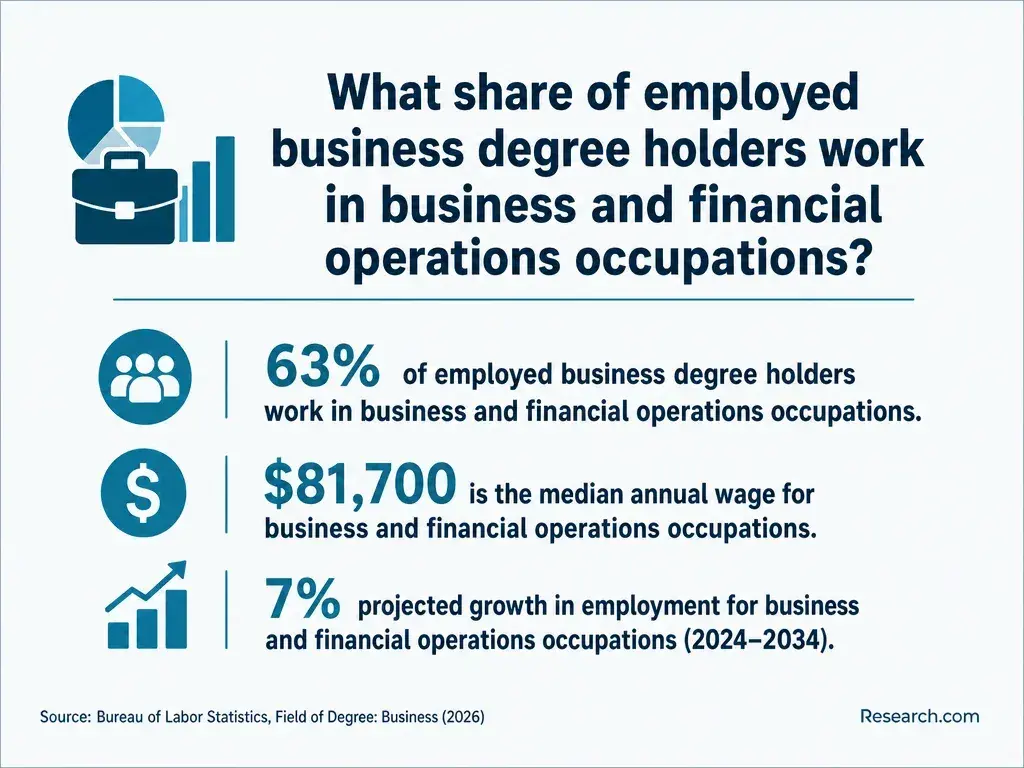
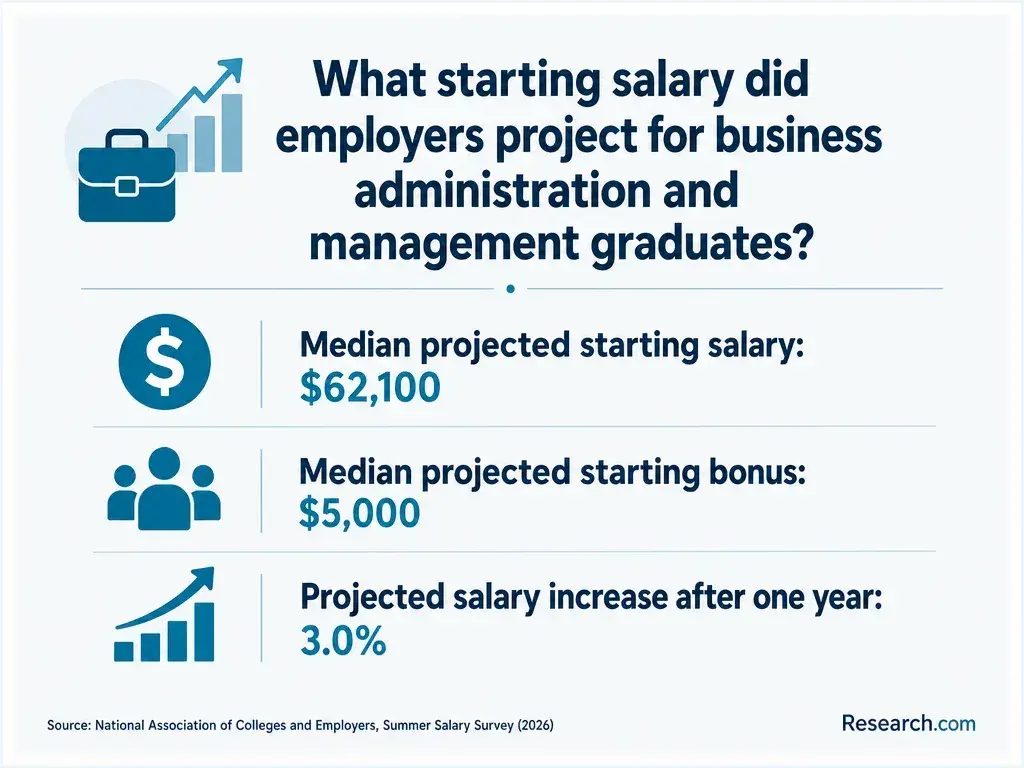
A single national figure should not be treated as a guaranteed benefits-specialist salary. The US Bureau of Labor Statistics reports a May 2025 median annual wage of $75,940 for human resources specialists, a broader occupation that can include benefits-related work. That occupation-wide median is not a starting wage, a degree-specific outcome, or a precise estimate for every job titled benefits specialist.
When assessing an offer, compare local postings with similar duties and experience requirements, then consider the employer's own benefits and advancement structure. For a degree decision, business administration college costs and potential career outcomes can provide context, but do not calculate a personal return using the national median as your expected first salary.
What is the job outlook for benefits specialists and related roles?
BLS projects 6% employment growth for human resources specialists from 2025 to 2035. This broader occupation includes work beyond benefits, so its projection does not isolate demand for benefits specialists or predict openings in your area. Employer size, industry, and whether benefits administration is handled internally or by a vendor can change the opportunities you find.
For an early-career applicant, the practical next step is to review local benefits assistant, coordinator, and specialist postings for recurring systems and experience requirements. If finishing a degree sooner would help you apply, compare fastest bachelor's-level business study options against transfer applicability and workload - not the advertised duration alone. Relevant work experience alongside the degree may matter more than graduating a little earlier.
Other Things You Should Know About Business Administration
No. Payroll specialists focus on pay processing and deductions; benefits specialists focus on plan eligibility, enrollment, and employee questions. They coordinate when a benefit choice changes a payroll deduction.
Yes. Explaining options, documenting cases, and resolving problems are transferable skills. You will still need to learn plan rules, confidentiality practices, and the employer's systems.
Only with appropriate employer and academic permission. Use fictional or approved de-identified information, and do not publish employee records, plan documents, or proprietary processes.
Not necessarily. Government employers may use formal job classifications and application rules. Read the specific posting for its education, experience, and civil-service requirements.
- An Employer's Guide to Group Health Continuation Coverage Under COBRA | U.S. Department of Labor https://www.dol.gov/agencies/ebsa/about-ebsa/our-activities/resource-center/publications/an-employers-guide-to-group-health-continuation-coverage-under-cobra
- Employment Law Guide - Employee Benefit Plans https://webapps.dol.gov/elaws/elg/erisa.htm
- What Can I Do with a Business Administration Degree? | CTU https://www.coloradotech.edu/degrees/studies/business-and-management/articles/what-can-i-do-with-a-business-administration-degree
- Understanding Benefits | UConn Center for Career Readiness and Life Skills https://career.uconn.edu/resources/understanding-benefits/
- What Is SHRM-CP vs. SHRM-SCP Certification? | Purdue Global https://www.purdueglobal.edu/blog/business/shrm-cp-vs-shrm-scp/
- What Is ERISA Law - And Why Does it Matter? - apu.apus.edu https://www.apu.apus.edu/area-of-study/security-and-global-studies/resources/what-is-erisa-law-and-why-does-it-matter/
- Introduction - The Regulation of Private Health Insurance | KFF https://www.kff.org/patient-consumer-protections/health-policy-101-the-regulation-of-private-health-insurance/
- The Benefits Specialist Role: Job Description & Salary Guide | AIHR https://www.aihr.com/blog/benefits-specialist/
- Benefits specialists: Salary, career path, job outlook, education and more - RaiseMe https://www.raise.me/careers/business-and-financial/compensation-benefits-and-job-analysis-specialists/benefits-specialists/
- Benefits Specialist Job Description | LHH https://www.lhh.com/en-us/insights/job-descriptions/benefits-specialist