2027 Should You Choose a BS in Business Administration or A Business Process Management Certificate for Your Next Career Step?
Audited and Verified:
Our Editorial and Data Verification Process
Research.com uses government datasets, official education statistics and primary institutional information to support its career and degree guides. Our review process checks factual accuracy, occupational definitions, source dates and the requirements associated with the credentials discussed.
How This Article Was Fact-Checked
Our editorial team verifies salary estimates, employment projections, education requirements and program information against original data providers and official organizations. Salary figures are checked against the relevant occupational definitions and reporting periods. Information about licensure, accreditation and required in-person training is reviewed separately.
Fact-checked and verified on:

Co-Founder and Chief Data Scientist
If you want to move into business operations, the right next credential depends on what you already know and what the job requires. A BS in Business Administration can build a broad foundation and satisfy a bachelor's-degree requirement; a business process management (BPM) certificate can help you improve how work flows through an organization.
For employees, career changers, and students weighing both options, this comparison explains what each teaches, what it costs in time and money, and which evidence to check before enrolling.
Key Things You Should Know
- Choose the BS when your target roles require a bachelor's degree or you need broad preparation in finance, management, and operations; a BPM certificate does not replace the degree.
- Choose the BPM certificate when you already meet employers' education requirements and need focused process-mapping and improvement skills you can apply at work.
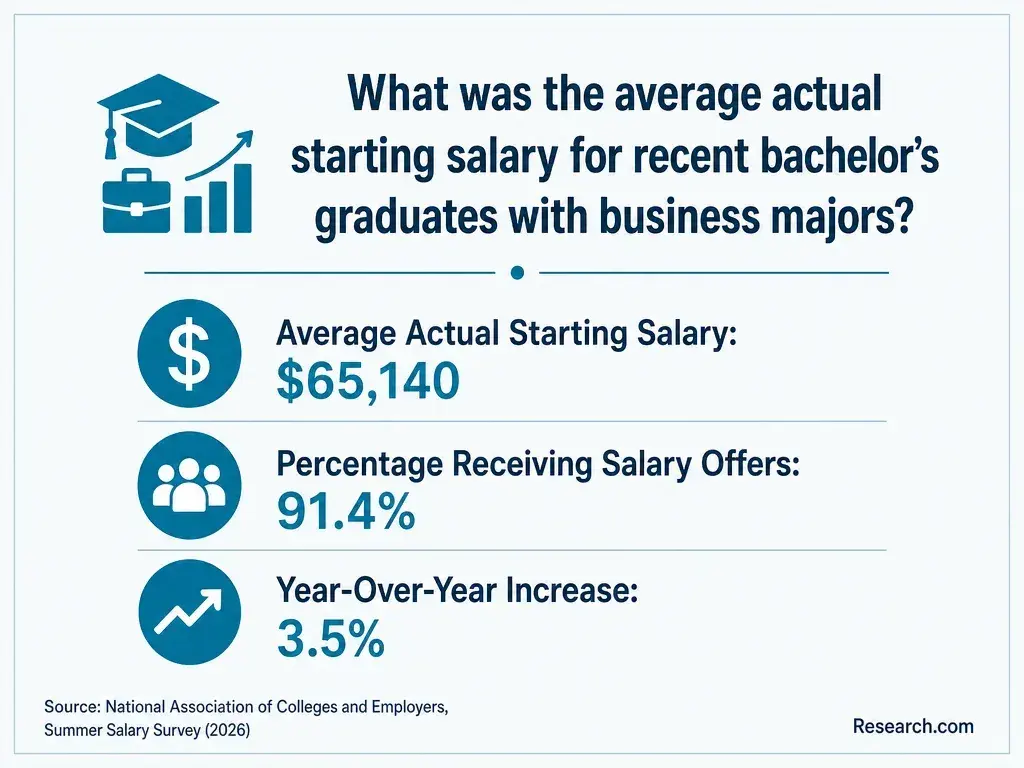
- Neither credential guarantees advancement: the U.S. Bureau of Labor Statistics reports a May 2025 median annual wage of $75,940 for human resources specialists, an occupation-wide figure - not a starting salary for business graduates.
What Is the Difference Between a BS in Business Administration and a BPM Certificate?
A BS in Business Administration is an undergraduate degree combining general education with several business functions. A BPM certificate is a narrower credential focused on documenting, analyzing, redesigning, and monitoring organizational processes. "Certificate" can mean a college-awarded, credit-bearing program or noncredit professional training; neither is automatically a professional certification.
The distinction matters most when a job posting specifies a bachelor's degree. A certificate may strengthen an otherwise qualified applicant's process-improvement skills, but it generally will not satisfy that degree requirement. Conversely, someone who already has a degree and relevant work experience may not need another bachelor's to learn BPM. A BPM certificate is also different from a project management degree: if that is your target, compare project management bachelor's credit transfer rules rather than assuming the credentials are interchangeable.
This table shows the principal differences to test against your target job and current qualifications.
| Decision factor | BS in Business Administration | BPM certificate |
| Scope | Broad business and general education | Focused process-improvement methods |
| Credential | Bachelor's degree | Academic or noncredit certificate, depending on provider |
| Best fit | Meeting degree requirements or building cross-functional knowledge | Addressing a defined process-skills gap |
| Main limitation | Greater time and expense for a narrow skills goal | Does not substitute for a required bachelor's degree |
Which Career Goals Does a BS in Business Administration Support?
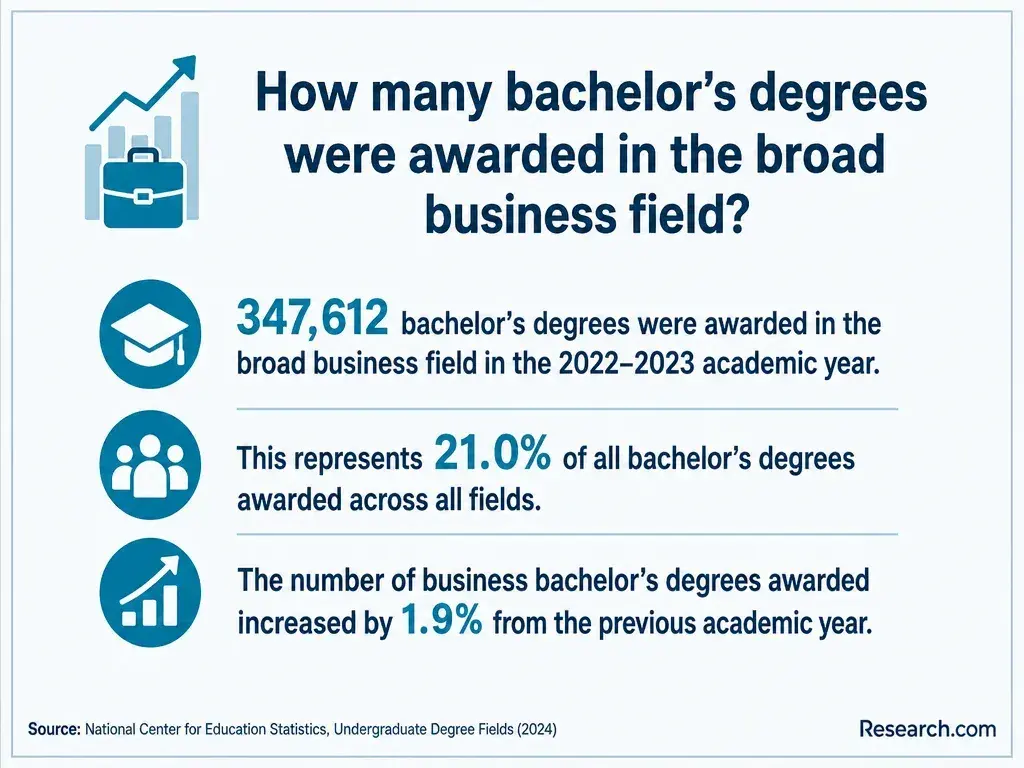
The BS is more useful when you lack a bachelor's degree and want access to roles that require or prefer one, or when you need to understand how decisions in accounting, marketing, staffing, and operations affect one another. That breadth can help a career changer translate customer service, technical, military, or administrative experience into business roles.
For example, an operations coordinator may need to interpret budgets, communicate with vendors, and track performance - not just improve a workflow. The degree can support that preparation, especially alongside relevant employment or an approved internship. It does not confer a management title or qualify you for regulated work. If your goal is specifically procurement or logistics, supply chain undergraduate programs with shorter terms may offer a more direct curriculum; confirm that the pace and required courses work for you.
When Is a Business Process Management Certificate the Better Choice?
A BPM certificate is often the better next step for an employee who already meets a role's education requirements and has access to a specific operational problem: delayed approvals, repeated handoffs, inconsistent service, or errors in routine work. Useful training should move beyond drawing a process map to identifying stakeholders, establishing a baseline, assessing risks, and checking whether a proposed change works.
Its value depends on whether you can demonstrate the skill. A supervised improvement proposal or appropriately authorized workplace project may be more persuasive than the certificate name alone. Get permission before using employer records, customer information, or proprietary procedures in assignments or a portfolio. If the work you want is primarily coordinating projects rather than managing recurring processes, online degree options in project management at lower cost provide a different comparison - not an automatic reason to pursue another degree.
Business administration curricula commonly cover accounting, economics, management, marketing, operations, and quantitative reasoning, though requirements vary by school. That range helps students evaluate a process change in terms of cost, staffing, customers, and organizational goals. An operations course may introduce improvement concepts, but one course does not provide the focused practice of a substantial BPM program.
A BPM certificate may teach process mapping, measurement, root-cause analysis, workflow redesign, change management, and monitoring. Compare actual assignments: a program that asks learners to justify a change using suitable evidence offers different practice from one assessed only through short quizzes. If you are considering a bachelor's after earlier college study, explore shorter routes to an online bachelor's, then obtain an official evaluation of which credits apply to the business core - not merely which credits transfer as electives.
A traditional bachelor's is commonly planned around four years of full-time undergraduate study, but transfer credit, part-time enrollment, prerequisite sequences, and course availability can change your remaining timeline substantially. BPM certificates range from short noncredit training to multi-course academic programs. Ask for a schedule of required courses rather than relying on an advertised completion time.
Compare the cost to finish, not just the advertised tuition rate. For a BS, account for credits remaining after an official degree audit, mandatory fees, books, technology, and any earnings affected by study time. For a certificate, check whether pricing covers all courses, assessments, software, and any optional certification exam. Employer reimbursement may help either route, but eligibility, payment timing, and continued-employment conditions can change your out-of-pocket cost. A review of business administration college costs and potential career outcomes can frame the comparison; request a personalized estimate before committing.
Neither format is inherently better. Online study may reduce travel, while campus study may provide easier access to in-person discussion and local recruiting. For working students, the decisive questions are whether classes meet live, group projects require fixed meeting times, exams are proctored, and required courses are offered when needed. Online does not necessarily mean self-paced.
A certificate's online format may be convenient for learning methods, but check whether you will receive feedback on your own process analysis. A degree student should also ask how advising, internships, and capstones work at a distance. When comparing online business administration programs with work-compatible schedules, match published course obligations to your actual work and household calendar.
A bachelor's applicant generally needs to document prior education, but a school may distinguish admission to the institution from entry into its business major. Transfer applicants should ask whether mathematics, accounting, or other prerequisites must be completed before particular upper-level courses. Only the receiving institution can determine how previous credits apply to its degree.
Certificate eligibility varies more widely. Some BPM programs accept beginners; others expect professional experience, a prior degree, or familiarity with operations. Check both admission requirements and the background needed to complete the assignments successfully. An application fee is a separate consideration: accredited online colleges without application fees may reduce the cost of applying, but fee policy says little about whether a specific program fits your goal.
For a BS, verify the institution's recognized accreditation and, if advertised, whether AACSB, ACBSP, or IACBE accreditation covers the relevant business program. Institutional and business-program accreditation have different scopes; neither proves that graduates obtain particular jobs. For a certificate, identify the awarding organization, whether academic credit is granted, and whether that credit could apply to a later degree. Ask the receiving school rather than assuming it will.
A BPM course certificate should not be confused with a separate professional certification that may require its own exam or experience. Likewise, accreditation does not itself guarantee financial aid for every program or student. If you are comparing a certificate with a longer project-focused degree, distinguish grants versus loans for project management bachelor's study when estimating what you would ultimately pay back.
A BS can support applications for roles such as operations coordinator, HR specialist, or project coordinator when the candidate also meets the employer's skill and experience requirements. BPM training may be useful in those roles or in an existing operations job, but employers usually assess the work you have done - not a certificate in isolation. Process-improvement positions can require substantial industry experience.
For context, the U.S. Bureau of Labor Statistics projects 6% employment growth for human resources specialists from 2025 to 2035. That is an occupation-wide projection, not a forecast for holders of either credential; HR work also involves responsibilities beyond BPM. Compare local job descriptions with your qualifications and weigh likely opportunities against your net education cost. If project coordination is your alternative target, examine project management college costs after financial aid rather than comparing salary figures with tuition alone.
How Should You Choose a Reputable Program for Your Career Goals?
Start with several real job postings and your current résumé. If the missing qualification is a bachelor's, prioritize a degree whose remaining requirements you can realistically complete. If you already meet education requirements but cannot show process-improvement ability, investigate a BPM certificate with substantial feedback and an applied assignment. If the gap is experience, a relevant workplace project or supervised role may be more valuable than enrolling immediately.
Before choosing, verify these points with the school and, where relevant, your employer:
- Request the exact credential name, curriculum, assessment methods, and any experience or prerequisite requirements.
- For a BS, obtain a written credit evaluation and degree audit showing remaining courses, sequencing, and expected charges.
- For a certificate, confirm whether it awards academic credit and whether an employer will recognize or reimburse it.
- Check delivery obligations, accreditation claims, career support, and rules for using workplace data in assignments.
Compare the answers on a like-for-like basis. Low-cost online business degree programs are worth examining if a bachelor's is necessary, but the least expensive advertised option is not necessarily the least costly path to completion.
Other Things You Should Know About Business Administration
Usually, a course or academic certificate belongs in the education or training section of a résumé. Do not use post-nominal letters unless the awarding organization explicitly grants and governs that designation.
No. BPM examines how work should flow and be measured. Automation can implement part of a process, but automating a poorly designed workflow may preserve its problems.
Potentially, if the program permits it and the organization authorizes the work and data use. Confirm the assignment's requirements before promising an analysis or publishing results.
Possibly, if the goal calls for graduate-level business breadth and the program fits your experience and budget. For a specific process-skills gap, a focused certificate or employer training may be more direct.
- TEN_25-19.pdf | dol.gov https://www.dol.gov/node/161262
- Business Administration Bachelor's Degree Online | The Pennsylvania Institute of Technology https://www.pit.edu/programs/b-s-business-administration/
- The Major Payoff: Evaluating Earnings and Employment Outcomes Across Bachelor's Degrees - CEW Georgetown https://cew.georgetown.edu/cew-reports/major-payoff/
- Bachelor of Science in Business Administration (BSBA) | University of Denver Bulletin https://bulletin.du.edu/undergraduate/undergraduateprograms/traditionalbachelorsprogram/bachelorofscienceinbusinessadministration/
- Stackable Credentials: Building Career Momentum One Certificate at a Time | Bellevue University https://www.bellevue.edu/articles/stackable-credentials-building-career-momentum-one-certificate-at-a-time/
- 10 Best Business Degrees for High Pay and Career Growth | Pace University New York https://www.pace.edu/news/best-business-degrees-undergrad-grad
- Employment and salary statistics - KU School of Business https://business.ku.edu/business-career-services/employers/employment-salary-statistics
- The Value of Certificates vs. Degrees: What's Right for You? | calmu.edu https://www.calmu.edu/the-value-of-certificates-vs.-degrees-whats-right-for-you
- Online Bachelor's Degree in Business Administration | Purdue Global https://www.purdueglobal.edu/degree-programs/business/bachelor-business-administration/
- Business Management vs Business Administration Certificate | Owen Graduate School of Management https://business.vanderbilt.edu/business-management-certificate/business-management-vs-business-administration-certificate/