2027 BS in Business Administration: Evaluating an Employer-Sponsored Degree with a Clawback Clause
Audited and Verified:
Our Editorial and Data Verification Process
Research.com uses government datasets, official education statistics and primary institutional information to support its career and degree guides. Our review process checks factual accuracy, occupational definitions, source dates and the requirements associated with the credentials discussed.
How This Article Was Fact-Checked
Our editorial team verifies salary estimates, employment projections, education requirements and program information against original data providers and official organizations. Salary figures are checked against the relevant occupational definitions and reporting periods. Information about licensure, accreditation and required in-person training is reviewed separately.
Fact-checked and verified on:

Co-Founder and Chief Data Scientist
Employer tuition assistance can make a BS in Business Administration affordable - until a job change triggers a repayment bill. If your employer will fund the degree only if you remain employed afterward, the offer is both an education benefit and a financial commitment. This guide is for working employees deciding whether to sign. It explains how to read the clawback terms, estimate your exposure, assess the degree and its career value, and compare alternatives without assuming that a promised tuition payment is free money.
Key Things You Should Know
- Compare the full amount you could owe if you leave - not just your share of tuition. Ask whether repayment includes fees, taxes, and payments made during earlier years of study.
- A clawback is easier to justify when the degree meets a documented advancement requirement and the repayment amount declines over a reasonable service period; get both terms in writing.
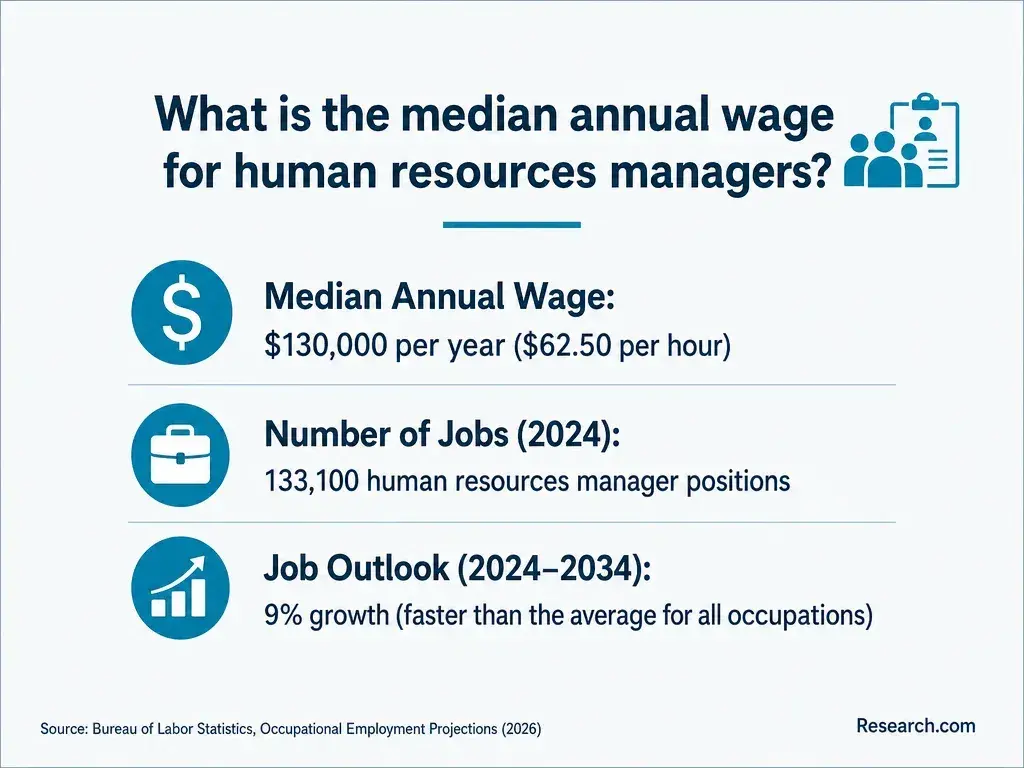
- The Bureau of Labor Statistics reports a May 2025 median wage of $75,940 for human resources specialists, but that occupation-wide figure is not a salary forecast for a business administration graduate.
What is an employer-sponsored BS in Business Administration with a clawback clause?
An employer-sponsored BS in Business Administration is an undergraduate degree for which an employer pays the school directly or reimburses an eligible employee. A clawback clause requires the employee to repay some or all of that assistance if a stated event occurs, commonly a voluntary departure before a required period of post-degree service ends.
The degree belongs to the student; the benefit agreement governs the employer's payment. It may set separate rules for eligible schools, grades, annual funding, continued employment, and repayment. Read the education-benefit policy and the agreement together. In particular, establish whether the service clock begins when each course is paid, when the final payment is made, or at graduation. That difference can substantially change how long you are effectively tied to the job.
If the approved school list is restrictive, compare the funded option with business administration colleges for working professionals before accepting the restriction. A benefit has less value if its permitted program cannot accommodate your work schedule or career goal.
How does a tuition clawback clause affect the true cost of a business degree?
A tuition clawback turns an uncertain future job change into a possible education expense. Your decision therefore needs three separate figures: the degree's total price, your expected out-of-pocket spending while enrolled, and the maximum repayment exposure under the agreement. Do not subtract employer assistance from the price until you know when payment arrives and when it becomes yours without repayment.
The comparison below separates costs that are often mistakenly combined. Use the school's written charges and the employer's policy to fill in your own amounts.
| Cost or risk | What to verify | Why it matters |
| School charges | Remaining required credits, tuition basis, mandatory fees, books, software, and travel | Accepted transfer credits may not satisfy degree requirements, leaving more courses to fund. |
| Payment timing | Direct payment versus reimbursement; grade, submission, and payment deadlines | Reimbursement may require you to cover tuition or borrow before the employer pays. |
| Benefit limits | Annual cap, excluded expenses, and rules for combining aid | An advertised benefit may cover only part of the degree. |
| Repayment exposure | Covered payments, triggering events, service-clock start, and any declining balance | The amount owed after leaving may differ greatly from your current out-of-pocket cost. |
| Opportunity costs | Reduced work hours, delayed job changes, loan interest, and tax treatment | Even fully paid tuition can carry a meaningful personal cost. |
A useful stress test is to calculate what you would owe if you left just after the employer's final payment, when exposure may be highest. Then repeat the calculation for a later departure. Ask payroll how educational assistance and any repayment would be handled for tax purposes; do not assume that repaying an employer automatically reverses an earlier tax consequence. For a comparison against paying for school yourself, review financial aid planning for low-cost business administration degrees and confirm your own aid eligibility with the school.
Is an employer-sponsored business administration degree worth the repayment obligations?
The agreement may be worth accepting if you already expect to remain with the employer, the approved degree advances a specific goal, and a plausible departure would leave you able to repay the balance. It is less attractive if you are seeking a career change that may require leaving soon after graduation, the repayment amount does not decline with service, or the employer can change your duties or location without addressing the obligation.
Before signing, request written answers to the terms most likely to change the decision:
- Which events trigger repayment: resignation, termination for cause, layoff, disability, retirement, or an internal transfer?
- Does the balance decline over time, and when does the required service period start?
- Are repayments limited to tuition actually paid, or do they include fees, taxes, and collection costs?
- What happens if the employer ends the benefit, the school cancels a required course, or you need an approved leave?
- Can the employer deduct an amount from final pay, and what review or dispute process applies?
Do not assume a clawback is enforceable - or unenforceable - without reviewing the signed language and applicable state law. Wage-deduction rules and contract remedies vary; an employment lawyer can assess a large or ambiguous obligation. If your goal is specifically project work rather than a broad business degree, compare a more targeted program and its funding options, including FAFSA-based aid for online project management undergraduates. The better option is the one that builds relevant skills at an acceptable total cost and level of employment risk.
Confirm that the institution holds accreditation from an accreditor recognized by the U.S. Department of Education. Then verify that the specific BS in Business Administration is offered by that institution in the format your employer will fund. Institutional accreditation matters for academic quality review and can affect federal aid and credit-transfer decisions, although another school still decides whether to accept particular credits.
Business-school accreditation from AACSB, ACBSP, or IACBE is a separate consideration. If a school claims it, check the accreditor's directory and the scope of accreditation rather than assuming every degree at the institution is covered. Neither institutional nor business accreditation proves that the degree will produce a promotion or make a clawback worthwhile.
Before paying an application fee, confirm that the employer accepts the institution and its degree. If you are comparing alternatives, you can also apply to accredited online colleges for free where the school's current policy allows it; an application fee waiver does not establish employer-benefit eligibility.
A BS in Business Administration commonly combines general education with accounting, economics, finance, marketing, management, operations, business law, statistics, and communication. Programs differ in quantitative depth, electives, concentrations, and capstone requirements. The relevant question for an employee using tuition assistance is whether the required courses - not just the degree title - address a skill gap tied to a realistic next role.
For example, someone aiming for operations responsibility may benefit from process analysis, budgeting, and supply chain coursework. An aspiring HR specialist should check for HR-specific study and opportunities to document employee-facing work. Ask an adviser for a degree audit showing which prior credits apply to the business core, not merely how many credits transfer.
If the goal is project coordination, compare the business curriculum with transfer-friendly project management bachelor's degrees. The more specialized option is useful only if its remaining requirements, cost, and employer approval work better for you; a project-management elective is not a separate credential.
An online BS in Business Administration can be as credible as a campus degree when it comes from an appropriately accredited institution and meets the same academic standards. Delivery mode alone does not establish quality or flexibility. Ask about live meetings, proctored exams, group presentations, required campus visits, and when required courses are offered.
For an employee subject to a clawback, scheduling is a financial issue: a course unavailable when needed can delay graduation and, depending on the contract, postpone the start of the service period. Compare the actual calendar and workload before choosing accelerated study formats for bachelor's students. A shorter advertised timeline may demand more weekly study time and does not necessarily lower the total price.
Admission requirements vary by school and by whether you are applying as a first-year, transfer, or returning student. Schools commonly request prior academic transcripts; a business major may have additional GPA or prerequisite rules involving mathematics, accounting, economics, or statistics. An employer's approval to fund study is not admission to the school or business major.
Request an official transfer evaluation and degree audit before committing to repayment terms if possible. Confirm the remaining required courses, residency rules, and whether the institution - not the employer - has accepted any prior learning toward graduation. For questions to resolve before applying, use a business administration admissions preparation guide, then check the specific school's current catalog and admissions office.
A bachelor's degree often takes about four years of full-time study from the start, but a working employee's remaining timeline depends on applicable transfer credits, course sequencing, and enrollment pace. Price depends on how the school charges - per credit, course, term, or another basis - and which expenses the employer covers. A quoted annual tuition figure is not a reliable completion-cost estimate for a part-time student.
Ask the school for a term-by-term plan and a written estimate of remaining tuition and required fees. Ask HR to apply its caps and eligibility rules to that plan, including what happens if a course must be repeated or a term is skipped. Then compare the employer-backed option with business administration online programs with competitive tuition. A less expensive independent program may preserve the freedom to change jobs; an employer-funded option may cost less if you complete the service period.
A business administration degree can support applications for roles such as operations coordinator, HR specialist, marketing coordinator, procurement staff member, or project coordinator. It does not itself qualify a new graduate to manage a department. For an experienced employee, the stronger case for employer sponsorship is a defined next responsibility that combines the degree with work results already demonstrated.
For context, the Bureau of Labor Statistics reports a May 2025 median annual wage of $75,940 for human resources specialists and projects employment growth of 6% from 2025 to 2035. That is an occupation-wide median, not an entry-level offer or an expected return on your tuition agreement. Compare actual internal openings, posted qualifications, and local pay with the mobility you would give up during the service period.
If your target work is specifically in supply chain, also compare relevant course requirements and shorter completion timelines for supply chain bachelor's students. A faster, more targeted route may matter if the clawback would otherwise keep you in a role unrelated to your goal.
What certifications or licenses are required for business administration careers?
There is no general license to practice "business administration." Requirements depend on the job: regulated accounting or financial-services activities may require separate licenses, while many HR, operations, and project roles do not have a universal license. Voluntary certifications can have their own education and experience requirements; completing a business course does not automatically satisfy them.
Before accepting years of repayment exposure to pursue a particular role, check its job postings and any relevant licensing or certifying body. If project work is the objective, compare required experience and the cost of training with project management schools with competitive tuition. A full bachelor's may be valuable for an unmet degree requirement, but targeted training or documented project experience may be more direct when a degree is not the obstacle.
Other Things You Should Know About Business Administration
Ask which version of the policy governs each payment and whether amendments require your written agreement. Save the signed agreement and the policy in effect when benefits are approved.
Ask in writing whether a successor employer assumes tuition payments and repayment rights. Do not rely on an informal assurance that the benefit will continue unchanged.
That depends on both the school's leave rules and the employer's benefit policy. Confirm deadlines for returning to study and whether a pause affects reimbursement or the service clock.
Yes. Retain payment statements and written confirmation that the service obligation has been satisfied, particularly if different course payments had different repayment dates.
- Frequently asked questions about educational assistance programs | Internal Revenue Service https://www.irs.gov/newsroom/frequently-asked-questions-about-educational-assistance-programs
- Accreditation in the U.S. | ed.gov http://www.ed.gov/laws-and-policy/higher-education-laws-and-policy/college-accreditation/accreditation-in-the-us
- Employer Tuition Reimbursement: How It Works and How to Pay for College | Winston-Salem State University https://ramsonline.wssu.edu/blog/employer-education-benefits/
- Transfer credit practices - UC Admissions https://admission.universityofcalifornia.edu/counselors/preparing-transfer-students/transfer-credit-practice.html
- What AACSB Accreditation Means for Your Business Career | App State Online https://onlineprograms.appstate.edu/blog/why-aacsb-accreditation-matters-business-program/
- and Ask For - Employer Tuition Reimbursement Benefits | Harvard Extension School https://extension.harvard.edu/blog/how-to-use-and-ask-for-employer-tuition-reimbursement-benefits/
- Transfer Credit - L&S Advising - UC Berkeley https://lsadvising.berkeley.edu/transfercredit
- Is a College Degree Worth It? Costs, Benefits, and Questions to Consider | western.edu https://western.edu/newsroom/is-a-college-degree-worth-it-costs-benefits-and-questions-to-consider/