2027 BS in Business Administration: A Required Business Ethics Course
Audited and Verified:
Our Editorial and Data Verification Process
Research.com uses government datasets, official education statistics and primary institutional information to support its career and degree guides. Our review process checks factual accuracy, occupational definitions, source dates and the requirements associated with the credentials discussed.
How This Article Was Fact-Checked
Our editorial team verifies salary estimates, employment projections, education requirements and program information against original data providers and official organizations. Salary figures are checked against the relevant occupational definitions and reporting periods. Information about licensure, accreditation and required in-person training is reviewed separately.
Fact-checked and verified on:

Co-Founder and Chief Data Scientist
A business ethics course can be a graduation requirement, but its value depends on what students actually practice in it. For prospective BS in Business Administration students, that distinction matters when comparing curricula, costs, and career preparation.
This guide explains what a required ethics course covers, how to check whether it develops useful judgment, and which program details to verify before enrolling.
Key Things You Should Know
- A required business ethics course must be completed to graduate unless the institution approves a transfer equivalency or substitution; an ethics elective elsewhere in the catalog is not the same requirement.
- The strongest courses ask students to analyze competing stakeholder interests, legal obligations, and incomplete information - not simply memorize rules.
- A business degree does not set a starting salary: the U.S. median for human resources specialists was $75,940 in May 2025, an occupation-wide figure that includes experienced workers.
What is a BS in Business Administration with a required ethics course?
It is a bachelor's program with a broad business curriculum in which students must complete a designated ethics requirement. That requirement might be a stand-alone business ethics course, an approved choice from several courses, or a clearly specified component of another required course. The school's catalog and degree audit - not a promotional description - determine what counts.
The course usually sits alongside subjects such as accounting, marketing, management, and operations. A BS, BBA, or other business bachelor's degree may cover similar subjects, but the degree names do not establish identical ethics requirements or quantitative depth.
When reviewing cheaper business administration college programs, compare the actual required courses and remaining credits, not just the degree title or advertised tuition. An ethics requirement is academic preparation, not a separate professional credential. Its value lies in helping students justify decisions they may later face at work.
Why is business ethics required in a business administration degree?
Business decisions can affect employees, customers, investors, suppliers, and communities at the same time. A choice may appear financially attractive yet create privacy risks, misleading claims, unfair treatment, or an undisclosed conflict of interest. An ethics course gives students a structured way to recognize those tensions before they have authority over budgets, data, or people.
Ethics also connects subjects that can otherwise seem separate. A marketing claim depends on evidence; a purchasing decision raises questions about supplier selection; and a manager's use of employee data involves both organizational goals and confidentiality. Legal compliance matters, but a decision can be lawful and still warrant closer scrutiny.
Check how the requirement works in accelerated formats as carefully as in conventional ones. When comparing fast-track business bachelor's schools, ask whether ethics is a scheduled course, an approved alternative, or an integrated requirement. A shorter calendar does not remove a graduation requirement.
What do you learn in a business ethics course?
Course content varies, but a useful syllabus combines ethical reasoning with realistic business decisions. Students may examine conflicts of interest, truthful reporting, employment practices, customer privacy, responsible use of data, and duties to people affected by a decision.
The difference between exposure and useful practice is the assignment. A strong case analysis requires students to identify who is affected, distinguish known facts from assumptions, compare feasible options, explain trade-offs, and defend a recommendation. A case about supplier selection, for example, should address price and delivery alongside labor practices, disclosure, and the reliability of available evidence.
Compare the ethics assignment with your intended work. Someone interested in project coordination might look for cases involving vendor selection, reporting risks, or pressure to conceal delays; a specialized curriculum may cover those issues differently. If that is your target, review the course requirements in accredited project management programs with low tuition rather than assuming their ethics content matches a general business degree.
Ask for a recent syllabus or sample assignment. Look for written feedback and opportunities to revise a decision - not only quizzes on terminology. Students using workplace examples should confirm permission before sharing internal, personal, or proprietary information.
Institutional accreditation applies to the college or university and is an important check when evaluating the degree and potential transfer or aid options. AACSB, ACBSP, and IACBE are business-focused accreditors, but their scopes differ. Confirm whether a particular accreditation covers the business school, the specific program, or neither; do not infer coverage from a logo on a general university page.
Accreditation alone does not tell you whether ethics is required or taught effectively. Read the current catalog, course description, and degree audit together. A nationwide comparison of online business programs can help identify candidates, but each institution must confirm its accreditation scope and the requirements that apply to your enrollment term.
If ethics is central to your choice, also ask who teaches it, how often it runs, and whether transfer students can satisfy it with prior coursework. Those answers may affect both learning and graduation timing.
Requirements depend on the institution and on whether you are applying as a first-year or transfer student. Schools commonly review previous education and transcripts; some business majors also set entry conditions or require preparatory coursework in mathematics, accounting, economics, or statistics. Admission to the university does not necessarily mean admission to the major.
An applicant whose earlier coursework includes philosophy or professional ethics should ask the transfer office whether it satisfies the specific business ethics requirement. Accepted credits may count only as electives. Request a written evaluation and check the degree audit before planning your remaining terms.
Keep financing separate from admission. Students considering a specialized alternative can review FAFSA-based aid for online project management undergraduates, but aid eligibility does not establish admission or transfer equivalency. Confirm both with the relevant school offices.
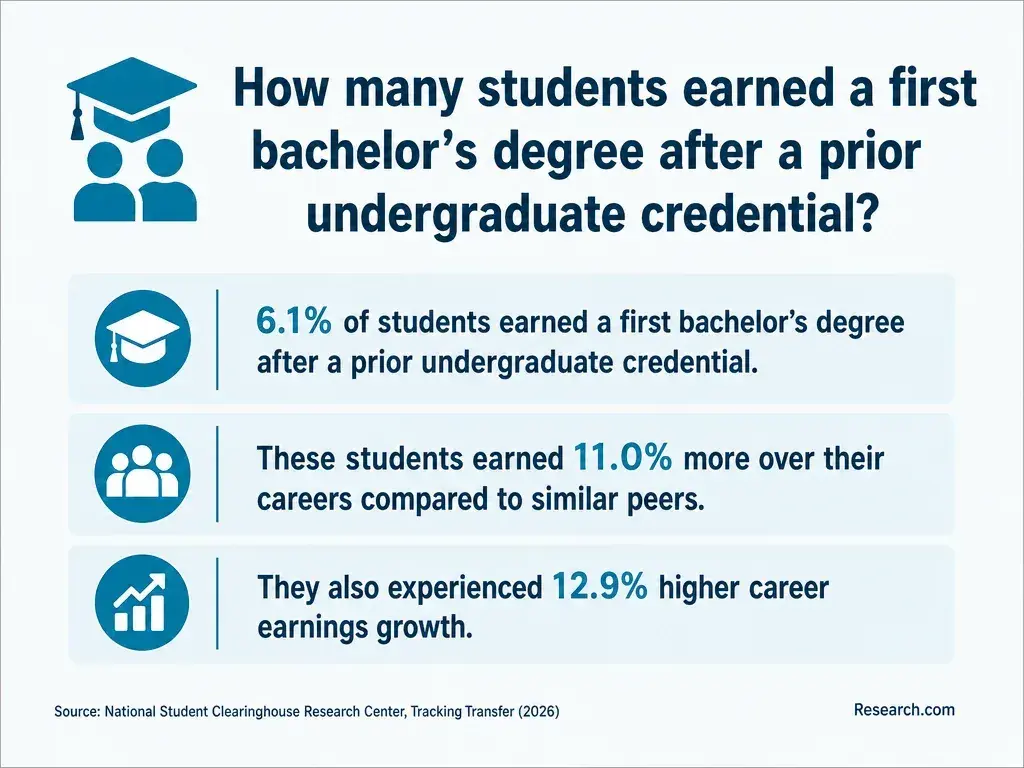
A conventional full-time bachelor's path often takes about four years, while transfer credits, part-time enrollment, and course scheduling can change an individual timeline. For this article's central decision, the important question is when the required ethics course is available. A course offered infrequently or restricted by prerequisites can delay completion even when a student has enough total credits.
Map the ethics requirement against the catalog and your proposed term-by-term plan. Ask an adviser whether a transfer equivalent is approved, whether the course must precede a capstone, and what happens if a section fills. Fast-track business degree options may shorten the calendar, but they do not necessarily reduce the coursework, weekly workload, or total cost.
Choose the format in which you can complete the actual ethics assignments, not just watch lectures. Online courses may use live discussions, timed case responses, group presentations, or fixed weekly deadlines. Campus courses may make debate and faculty feedback easier to access but require travel and attendance at set times.
Request a recent course schedule and ask whether discussions are synchronous, how teams coordinate, and how participation is assessed. If you work while studying, flexible business administration programs for career progression are worth comparing against your work hours - but online delivery should not be mistaken for self-paced study.
In either format, look for a chance to test your reasoning against other viewpoints. That interaction is particularly useful when an ethical case has no risk-free answer.
Graduates may pursue entry-level or early-career work in operations, human resources, marketing, purchasing, sales support, or project coordination, depending on their experience and skills. Ethics coursework is relevant across these roles: an HR employee handles sensitive information, while a purchasing employee may need to identify a vendor conflict of interest. The course supports judgment; it does not qualify a graduate to manage a department immediately.
Use the role you want to test the value of a broad business curriculum. For example, U.S. employment of human resources specialists is projected to grow 6% from 2025 to 2035. That describes an occupation, not the likelihood of a job offer to a business graduate; relevant experience and employer requirements still matter.
If procurement or logistics is your goal, compare general business coursework with economical study options for supply chain careers. Specialized study may offer more functional depth, while a business administration degree may leave more room to explore several functions.
There is no single salary for a BS in Business Administration. Pay depends on the occupation, location, industry, responsibilities, and experience. The U.S. Bureau of Labor Statistics reports a May 2025 median annual wage of $75,940 for human resources specialists. That is the midpoint for workers in the occupation, not an expected starting salary or a measured outcome for graduates of this degree.
For an education-cost decision, compare likely entry roles with the tuition and time you would need to finish. A required ethics course is part of that calculation if it adds an unsatisfied requirement or affects scheduling. Resources that evaluate price, duration, and outcomes of business administration degrees can help frame comparisons, but request your own credit evaluation and cost estimate before relying on an advertised completion time.
Do business administration graduates need certifications or licenses?
Graduates generally do not need a license simply to hold a BS in Business Administration or take many general business roles. Particular occupations and activities can have separate rules: accounting licensure, financial-services activities, and some other regulated work require qualifications beyond a general business degree. Voluntary HR or project management certifications have their own eligibility criteria.
Do not treat a business ethics course as a compliance certification or assume that completing it satisfies a professional ethics requirement. If your goal is project coordination, compare affordable project management schools with targeted training and the experience requested in job postings. A specialized degree, a certification, and supervised work experience serve different purposes.
Other Things You Should Know About Business Administration
Often, but check the instructor's rules and your employer's permissions first. Use public or appropriately anonymized information unless sharing internal material is explicitly authorized.
No. Business law focuses on legal rules and obligations. Ethics also examines how to make a defensible decision when several lawful options have different effects on stakeholders.
Students can ask how the published rubric was applied and use the institution's grade-appeal process if warranted. Courses can assess the quality of evidence and reasoning even when several conclusions are defensible.
Neither structure is automatically better. Compare the assignments: a dedicated course may allow deeper case analysis, while ethics across multiple courses may show how decisions differ by business function.
- What Is Ethics in Research & Why Is It Important? | National Institute of Environmental Health Sciences https://www.niehs.nih.gov/research/resources/bioethics/whatis
- Business Administration Major & Minor Requirements | robins https://robins.richmond.edu/undergraduate/departments/business-administration/major-minor.html
- The Terrible Irony of Teaching Business Ethics in the Modern University | Georgetown Law https://www.law.georgetown.edu/public-policy-journal/in-print/volume-22-special-issue/the-terrible-irony-of-teaching-business-ethics-in-the-modern-university/
- Business Administration (A.S.) - BMCC - CUNY https://www.bmcc.cuny.edu/academics/departments/business-management/business-administration/
- Approaches and Techniques for Teaching Business Ethics | kennesaw.edu https://digitalcommons.kennesaw.edu/cgi/viewcontent.cgi
- Business Ethics | acenet.edu https://www.acenet.edu/National-Guide/Pages/Course.aspx
- How to Read a College Degree Plan Before You Enroll | Florida National University (FNU) https://www.fnu.edu/how-to-read-college-degree-plan/
- College of Business Administration - Academic Catalog https://catalog.uic.edu/ucat/colleges-depts/business-administration/
- Business Administration Major, B.S.B.A. - UNC Catalog https://catalog.unc.edu/undergraduate/programs-study/business-administration-major-bsba/
- Bachelor of Science in Business Administration - (SPS) | UIW https://sps.uiw.edu/academics/undergraduate/bachelor-of-science-in-business-administration/