2027 Cheapest Accredited Online Animal Science Degree Programs That Accept FAFSA

Co-Founder and Chief Data Scientist
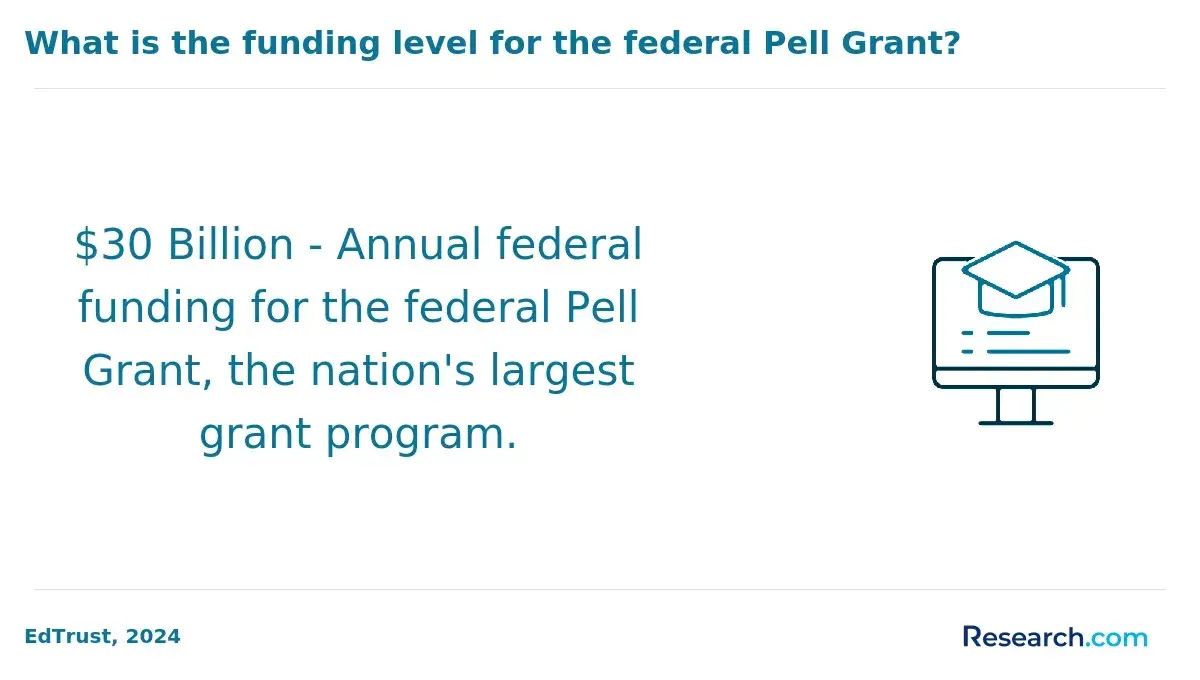
Choosing an online animal science degree is really a cost-and-credibility decision: you need a program that fits your career goal, accepts federal aid, and will not leave you overborrowing. Federal Student Aid lists the maximum Pell Grant at $7,395 for the 2025-26 award year, which can materially reduce tuition for eligible undergraduates.
This guide is for students comparing accredited online animal science programs, transfer options, FAFSA eligibility, and long-term value so they can estimate real out-of-pocket cost before enrolling.
Key Things You Should Know
- The lowest published tuition is not always the lowest net price; compare FAFSA grants, scholarships, fees, transfer credits, and time to completion before choosing a program.
- For eligible undergraduates, the 2025-26 maximum Pell Grant is $7,395, but FAFSA submission does not guarantee grant funding or full program coverage.
- BLS reports a 2024 median annual wage of $78,770 for agricultural and food scientists, so ROI depends heavily on total debt, degree level, location, and whether the role requires graduate study.
Which Are the Cheapest Accredited Online Animal Science Degree Programs That Accept FAFSA?
The cheapest FAFSA-eligible online animal science degree depends on your residency, transfer credits, and whether the program charges a flat online rate or separate in-state and out-of-state tuition. Fully online animal science bachelor's programs are less common than online business or healthcare degrees, so students should compare both exact animal science majors and closely aligned animal agriculture, animal health, and animal industry programs.
The table below summarizes affordable, institutionally accredited online options that are commonly relevant to animal science students. Tuition is best treated as a starting point, because the final cost can change with fees, residency rules, transfer credit, course load, and annual tuition updates.
| School | Online degree option | Institutional accreditation | FAFSA participation | Cost position before aid | Best fit |
| University of Florida Online | Bachelor's in Animal Sciences | SACSCOC | Yes, if student and program eligibility requirements are met | Often among the lowest for Florida residents because UF Online publishes a separate in-state online rate | Florida residents seeking the lowest public-university tuition and a recognized animal sciences major |
| Oregon State University Ecampus | Bachelor's in Animal Sciences | Northwest Commission on Colleges and Universities | Yes, if student and program eligibility requirements are met | Competitive for nonresidents because OSU Ecampus commonly uses online tuition rather than traditional campus residency pricing | Students who need a flexible online format from a land-grant university and may bring transfer credits |
| Kansas State University Online | Bachelor's in Animal Sciences and Industry | Higher Learning Commission | Yes, if student and program eligibility requirements are met | Usually higher than the lowest resident public rates but may be valuable for industry-focused coursework and transfer flexibility | Students interested in livestock, production, agribusiness, or animal industry careers |
| Texas Tech University Online or distance education options | Animal science or related agricultural science pathways may vary by catalog and delivery format | SACSCOC | Yes, if student and program eligibility requirements are met | Requires a current quote because tuition can vary by residency, campus, college, and course delivery | Students in Texas or nearby states who want a public research university option and can confirm online completion requirements |
For most students, the practical shortlist starts with the University of Florida Online if they qualify for Florida tuition, Oregon State University Ecampus if they need a broadly accessible online format, and Kansas State University if the animal industry curriculum fits their goals.
If your goal is animal nutrition, feed formulation, wellness, or food systems, it may also be worth comparing a nutritionist bachelor degree online with an animal science program, especially if you are deciding between human nutrition, animal nutrition, and agriculture careers.
Before treating any program as "cheapest," ask the school for a written cost estimate that includes tuition, mandatory fees, online course fees, lab kits if used, textbooks, required software, internship or practicum costs, and whether any campus visits are required. A program with higher per-credit tuition can still cost less overall if it accepts more transfer credits or lets you finish faster.
How Does FAFSA Eligibility Work for Online Animal Science Degree Programs?
FAFSA eligibility means the school participates in federal student aid programs and the student may be considered for federal grants, loans, and work-study. It does not automatically mean every online animal science program, every course load, or every student will receive the same aid package.
For an online animal science degree to be financially aid-eligible, three things generally need to line up: the institution must be eligible for Title IV federal aid, the program must be an eligible degree or certificate program, and the student must meet federal and school-level requirements. Online delivery alone does not disqualify a program, but enrollment status, satisfactory academic progress, citizenship or eligible noncitizen status, prior loan history, and degree-seeking status can affect aid.
Use this sequence before applying or paying a deposit. It helps you separate "the school accepts FAFSA" from "this specific online animal science degree is eligible for the aid I need."
- Confirm that the institution is listed as eligible to participate in federal student aid programs and has an active federal school code.
- Ask whether the specific online animal science degree is Title IV-eligible, not just whether the university accepts FAFSA.
- Request the school's full cost of attendance for online students, including tuition, fees, books, supplies, technology, and any travel requirements.
- Ask whether your intended course load qualifies as full-time, three-quarter-time, half-time, or less-than-half-time for aid purposes.
- Review the school's satisfactory academic progress policy so you know the GPA, completion rate, and maximum-timeframe rules for keeping aid.
A common mistake is assuming that FAFSA participation means a program will be fully paid for. In reality, the FAFSA is an application used to determine eligibility for aid types, and your final package may include a mix of grants, scholarships, loans, and unmet needs.
How Much Does an Online Animal Science Degree Cost After Financial Aid?
The real cost after financial aid is the school's cost of attendance minus grants, scholarships, tuition waivers, employer assistance, and other gift aid, plus any borrowing you choose to accept. Students often focus on tuition, but total cost can include mandatory fees, books, online learning fees, lab materials, animal handling or internship requirements, and the cost of repeating courses.
The table below shows how the same published program price can create very different net costs depending on FAFSA-based aid and transfer credit. These are examples of decision-making, not guaranteed aid offers.
| Scenario | Published tuition and required charges | Gift aid applied | Transfer credit effect | Estimated amount left to pay or finance |
| High-need undergraduate with strong transfer credit | $30,000 | Pell Grants, state grants, and institutional scholarships reduce the bill | Prior credits remove several terms of tuition | Lowest out-of-pocket cost if credits apply directly to the degree plan |
| Middle-income student with limited grant eligibility | $30,000 | Small institutional scholarship or no grant aid | Some general education credits transfer | Moderate net cost, often financed through payment plans, savings, or federal loans |
| Student with no transfer credits | $30,000 | Aid varies by FAFSA results and school policy | No tuition reduction from prior coursework | Highest completion cost because the student must pay for the full credit requirement |
Federal Student Aid lists the maximum Pell Grant at $7,395 for the 2025-26 award year. For a student at a low-cost public online program, that amount can cover a meaningful share of annual tuition, but it may not cover fees, books, housing, transportation, or the full cost of year-round enrollment.
To estimate your likely net cost, calculate the program in this order: required credits still needed, tuition per credit, mandatory fees, aid that does not need to be repaid, and then loans. Students comparing animal science with advanced healthcare pathways may notice that graduate health programs have very different cost structures; for example, comparing the average cost of DNP program options can show why undergraduate and graduate ROI should be evaluated separately.
The best value is not always the school with the smallest sticker price. In animal science, value comes from a combination of accreditation, science coursework, career alignment, transfer acceptance, advising quality, internship access, and manageable borrowing.
The table below compares value factors that matter most when two programs appear similarly affordable. Use it to decide when paying slightly more may be justified.
| Value factor | Why it matters | When a higher-cost program may be worth it |
| Major fit | Animal science can emphasize livestock, companion animals, pre-veterinary preparation, animal nutrition, reproduction, genetics, or agribusiness | The curriculum closely matches your target role or graduate school prerequisites |
| Transfer policy | Accepted credits reduce total tuition and shorten time to graduation | The school accepts more prior credits, even if its per-credit rate is higher |
| Lab and field expectations | Science-based animal programs may require hands-on learning, local placements, or in-person components | The program has clear support for arranging local experiential learning |
| Career services | Animal science jobs often rely on internships, industry networks, and practical experience | The school has agriculture employers, extension connections, or structured internship advising |
| Graduate-school preparation | Students aiming for veterinary school or research roles may need specific science prerequisites | The degree plan includes the prerequisite sciences required by your intended graduate program |
A low-cost program is a strong value when it gets you to your intended outcome with minimal debt and no credibility concerns. It is a weaker value if it lacks courses required for veterinary school, offers limited advising for internships, or forces you to retake credits that another school would accept.
Current employer expectations also matter. Precision livestock management, animal data systems, biosecurity, sustainability reporting, and food supply chain technology are making quantitative and digital skills more useful in animal science roles. Students should look for coursework or electives in statistics, genetics, nutrition, production systems, business, and data-informed decision-making.
The first accreditation question is institutional accreditation. For federal financial aid, transfer credit, graduate school, and employer recognition, students should generally look for schools accredited by recognized institutional accreditors such as SACSCOC, HLC, NWCCU, NECHE, MSCHE, or WSCUC.
Animal science bachelor's programs typically do not have one universal programmatic accreditor in the way nursing, counseling, or some allied health programs do. That makes institutional accreditation, curriculum quality, faculty expertise, lab or field learning, and graduate-school prerequisite alignment especially important.
Follow these checks before enrolling in a cheap online program. They can help you avoid schools that advertise affordability but may not support your academic or career plans.
- Verify the institution's accreditation directly through the accreditor or the U.S. Department of Education's recognized accreditation resources.
- Ask whether online students receive the same transcript and degree title as campus students, if the school has both formats.
- Confirm whether the degree is a bachelor's, associate, certificate, or concentration, because aid eligibility and career value can differ.
- Request a degree map showing science requirements, electives, experiential learning, and any in-person components.
- If you plan to apply to veterinary school or graduate school, compare the curriculum against the prerequisite list of your target programs before enrolling.
Red flags include vague accreditation language, pressure to enroll before you receive a financial aid estimate, unclear transfer policies, missing faculty information, or a program page that does not identify the exact degree awarded.
If you are comparing animal science with regulated healthcare education, note that fields such as nursing have different accreditation and licensure expectations; an ASN program, for instance, should be evaluated through nursing-specific approval and licensure requirements rather than animal science criteria.
FAFSA can open access to several forms of federal aid, but the mix depends on your dependency status, financial need, enrollment level, and school policies. For animal science undergraduates, the most valuable aid is usually gift aid first, then federal loans only if needed.
The table below explains common aid categories and how they usually apply to FAFSA-eligible online animal science students. The exact amount is determined by the school's financial aid office after FAFSA processing.
| Aid type | Does it need to be repaid? | How it can help animal science students | Important limitation |
| Federal Pell Grant | No | Can reduce tuition and education-related costs for eligible undergraduates with financial need | Amount depends on eligibility, enrollment intensity, and annual federal limits |
| Federal Supplemental Educational Opportunity Grant | No | May provide extra grant support at participating schools | Funds are limited, and not every school participates |
| Federal Direct Subsidized Loan | Yes | Can help cover remaining undergraduate costs after grants and scholarships | Need-based and subject to annual and aggregate borrowing limits |
| Federal Direct Unsubsidized Loan | Yes | Available to many eligible students regardless of financial need | Interest is the student's responsibility |
| Federal Work-Study | No, because it is earned wages | May help with living or education costs through part-time work | Availability depends on the school and job openings; online students may have fewer local options |
The safest financing order is grants and scholarships first, then payment plans or employer support, then federal loans if the expected career value supports repayment. Private loans should usually be a last resort because they often have fewer borrower protections than federal loans.
Some students interested in animal records, veterinary office administration, or agriculture-adjacent healthcare operations also compare shorter career pathways. If your main goal is administrative work rather than animal science coursework, accredited medical billing and coding online schools may be a more direct and lower-commitment comparison point.
Transfer credit can be the biggest affordability lever for online animal science students. Because bachelor's programs often require about 120 semester credits or the equivalent, each accepted credit can remove one course from the tuition bill and may shorten the time you spend enrolled.
The key is not just how many credits a school accepts, but how those credits apply. General elective credit is useful, but credits that satisfy major requirements, science prerequisites, math, chemistry, biology, and general education requirements usually save more time and money.
Use this process before choosing between two affordable programs. It can prevent you from picking a cheaper per-credit rate that becomes more expensive because fewer credits transfer.
- Send unofficial transcripts early and ask for a preliminary transfer review before applying if the school offers one.
- Ask how many credits can apply to the degree, not just how many credits the university will accept in general.
- Request a remaining-course plan showing exactly which courses you still need for graduation.
- Compare the tuition cost of remaining credits at each school rather than comparing only advertised tuition per credit.
- Check whether science courses expire for your intended major, veterinary-school prerequisites, or graduate-school plans.
A higher-tuition program may be cheaper if it accepts an associate degree block transfer or more completed science courses. On the other hand, a low-cost program may be the better choice if it has strict but transparent transfer rules and gives you a shorter, clearer path to completion.
A low-cost FAFSA-eligible online animal science degree is most useful for students who need a legitimate bachelor's pathway but cannot relocate to a campus-based agriculture program. It can work especially well for working adults, rural students, military-connected students, community college transfers, and students already employed in farms, feed companies, veterinary settings, animal shelters, extension offices, or agribusiness.
Students in these situations often get the strongest value from an online format because they can keep earning income while completing the degree. That matters because lost wages can be a hidden cost of full-time campus enrollment, especially for adult learners and caregivers.
The degree may be a good fit if your goal falls into one of these categories. Each pathway has different course needs, so the cheapest program should still match your intended outcome.
- Pre-veterinary or graduate-school preparation, if the curriculum includes the required biology, chemistry, physics, math, and animal science prerequisites.
- Livestock production, animal agriculture, feed, reproduction, genetics, or animal industry roles where a bachelor's degree can strengthen technical credibility.
- Companion animal, shelter, or animal care leadership roles where management, behavior, welfare, and science coursework are useful.
- Agribusiness, extension, food systems, or sales roles where animal science knowledge plus communication and business skills can improve career fit.
Students should avoid choosing primarily by low cost if they need intensive lab access, a highly structured pre-veterinary advising environment, or campus-based animal facilities every term. In those cases, a hybrid or campus program may provide stronger preparation even if it costs more.
Career ROI is the relationship between what you pay for the degree and the career options it may help you access. In animal science, ROI varies widely because graduates may pursue agriculture, feed and nutrition, animal production, veterinary school prerequisites, research support, sales, extension, quality assurance, or management roles.
BLS reports a 2024 median annual wage of $78,770 for agricultural and food scientists. That figure is useful as a labor-market reference point, but it should not be treated as a guaranteed outcome for every animal science graduate because roles, degree requirements, experience, state, and industry segment can differ substantially.
The most practical ROI question is not "Will this degree pay off?" but "How much debt is reasonable for the role I am targeting?" A student using the degree as preparation for veterinary school should consider future graduate debt, while a student aiming for entry-level animal industry work may need to keep undergraduate borrowing especially low.
Use the following ROI checks before committing to a program. They help connect program cost to realistic career planning.
- Compare total estimated debt at graduation with entry-level salaries in your target state and industry, not only national median figures.
- Ask the program where recent online students complete internships, practicums, or industry projects.
- Check whether the curriculum supports your intended route: pre-vet, livestock production, animal nutrition, companion animal work, agribusiness, or research support.
- Estimate monthly federal loan payments under standard and income-driven repayment scenarios before borrowing.
- Consider whether a certificate, associate degree, employer training, or related major could achieve your goal at lower cost.
Students comparing animal science with healthcare careers should remember that ROI depends on credential requirements and licensure. A clinical pathway such as a medical assistant certification accelerated program may have a shorter training timeline, while an animal science bachelor's degree can be better suited to agriculture, animal systems, or graduate-school preparation.
How Should Students Choose the Cheapest FAFSA-Eligible Online Animal Science Degree?
Start with eligibility and fit, then compare net cost. A program should be accredited, FAFSA-eligible, academically aligned with your goal, realistic to complete online, and affordable after grants, scholarships, transfer credits, and expected borrowing.
The best decision process is a side-by-side comparison using the same categories for every school. This prevents schools with low advertised tuition from looking cheaper than they really are.
- Make a shortlist of accredited online animal science or closely related animal-focused bachelor's programs.
- Confirm that each specific program is eligible for federal student aid and ask for the school's federal school code.
- Submit the FAFSA and any required school scholarship applications as early as possible.
- Request a net price estimate after transfer review, not just a first-year tuition quote.
- Ask whether the program has in-person labs, internships, proctored exams, field placements, or campus visits.
- Compare remaining credits, total cost, aid that does not need repayment, estimated loan debt, and expected time to graduation.
- Choose the lowest-cost program that still supports your career or graduate-school plan.
When contacting admissions or financial aid offices, ask direct questions: "Is this online degree Title IV-eligible?", "What is my estimated cost of attendance as an online student?", "How many of my credits apply to the degree?", "What aid can be renewed each year?", and "What happens if I enroll half-time?" Clear answers are a sign that the school can support online learners responsibly.
Students who are still deciding between animal science and healthcare support roles should compare training length, licensure, and job goals before borrowing. For example, a shorter healthcare pathway may be more appropriate if your goal is patient-facing support rather than animal agriculture, and researching a medical assistant certification accelerated program can help clarify that trade-off.
Other Things You Should Know About Animal Science
Sometimes, but not always. Some programs are fully online, while others may require local internships, supervised fieldwork, proctored exams, labs, or occasional in-person experiences. Ask for a complete list of non-online requirements before enrolling.
It can be, but veterinary schools evaluate specific prerequisites, grades, animal experience, recommendations, and admissions requirements. Before enrolling, compare the online degree plan with the prerequisite list for each veterinary school you may apply to.
Some do, but scholarship rules vary by school, major, residency, enrollment level, and donor restrictions. Ask whether online animal science students can apply for departmental agriculture scholarships, transfer scholarships, state aid, and need-based institutional grants.
An associate degree may support entry-level animal care, agriculture, or technician roles, but many professional, management, research, and graduate-school pathways prefer or require a bachelor's degree. The better choice depends on your target job, budget, transfer plan, and long-term education goals.
- Animal Sciences https://www.fastweb.com/directory/scholarships-for-animal-sciences-majors
- 27 Awesome Animal Science Scholarships for Animal Lovers - The Scholarship System https://thescholarshipsystem.com/blog-for-students-families/25-awesome-scholarships-for-animal-lovers/
- BSAS https://www.bisas.org.uk/blog/the-future-of-animal-science-in-higher-education/
- Animal Science Degree- Best Schools, Major & Programs https://www.onlinedegree.com/bachelors/animal-science/
- Home https://www.husson.edu/online/online-degrees/bachelor-of-science-in-animal-care-and-behavior
- Purina Animal Nutrition Scholarship - Scholarship America https://scholarshipamerica.org/scholarship/purina/
- Top Veterinary & Animal Science Scholarships https://www.vettechcolleges.com/blog/50-veterinary-animal-science-scholarships
- 30 Scholarships for Animal Lovers | Imagine Scholarships https://imaginescholarships.com/30-scholarships-for-animal-lovers/
- ILRI - CGSpace - CGIAR https://cgspace.cgiar.org/bitstreams/0e712b28-d982-45b7-94f0-e5e51cf46227/download