2027 Fastest Accredited Online Animal Science Degree Programs That Accept Transfer Credits

Co-Founder and Chief Data Scientist
Transfer students often have the credits but not the degree, and the right accredited online animal science program can turn prior coursework into a shorter path to graduation. NCES's 2024 reporting shows that more than half of U.S. undergraduates took at least one distance education course, making online degree completion a mainstream option rather than a backup plan.
This guide is for transfer students, returning adults, military learners, and degree completers who want the fastest legitimate route. You will learn how to compare programs, verify accreditation, estimate completion time, and avoid transfer-credit surprises.
Key Things You Should Know
- The fastest realistic route is usually a regionally accredited bachelor's completion program that accepts up to about 90 applicable transfer credits while still requiring roughly 30 credits in residence. Kansas State University's online Animal Sciences and Industry degree is one of the clearest animal science-specific examples.
- A high transfer limit does not automatically mean a faster graduation date, credits must satisfy the major, upper-division, lab science, general education, and residency requirements, so a student with 90 credits may still need 18 to 30 months if key animal science prerequisites are missing.
- For cost planning, use remaining credits rather than advertised annual tuition. College Board's 2024-25 data lists average published public four-year in-state tuition and fees at $11,610, so transferring credits can reduce the number of terms you pay for, but lab fees, online fees, textbooks, and lost aid eligibility still matter.
What Are the Fastest Accredited Online Animal Science Degree Programs That Accept Transfer Credits?
The fastest accredited online animal science degree programs are usually not "start-from-zero and finish instantly" degrees. They are transfer-friendly bachelor's completion pathways that let students bring in community college credits, prior university coursework, military training, exams, or approved prior learning and then finish the remaining animal science, agriculture, veterinary science, or animal-focused coursework online.
Fully online, animal science-specific bachelor's programs are less common than online business, psychology, or nursing pathways. That makes program fit especially important: if your goal is livestock production, feed, genetics, animal nutrition, agribusiness, veterinary school prerequisites, animal welfare, or companion-animal careers, the fastest program is the one where your credits actually apply to the curriculum you need. Students comparing related life-science options may also look at a nutritionist bachelor degree online, because nutrition, biology, chemistry, and health-science transfer rules can be similar, but animal science programs usually have more specialized animal, agriculture, and lab expectations.
The table below summarizes accredited online or primarily online animal-focused options worth comparing. Policies change, so treat the transfer-credit figures as a starting point and request an official degree audit before enrolling.
| Program type | Example accredited option | Best fit | Transfer-credit speed factor | Main caution |
| Animal science-specific bachelor's completion | Kansas State University, online B.S. in Animal Sciences and Industry | Students with agriculture, biology, chemistry, livestock, animal production, or general education credits who want a named animal sciences degree | Often strong for students who can apply up to roughly 90 credits and complete about 30 credits through the institution | Upper-division animal science and major-specific requirements may still extend the timeline |
| Animal health and behavior bachelor's | Unity Environmental University, online B.S. in Animal Health and Behavior | Students interested in companion animals, wildlife care, animal behavior, welfare, shelter work, or graduate study in related fields | Short online terms and generous transfer review can help degree completers move quickly | It is not the same as a traditional livestock-focused animal science degree |
| Veterinary science-oriented bachelor's | University of Arizona Online, B.S. in Veterinary Science | Students interested in veterinary school preparation, animal health, biomedical foundations, or veterinary-related careers | Can be efficient for students whose biology, chemistry, math, and general education credits fit the plan | Professional school prerequisites and GPA expectations may matter more than speed |
| Agricultural sciences bachelor's with animal coursework | Oregon State University Ecampus, online B.S. in Agricultural Sciences | Students with broad agriculture transfer credits who want an accredited online agriculture degree with flexibility | May accept substantial prior college coursework, especially general education and agriculture credits | Students seeking a degree titled "Animal Science" should verify transcript wording and course availability |
The most transfer-friendly choice depends on your academic history. A student with an associate degree in agriculture may finish fastest in an animal sciences completion program, while a student with biology and chemistry credits may move faster through a veterinary science or animal health curriculum. A student whose credits are mostly unrelated electives may need a longer plan even if the school accepts many credits institutionally.
Before you pick a program, ask for three documents: an unofficial transfer estimate, a major requirement checklist, and a term-by-term graduation plan. The estimate tells you what the school might accept, the checklist shows what the degree actually requires, and the term plan reveals whether required courses are offered often enough to graduate quickly.
How Fast Can You Complete an Online Animal Science Degree With Transfer Credits?
Most bachelor's degrees require about 120 semester credits, so speed depends on how many credits transfer and how many of those credits apply to general education, prerequisites, the animal science major, electives, and upper-division requirements. A student entering with a completed associate degree can often move faster than a student with the same number of credits scattered across unrelated subjects.
The table below gives realistic completion ranges for full-time online students. These are planning ranges, not guarantees, because course sequencing, lab requirements, term length, and institutional residency rules can change the timeline.
| Applicable transfer credits | Credits still needed for a 120-credit bachelor's | Fast realistic completion range | Why the timeline may change |
| 0 to 30 | 90 to 120 | 3 to 4 years | The student is still completing most general education, science, and major coursework |
| 45 to 60 | 60 to 75 | 2 to 3 years | This is common for students who transfer before or after an associate degree |
| 60 to 75 | 45 to 60 | 18 to 30 months | Speed depends heavily on whether biology, chemistry, statistics, and agriculture prerequisites are complete |
| 75 to 90 | 30 to 45 | 12 to 24 months | This is the fastest common bachelor's completion range, but only if remaining courses are offered online and in the right sequence |
| 90 accepted but not fully applicable | Often 45 or more | 18 to 30 months | Accepted electives may not replace required upper-division animal science courses |
The biggest timeline mistake is assuming that "90 credits accepted" means "30 credits left." A school may accept 90 credits onto your transcript but apply only 70 toward the degree if the rest do not match required categories. This is why the official degree audit matters more than the admissions transfer estimate.
Students who want a genuinely accelerated path should complete the process in a specific order. The steps below help you avoid enrolling in a fast-looking program that later turns out to require several extra terms.
- Send every transcript before you apply or immediately after admission, including community college, university, dual enrollment, military, and exam records.
- Ask the program to identify credits that apply to the major, not just credits accepted by the institution.
- Request a list of remaining courses by term and confirm whether each course is offered online during the terms you need it.
- Check whether labs, internships, practicums, or capstone projects require in-person attendance, synchronous meetings, or local site approval.
- Calculate your fastest sustainable course load based on work, caregiving, financial aid rules, and science-course difficulty.
Animal science is different from many online degree-completion fields because laboratory science, biology, chemistry, and applied animal courses can create sequencing issues. By contrast, cohort-based clinical programs such as an ASN program may be less flexible because clinical placements and licensure requirements drive the pace. In animal science, the fastest path is usually flexible enough for online study but structured enough that missing prerequisites can still slow you down.
How Many Transfer Credits Can You Apply Toward an Online Animal Science Degree?
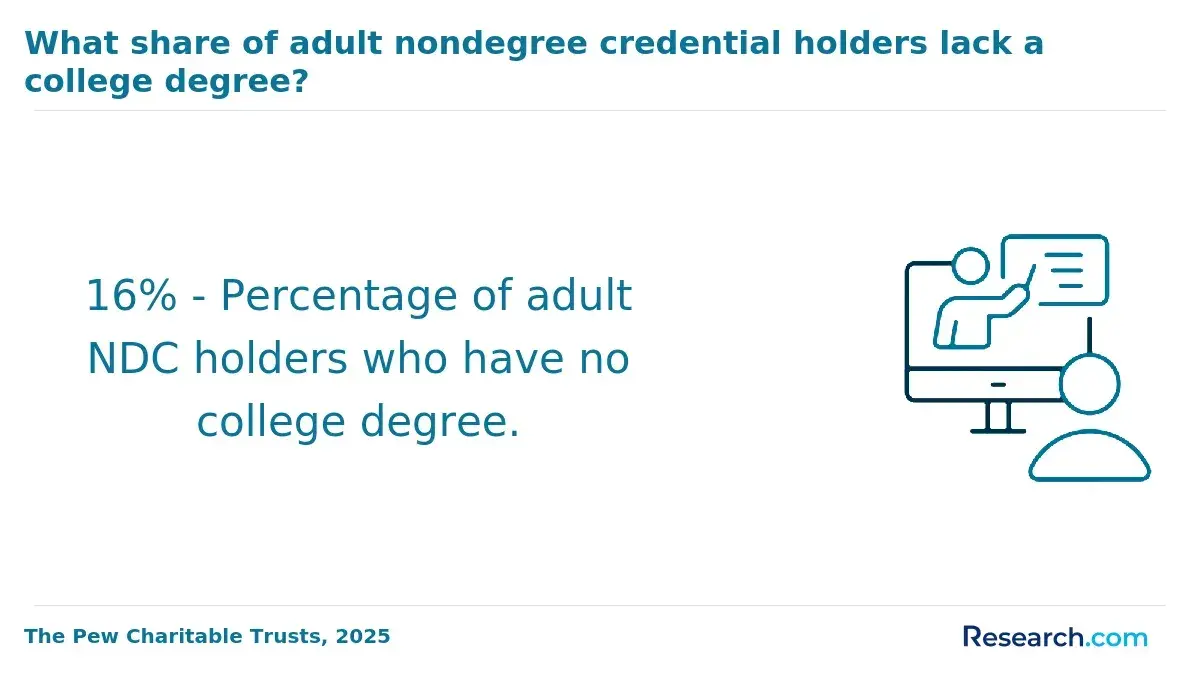
Many bachelor's completion programs allow students to transfer a large block of credits, often up to about three-fourths of the degree. For a 120-credit bachelor's program, that usually means a maximum near 90 transfer credits, with about 30 credits completed through the degree-granting university. However, the exact number varies by school, source of credit, level of credit, accreditation, grade earned, and major fit.
The key distinction is simple: accepted credits appear on the transfer record, while applicable credits reduce remaining degree requirements. A fast animal science degree depends on applicable credits.
| Credit category | How it may help | Why it may not shorten the degree |
| General education | Can satisfy English, communication, humanities, social science, math, and natural science requirements | Some schools require specific labs, statistics, or institutional general education courses |
| Lower-division science | Can cover biology, chemistry, anatomy, physiology, or introductory agriculture foundations | Older coursework or non-lab versions may not satisfy science major requirements |
| Agriculture or animal science courses | Can reduce introductory major requirements and electives | Upper-division animal nutrition, genetics, reproduction, physiology, or production courses may still be required |
| Free electives | Can help reach the total 120-credit minimum | Electives do not replace required major courses if those categories are already full |
| Technical or career credits | May apply in applied programs, prior learning policies, or elective blocks | Some traditional science degrees limit technical credit from non-collegiate sources |
When comparing schools, look for the most restrictive rule, not the most generous rule. A university may advertise a high transfer maximum, but still require a minimum grade, upper-division coursework, a certain number of credits from four-year institutions, or a set number of credits completed after admission.
Use these questions to separate a generous policy from a genuinely fast path:
- What is the maximum number of transfer credits allowed toward this exact degree?
- How many of my credits apply to required animal science, agriculture, biology, chemistry, statistics, and upper-division categories?
- Is there a limit on community college credits, technical credits, exam credits, or military credits?
- Do older science courses expire or require departmental review?
- Can I see a written degree audit before I commit financially?
A school that accepts fewer total credits but applies more of them to your major may be faster than a school with a larger advertised transfer maximum. The fastest accredited option is the one with the fewest remaining required credits, the clearest course sequence, and the least scheduling friction.
Accreditation is the line between a legitimate accelerated degree and a risky shortcut. For online animal science bachelor's programs, the most important accreditation is institutional accreditation from a recognized U.S. accreditor. This affects federal financial aid eligibility, transferability, graduate school review, and employer recognition.
Animal science bachelor's degrees typically do not require a separate programmatic accreditor in the same way that nursing, veterinary technology, education, or counseling programs may. However, if your goal is veterinary technology licensure, veterinary school admission, teaching certification, or a regulated credential, you must check the rules for that pathway separately.
Follow this verification sequence before enrolling. These steps are especially important when a program advertises fast completion, unusually large credit awards, or very low tuition.
- Confirm the institution's accreditation in the U.S. Department of Education's Database of Accredited Postsecondary Institutions and Programs or through the accreditor's official directory.
- Check that the accreditation covers the institution currently offering the online degree, not a former campus, separate partner, or unaccredited training provider.
- Review the university catalog to confirm that the online program leads to the same degree title or an accurately described degree title.
- Ask whether online students are eligible for the same transcript, faculty oversight, financial aid, advising, and graduation requirements as campus students.
- If you plan to apply to veterinary school, graduate school, or a state-regulated credential, confirm prerequisite acceptance directly with that school or licensing authority.
Watch for red flags: "life experience degrees" with no rigorous assessment, pressure to enroll before receiving a transfer audit, unclear institutional accreditation, no catalog listing, or promises that every credit will transfer. Legitimate accredited programs can be flexible and fast, but they still document learning outcomes, course requirements, faculty qualifications, and academic standards.
Online animal science programs may evaluate several kinds of prior credit. The strongest credits are usually regionally accredited college courses with clear titles, credit hours, grades, and syllabi. Credits with labs, science sequencing, or upper-division content may require closer review by the department.
The following categories commonly appear in transfer reviews. Understanding them helps you predict which credits may shorten your animal science degree and which may count only as electives.
- Community college credits: These often satisfy general education, introductory biology, chemistry, agriculture, animal science, math, and elective requirements, especially when earned as part of an associate degree.
- Prior university credits: Courses from accredited four-year institutions may be useful for upper-division requirements if the content matches the receiving program's curriculum.
- Dual enrollment credits: High school students who completed college-level coursework may transfer those credits if the official college transcript is available.
- Exam credits: CLEP, Advanced Placement, International Baccalaureate, and similar exams may satisfy general education or introductory requirements if the score meets the school's policy.
- Military training: Joint Services Transcript coursework may apply to electives, leadership, technical, or applied areas depending on the university's review process.
- Career and technical credits: Veterinary assistant, agriculture technology, animal care, or related training may apply in some programs, especially as electives or prior learning credit.
- Prior learning assessment: Some schools allow portfolios, faculty evaluation, or standardized assessments for documented college-level learning gained outside traditional classrooms.
Science credits deserve extra attention. A general biology course without a lab may not satisfy a biology-with-lab requirement. An animal care course may not replace animal physiology. A nutrition course designed for general wellness may not replace animal nutrition. If the course title is vague, send the syllabus early.
Transfer students should also check whether a school uses semester credits or quarter credits. A 180-quarter-credit bachelor's program is broadly comparable to a 120-semester-credit bachelor's program, but credit conversion can affect how many credits remain after evaluation.
Residency requirements are one of the most important speed limits in transfer-friendly online degrees. In this context, "residency" usually means the minimum number of credits you must complete through the degree-granting university, not where you physically live. Many bachelor's programs require about 30 institutional credits, and some also require a portion of major or upper-division credits to be completed through that school.
The table below shows how common policy layers can affect a student who transfers many credits into an online animal science or related animal-focused bachelor's degree.
| Requirement | What it means | Impact on speed | What to ask |
| Institutional residency | Minimum credits completed through the university awarding the degree | Often prevents students from finishing with fewer than about 30 remaining credits | How many credits must I complete here after transfer? |
| Major residency | Minimum animal science, agriculture, or veterinary science major credits completed through the school | May require additional upper-division courses even when total transfer credits are high | How many major credits must be taken through your department? |
| Upper-division requirement | Minimum 300- or 400-level credits required for graduation | Community college credits may not satisfy these even when the content is similar | Which of my credits count as upper division? |
| Prerequisite sequencing | Required order for biology, chemistry, statistics, nutrition, genetics, or physiology | Missing one prerequisite can delay several later courses | Which remaining courses are prerequisites for others? |
| Capstone or internship | Final project, applied experience, research, internship, or senior seminar | May require planning several terms ahead | Can online students complete this locally or fully online? |
A common mistake is transferring after taking many electives but before completing required math and lab science courses. For animal science, biology, chemistry, statistics, anatomy, physiology, and nutrition foundations can be more valuable than unrelated electives because they unlock advanced major courses.
If you still have time before transferring, ask the destination school for a pre-transfer course plan. Taking the right remaining community college courses before admission can be cheaper and faster, but only if those courses are guaranteed to apply. Do not assume that a course with a similar title will meet a major requirement without written confirmation.
Yes, nontraditional credit can help, but it usually works best for general education, electives, introductory requirements, or applied learning. It is less likely to replace advanced animal science courses that require faculty-reviewed discipline-specific outcomes. For returning adults, military students, veterinary assistants, farm managers, animal shelter workers, and agriculture professionals, prior learning credit can still reduce both time and cost.
Credit for prior learning varies widely by institution, so students should treat it as a possible accelerator rather than a guaranteed shortcut. In many fields, accelerated credentials are designed around workforce entry, such as a medical assistant certification accelerated program; bachelor's degree credit, however, must still map to college-level academic outcomes.
The best candidates for prior learning credit are students who can document structured training, supervised work, certifications, military education, or measurable competencies. Use the following approach before paying portfolio or assessment fees.
- Ask whether the program accepts CLEP, AP, DSST, military JST credits, ACE-recommended training, certifications, or portfolio-based prior learning.
- Confirm whether those credits can apply to your degree requirements or only to free electives.
- Request the maximum number of nontraditional credits allowed toward the bachelor's degree.
- Compare the assessment fee with the tuition you would save by not taking the course.
- Keep documentation, including certificates, training hours, job descriptions, supervisor letters, syllabi, score reports, and military records.
Prior learning is most valuable when it clears a requirement that would otherwise take a full term. It is less valuable if it only adds elective credits beyond the number the degree can use. Before relying on it, ask the advisor to show the credit placement on your degree audit.
The cost of a fast online animal science degree depends less on the sticker price of the full bachelor's program and more on how many credits you still need after transfer. If you enter with 75 applicable credits and need 45 more, your tuition exposure is very different from a student starting with 15 credits. Online fees, lab kits, textbooks, proctoring, technology fees, and internship travel can also affect the final cost.
College Board's 2024-25 data lists average published tuition and fees at $11,610 for in-state students at public four-year institutions, $30,780 for out-of-state students at public four-year institutions, and $43,350 at private nonprofit four-year institutions. These figures are not animal science-specific, but they show why transfer credits and in-state online tuition policies can materially change the economics of completion.
The table below shows a practical way to think about cost after transfer. Use it to compare remaining credits rather than full-degree marketing language.
| Cost factor | Why it matters for transfer students | Decision impact |
| Remaining credits | The fewer applicable credits left, the fewer courses you pay for | Most important cost driver after transfer evaluation |
| Per-credit tuition | Online programs may charge in-state, out-of-state, flat, or distance tuition rates | A lower per-credit price can beat a faster format if the credit gap is large |
| Online and course fees | Science courses may include lab kits, software, proctoring, or technology fees | Can make two similarly priced programs differ in total cost |
| Financial aid eligibility | Federal aid generally requires enrollment in eligible programs and sufficient credit load | Part-time acceleration may affect aid timing and out-of-pocket payments |
| Loan interest | Federal undergraduate Direct Loans for 2024-25 carry a 6.53% fixed interest rate | Borrowing less by transferring credits can reduce long-term repayment pressure |
Students comparing online science and health programs should evaluate total remaining cost, not just tuition per credit. Graduate healthcare degrees, for example, involve very different price structures; resources on the average cost of DNP program options show how quickly costs can diverge by level, institution type, and clinical requirements. For animal science bachelor's students, the lesson is to compare the whole completion plan before choosing the lowest advertised rate.
To estimate your net cost, multiply remaining required credits by tuition per credit, then add mandatory fees and subtract grants, scholarships, employer tuition assistance, military benefits, or institutional aid. If one program costs slightly more but lets you graduate two terms earlier, factor in the value of earlier workforce entry or graduate school eligibility. If a faster program requires heavy course loads that may cause withdrawals or repeated courses, the cheaper and steadier option may be better.
Fast online programs can use several models, but animal science degrees are not equally suited to all of them. Because the field often includes lab science, applied animal systems, nutrition, reproduction, genetics, welfare, and capstone requirements, fully self-paced or competency-based formats are less common than in business or some technology programs.
The table below compares the main formats transfer students may encounter. The fastest option depends on your prior credits, self-discipline, remaining science requirements, and course availability.
| Format | How it works | When it can be fastest | When it may be risky |
| Accelerated term-based | Courses run in shorter sessions, often 5 to 8 weeks | Good for motivated students taking one or two focused courses per session | Science-heavy courses can feel compressed and demanding |
| Traditional online semester | Courses follow 15- or 16-week semesters | Good for students balancing work, labs, and complex science content | May slow progress if required courses are offered only once per year |
| Competency-based | Students progress by demonstrating mastery | Fast for students with substantial prior knowledge in flexible fields | Less common for animal science majors with lab and discipline-specific sequencing |
| Self-paced independent study | Students complete coursework within a broad time window | Useful for electives or make-up prerequisites | Can delay graduation without strong structure and advising |
| Hybrid or low-residency | Most coursework is online, with limited in-person labs, fieldwork, or intensives | Useful when hands-on learning strengthens career preparation | Travel, scheduling, or local placement requirements may slow completion |
Competency-based education is popular in some online career fields because students can move quickly through material they already know. For animal science, the model is more limited because faculty often need to verify laboratory, scientific, and applied animal knowledge through structured courses. Students comparing flexible non-lab online credentials, such as medical billing and coding online schools, should understand that animal science degrees usually have more sequencing and science-content constraints.
The fastest sustainable format is usually accelerated term-based study with careful advising. It lets transfer students stack required courses more efficiently while preserving academic structure. However, students working full time should be cautious about taking multiple lab science or upper-division animal science courses in the same short term.
Choose speed only when the course sequence, workload, and support services make graduation more likely. A program that looks slower on paper may be the better choice if it offers required courses more reliably, provides stronger transfer advising, or better matches graduate school prerequisites.
Are Fast Accredited Online Animal Science Degrees Respected by Employers and Graduate Schools?
A fast accredited online animal science degree can be respected when it comes from a recognized institution, carries an appropriate degree title, includes rigorous science and animal-focused coursework, and appears on an official transcript like other university degrees. Employers and graduate schools generally care less about whether the courses were online and more about accreditation, curriculum, grades, skills, experience, references, and fit for the role or program.
The career value of the degree depends on your target. Animal science graduates may pursue roles in livestock production, feed and nutrition sales, animal health companies, breeding and genetics, extension support, animal welfare, quality assurance, agribusiness, laboratory support, regulatory compliance, or graduate and professional study. BLS's May 2024 wage data lists the median annual wage for agricultural and food scientists at $83,260, but that category includes several occupations and often requires advanced education for research-focused roles. Use salary data as context, not a promise.
Graduate schools and veterinary programs may review online coursework carefully if prerequisites include labs, organic chemistry, biochemistry, microbiology, genetics, or anatomy. Some schools accept online courses; others prefer or require in-person labs. If veterinary school, graduate research, or teaching certification is your goal, verify requirements before choosing the fastest option.
To strengthen the credibility of a fast online degree, build evidence beyond the transcript. The following steps can help you show employers or admissions committees that your online pathway was rigorous and career-relevant.
- Complete internships, farm or animal facility experience, research assistance, veterinary clinic work, shelter work, extension projects, or supervised field experience when possible.
- Keep syllabi for major science courses, especially if you plan to apply to graduate or professional schools.
- Choose electives that align with your goal, such as animal nutrition, genetics, reproduction, physiology, welfare, behavior, agribusiness, or data analysis.
- Ask faculty for references before graduation, especially from upper-division science or capstone courses.
- Document hands-on skills separately from online coursework through work history, volunteer roles, certifications, or supervised projects.
The biggest red flag is not online delivery; it is weak accreditation, unclear curriculum, little advising, or a degree plan that does not match your career goal. A slower accredited program with the right prerequisites and hands-on opportunities may be more valuable than the fastest program if your next step is competitive graduate admission or a specialized animal science role.
Other Things You Should Know About Animal Science
No. Animal science is a broader bachelor's-level field covering topics such as nutrition, genetics, reproduction, physiology, livestock systems, behavior, welfare, and agribusiness. Veterinary technology is a regulated clinical pathway in many states and may require graduation from an accredited veterinary technology program to qualify for credentialing exams.
Often, yes. An associate degree can satisfy many lower-division and general education requirements, especially if it includes biology, chemistry, math, agriculture, or animal science courses. The key is whether the bachelor's program applies those credits to the major rather than counting them only as electives.
Some do, especially through labs, internships, practicums, capstones, or locally arranged field experiences. Requirements vary by school and concentration. If you need a fully online program with no travel, confirm lab and experiential requirements before enrolling.
Send official or unofficial transcripts from every college attended, exam score reports, military records, course syllabi for science and animal courses, and documentation for certifications or prior learning. For the best decision, ask for a written degree audit showing exactly which requirements remain.
- Pursue your passion to save the lives of dogs and cats https://bestfriends.org/learn
- GRADUATE OPPORTUNITIES | ALFA https://www.feedlots.com.au/graduates
- Can I Study Animal Science Courses Online? https://www.stonebridge.uk.com/blog/veterinary/animal-science-courses-online-or/
- BSAS https://www.bisas.org.uk/blog/the-future-of-animal-science-in-higher-education/
- Home https://www.husson.edu/online/online-degrees/bachelor-of-science-in-animal-care-and-behavior
- Animal Science Transfer Major | EICC https://eicc.edu/classes-programs/pathway/agriculture/animal-science-transfer/default.aspx
- CCAC - Canadian Council on Animal Care https://ccac.ca/en/certification/how-to-participate/program-features.html