
2027 What Can I Do With a Bachelor’s in Special Education?

Co-Founder and Chief Data Scientist
A bachelor’s in special education is a career-focused education degree for people who want to teach, support, advocate for, or design services for students with disabilities. The decision matters because demand for qualified special education professionals remains a major issue: as of 2024, more than 50% of America's public schools faced significant challenge in special education staffing, while the number of students ages 3 to 21 receiving special education services continues to rise.
This guide is for prospective students, career changers, paraprofessionals, and current education majors who want to understand what this degree can lead to beyond the traditional classroom. You will learn what a bachelor’s in special education covers, how admission and costs work, whether online programs are accepted, what jobs graduates pursue, what salaries look like, and how to decide whether this path fits your goals, strengths, and financial priorities.
Quick Answer: What can you do with a Bachelor’s in Special Education?
With a bachelor’s in special education, graduates most often become special education teachers, inclusion specialists, early intervention specialists, transition specialists, curriculum developers, or education consultants. Some roles require state teacher licensure, supervised fieldwork, or additional credentials. The degree can also support work in schools, early intervention programs, disability services, nonprofits, family support agencies, rehabilitation centers, and education technology settings.
The degree is usually worth considering if you want a service-oriented career with strong practical demand and you are prepared for the emotional, administrative, and behavioral challenges that come with supporting students with disabilities. It may be less suitable if your main priority is high pay with low stress or if you do not want to meet state licensure and continuing education requirements.
What are the main benefits of getting a Bachelor’s in Special Education?
| Benefit | What it means for students | Decision tip |
| Multiple career options | The degree can lead to roles such as special education teacher, behavioral support specialist, educational diagnostician pathway, assistive technology specialist pathway, inclusion specialist, or advocacy-related work. | Choose programs with field placements in more than one setting if you are unsure whether you want classroom teaching long term. |
| Meaningful workforce need | Schools continue to report difficulty finding qualified special education staff, which can improve job prospects for licensed graduates in high-need areas. | Check state licensure rules before enrolling, especially if you plan to study online or move after graduation. |
| Competitive salary potential in some roles | The median annual salary for special education teachers in the U.S. is around $62,950, while specialized or consulting-oriented roles may pay more depending on credentials, location, and experience. | Compare salary against total program cost, unpaid fieldwork time, and the cost of required exams or licensure fees. |
| Online study flexibility | Online programs can help working adults, parents, and paraprofessionals complete coursework while managing other responsibilities. | Make sure the online program includes approved student teaching or clinical placement support in your state. |
- What is a Bachelor’s in Special Education?
- What are the admission requirements for a Bachelor’s in Special Education?
- How much does a Bachelor’s in Special Education cost?
- Will employers accept an online Bachelor’s in Special Education?
- Top careers for Bachelor’s in Special Education graduates
- How much can you earn with a Bachelor’s in Special Education?
- Which industries hire Bachelor’s in Special Education graduates?
- Can graduate education increase career options?
- How can you accelerate advanced study in special education?
- Which states may offer strong opportunities for special education graduates?
- How can complementary online degrees expand education expertise?State opportunity factors
- What is the job outlook for Bachelor’s in Special Education graduates?
- Is a Bachelor’s in Special Education worth it?
- Can creative writing improve special education teaching?
- How can networking and mentorship support a special education career?Creative teaching methodsDegree value
- Can digital design skills improve special education practice?
- Can interdisciplinary graduate study strengthen a special education career?
- Should you pursue an online EdD for special education leadership?
- Which affordable graduate programs may support advancement?
- How can creative arts expand special education career paths?Graduate program optionsOnline doctoral studyInterdisciplinary advancementWorth-it factorsAdditional considerations
What is a Bachelor’s in Special Education?
A bachelor’s in special education is an undergraduate program that prepares students to teach and support learners with disabilities, developmental delays, behavioral needs, communication challenges, emotional disabilities, physical disabilities, or specific learning differences. It is often the first academic step toward becoming a licensed special education teacher.
Programs typically combine general education coursework, teaching methods, disability studies, assessment, child and adolescent development, behavior management, inclusive education, classroom technology, legal responsibilities, and supervised field experience. Students learn how to adapt instruction, interpret individualized education plans, collaborate with families, and work with general education teachers, school psychologists, therapists, and administrators.
Graduates of a special education degree may work in self-contained classrooms, resource rooms, inclusive general education classrooms, early intervention programs, or education support roles. However, the degree alone may not be enough for classroom teaching. Public school teaching roles usually require state-approved educator preparation, student teaching, exams, background checks, and licensure.
What you typically study in this degree
- Special education law and ethics: Students learn how federal and state requirements shape services, accommodations, IEPs, evaluations, and family rights.
- Instructional adaptation: Coursework teaches future educators how to modify lessons, assessments, materials, pacing, and classroom routines.
- Assessment and progress monitoring: Students study how to use data to identify needs, document progress, and adjust interventions.
- Behavior and classroom support: Programs introduce behavior plans, positive behavior supports, trauma-informed strategies, and de-escalation methods.
- Inclusive teaching: Students learn how to collaborate with general education teachers so students with disabilities can access the broader curriculum when appropriate.
- Clinical practice: Most licensure-focused programs require fieldwork, observation, practicum experiences, and student teaching.
What are the admission requirements for a Bachelor’s in Special Education?
Admission requirements vary by school and by whether the program admits students directly into the special education major or first into a general education track. In 2023, there were 212,700 special education teachers in both public and private elementary schools, and many institutions continue to prepare students for this workforce through bachelor’s-level educator preparation programs.
| Requirement | What schools usually ask for | What applicants should check |
| High school diploma or equivalent | Most bachelor’s programs require high school completion or a GED. | Transfer students should ask how many previous credits can apply to major, general education, and elective requirements. |
| GPA | Many programs look for a minimum GPA, often around 2.5 or higher, though competitive schools may set higher standards. | Some universities require one GPA for university admission and a separate GPA for entry into the teacher preparation program. |
| Official transcripts | Applicants generally submit high school transcripts and transcripts from any college coursework already completed. | Students with community college credits should request a transfer evaluation before committing. |
| Prerequisite coursework | Some programs expect prior or early coursework in educational psychology, child development, or introductory education. | Students comparing lower-cost options can explore whether prerequisites are available through colleges offering affordable online courses. |
| Teacher preparation screening | Licensure-track programs may require background checks, basic skills exams, interviews, or field placement approval. | Ask whether these requirements occur before admission, after sophomore year, or before student teaching. |
Questions to ask before applying
- Is the program designed for teacher licensure in the state where I plan to work?
- Does the program prepare graduates for elementary, secondary, early childhood, mild/moderate, severe/profound, or cross-categorical special education?
- How are field placements arranged for online students?
- What exams, background checks, or student teaching requirements are built into the program?
- Will transfer credits reduce the total time and cost, or will methods courses still take several years?
How much does it cost to complete a Bachelor’s in Special Education?
The cost of a bachelor’s in special education depends on school type, residency status, delivery format, program length, fees, and whether the student enters with transfer credits. Tuition is only part of the total price. Students should also budget for books, technology, transportation, background checks, licensure exams, student teaching expenses, and possible lost income during full-time clinical placements.
| School type | Typical tuition range stated | Cost considerations |
| Public university, in-state | Roughly $7,000 to $15,000 per year | Often the lowest-cost option for state residents, especially when combined with transfer credits from a community college. |
| Public university, out-of-state | $15,000 to $30,000 or more per year | Can be expensive unless the program offers online tuition discounts, reciprocity, or scholarships. |
| Private university | Often exceeds $30,000 per year | May offer institutional aid, but students should compare net price rather than sticker price. |
What affects the total cost?
- Institution type: Public colleges are often less expensive than private colleges, particularly for in-state students.
- Location: Tuition and living costs vary widely by state, city, and campus setting.
- Online or campus format: Online programs may reduce relocation and commuting costs, but they are not automatically cheaper.
- Residency status: Public universities typically charge lower rates to in-state students than to out-of-state students.
- Program length: Most bachelor’s degrees are structured around four years of full-time study, but transfer credits, part-time enrollment, and repeated courses can change the timeline.
- Clinical placement expenses: Student teaching may require daytime availability, transportation, fingerprinting, background checks, and reduced work hours.
How to reduce the cost of the degree
- Complete general education courses at an accredited community college before transferring.
- Ask whether paraprofessional experience can help with placement options, scholarships, or credit for prior learning.
- Compare net price after grants and scholarships, not only published tuition.
- Confirm whether online students pay extra technology, placement, or distance learning fees.
- Check whether the school has teacher shortage scholarships, service-based grants, or district partnerships.
Will employers recognize an online Bachelor’s in Special Education?
Employers generally recognize an online bachelor’s in special education when the institution is properly accredited and the program meets state licensure requirements. The same principle applies when comparing the top special education graduate programs. For school districts, the most important questions are usually whether the degree came from an accredited institution, whether the teacher preparation program was state-approved, and whether the graduate is eligible for licensure.
Online delivery by itself is rarely the problem. The risk is choosing a program that is accredited but not approved for the license, grade band, or disability specialization required in the state where you want to teach.
| Factor | Why it matters | What to verify |
| Accreditation | Accreditation affects employer confidence, financial aid eligibility, credit transfer, and licensure review. | Confirm institutional accreditation and whether the educator preparation program is recognized by the relevant state authority. Programs may also reference the Council for the Accreditation of Educator Preparation. |
| State licensure alignment | Public school special education roles usually require state certification or licensure. | Ask the program to state in writing which state license it prepares students for and whether it meets requirements outside that state. |
| Clinical experience | Special education preparation requires hands-on practice with real students, IEP processes, classroom routines, and collaboration. | Find out who arranges placements, whether placements can be completed near you, and what happens if a placement site is unavailable. |
| University reputation | A known education school or strong district partnership can help with networking and placements. | Review placement support, licensure pass information if available, and employer partnerships. |
| Employer preference | Some employers may still have preferences about program format, but accreditation and licensure usually matter more. | Contact districts where you may apply and ask whether graduates from the program have been hired before. |
Top Careers for Bachelor’s in Special Education Graduates
During the 2022-23 school year, 7.5 million students between the ages of 3 and 21 received special education or related services through the Individuals with Disabilities Education Act (IDEA). This represented 15% of all students enrolled in public schools. A bachelor’s in special education can prepare graduates for direct teaching roles and for support positions that improve access, instruction, transition planning, and family services.
| Career | Typical responsibilities | Median annual salary | Best fit for |
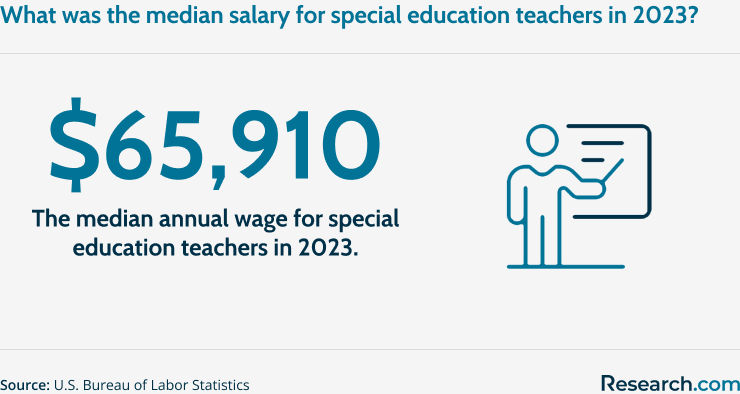
| Special Education Teacher | Teach students with disabilities, adapt lessons, manage IEP-related instruction, monitor progress, collaborate with families and school teams, and support students in self-contained, resource, or inclusive classrooms. | $65,910 | Students who want a classroom-centered role and are willing to complete state licensure. Special education was the main teaching assignment for 13% of public school teachers in rural areas in the academic year 2020-2021. |
| Inclusion Specialist | Work with general education teachers to modify lessons, support accommodations, strengthen inclusive classroom practices, and help students access grade-level learning. | $63,440 | Educators who enjoy collaboration, coaching, curriculum access, and problem-solving across classrooms. |
| Educational Consultant | Advise schools, families, programs, or organizations on special education practices, program improvement, teacher training, and student support strategies. | $83,065 | Experienced professionals who want advisory work; some consulting paths may require graduate education or specialized expertise. |
| Curriculum Developer | Create or revise lessons, intervention materials, assessments, and accessible learning resources for students with varied needs. | $73,003 | Graduates who like instructional design, writing, standards alignment, accessibility, and educational materials development. |
| Early Intervention Specialist | Support infants and young children with developmental delays through family-centered services, developmental activities, and early support plans. | $48,312 | People who want to work with young children and families before formal schooling begins. |
| Transition Specialist | Help students with disabilities prepare for employment, postsecondary education, daily living, community participation, and adult services after high school. | $67,955 | Professionals interested in adolescence, career readiness, life skills, and interagency collaboration. |
Entry-level roles to consider while completing the degree
- Paraprofessional or instructional aide in a special education classroom
- Behavior support aide under supervision
- After-school or summer program staff for students with disabilities
- Substitute teacher, where allowed by state and district rules
- Disability services assistant in a school, nonprofit, or community program
How much can I make with a Bachelor’s in Special Education?
Earnings for special education graduates vary by role, state, district pay scale, grade level, school type, experience, and additional credentials. The work can be demanding, and staffing shortages are part of the salary conversation. In 2022, 65% of U.S. public schools reported a shortage of special education teachers.
Salary factors that matter most
- Location: State funding, district contracts, local cost of living, and high-need incentives can affect pay.
- Experience: Public school salary schedules often increase with years of service.
- Education level: A bachelor’s degree may qualify graduates for entry-level teaching, but a master’s degree or additional certifications can increase pay in some systems.
- School type: Public schools often use formal salary schedules, while private schools may set salaries differently.
- Specialized role: Roles involving behavior support, transition planning, curriculum design, consulting, or specialized disability services may have different salary structures.
General salary expectations
- Entry-level: New graduates may start in the $40,000s or $50,000s per year, depending on location and employer.
- Average range: The national average salary for special education teachers is around $60,000-$70,000 per year, though this is a broad estimate.
- Experienced professionals: Teachers with many years of experience, graduate credits, or advanced degrees may earn over $80,000 or even $90,000 in some areas.
How to evaluate salary before enrolling
- Look up salary schedules for districts where you would realistically work.
- Compare bachelor’s, master’s, and additional-credit pay lanes if the district publishes them.
- Ask whether special education roles receive shortage stipends, retention bonuses, or extra-duty pay.
- Estimate student loan payments against likely first-year salary.
- Consider non-salary benefits such as health insurance, retirement plans, union protections, and paid leave.
Which industries are best for graduates of a Bachelor’s in Special Education?
The most prevalent disability among students was specific learning disabilities, which accounted for 32% of cases. Because the degree develops skills in assessment, adaptation, communication, behavior support, documentation, and family collaboration, it can be useful in several settings connected to careers in education and disability support.
Education settings
- Public schools: The primary employment setting for licensed special education teachers working in inclusive classrooms, resource rooms, and self-contained classrooms.
- Private schools: Some private schools hire special education teachers or learning support specialists, though licensure expectations vary.
- Charter schools: Charter schools may hire special education staff to support compliance, inclusion, and student services.
- Early intervention programs: Graduates may work with infants, toddlers, and families when they meet state and employer requirements.
- Higher education: Some graduates move into disability services support, academic coaching, or access-related roles in postsecondary settings.
Related services and support organizations
- Rehabilitation centers: Staff may help individuals with disabilities develop academic, social, vocational, or independent living skills.
- Hospitals and clinics: Education-focused support roles may involve children and adolescents managing health, developmental, or disability-related needs.
- Community centers: Graduates may support inclusive programming, adaptive activities, and family resources.
- Nonprofit organizations: Disability-focused nonprofits often need staff for advocacy, training, outreach, family support, and program coordination.
Child and family services
- Social service agencies: Special education knowledge can support case coordination, family advocacy, and service navigation.
- Child protective services: Some roles involve working with children with disabilities who may need additional protection, assessment, or support.
- Family support programs: Staff may connect families to resources, education planning information, and community-based services.
Can further education increase my career opportunities?
Yes. Graduate education can expand options for licensed special educators who want to move into leadership, intervention specialization, curriculum design, teacher coaching, administration, research-informed practice, or policy-related work. A master’s degree may also help educators qualify for higher salary lanes in some school systems, although pay increases depend on district rules and state policy.
Before enrolling, compare the credential with the job you want. A master’s in special education, educational leadership, curriculum and instruction, applied behavior analysis, assistive technology, or reading intervention may lead to very different outcomes. Professionals comparing advanced roles can review examples of high-paying jobs with a master's in education to understand how graduate study may connect to compensation and leadership opportunities.
How can I fast-track advanced education in special education?
Accelerated graduate programs can be useful for working educators who want to move quickly into advanced practice or leadership. However, “fast” should not mean weak clinical preparation, poor advising, or unclear accreditation. A strong accelerated program should still offer rigorous coursework, applied projects, faculty support, and clear alignment with professional goals.
When reviewing options, ask whether the program is accredited, whether the schedule is realistic while teaching full time, how practicums or applied research are completed, and whether the degree supports the license, endorsement, or leadership role you want. Educators exploring doctoral acceleration can compare affordable EdD programs that are designed for faster completion.
Which states are best for graduates of a Bachelor’s in Special Education?
States often cited as offering strong opportunities for special education bachelor’s graduates include California, Massachusetts, New York, Illinois, Pennsylvania, Washington, Oregon, Colorado, and Maryland. These states may be attractive because of demand, salary levels, education funding, professional resources, and established special education systems. Still, the “best” state depends on your license area, cost of living, preferred student population, and willingness to work in high-need districts.
| State opportunity factor | Why it matters | What to research before moving |
| High demand | Larger student populations and teacher shortages can create more openings for qualified special education teachers. | Review district job postings by license area, grade band, and disability category. |
| Competitive salaries | Some states pay higher salaries, though higher cost of living may offset the difference. | Compare district salary schedules with housing, transportation, taxes, and benefits. |
| Strong programs and resources | Established special education systems may offer mentoring, professional development, and better support structures. | Look for induction programs, caseload expectations, planning time, and special education staffing ratios. |
| Supportive work environments | Teacher retention often depends on manageable workloads, collaboration, administrative support, and access to related service staff. | Ask current teachers about caseloads, paperwork, paraprofessional support, and leadership responsiveness. |
| Diverse student populations | Working with students across cultures, languages, disabilities, and communities can deepen professional skills. | Ask how districts support multilingual learners with disabilities and culturally responsive evaluation practices. |
| Licensure pathways | Moving states can require additional tests, coursework, or documentation. | Confirm reciprocity rules and whether your program qualifies for the license you need. Some states also have universities with accredited online teaching degree programs. |
How can complementary online degrees broaden my educational expertise?
Complementary degrees can help special education professionals build stronger content knowledge, communication skills, digital literacy, or curriculum design expertise. For example, an online history degree may strengthen research, analysis, and cultural context skills that can support inclusive lesson planning and accessible social studies instruction.
This path makes the most sense for educators who already understand their core licensure requirements and want to add depth in a subject area or broaden long-term career options. It is less useful if the additional degree delays licensure or increases debt without a clear professional purpose.
What is the job outlook for graduates with a Bachelor’s in Special Education?
The job outlook for special education graduates is generally favorable because schools continue to need qualified professionals who can support students with disabilities. The demand for qualified special education professionals continues to rise for reasons that include disability identification, legal requirements for appropriate services, and ongoing staffing challenges in schools.
Job prospects are often strongest for graduates who are licensed, flexible about location, prepared to work in high-need districts, and trained for shortage areas or specific student populations. However, job availability is not identical everywhere. Some districts may have many openings, while others may be more competitive or may require additional endorsements.
A bachelor’s degree is commonly the entry point for teaching roles, but further education may improve advancement options. Graduates comparing advanced credentials can review the cheapest online special education master's degree options to see whether a master’s program fits their budget and career goals.
Current trends affecting special education careers
- Staffing shortages: Schools continue to report difficulty hiring qualified special education staff, which can increase opportunities but also increase workload for current teachers.
- Inclusive education expectations: More schools emphasize serving students in inclusive settings when appropriate, increasing the need for collaboration and co-teaching skills.
- Data and compliance demands: Special education professionals must document progress, services, accommodations, and IEP-related decisions carefully.
- Assistive technology and digital learning: Teachers increasingly use accessibility tools, adaptive software, text-to-speech, communication supports, and digital learning platforms.
- Focus on transition outcomes: Secondary programs place greater emphasis on employment, independent living, and postsecondary planning for students with disabilities.
Is a Bachelor’s in Special Education worth it?
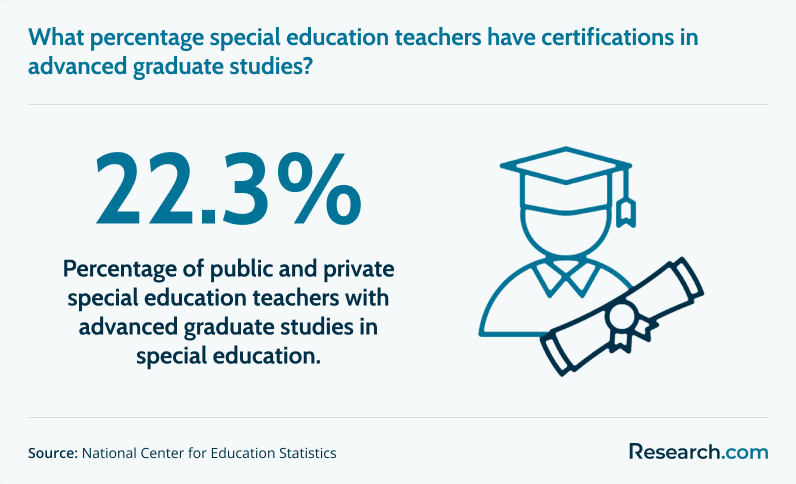
A bachelor’s in special education can be worth it for students who want a practical, people-centered career and are prepared for the demands of teaching or disability support work. Among public and private special education teachers in the U.S., 22.3% have completed advanced graduate studies in special education, showing that many professionals continue building expertise after the bachelor’s level.
The degree is not automatically worth it for everyone. The value depends on tuition, financial aid, licensure alignment, expected salary, resilience, work preferences, and whether you genuinely want to support students with disabilities in complex learning environments.
| It may be worth it if... | It may not be the best fit if... |
| You want to help students with disabilities access learning, communication, independence, and opportunity. | You want a low-stress job with minimal paperwork, meetings, and emotional demands. |
| You are comfortable collaborating with families, teachers, administrators, therapists, and service providers. | You prefer working independently and do not want frequent team-based decision-making. |
| You can handle behavior challenges, slow progress, and complex student needs with patience and consistency. | You may struggle with burnout when progress is uneven or when systems are under-resourced. |
| You are willing to complete licensure, testing, fieldwork, and continuing professional development. | You do not want to navigate state certification rules or ongoing training requirements. |
| You have compared program cost with realistic district salaries and benefits. | You are taking on high debt without a clear plan for repayment or employment. |
How to decide before enrolling
- Shadow a special education teacher for a full day if possible, including planning time, meetings, and classroom transitions.
- Volunteer or work as a paraprofessional to see whether the daily environment fits your temperament.
- Review licensure rules in the state where you plan to teach.
- Compare at least three programs by accreditation, student teaching support, cost, transfer policy, and job placement support.
- Talk with recent graduates about workload, advising, field placements, and preparation for licensure exams.
Common mistakes to avoid
- Choosing a program without checking licensure alignment: Accreditation matters, but state approval for teacher preparation is also critical.
- Looking only at tuition: Fees, student teaching expenses, lost work time, books, travel, and exams can change the real cost.
- Assuming every online program works in every state: Online degrees may not meet out-of-state licensure requirements automatically.
- Ignoring field placement logistics: A flexible online program can become difficult if the school does not help secure approved placements near you.
- Relying only on rankings: A highly ranked school is not useful if it is unaffordable, does not fit your schedule, or does not prepare you for the license you need.
- Assuming salaries are guaranteed: Pay depends on district schedules, role, location, experience, and additional education.
Can creative writing skills boost the effectiveness of special education teaching?
Creative writing can strengthen special education practice when it helps teachers explain ideas clearly, design engaging prompts, adapt reading and writing activities, and create student-centered communication tools. Narrative skills can also support social stories, reflective journals, accessible lesson materials, and family communication.
This kind of study is most useful as a complement, not a replacement for special education preparation. Educators who want to build stronger writing and instructional storytelling skills may consider online creative writing degree programs, especially if they are interested in curriculum writing, literacy support, or educational content development.
How can professional networking and mentorship empower my career in special education?
Mentorship can make a major difference in special education because new teachers often need help with IEP meetings, behavior plans, progress monitoring, family communication, compliance timelines, and classroom routines. A strong mentor can help you avoid common early-career mistakes and understand how to balance student needs with documentation requirements.
Useful networking options include district induction programs, professional associations, school-based special education teams, university alumni networks, online educator communities, and disability advocacy organizations. Educators who also want to expand creative instructional methods may explore programs such as cheap online MFA creative writing, though this should be connected to a clear teaching, writing, or curriculum goal.
What do graduates have to say about their Bachelor’s in Special Education?
-
: "
Working in special education has been the most rewarding experience of my life. Watching my students grow academically and socially reminds me why this work matters. Helping them move toward their potential gives me a deep sense of purpose. Maria
"
-
: "
My special education program taught me that teaching and advocacy go together. I learned how to speak up for students, help families understand their rights, and make sure students receive the supports they need. The work is demanding, but the impact is real. James
"
-
: "
I did not expect my special education background to lead to hospital-based work. The patience, empathy, and problem-solving skills I developed now help me support children and families during difficult medical experiences as a child life specialist. Lisa
"
Can integrating digital design innovation elevate special education practices?
Digital design skills can help special education professionals create more accessible learning materials, improve visual supports, evaluate educational software, and collaborate with technology teams. User-centered design is especially relevant when students need clear navigation, reduced cognitive load, alternative communication, or adaptive learning tools.
Educators interested in accessibility, assistive technology, or digital curriculum may find value in online UX degree programs. This pathway is most practical for professionals who want to move toward instructional design, edtech, accessibility consulting, or adaptive learning product development.
Can interdisciplinary advanced education boost my career in special education?
Interdisciplinary graduate study can broaden a special education career when it adds a skill employers actually need. For example, library science can strengthen information literacy, resource curation, digital access, and inclusive materials selection. These skills may help educators support students who need accessible texts, research support, or differentiated learning resources.
An online MLS degree may be useful for educators interested in school libraries, instructional resources, digital learning, or accessibility-focused information services. Before enrolling, compare the degree with your state’s school librarian requirements and your long-term career plan.
Should I pursue an online EdD to advance my career in special education?
An online EdD may be appropriate for experienced special education professionals who want leadership, district-level program development, higher education, policy, consulting, or research-informed practice roles. It is not usually necessary for entry-level teaching, and it should be evaluated carefully because doctoral study requires time, money, and sustained professional focus.
Online doctoral formats can work well for educators who need flexibility while continuing to teach or lead programs. Before applying, review faculty expertise, dissertation or capstone expectations, cohort structure, cost, completion support, and whether the curriculum connects to special education leadership. Prospective doctoral students can compare the best EdD programs to identify options that fit their goals and budget.
Which affordable graduate programs can fast-track my career advancement?
Affordable graduate programs can support advancement when they combine relevant coursework, recognized accreditation, strong advising, and practical application. The lowest tuition is not always the best value if the program does not help with licensure, salary advancement, leadership preparation, or career mobility.
Teachers who want a graduate credential with a classroom or instructional focus may compare the cheapest masters of education online options. When comparing programs, ask whether the degree leads to an endorsement, pay increase, leadership eligibility, or stronger instructional expertise in the setting where you plan to work.
How can integrating creative arts expand my career opportunities in special education?
Creative arts can expand special education practice by giving educators more ways to support communication, engagement, emotional expression, literacy, and social participation. Arts-based strategies may be useful in classroom instruction, therapeutic collaboration, community programs, and adaptive curriculum design.
Professionals interested in writing, storytelling, curriculum development, or community arts programming can explore how MFA creative writing careers connect with education, content creation, and outreach. This path is strongest when paired with special education expertise and a clear plan for using creative skills in instruction, advocacy, or program development.
Key Insights
- A bachelor’s in special education is primarily a preparation pathway for teaching and disability support roles, but public school teaching usually requires state licensure in addition to the degree.
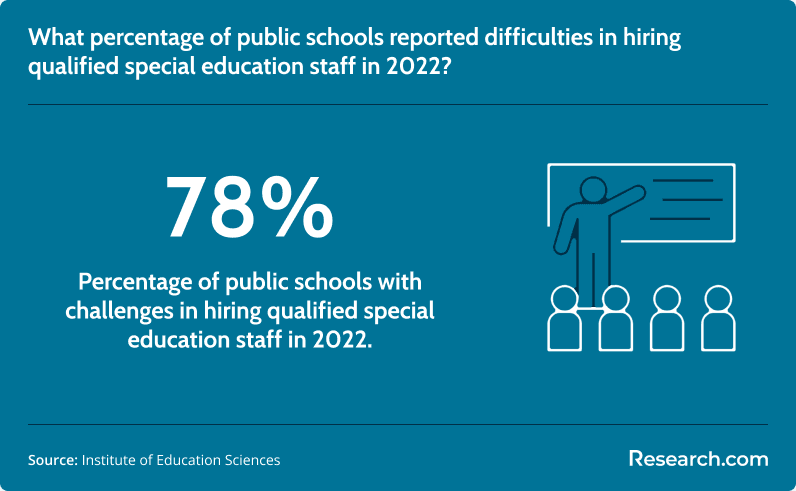
- Demand remains a major factor in this field: 65% of U.S. public schools reported a shortage of special education teachers, and over 78% of public schools reported challenges in hiring qualified special education staff in 2022.
- More than 7.5 million US students have disabilities that qualify them for Individualized Education Plans (IEPs), and during the 2022-23 school year, 7.5 million students ages 3 to 21 received special education or related services under IDEA.
- The most prevalent disability among students was specific learning disabilities, which accounted for 32% of cases.
- Special education was the main teaching assignment for 13% of public school teachers in rural areas in the academic year 2020-2021.
- Salary depends heavily on location, role, school type, experience, and graduate education. Entry-level salaries may fall in the $40,000s or $50,000s, while experienced educators in some areas may earn over $80,000 or even $90,000.
- Among public and private special education teachers in the U.S., 22.3% have completed advanced graduate studies in special education, which can support specialization, leadership, and salary advancement in some systems.
- In 2023, there were 531,600 special education teachers in both public and private schools.
- While the vast majority of special education teachers hold an education degree with relevant qualifications, only 94% of those in rural areas have a major, minor, or certification in special education compared to 96% in suburban areas.
- The best program is not simply the cheapest or most convenient. Prioritize accreditation, state licensure alignment, supervised fieldwork, transfer credit policy, total cost, and placement support.
References:
- Bureau of Labor Statistics. (2023). Special education teachers. Occupational Outlook Handbook. U.S. Department of Labor.
- Council for Exceptional Children.
- National Center for Education Statistics. (2022). Characteristics of public school teachers. (Digest of Education Statistics 2022, Table 209.42). U.S. Department of Education.
- National Center for Education Statistics. (2024). Children with disabilities. (Condition of Education 2024).
- National Center for Education Statistics. Labor force participation and employment outcomes of young adults with disabilities. (Condition of Education).
- National Center for Education Statistics. Students with disabilities. (Condition of Education).
- National Center for Education Statistics. (2022). Special Programs Survey: 2022 data on staffing, expenditures, and services.
- O*NET. (n.d.). Special education teachers.
Other Things You Should Know About Bachelor’s in Special Education
In 2027, a Bachelor’s in Special Education can lead to non-teaching careers such as educational consulting, advocacy roles, special education administration, and developmental therapy. Skills from the degree are applicable in policy-making and research positions aimed at impacting special education frameworks and policies.
Several certifications can significantly enhance your special education career prospects. Earning certifications related to specific disability areas (like autism spectrum disorders, learning disabilities, or emotional/behavioral disorders) demonstrates specialized knowledge and can make you a more desirable candidate. National board certification, while rigorous, is highly respected and signifies advanced teaching skills.
Certifications in areas like assistive technology, behavior analysis (e.g., Registered Behavior Technician or Board Certified Assistant Behavior Analyst), or specific instructional methodologies (e.g., Orton-Gillingham for dyslexia) can also set you apart and open doors to specialized roles or higher earning potential. Pursuing these certifications shows a commitment to professional growth and can lead to greater expertise, increased job opportunities, and career advancement.
In 2027, graduates with a Bachelor’s in Special Education can pursue careers as special education teachers, early intervention specialists, educational consultants, or inclusive education advocates. They can also consider roles such as case managers, curriculum developers, or transition coordinators within educational settings.


