2027 Best Online Bachelor's in Game Programming and Development for Working Adults

Co-Founder and Chief Data Scientist
Choosing an online bachelor's in game programming and development is a career investment, not just a way to study games. The Entertainment Software Association reported in 2024 that more than 190 million Americans play video games, and studios increasingly need technical talent for engines, AI systems, multiplayer infrastructure, and live-service updates. This guide is for working adults comparing flexible degree options, costs, admissions expectations, and career outcomes. You'll learn how to judge program quality, avoid common mistakes, and decide whether this degree fits your goals.
Key Things You Should Know
- The best online game programming bachelor's programs for working adults combine regional or national accreditation, hands-on engine work, C++ or C# programming, portfolio projects, and flexible pacing rather than relying only on a "game design" label.
- Cost varies widely, but College Board's 2024-25 tuition benchmarks show average published tuition and fees of $11,610 at public four-year in-state institutions and $43,350 at private nonprofit four-year institutions, so transfer credits and employer tuition benefits can materially change ROI.
- The closest U.S. labor-market category, software developers, had a May 2024 median annual wage of $133,080, but game-specific roles can be more competitive and portfolio-dependent than general software jobs.
What is an online bachelor's in game programming and development, and who is it best for?
An online bachelor's in game programming and development is a four-year undergraduate degree focused on building interactive software for games, simulations, and real-time media. Unlike a general game design degree, which may emphasize storytelling, level design, art direction, or player experience, a programming-focused degree usually centers on code, algorithms, game engines, software architecture, physics, graphics, networking, and production workflows.
For working adults, the best-fit programs are usually those that treat games as applied software engineering. That matters because many graduates pursue not only studio roles but also adjacent work in simulation, virtual training, educational technology, visualization, and interactive media. If you want a broader coding pathway with fewer game-specific courses, an accelerated computer science degree online may be a better comparison point.
This degree is usually a strong fit for adults who already enjoy problem-solving, are comfortable learning programming syntax, and want a structured path to build a portfolio while earning a bachelor's credential. It may be less ideal if you mainly want to create concept art, write game narratives, compose music, or manage esports programs, because those goals often align better with art, writing, media production, business, or design-focused degrees.
The table below clarifies which learner profiles typically match this degree and which may need a different route. Use it to avoid enrolling in a program whose curriculum does not match the role you actually want.
| Learner goal | How well this degree fits | Better alternative if needed |
| Become a gameplay, tools, engine, or systems programmer | Strong fit if the curriculum includes C++, C#, algorithms, engines, and portfolio projects | Computer science if you want maximum flexibility outside games |
| Work in technical game design | Good fit if you want to script mechanics and prototype systems | Game design if you prefer player experience and level design over code |
| Enter game art, animation, or concept design | Limited fit unless the program includes substantial visual production | Animation, digital art, or interactive media |
| Move into simulation or real-time training software | Good fit because game engines are widely used in non-entertainment settings | Software engineering or computer science for broader technical roles |
How does an online game programming and development degree compare to a campus-based program?
Online and campus-based game development degrees can lead to similar academic credentials if they are properly accredited and cover comparable technical outcomes. The practical difference is how you access labs, collaborate with classmates, meet deadlines, and build a portfolio while managing work and family responsibilities.
Working adults often prefer online programs because asynchronous lectures, recorded demos, and remote development tools make it easier to study outside standard class hours. Campus programs may offer stronger in-person studio spaces, game jams, hardware labs, and local recruiting events. Neither format is automatically better; the right choice depends on your schedule, learning style, and access to equipment.
The comparison below shows the trade-offs that matter most before you choose a format. Focus less on convenience alone and more on whether the format supports the technical practice you need.
| Factor | Online bachelor's program | Campus-based program |
| Schedule flexibility | Often better for full-time workers, especially with asynchronous courses | Usually tied to class meeting times and campus availability |
| Collaboration | Relies on Git, Discord, learning platforms, and remote team projects | Allows more in-person project work and informal peer support |
| Hardware access | Student may need a capable computer and stable internet connection | May provide labs, testing devices, VR equipment, or motion-capture spaces |
| Portfolio development | Can be strong if courses require playable builds and public repositories | Can be strong if studio courses and showcases are well supported |
| Networking | Depends on virtual events, alumni access, and faculty engagement | May offer easier local employer events and campus showcases |
A common mistake is assuming online means less rigorous. A serious online game programming program should still require frequent coding, debugging, version control, team production, and finished projects. If a school markets flexibility but does not show examples of student work, course tools, or technical requirements, ask for more detail before applying.
How can working adults choose an accredited, reputable online game development program?
Accreditation should be your first filter. In the U.S., institutional accreditation signals that a college meets recognized academic and administrative standards, which affects transfer credit, graduate school eligibility, and access to federal financial aid. Programmatic accreditation is less common for game degrees than for fields like engineering or nursing, so institutional accreditation is especially important.
After accreditation, look for evidence that the program teaches modern production skills rather than only broad creative concepts. A reputable online game programming degree should clearly publish its curriculum, faculty background, software requirements, portfolio expectations, credit-transfer policy, and student support services.
Use the following checklist when comparing schools. These questions help you separate a strong working-adult program from a program that is convenient but weak on outcomes.
- Verify institutional accreditation through the school's accreditor and the U.S. Department of Education or CHEA directories.
- Review the full course list for programming depth, including data structures, algorithms, C++ or C#, game engines, software engineering, math, graphics, physics, and networking.
- Ask whether courses require completed playable projects, team development, version control, and portfolio-ready work.
- Confirm whether credits from prior college, military training, professional certifications, or exams can reduce your time and cost.
- Check whether online students receive career coaching, technical tutoring, library access, disability accommodations, and faculty office hours.
- Ask for recent examples of capstone projects, employer partnerships, internship options, or alumni career paths without treating any outcome as guaranteed.
Red flags include vague accreditation language, pressure-heavy admissions calls, unclear total costs, no published curriculum, promises of guaranteed jobs, or a program that teaches only one tool without broader programming foundations. Game tools change, but strong fundamentals in code, math, architecture, and collaboration transfer across engines and employers.
What admission requirements and prior experience do online game programming degrees expect?
Most online bachelor's programs in game programming and development require a high school diploma or GED. Transfer-friendly programs may also request official college transcripts, placement information, a minimum GPA, or evidence of completed general education coursework. Selective programs may ask for a statement of purpose, résumé, portfolio, or prior programming experience, but many bachelor's programs are designed for beginners who can handle college-level math and structured coding practice.
Prior experience is helpful but not always required. Adults who have coded small games, used Unity or Unreal, taken community college programming courses, or built mods may adapt more quickly. However, self-taught experience does not replace the need to learn debugging, documentation, algorithms, software testing, and team workflows.
Before applying, prepare materials that help the school evaluate both your academic readiness and your transfer options. This can reduce surprises after admission.
- Official high school, GED, and college transcripts from every institution attended.
- A list of completed math, programming, computer science, art, or media courses that may transfer.
- A basic résumé showing work experience, technical projects, military training, or relevant certifications.
- Samples of code, small games, prototypes, mods, or Git repositories if the program encourages portfolio review.
- Questions about placement testing, prerequisite math, and whether introductory programming is available for beginners.
If you have been away from school for years, do not let that alone stop you. A better concern is whether you can consistently reserve time for programming practice. Game programming is learned by building and fixing systems repeatedly, not by watching lectures alone.
How long does it take to finish an online bachelor's in game development?
A traditional bachelor's degree usually requires about 120 credits and takes four years of full-time study. Working adults often take longer because they study part time, pause for work or caregiving, or spread technical courses across manageable terms. On the other hand, transfer credits, year-round enrollment, prior learning assessment, and accelerated terms can shorten the path.
The table below summarizes common completion scenarios. These are planning ranges, not promises, because each school sets its own credit requirements, term structure, and transfer limits.
| Student situation | Typical enrollment pattern | Likely timeline |
| No prior college credit | Full time | About 4 years |
| No prior college credit | Part time while working | Often 5 to 6 years |
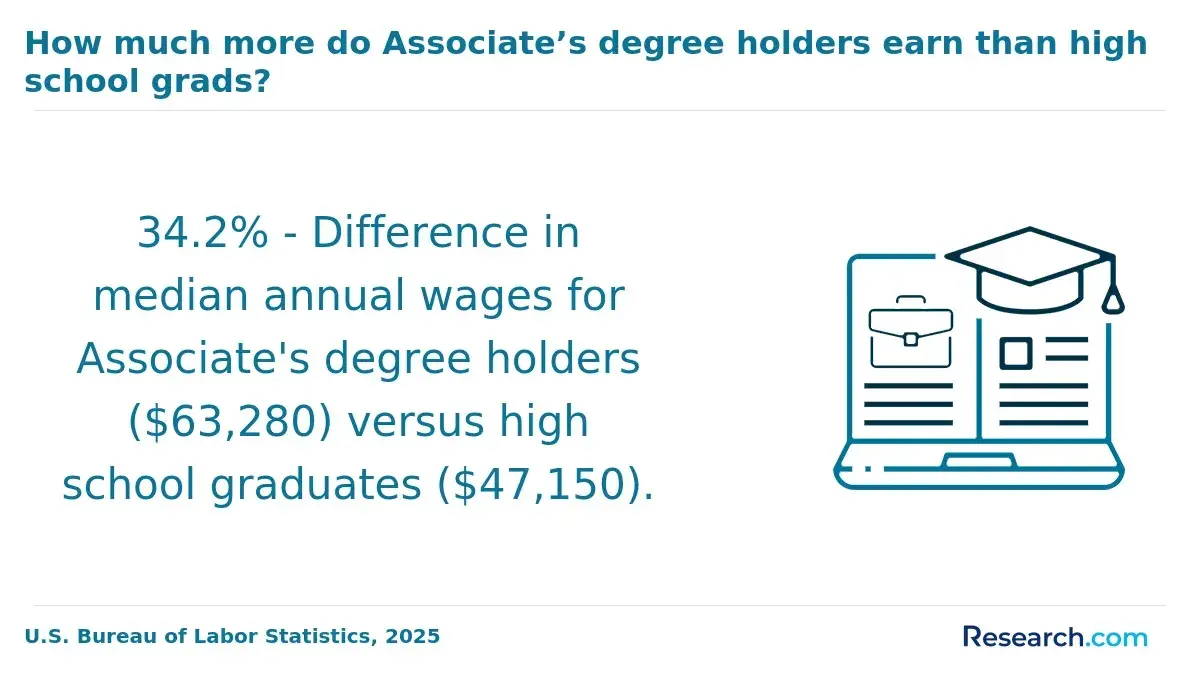
| Associate degree or substantial transfer credit | Part time or full time | Often 2 to 3 years |
| Accelerated online terms with transfer credit | Year-round study | Potentially less than 2 years, depending on accepted credits |
The fastest option is not always the best option. Heavy technical loads can be risky if you work full time, especially when courses involve programming labs, team projects, and capstones. A realistic schedule should leave time for debugging, portfolio polish, and collaboration rather than only meeting minimum assignment deadlines.
To estimate your timeline, ask an advisor for a written degree plan before enrolling. It should show accepted transfer credits, remaining courses, prerequisites, term availability, and whether any courses must be taken in sequence.
What core courses and skills are taught in online game programming curricula?
Online game programming curricula typically blend computer science, mathematics, game engine practice, and production methods. The strongest programs do not teach only how to use a single engine; they explain why systems work so graduates can adapt when tools, platforms, or studio workflows change.
Common course areas include programming fundamentals, object-oriented design, data structures, algorithms, discrete mathematics, linear algebra, physics, graphics, artificial intelligence for games, networked games, databases, software engineering, game engine scripting, user experience, quality assurance, and capstone development. Some programs also offer electives in analytics or machine learning; students interested in player behavior, monetization analysis, or game telemetry may also compare broader data science degrees.
For working adults, the most valuable skills are those that can be demonstrated in a portfolio and transferred to multiple employers. A strong curriculum should help you build these competencies over several projects, not just one final assignment.
- Programming in C++, C#, Java, or Python, with emphasis on clean structure, debugging, and performance trade-offs.
- Game engine development using tools such as Unity or Unreal Engine, including scripting, asset integration, scene management, and build pipelines.
- Math for games, including vectors, matrices, collision detection, movement, camera behavior, and physics simulation.
- Software engineering practices such as version control, testing, documentation, agile workflows, code review, and team production.
- Gameplay systems, including input, UI, progression, inventory, combat, procedural content, AI behavior, and player feedback loops.
- Networking and live-service concepts, including latency, synchronization, multiplayer architecture, backend services, and security basics.
AI is changing parts of game production, especially prototyping, asset variation, testing support, NPC behavior, and developer tooling. That does not make programming fundamentals less important. It raises the value of developers who can evaluate AI-generated code, protect intellectual property, debug complex systems, and understand how AI features affect performance and player experience.
How much does an online game programming and development degree cost, and what aid is available?
The cost of an online game programming bachelor's degree depends on tuition, fees, transfer credits, equipment, software, books, and time away from paid work. College Board's 2024-25 figures place average published tuition and fees at $11,610 for in-state students at public four-year institutions and $43,350 at private nonprofit four-year institutions. Those benchmarks are not game-degree-specific, but they help adults understand why school type, residency rules, and transfer credit can change the financial picture dramatically.
When comparing online programs, look beyond the per-credit tuition rate. A lower sticker price can become less attractive if the school accepts few transfer credits, charges high technology fees, or requires extra terms because courses are not offered frequently.
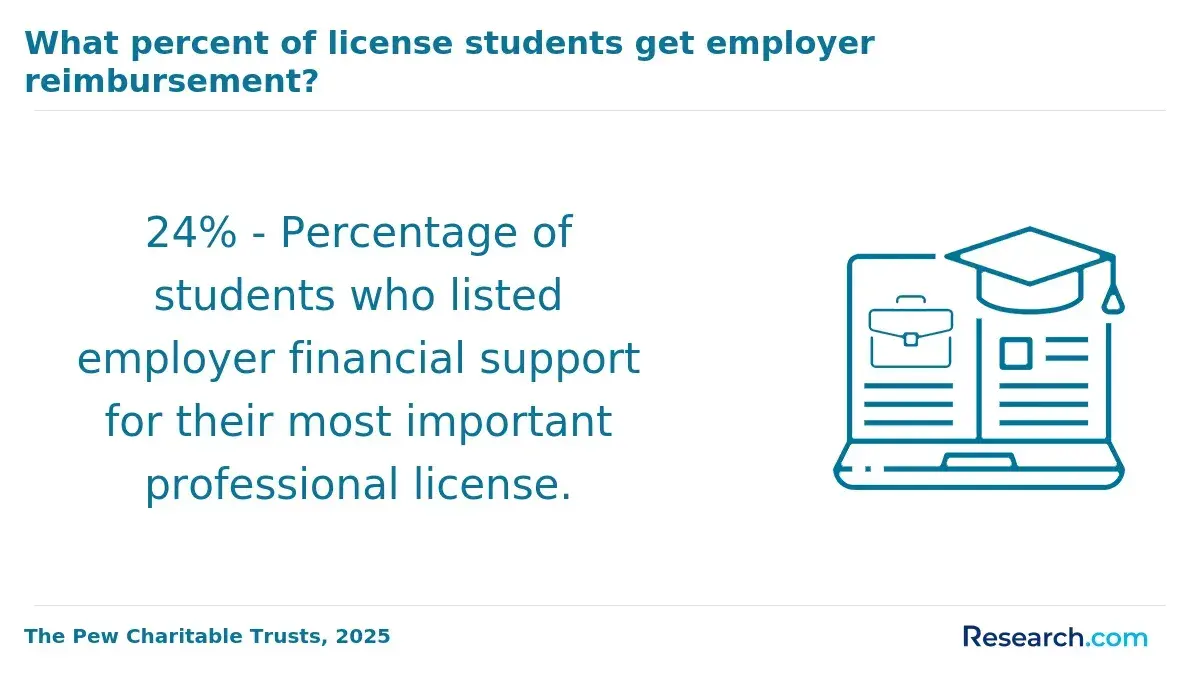
Financial aid may include federal grants, federal student loans, state aid, institutional scholarships, military and veteran benefits, employer tuition assistance, and payment plans. Federal undergraduate Direct Loan interest rates change by year; for 2025-26, the fixed rate for Direct Subsidized and Unsubsidized Loans is 6.39%, so borrowing decisions should be based on the total debt you expect to carry, not only whether monthly payments look manageable.
Students comparing online degree costs across fields can also look at how other applied programs present tuition, fees, and career fit; for example, an online exercise physiology degree may have different lab, internship, or certification costs even when the delivery format is also online.
To reduce cost, prioritize transfer evaluation before enrollment, complete the FAFSA early, ask about employer benefits, avoid repeating courses unnecessarily, and choose a pacing plan that you can finish. The cheapest program is not always the best value if it leaves you without a credible portfolio or recognized credential.
What game industry careers can graduates pursue with this online bachelor's degree?
Graduates can pursue game-specific roles and broader software roles, depending on their portfolio, technical depth, location, and willingness to work in adjacent industries. A bachelor's degree can help meet baseline education expectations, but game employers usually evaluate candidates through code samples, playable projects, technical interviews, and team experience.
The table below outlines common roles connected to game programming and development. Use it to match your coursework and portfolio to the job family you want, because "game developer" can mean very different things across studios.
| Career path | Typical responsibilities | Portfolio evidence that helps |
| Gameplay programmer | Builds mechanics, controls, camera systems, UI interactions, and player-facing features | Playable prototypes showing polished mechanics and readable code |
| Engine or tools programmer | Improves editors, build pipelines, rendering tools, asset workflows, and internal systems | Engine plugins, tools, performance improvements, or editor extensions |
| AI programmer | Creates NPC behavior, pathfinding, decision systems, and simulation logic | Demos showing behavior trees, navigation, tactical AI, or procedural systems |
| Network or multiplayer programmer | Develops online gameplay, synchronization, matchmaking, and backend integration | Multiplayer demos with clear handling of latency and state synchronization |
| Quality assurance automation tester | Tests builds, documents bugs, writes automated tests, and supports release quality | Test plans, bug reports, automated scripts, and version-control experience |
| Simulation or interactive software developer | Uses game engines for training, visualization, education, or enterprise applications | Real-time 3D projects, VR or AR demos, and user-centered technical builds |
Entry-level candidates often start in junior programmer, QA, technical designer, tools support, or associate developer roles. Advancement usually depends on shipping projects, solving production problems, mentoring others, and developing deeper specialization in systems such as rendering, networking, AI, or engine architecture.
One common mistake is building only small solo projects that look similar to tutorials. A stronger portfolio includes original decisions, documented trade-offs, team contributions, source control history, and concise explanations of what you personally built.
What are typical salaries and job outlook for game programmers and developers in the U.S.?
Salary data for game-specific job titles can be difficult to compare because studios use different titles and many government datasets group game programmers with broader software occupations. The U.S. Bureau of Labor Statistics reported a May 2024 median annual wage of $133,080 for software developers, which is the closest broad benchmark for many programming-heavy roles. This figure should be treated as a national reference point, not a promise for entry-level game jobs or any specific studio.
The table below summarizes how to interpret salary and outlook data for related roles. It is most useful for understanding the labor-market neighborhood around game programming rather than predicting an individual offer.
| Role group | Most relevant salary benchmark | How to interpret it |
| Software developers | May 2024 median annual wage: $133,080 | Useful benchmark for programming-heavy roles, including some game and simulation positions |
| Game programmers | Often compared with software developer data | Compensation varies by studio size, location, specialization, shipped experience, and platform |
| QA analysts and testers | Related benchmark rather than direct game-only figure | May align with entry routes into technical QA, automation, or build verification roles |
| Technical artists and real-time developers | May overlap with animation, software, or design datasets | Best evaluated through role-specific postings because responsibilities vary widely |
Job outlook is also strongest when viewed through broader software demand. BLS projections for software developers, quality assurance analysts, and testers show much faster-than-average growth for the 2024-34 period, reflecting continued demand for software across industries. For game-focused applicants, that means the degree may be most valuable when it leaves you employable both inside studios and in adjacent real-time software markets.
AI is likely to reshape workflows rather than remove the need for skilled programmers. Employers increasingly value developers who can work with AI-assisted tools while still understanding architecture, performance, security, and human review. If your interest is specifically in machine learning, procedural systems, or intelligent agents beyond games, compare game development curricula with the best online AI degree programs before committing.
Are certifications or professional portfolios needed alongside an online game development degree?
A degree can establish academic preparation, but a portfolio often determines whether an employer can see your ability. For game programming roles, a portfolio should show finished or near-finished work, code quality, problem-solving, technical documentation, and your specific contribution to each project. It does not need to be large; it needs to be clear, playable, and relevant.
Certifications are optional in many game programming roles, but they can help in specific contexts. Engine certifications, cloud credentials, cybersecurity basics, or project management training may support your profile if they match the job. They are rarely a substitute for a degree plus demonstrated projects, especially for programming roles that require technical interviews.
Build your career materials while you study rather than waiting until graduation. The following steps create a stronger signal for employers and help you make better use of course projects.
- Choose two to four portfolio projects that match your target role, such as gameplay systems, AI behavior, multiplayer prototypes, tools, or engine extensions.
- Use version control consistently and keep repositories organized enough for another developer to understand your work.
- Write short project summaries explaining the problem, your role, technical choices, trade-offs, and what you would improve next.
- Include playable builds or videos when possible, because recruiters and hiring managers may not compile code during an initial screen.
- Participate in game jams, open-source projects, mods, or team capstones to show collaboration and production habits.
- Practice technical interviews that cover algorithms, debugging, object-oriented design, memory, performance, and engine-specific questions.
The biggest portfolio mistake is showing quantity without clarity. A hiring reviewer should be able to tell what you built, why it matters, how it works, and whether the code reflects your current ability.
Other Things You Should Know About Game Programming & Development
Most online bachelor's programs in game programming and development require about 120 semester credit hours. That total usually includes general education, programming foundations, game design courses, and a final capstone or portfolio project. Transfer credits can reduce the remaining coursework for working adults.
Some developers enter through self-study, bootcamps, modding, QA, or indie projects. However, a bachelor's degree can help with structured learning, internships, transferability to broader software roles, and employers that prefer or require a degree.
Most require college algebra or precalculus, and stronger programs include linear algebra, discrete math, physics, or calculus concepts. You do not need to be a math expert before applying, but you should be ready to use math in movement, collision, graphics, camera systems, and simulation.
Ask about accreditation, total cost, transfer credits, weekly time expectations, required hardware, course sequencing, portfolio projects, tutoring, career services, and whether online students have access to the same faculty support and capstone opportunities as other students.
References
- How to Become a Video Game Designer | ComputerScience.org https://www.computerscience.org/careers/video-game-designer/how-to-become/
- Online Game Development Courses | Learn from Top Game Devs https://www.cgspectrum.com/courses/game-development
- Best Online Schools and Colleges to Learn Game Design & Development | The Rookies Blog https://www.therookies.co/blog/headlines/best-online-schools-and-colleges-to-learn-game-design-development
- Salaries in game development industry | InGame Job https://ingamejob.com/en/salaries
- Game Design and Development Curriculum for High Schoolers https://www.masterycoding.com/courses/game-design-and-development-curriculum
- Admissions : Campus Tuition | Full Sail University https://www.fullsail.edu/admissions/tuition
- Bachelor of Science inGame Design and Development Online or On Campus https://www.albany.edu/cehc/programs/bs-game-design-and-development
- Game Design with Code.org | Curriculum and Activities for All Ages https://code.org/en-US/curriculum/game-design
- Game Development Degrees: What You Need to Know https://www.ivywise.com/ivywise-knowledgebase/gaming-majors/