2027 Best Game Programming Degrees for Tools, Technical Design, and Engine Work

Co-Founder and Chief Data Scientist
Choosing a game programming degree is really a choice about the kind of technical problems you want to solve: rendering, engines, gameplay systems, build tools, or designer-facing workflows. The stakes are high because the U. S. Bureau of Labor Statistics projects software developer, quality assurance analyst, and tester employment to grow 17% from 2023 to 2033. This guide is for students who want the programming-heavy side of games, not just art or level design. You will learn which degree types fit engine and tools work, how to compare schools, what they cost, and which careers they can support.
Key Things You Should Know
- The strongest degree options for engine and tools work are usually computer science, software engineering, or game programming programs with substantial C++, data structures, graphics, math, systems, and collaborative game studio coursework.
- Cost should be evaluated by total attendance, not tuition alone; College Board's 2024 Trends in College Pricing reports average 2024-25 published tuition and fees of $11,610 for in-state public four-year colleges, $30,780 for out-of-state public colleges, and $43,350 for private nonprofit colleges.
- Salary outcomes vary by employer and location, but BLS May 2024 data lists the median annual wage for software developers at $133,080, making portfolio quality, internships, specialization, and school-industry connections especially important.
What are the best game programming degrees for tools, technical design, and engine work?
The best game programming degree for tools, technical design, and engine work is usually the one that gives you a computer science-level foundation while letting you apply that foundation to real-time interactive software. Employers hiring engine programmers, tools programmers, technical designers, gameplay systems engineers, and build/release engineers typically look for evidence that you can write reliable code, understand performance constraints, collaborate with designers and artists, and ship working projects.
For most students, the strongest choices fall into four degree categories. The table below compares them by fit, strengths, and trade-offs so you can match a program type to your target role instead of choosing only by the word "game" in the degree title.
| Degree type | Best fit | Why it helps engine and tools work | Main trade-off |
| BS in Computer Science with game systems electives | Students who want the widest software career flexibility | Strong algorithms, systems, math, architecture, and optimization foundation | May require building a game portfolio outside required coursework |
| BS in Game Programming or Game Development with a programming concentration | Students who want game-specific projects from the start | Often includes game engines, gameplay programming, production pipelines, and studio courses | Quality varies widely; some programs are design-heavy rather than code-heavy |
| BS in Software Engineering with interactive media electives | Students interested in tools, production systems, testing, and maintainable code | Emphasizes software design, requirements, version control, QA, and team workflows | May offer less graphics, physics, or low-level engine depth unless electives are available |
| MS in Computer Science, Game Engineering, or Interactive Technology | Students seeking advanced specialization or career switching after a technical bachelor's | Can add graphics, simulation, AI, networking, and research-level systems work | Usually assumes prior programming and math preparation |
A game programming major makes the most sense if you want to build game technology rather than primarily create story, art, levels, or business strategy. It is less ideal if you dislike debugging, math, reading documentation, or working through performance problems that may not have obvious visual payoff.
How does game programming differ from game design and general game development degrees?
Game programming focuses on how games run. Game design focuses on how games feel, how players make decisions, and how mechanics support an experience. General game development degrees may combine programming, design, art, production, audio, and business, so students need to inspect the curriculum carefully before assuming the program is technical enough for engine or tools roles.
The simplest distinction is this: a game programmer builds systems, while a game designer defines player-facing rules and experiences. Technical designers sit between those worlds, often scripting mechanics, implementing prototypes, tuning tools, and communicating constraints between designers and engineers. Students more interested in creative systems, level design, and production leadership may want to compare programming-heavy degrees with a masters in game design, especially if they already have some technical background.
Here is how the paths usually differ in practice.
| Program focus | Typical coursework | Portfolio evidence | Common roles |
| Game programming | C++, data structures, graphics, physics, AI, engine architecture, tools, networking | Engine features, gameplay systems, tools, performance demos, code samples | Gameplay programmer, tools programmer, engine programmer, systems programmer |
| Game design | Game mechanics, level design, narrative design, player psychology, prototyping, production | Playable levels, design documents, prototypes, tuning examples, user testing notes | Game designer, level designer, systems designer, narrative designer |
| General game development | Mixed coursework across art, programming, design, audio, production, and business | Team projects, capstone games, mixed media work | Associate producer, junior developer, QA, technical artist, indie developer |
If your target is engine or tools work, avoid programs where the technical sequence stops after introductory scripting. Look for multiple semesters of programming, proof that students use professional engines or build parts of engines, and capstones where programmers are responsible for complex technical systems.

Which accredited U.S. schools offer strong game engine and tools programming programs?
Several accredited U.S. institutions offer programs that can support engine, tools, gameplay systems, or technical design careers. This is not a universal ranking, because the right choice depends on cost, location, transfer credits, faculty, portfolio expectations, and whether you want a computer science-first or game studio-first environment.
The examples below are useful starting points because they are known for technical game, interactive media, computer science, or studio-based game development pathways. Always verify current accreditation, curriculum, tuition, and outcomes directly with the school before applying.
| School | Relevant program direction | Why applicants consider it for technical game work | What to verify |
| DigiPen Institute of Technology | Computer science and real-time interactive simulation pathways | Strong emphasis on C/C++, math, low-level programming, and team game projects | Workload intensity, graduation requirements, transfer credit, total cost |
| University of Southern California | Computer science games and interactive media ecosystem | Access to cross-disciplinary game production, engineering coursework, and a large alumni network | Admissions selectivity, portfolio expectations, financial aid, class access |
| Rochester Institute of Technology | Game design and development with technical coursework | Co-op culture, project-based learning, and computing infrastructure can benefit programmers | Programming depth, co-op placement patterns, elective availability |
| Worcester Polytechnic Institute | Interactive media and game development with technical options | Project-based curriculum can suit students who want applied technical design and systems work | Balance of art/design versus programming in the chosen plan |
| University of Utah | Games and computing-related pathways | Recognized game development environment with opportunities to combine technical and creative work | Which major or emphasis best fits engine programming rather than design |
| DePaul University | Game programming and game development pathways | Urban industry access, game labs, and coursework oriented around game production | Required language sequence, portfolio support, internship access |
| Southern Methodist University Guildhall | Graduate-level game development specialization | Studio-style graduate training can suit students with prior bachelor's preparation | Whether the program is appropriate for bachelor's seekers or career switchers |
Accreditation matters because it affects federal financial aid eligibility, transfer credit, graduate school options, and employer confidence. For game programming, institutional accreditation is the baseline; ABET accreditation can be a bonus for computer science or software engineering programs, but many reputable game-specific programs are not ABET-accredited. Treat ABET as a useful signal, not the only measure of quality.
What courses and skills do game programming majors emphasize for engine and tools work?
Engine and tools programmers need more than the ability to make a character move on screen. They build software that other developers depend on, so programs should teach both technical depth and production habits. A strong curriculum typically moves from programming fundamentals to real-time systems, then to team-based projects where students must solve messy integration problems.
The most important courses and skill areas usually include the following, because each one maps directly to common technical game roles.
- C++ and systems programming: Memory management, pointers, data-oriented design, debugging, performance profiling, and platform constraints.
- Data structures and algorithms: Search, sorting, graphs, spatial partitioning, pathfinding, and efficient runtime behavior.
- Computer graphics: Rendering pipelines, shaders, lighting, cameras, animation systems, and GPU-aware thinking.
- Game engine architecture: Entity-component systems, scene management, asset loading, serialization, input, audio, scripting, and editor integration.
- Tools programming: Designer-facing editors, pipeline automation, build tools, asset validation, telemetry, and workflow improvements.
- Math for games: Linear algebra, vectors, matrices, quaternions, calculus basics, probability, and numerical methods.
- Physics and simulation: Collision detection, rigid bodies, constraints, time steps, and stability trade-offs.
- Networking and multiplayer systems: Latency, replication, prediction, synchronization, and server-client architecture.
- Software engineering practices: Version control, testing, code review, documentation, modular design, and continuous integration.
- AI and procedural systems: Behavior trees, navigation, utility AI, content generation, and increasingly, responsible use of AI-assisted workflows.
AI is changing game production, but it is not replacing the need for strong engineering fundamentals. Students who want to understand machine learning, automation, and intelligent systems at a deeper level may compare game programming with an applied artificial intelligence bachelor, especially if they are interested in AI tools, simulation, procedural content, or non-game software careers.
How do online game programming degrees compare with campus-based programs?
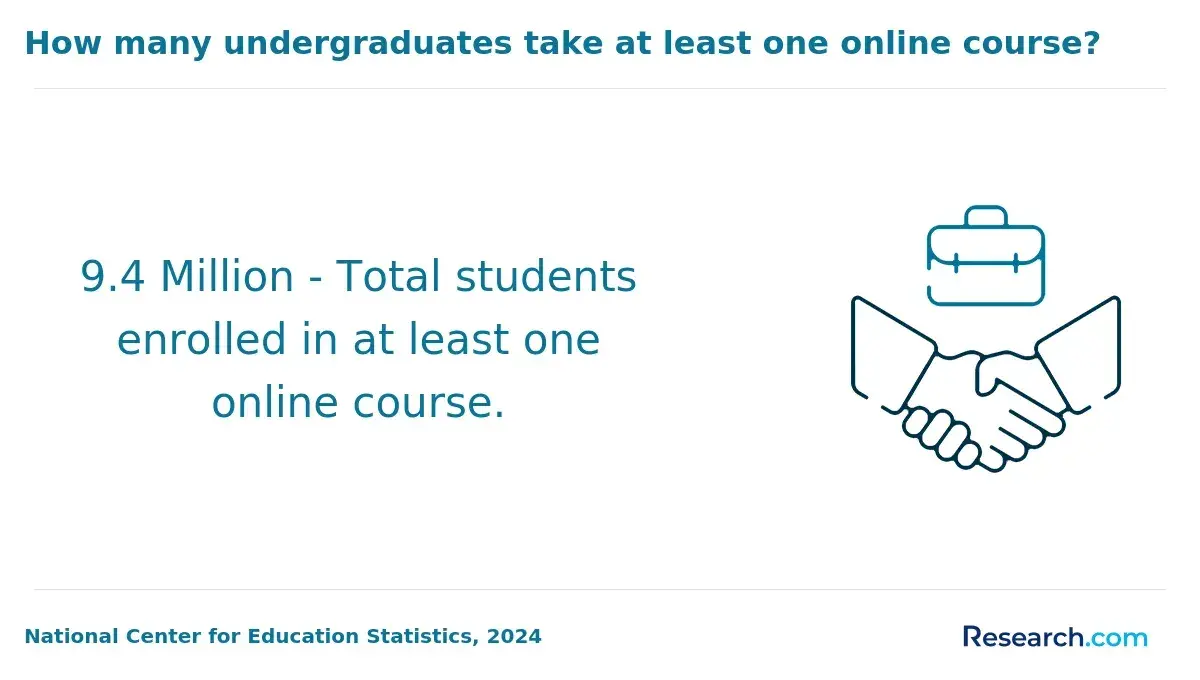
Online game programming degrees can be a good fit for disciplined students who need flexibility, already have a strong computer setup, or plan to keep working while studying. Campus-based programs often provide easier access to labs, game jams, peer teams, faculty feedback, recruiting events, and collaborative production culture. The better format depends on how much structure, networking, and hands-on support you need.
The table below summarizes the practical trade-offs. Use it to decide whether online flexibility is worth the possible loss of in-person studio intensity.
| Factor | Online program | Campus-based program | Best choice when |
| Schedule flexibility | Usually stronger, especially asynchronous courses | Often tied to studio, lab, and class schedules | Online fits working adults and students with location limits |
| Team collaboration | Can be strong if the program uses structured remote production tools | Often easier because students meet in labs and studios | Campus fits students who learn best through frequent peer interaction |
| Hardware and software access | Student may need a capable computer and stable internet | Labs may provide workstations, motion capture, VR, or testing spaces | Campus helps if specialized equipment is important |
| Portfolio development | Depends heavily on project structure and instructor feedback | Often supported by game showcases, capstones, and local events | Either can work if the portfolio requirements are rigorous |
| Career networking | May rely on virtual events and self-directed outreach | May offer stronger local employer access and alumni events | Campus may be better for students entering the industry with no network |
Before choosing an online program, ask whether students complete team-based games, use Git or similar version control, receive code review, and graduate with a public portfolio. A flexible program that lacks serious projects may be less useful than a more demanding program with visible technical outcomes.
What are typical admission requirements for competitive game programming bachelor's programs?
Competitive game programming bachelor's programs usually evaluate academic readiness, math preparation, problem-solving ability, and sometimes creative or technical portfolio evidence. Requirements vary by school, but applicants should expect a process similar to computer science admissions with extra attention to projects, motivation, and fit for collaborative game production.
Most applicants should prepare the following materials and prerequisites because they help admissions teams judge whether the student can handle programming-heavy coursework.
- High school diploma or equivalent: Colleges typically require official transcripts showing graduation or an approved equivalent credential.
- Math preparation: Algebra, precalculus, calculus, statistics, or physics can strengthen readiness for graphics, simulation, and systems courses.
- Programming experience: Prior work in C++, C#, Java, Python, or JavaScript is often helpful, even when not strictly required.
- Portfolio or project samples: Some schools request games, mods, tools, code repositories, design prototypes, or technical write-ups.
- Essay or statement of purpose: Strong essays explain why the applicant wants programming rather than only playing games.
- Letters of recommendation: Teachers, mentors, or supervisors can speak to persistence, teamwork, and technical curiosity.
- Standardized tests: Many schools are test-optional, but policies differ and may change by applicant type or scholarship consideration.
A common mistake is submitting only polished gameplay footage without explaining the technical contribution. For engine and tools-focused programs, a simple but well-documented tool, rendering demo, level editor, or systems prototype can be more persuasive than a flashy project where the applicant's coding role is unclear.
How long do game programming degrees take, and what do they cost?
A bachelor's degree in game programming, computer science, or software engineering typically takes four years of full-time study. Transfer students, students with AP or dual-enrollment credits, and accelerated learners may finish sooner, while part-time students and those in demanding studio-based programs may take longer. Master's programs commonly take one to three years depending on enrollment status and prerequisites.
Published tuition benchmarks help set expectations, but they do not show the full bill. College Board's 2024 Trends in College Pricing reports the following average 2024-25 published tuition and fees for U.S. four-year colleges:
- $11,610 for in-state students at public four-year colleges
- $30,780 for out-of-state students at public four-year colleges
- $43,350 for students at private nonprofit four-year colleges
Those figures are useful for comparison, but your real cost depends on grants, scholarships, housing, fees, equipment, health insurance, transportation, and the number of credits required. Game programming students should also budget for a capable computer, external storage, software subscriptions when not provided by the school, and possible travel to showcases, conferences, or recruiting events.
To reduce cost without weakening your education, focus on the sequence of credits and the quality of technical outcomes rather than the sticker price alone. The following steps can help you control expenses before enrolling.
- Ask for a full cost-of-attendance estimate that includes tuition, fees, housing, equipment, books, and expected annual increases.
- Confirm exactly which transfer, AP, dual-enrollment, or community college credits apply to the major, not just to general electives.
- Compare net price after grants and scholarships rather than published tuition alone.
- Check whether required software, game engines, cloud tools, and lab access are included in tuition or billed separately.
- Ask whether co-ops, internships, or paid campus technical jobs are common among students in the program.
The lowest-cost program is not automatically the best value, and the most expensive program is not automatically the strongest. The better question is whether the program helps you graduate with marketable code, shipped team projects, internships or co-ops, and a realistic debt load.
What entry-level and advanced careers can game programming graduates pursue?
Game programming graduates can pursue jobs inside game studios and in adjacent industries that use real-time 3D, simulation, visualization, tools automation, and interactive software. Because game programming is a specialized form of software development, graduates with strong fundamentals may also compete for broader software engineering roles, especially if they can demonstrate clean code and team experience.
The table below connects common roles to the kind of work graduates may do. It can help you decide which portfolio projects to prioritize while in school.
| Career path | Typical responsibilities | Portfolio evidence that helps |
| Gameplay programmer | Implements player abilities, combat, camera systems, interaction systems, and gameplay features | Playable prototypes, mechanic breakdowns, clean code samples, tuning tools |
| Tools programmer | Builds editors, pipeline tools, automation scripts, asset validators, and designer-facing workflows | Custom editor plugins, build tools, asset pipeline demos, documentation |
| Engine programmer | Works on rendering, memory, physics, performance, platform systems, and engine architecture | Rendering demos, profiling reports, engine modules, optimization case studies |
| Technical designer | Prototypes systems, scripts mechanics, tunes content, and bridges design and engineering | Design prototypes, scripting examples, system diagrams, iteration notes |
| QA automation or software development engineer in test | Builds test frameworks, catches regressions, automates gameplay or engine testing | Automated test suites, bug reports, CI examples, test tools |
| Technical artist or pipeline developer | Supports art tools, shaders, import pipelines, procedural workflows, and content optimization | Shader demos, DCC tool scripts, pipeline case studies, before-and-after workflow examples |
| Simulation or XR developer | Creates interactive training, visualization, VR/AR, digital twin, or simulation systems | Real-time demos, input systems, optimization examples, usability testing notes |
Advanced roles usually require several shipped projects, deep specialization, leadership ability, or graduate-level study. Students who become interested in analytics, player behavior, telemetry, or machine learning pipelines may later consider a data science masters online as a way to pivot toward game analytics, live operations, personalization, or broader data roles.
What salary ranges and job outlook can engine and tools programmers expect?
Most official labor data does not isolate "game engine programmer" or "tools programmer" as separate occupations, so the best U.S. benchmarks come from broader software categories. BLS May 2024 data lists the median annual wage for software developers at $133,080. That figure should be treated as a national software labor-market benchmark, not a guaranteed game-industry salary, because pay depends on studio size, region, specialization, experience, overtime practices, and whether the role is in games, simulation, enterprise software, or big tech.
The table below shows how to interpret relevant labor categories for game programming careers. It is most useful for understanding direction and career flexibility, not predicting an individual offer.
| Labor-market category | Why it matters to game programming students | Current U.S. outlook signal |
| Software developers | Closest broad match for gameplay, tools, engine, simulation, and platform programmers | BLS reports a May 2024 median annual wage of $133,080 and strong projected growth for software developer-related roles |
| Software quality assurance analysts and testers | Relevant to QA automation, build verification, engine testing, and live-service reliability | Demand is tied to software complexity, automation, and release pipelines |
| Computer and information research scientists | Relevant for advanced graphics, AI, simulation, procedural generation, and research-heavy technical roles | Often requires a graduate degree and strong math or research preparation |
| Computer programmers | Less precise for modern engineering roles but relevant to coding-heavy implementation work | Routine coding work is more exposed to outsourcing and automation than specialized software engineering |
Game industry pay can be uneven. High-demand technical specialties such as engine, graphics, networking, build systems, and tools may be more portable across industries than narrow content implementation roles. For ROI, students should build a portfolio that can serve both game studios and adjacent employers in simulation, XR, defense, education technology, visualization, robotics, or software tools.
How can students evaluate and choose a reputable game programming program?
The best way to choose a game programming program is to work backward from the role you want, then verify whether the curriculum, faculty, projects, and outcomes support that role. A strong program should make it possible to graduate with demonstrable technical skill, not just a transcript that says "game."
Use these questions when reviewing school websites, speaking with admissions counselors, and contacting current students or alumni.
- Is the institution accredited by a recognized accreditor, and does the program qualify for federal financial aid if needed?
- How many required courses use C++, data structures, algorithms, graphics, systems, software engineering, or engine architecture?
- Do students build tools, engines, plugins, or technical systems, or do they mostly use visual scripting and prebuilt templates?
- Are capstone teams structured so programmers have clear technical ownership and visible code contributions?
- Can students publish code samples, project write-ups, or portfolio materials after completing coursework?
- What internships, co-ops, studio partnerships, alumni employers, or career events are available to programming students?
- What are the program's retention, graduation, placement, and debt indicators, and how are they measured?
- How does the school support transfer students, commuters, online learners, veterans, and working adults?
Students comparing programs should also watch for red flags. The same due diligence applies across online degrees, whether you are evaluating game programming or an online degree in exercise science: accreditation, total cost, curriculum fit, and student outcomes matter more than marketing language.
The table below highlights common mistakes and better alternatives.
| Common mistake | Why it can hurt | Better alternative |
| Choosing only by rankings or brand recognition | A famous school may not offer the technical depth or affordability you need | Compare required courses, portfolio outcomes, faculty expertise, and net price |
| Assuming every game degree is programming-heavy | Some programs focus mainly on design, art, production, or introductory scripting | Count advanced programming courses and review student technical projects |
| Ignoring accreditation | It can affect financial aid, transfer credit, and graduate school options | Verify the institution's accreditor through official school and accreditor records |
| Looking only at tuition | Fees, housing, hardware, software, and delayed graduation can change total cost | Compare net price and full cost of attendance over the expected timeline |
| Waiting until senior year to build a portfolio | Internship and junior role applications often require proof of ability before graduation | Start with small technical demos, then add team projects and code write-ups each year |
| Over-specializing too early | A narrow skill set can limit options in a competitive entry-level market | Build broad software fundamentals, then specialize in tools, engines, graphics, AI, or networking |
A reputable program should make your next step clearer. By the time you enroll, you should know what technical sequence you will take, what projects you will build, how much the degree is likely to cost, and how the school helps students move from coursework to internships and entry-level roles.
Other Things You Should Know About Game Programming & Development
Pursuing a game programming degree in 2027 can significantly boost career prospects in the industry. These programs offer specialized, up-to-date training in tools, technical design, and engine work, equipping students with crucial skills and knowledge that align with current and future industry demands.
No. Many engine programmers come from computer science, software engineering, computer engineering, math, or physics backgrounds. A game-specific degree can help if it adds real-time systems projects, but strong C++, systems knowledge, graphics, math, and portfolio evidence matter more than the degree title alone.
Most programs require a high school diploma or GED, algebra readiness, and proof of basic programming or math background. Many also ask for a minimum 2.5 to 3.0 GPA, official transcripts, and placement in calculus or computer science before upper-level engine and technical design courses.
They can be respected if the school is accredited, the curriculum is rigorous, and the student can show strong technical work. Employers usually care less about the delivery format than whether you can program well, collaborate, solve problems, and demonstrate finished projects.
References
- Game Developer Skills: What You Need to Know to Succeed https://www.dice.com/career-advice/game-developer-skills-what-you-need-to-know-to-succeed
- Software Industry Job Outlook and Desired Skills https://www.compuscholar.com/schools/blog/software-industry-job-outlook-and-desired-skills/
- How Game Programming and Game Design Differ | All Art Schools https://www.allartschools.com/game-design/game-programming-vs-game-design/
- Software Developer Salary Statistics 2026: Pay by Role https://rockstardeveloperuniversity.com/software-developer-salary-statistics/
- Game Development https://online.champlain.edu/degrees-certificates/bachelors-game-development
- Game Programming Bachelor’s Degree at University of Advancing Technology https://www.uat.edu/game-programming-degree
- Circuit Stream · Your Guide to the Different Career Pathways You Can Take in the Game Development Industry https://www.circuitstream.com/blog/your-guide-to-the-different-career-pathways-you-can-take-in-the-game-development-industry
- The Difference Between Game Programming and Development https://www.cgspectrum.com/blog/difference-between-game-programming-and-game-development
- Considering an MS in Game Development? 5 Key Factors to Evaluate a Potential Program https://www.princetonreview.com/grad-school-advice/game-design/key-factors-grad-game-program
- 5 Programming Languages of the Future (and Their Salary Outlook) https://dev.to/farhadrahimiklie/5-programming-languages-of-the-future-and-their-salary-outlook-227o