2027 Online Game Programming and Development Degrees That Help Build Playtesting and Iteration Skills

Co-Founder and Chief Data Scientist
Choosing an online game programming and development degree is really a question of fit: will the program help you build playable systems, test them with users, and improve them through iteration? That matters because the Entertainment Software Association reported in 2024 that 190.6 million Americans play video games, making quality, accessibility, and performance central to modern game work. This guide is for prospective students comparing online degrees, costs, career outcomes, and skill-building options so they can choose a program that supports real game development goals.
Key Things You Should Know
- Online game programming degrees are strongest for students who want structured training in coding, engines, gameplay systems, debugging, version control, and portfolio projects rather than only game design theory.
- Cost varies widely: College Board's 2024-25 national tuition benchmarks list average published tuition and fees of $11,610 for in-state public four-year colleges and $43,350 for private nonprofit four-year colleges.
- BLS May 2024 wage data places the median annual wage for software developers at $133,080, but game-specific outcomes depend heavily on portfolio quality, engine experience, location, studio type, and role specialization.
What is an online game programming and development degree, and who is it best for?
An online game programming and development degree is a college program that teaches students how to build interactive software for games, simulations, XR experiences, and real-time applications. Unlike a general game design degree, which may focus more on mechanics, storytelling, level design, or player experience, a programming-focused degree emphasizes code, engines, systems, tools, performance, and technical problem-solving.
This path is best for students who enjoy both creative work and technical detail. A good candidate is comfortable learning programming languages, fixing bugs, reading documentation, collaborating with artists and designers, and testing whether a game actually works for players. It can also fit working adults who need a flexible format but still want project-based learning and faculty feedback.
Students comparing technology paths should be honest about their preferred problems. If you are more interested in decentralized finance, smart contracts, and digital asset systems than gameplay, a blockchain school may align better than a game development program.
The table below summarizes common degree levels and when each option usually makes sense. Use it to match the credential to your current experience, budget, and career goal rather than assuming the longest program is always the best choice.
| Program type | Typical focus | Best fit | Important trade-off |
| Certificate | Game engines, scripting, portfolio pieces, or a specific toolset | Students with prior programming experience or career changers testing the field | May not provide the broader computer science foundation many employers prefer |
| Associate degree | Introductory programming, math, engines, art pipeline basics, and general education | Students seeking a lower-cost start or transfer pathway | Career options may be narrower without a bachelor's degree or strong portfolio |
| Bachelor's degree | Programming, algorithms, gameplay systems, production, testing, and capstone projects | Most students targeting entry-level technical roles in games or interactive software | Requires more time and money, so program quality and transfer policy matter |
| Master's degree | Advanced graphics, AI, simulation, research, technical leadership, or specialized production | Experienced developers, computer science graduates, or students pursuing advanced technical roles | Usually not necessary for many entry-level game developer roles |
A game programming degree may not be the right investment if you mainly want to write game stories, create concept art, compose music, or manage esports events. Those goals can still connect to the game industry, but they usually require different portfolios and coursework.
How do online game programming and development degrees build playtesting and iteration skills?
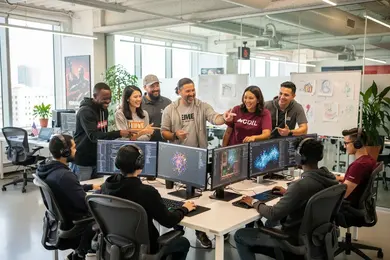
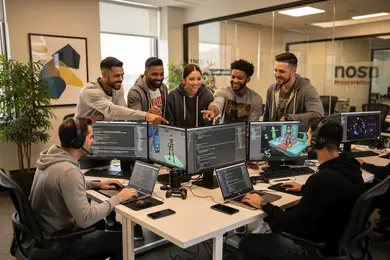
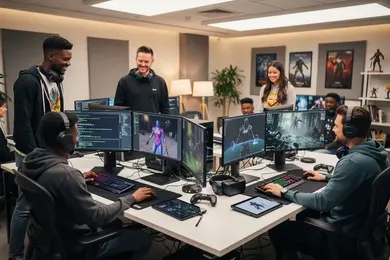
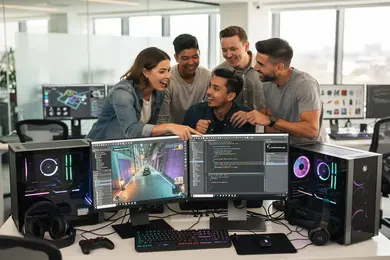
Playtesting is the process of observing players as they interact with a game to identify bugs, balance issues, usability problems, pacing concerns, and unclear mechanics. Iteration is the cycle of changing the game based on evidence, testing again, and refining until the experience becomes more stable, engaging, and understandable.
Online degrees can build these skills when they require students to move beyond "make a prototype" assignments and into structured testing, feedback analysis, and revision. The best programs treat playtesting as part of development, not as a final step before submission.
A strong online course sequence usually trains students to follow a repeatable iteration cycle. This sequence matters because employers want developers who can improve a game based on evidence rather than defending their first idea.
- Build a small playable prototype that tests one mechanic, system, or interaction.
- Define what the playtest should measure, such as confusion points, completion time, bug frequency, or difficulty balance.
- Recruit testers who resemble the intended audience instead of relying only on classmates or friends.
- Observe behavior, collect notes, and separate player problems from player preferences.
- Prioritize fixes based on severity, development effort, and impact on the intended experience.
- Revise the build, document the change, and run another test to see whether the problem improved.
Online programs support this cycle through recorded play sessions, discussion boards, remote testing tools, version control repositories, peer critiques, and capstone reviews. Students should look for courses that require multiple submissions of the same project because revision-based grading more closely resembles studio production.
Artificial intelligence is also changing how students test and iterate. Developers increasingly use AI-assisted debugging, procedural content tools, automated test scripts, telemetry analysis, and NPC behavior systems. However, AI does not replace human playtesting because games must still be evaluated for emotion, clarity, fairness, accessibility, and fun.
What game programming and development courses are typically included in online curricula?
Online game programming curricula usually combine computer science fundamentals with game-specific production work. The strongest programs help students understand not only how to use an engine, but why systems behave the way they do under performance, memory, network, and player-behavior constraints.
The table below outlines common courses and the practical skills they are meant to build. When comparing schools, check whether these topics appear as full courses, short modules, or optional electives because that difference can affect portfolio depth.
| Course area | What students learn | Why it matters for game development |
| Programming fundamentals | Variables, functions, object-oriented design, data structures, and debugging | Creates the base needed to build reliable gameplay systems |
| Game engine development | Unity, Unreal Engine, scripting, prefabs, blueprints, scenes, assets, and build settings | Shows students how real-time projects are assembled and deployed |
| Gameplay systems | Input, character movement, combat, inventory, scoring, progression, and user interface logic | Connects code directly to player-facing mechanics |
| Computer graphics | Rendering pipelines, shaders, lighting, cameras, and optimization basics | Helps students troubleshoot performance and visual behavior |
| Game physics and math | Vectors, collision, forces, motion, probability, and spatial reasoning | Supports movement, simulation, hit detection, and responsive controls |
| Networking and multiplayer systems | Client-server architecture, synchronization, latency, matchmaking, and security basics | Prepares students for online games and live-service environments |
| Quality assurance and playtesting | Test plans, bug reports, player observation, accessibility checks, and regression testing | Builds the iteration habits needed to improve playable builds |
| Production and team projects | Agile workflows, version control, sprint planning, documentation, and milestone reviews | Mirrors the collaboration expected in studios and software teams |
Some students strengthen game projects by adding analytics, machine learning, or data visualization skills. If you want to focus on player behavior, monetization analysis, recommendation systems, or game telemetry, comparing a game development curriculum with a data science degree can clarify whether your ideal role is development, analytics, or a hybrid of both.
Students should also review the programming languages used in the curriculum. C# is common in Unity programs, C++ is important for Unreal Engine and performance-sensitive systems, and Python may appear in tooling, automation, data analysis, or AI-related coursework. A program that teaches only visual scripting can be useful for designers, but it may be too limited for students seeking programming-heavy roles.
How do online game programming and development programs compare to campus-based options?
Online and campus-based game programming programs can lead to similar outcomes when the online option includes rigorous projects, instructor feedback, team collaboration, and portfolio review. The delivery format matters less than the evidence that students build, test, revise, and ship playable work.
The comparison below shows where online and campus programs often differ. Use it to decide which learning environment supports your schedule, motivation, technical setup, and networking needs.
| Factor | Online degree | Campus-based degree | Decision point |
| Schedule | Often more flexible, especially for working adults | Usually more fixed around class meetings and lab times | Choose online if you need flexibility; choose campus if structure keeps you accountable |
| Collaboration | Uses remote teams, repositories, video meetings, and asynchronous critique | Offers face-to-face labs, clubs, game jams, and studio spaces | Online can work well if the program intentionally teaches remote production |
| Hardware access | Students may need their own capable computer and peripherals | Campus labs may provide high-end machines and specialized equipment | Include equipment costs when comparing total price |
| Networking | Depends on virtual events, alumni access, Discord communities, and portfolio showcases | May offer more in-person recruitment events and local studio connections | Ask how online students meet employers and alumni |
| Feedback quality | Can be strong if instructors review builds, code, and playtest data | Can be strong through live critique and studio-style review | Format alone does not prove quality; feedback frequency does |
Students who are also considering AI-heavy technical paths may want to compare game AI electives with an online artificial intelligence degree. A game program is usually better for engine-based interactive work, while an AI degree may be stronger for machine learning, automation, data modeling, and advanced algorithmic roles outside games.
Online study is not easier by default. Game projects require sustained troubleshooting, regular file management, communication with teammates, and comfort asking for help when builds fail. Students who need frequent hands-on lab support may prefer a campus program or a hybrid option.
What admission requirements and prerequisites do online game programming degrees commonly have?
Admission requirements vary by school and degree level, but online game programming programs commonly look for evidence that a student can handle technical coursework. Bachelor's programs may admit first-year students with no prior game experience, while upper-division, transfer, or graduate programs may expect previous programming, math, or portfolio work.
Before applying, students should review both formal admission requirements and practical readiness expectations. The items below are common because game programming depends on logical thinking, technical persistence, and project follow-through.
- High school diploma, GED, or equivalent credential for undergraduate admission.
- Official transcripts from high school and any prior colleges attended.
- Minimum GPA requirement, which varies by institution and may be higher for transfer or graduate admission.
- College algebra, precalculus, statistics, or discrete math preparation, depending on program rigor.
- Introductory programming experience in C#, C++, Java, Python, or a similar language for some advanced programs.
- Personal statement, admissions essay, or statement of career goals for selective programs.
- Portfolio, GitHub repository, playable prototype, or prior creative work for programs that use project-based admission review.
- English proficiency documentation for applicants whose prior instruction was not in English.
Prerequisites should not be treated as obstacles only. They are also signals of program expectations. If a school requires calculus, C++, or object-oriented programming, the curriculum may be more technically demanding than a program centered on design tools and visual scripting.
A common mistake is applying only to programs with the fastest admission process. A better approach is to ask whether admitted students receive placement guidance, tutoring, bridge courses, or coding refreshers. These supports can matter more than a simple acceptance decision, especially for adults returning to school or students switching from nontechnical majors.
How long do online game programming and development degrees take, and what do they cost?
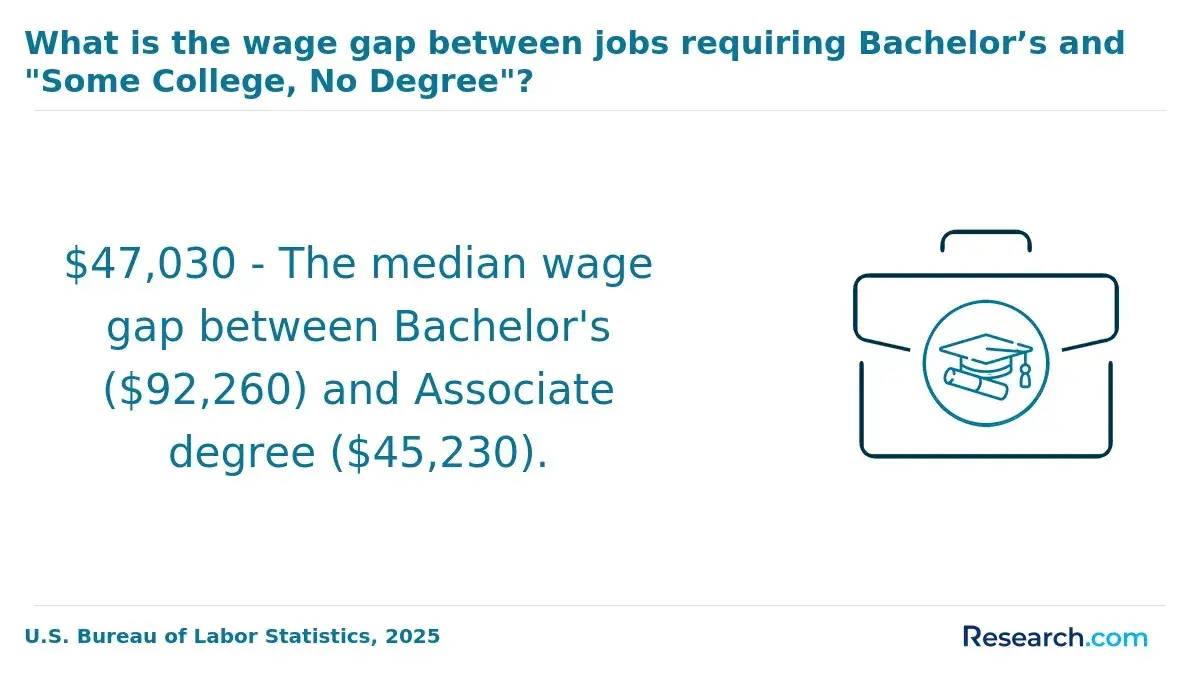
Most online bachelor's degrees in game programming and development take about four years of full-time study, while associate degrees often take about two years and certificates can range from a few months to a year. Part-time students may need longer, but transfer credits, prior learning assessment, summer terms, and accelerated course formats can shorten the timeline.
Cost depends on tuition, fees, technology requirements, transfer credit acceptance, residency rules, and whether the institution is public, private nonprofit, or private for-profit. College Board's 2024-25 national published tuition and fee benchmarks provide a useful starting point for understanding how broad the market can be:
- $11,610 average published tuition and fees for in-state students at public four-year institutions.
- $30,780 average published tuition and fees for out-of-state students at public four-year institutions.
- $43,350 average published tuition and fees at private nonprofit four-year institutions.
These figures are not game-degree-specific prices, and many students pay less after grants, scholarships, employer tuition assistance, military benefits, or transfer credits. Still, they help students avoid a major mistake: comparing only per-credit tuition while ignoring total credits, fees, software, hardware, and time to completion.
Students should estimate total cost before enrolling. The following steps help reveal the real price of an online game programming degree, not just the advertised rate.
- Multiply tuition by the exact number of credits required for the degree.
- Add mandatory online learning fees, technology fees, graduation fees, and course-specific lab fees.
- Estimate hardware costs for a computer that can run the required game engine, development tools, and testing builds.
- Ask how many transfer credits will apply to the major, not only to general electives.
- Compare net price after grants and scholarships rather than relying on sticker price.
- Check whether dropping to part-time study affects scholarships, financial aid eligibility, or completion time.
Accelerated programs can be valuable for motivated students who already have credits or professional experience. However, faster is not always better in game development because portfolio projects need time for testing, revision, polish, and documentation.
How can students verify accreditation and program quality for online game development degrees?
Accreditation is one of the most important quality checks for any online degree. In the U.S., students should first verify institutional accreditation from an agency recognized by the U.S. Department of Education or the Council for Higher Education Accreditation. This affects transfer credit, federal financial aid eligibility, graduate school options, and employer confidence.
Game programming programs may not always have a specialized accreditation label, so students should look at several quality indicators together. The following checks help separate legitimate online degrees from weak programs with attractive marketing.
- Confirm the institution's accreditation status directly through recognized accreditation databases, not only the school's website.
- Review the curriculum for programming depth, math expectations, engine experience, testing methods, and capstone requirements.
- Ask whether online students complete team-based projects using version control and documented production workflows.
- Request examples of student portfolios, capstone showcases, or playable projects from recent cohorts.
- Check faculty backgrounds for game development, software engineering, technical art, simulation, or interactive media experience.
- Ask how career services support online students, including resume reviews, portfolio feedback, mock interviews, and employer events.
- Look for transparent graduation, retention, transfer, and student debt information when available.
Red flags include vague accreditation language, pressure to enroll immediately, no clear faculty directory, limited curriculum details, no code-heavy coursework for a programming degree, or promises of specific jobs and salaries. A reputable program should be willing to explain its outcomes and limitations clearly.
Program quality also depends on assessment design. A course that grades only final submissions may not teach iteration well. A stronger course asks students to submit prototypes, collect feedback, revise, document bugs, and explain why each change improved the player experience.
What entry-level and advanced careers can a game programming and development degree support?
A game programming and development degree can support careers in game studios, software companies, simulation firms, educational technology, defense training, healthcare visualization, XR production, and interactive media. The exact role depends on the student's portfolio, technical strengths, internships, networking, and willingness to start in adjacent positions.
The table below connects common roles with responsibilities and degree relevance. Use it to identify which portfolio projects and electives would make the strongest evidence for each path.
| Career path | Typical responsibilities | How the degree can help | Portfolio evidence to build |
| Junior gameplay programmer | Implements mechanics, controls, UI logic, combat systems, and player interactions | Provides engine practice, programming fundamentals, and team project experience | Playable mechanics, clean code samples, and before-and-after iteration notes |
| Game systems programmer | Builds progression, inventory, AI behavior, tools, save systems, and internal frameworks | Strengthens architecture, data structures, debugging, and documentation skills | Modular systems, technical writeups, and performance-conscious design |
| Quality assurance tester or QA analyst | Finds bugs, writes test cases, verifies fixes, and communicates issues to developers | Develops testing discipline and understanding of how games are built | Bug reports, test plans, regression examples, and automation scripts if possible |
| Technical designer | Bridges design and programming by scripting mechanics, balancing systems, and prototyping features | Combines engine fluency with player-experience thinking | Playable prototypes with documented design goals and test findings |
| Tools programmer | Creates internal tools that help artists, designers, and developers work faster | Builds software engineering habits useful beyond entertainment games | Editor extensions, pipeline tools, automation scripts, and usability notes |
| Simulation or XR developer | Creates interactive training, visualization, VR, AR, or real-time simulation applications | Transfers game engine skills to industries outside entertainment | Interactive demos, performance optimization examples, and user testing results |
Some students discover that they prefer preserving, organizing, teaching, or researching media rather than building games directly. In that case, a library science degree may be more relevant for roles involving digital collections, archives, metadata, educational resources, or information access.
Entry-level paths often begin with internships, QA, junior developer roles, technical design support, or contract work. Advanced roles may include senior gameplay programmer, lead programmer, technical director, engine developer, producer with technical expertise, or simulation architect. Advancement usually requires shipped projects, strong collaboration, and the ability to explain technical decisions to nonprogrammers.
What salary ranges and job outlook can game programmers and developers expect in the U.S.?
Game industry salaries vary widely because "game developer" is not a single standardized occupation. Compensation depends on whether the role is closer to software development, QA testing, technical art, animation, design, or production. Location, studio size, union status where applicable, remote work policy, platform specialization, and shipped-title experience can also affect pay.
BLS wage data is useful because it provides standardized U.S. labor market benchmarks, even though it does not isolate every game-specific job title. The table below uses related occupations to give students a realistic salary context without implying guaranteed outcomes.
| Related U.S. occupation | BLS May 2024 median annual wage | How it relates to game programming |
| Software developers | $133,080 | Closest broad benchmark for many programming-heavy game and interactive software roles |
| Software quality assurance analysts and testers | $102,610 | Relevant for QA, test automation, and quality-focused game development roles |
| Computer programmers | $98,670 | Useful for coding-focused roles, though many employers now classify developers under broader software titles |
| Special effects artists and animators | $99,060 | Relevant to technical art, animation systems, and real-time visual production, though not purely programming-focused |
The job outlook is strongest when students build transferable software skills. BLS projections published in 2024 expected employment for software developers, quality assurance analysts, and testers to grow 17% from 2023 to 2033, much faster than the average for all occupations. For readers, this means the safest strategy is to choose a program that teaches broadly applicable programming and testing skills, not only one engine or one genre.
Students should be cautious about salary claims from schools, bootcamps, or influencers. A high median wage in a broad software occupation does not mean every new graduate will enter a high-paying game role. Entry-level game positions can be competitive, and some graduates improve their options by applying to adjacent industries that use game engines, such as simulation, training, architecture visualization, healthcare, or education technology.
Are there industry certifications or portfolios that strengthen game programming career prospects?
Certifications are not usually required for game programming jobs, but they can help students show tool fluency, especially when paired with a strong portfolio. Employers generally care more about whether applicants can build, debug, explain, and improve a working project than whether they have a standalone badge.
The most useful credentials and portfolio assets are those that prove practical competence. Students should prioritize evidence that hiring teams can inspect, play, or review.
- Engine certifications, such as Unity or Unreal Engine credentials, can support entry-level credibility when the student also has playable projects.
- Cloud or platform certifications may help students interested in multiplayer infrastructure, backend services, live operations, or scalable game systems.
- Programming language coursework or certificates can be useful when they include C++, C#, Python, data structures, testing, and code review.
- Accessibility training can strengthen projects by showing that the student understands inclusive design, readable interfaces, remappable controls, and usability barriers.
- Agile, Scrum, or project management training may help students seeking producer, technical lead, or team coordination roles later in their careers.
A game programming portfolio should not be a folder of unfinished experiments. It should make a clear case that the student can solve real development problems. A strong portfolio usually includes a playable build, short gameplay video, code samples, a concise technical writeup, a list of tools used, and a description of testing and iteration decisions.
Students can strengthen career prospects by following a practical portfolio plan before graduation. These steps help turn coursework into job-search evidence.
- Choose two or three polished projects instead of showing every class assignment.
- For each project, explain the technical problem, the design goal, and the player experience you were trying to improve.
- Include at least one project that demonstrates iteration based on playtest feedback.
- Use version control and write clear commit messages so reviewers can see professional workflow habits.
- Document bugs you fixed, performance issues you improved, and trade-offs you made.
- Ask instructors, peers, or developers to review the portfolio before applying for jobs.
The biggest mistake is treating the degree itself as the portfolio. The degree can provide structure, feedback, and credibility, but the hiring conversation usually centers on what the student has built and how well they can discuss it.
Other Things You Should Know About Game Programming & Development
It can be worth it if the program is accredited, technically rigorous, portfolio-based, and affordable relative to your goals. It is less likely to be worth it if it lacks programming depth, offers little feedback, or does not help you produce playable, revised projects.
Playtesting is essential in a game development degree as it provides real-world experience in understanding user feedback and refining game mechanics. In 2027, online programs focus on iterative processes, emphasizing on building these critical skills to enhance gameplay and user satisfaction.
Courses in game systems design, user experience testing, agile development, and playtest analysis build those skills. Many bachelor’s programs require about 120 semester credits, with a capstone that uses player feedback, bug tracking, and repeated prototype revisions before graduation.
References
- Game Developer Certifications: Best Credentials to Advance Your Career | Teal https://www.tealhq.com/career-paths/game-developer-certifications
- Intro to Game Development: Course | Codecademy https://www.codecademy.com/learn/introduction-to-game-development
- Online Game School | Everything You Need to Know - CodaKid https://codakid.com/online-game-school/
- Career Path and Salary for Video Game Designers | ComputerScience.org https://www.computerscience.org/careers/video-game-designer/career-outlook-and-salary/
- Online Game Development Courses | Learn from Top Game Devs https://www.cgspectrum.com/courses/game-development
- Circuit Stream · Your Guide to the Different Career Pathways You Can Take in the Game Development Industry https://www.circuitstream.com/blog/your-guide-to-the-different-career-pathways-you-can-take-in-the-game-development-industry
- Online Game Development Courses: The Path to Mastering Virtual Worlds and Career Success https://macrobiangames.com/blog/online-game-development-courses/
- How to Land Entry Level Game Design Jobs Without a Degree https://gamedesignskills.com/game-design/entry-level-game-design-jobs-without-degree/
- Game Development Bachelor's Degree https://www.fullsail.edu/degrees/game-development-bachelor
- Learn game development | edX https://www.edx.org/learn/game-development