2027 Online Game Programming and Development Degrees With Practice-Ready Technical Curricula

Co-Founder and Chief Data Scientist
You are choosing more than a game degree; you are choosing a technical pathway into software, interactive media, simulation, and real-time 3D development. The U. S. Entertainment Software Association reported in 2024 that 190.6 million Americans play video games, which helps explain why employers need developers who can build reliable, engaging, cross-platform experiences. This guide is for prospective online students comparing accredited game programming degrees. You will learn what these programs teach, what they cost, how online formats work, and how to judge whether the investment fits your career goals.
Key Things You Should Know
- Accredited online game programming degrees usually combine computer science fundamentals, C++ or C#, game engines, 3D math, graphics, gameplay systems, debugging, version control, and portfolio-based capstone work.
- The strongest labor-market comparison is the broader software developer category: BLS data published for May 2024 lists a median annual wage of $133,080, while the 2024-2034 outlook projects 15% growth for software developers, quality assurance analysts, and testers.
- Cost varies widely by institution, but College Board's 2024 pricing benchmarks show published tuition and fees of $11,610 for in-state public four-year students, $30,780 for out-of-state public students, and $43,350 for private nonprofit four-year students before aid.
What is an online game programming and development degree and who is it best for?
An online game programming and development degree is a college program that prepares students to design, build, test, and optimize interactive software. Unlike a general game design program, which may emphasize storytelling, level design, user experience, or art direction, a programming-focused degree is usually more technical. Students learn to write code, use game engines, implement gameplay mechanics, manage assets, work with physics and graphics systems, and ship playable projects.
This degree is best for students who enjoy both creative problem-solving and rigorous technical work. If you like building prototypes, fixing bugs, learning new tools, and collaborating with artists or designers, the fit can be strong. If you mainly want to write stories, create concept art, compose music, or manage esports communities, a more specialized design, animation, media, or business program may be better.
Students should also understand the difference between a game-specific degree and a broader computing degree. A game programming major can help you build a targeted portfolio, but an online computer science degree may offer wider flexibility for software engineering, cybersecurity, cloud computing, or systems development roles outside games.
The table below compares common student goals with the most sensible education path. Use it to decide whether a game programming degree is the right investment or whether another credential would keep more doors open.
| Student goal | Best-fit pathway | Why it may fit | Possible drawback |
| Become a gameplay programmer | Game programming bachelor's degree | Builds coding depth, engine experience, and playable portfolio projects | May be narrower than computer science if the student later leaves games |
| Work in general software development | Computer science or software engineering degree | Covers algorithms, systems, databases, and software design in broader depth | May include fewer game-specific projects unless electives are available |
| Create game art or animation | Game art, animation, or digital media degree | Focuses on visual production, tools, and portfolio style | Usually does not provide enough programming depth for developer roles |
| Build educational simulations or XR tools | Game development, computer science, or interactive media degree | Combines real-time 3D skills with applied software development | Program quality depends heavily on access to engines, labs, and faculty expertise |
| Change careers quickly | Certificate, bootcamp, or post-baccalaureate option | Can focus on a specific engine or programming language | May not carry the same weight as a degree for employers requiring a bachelor's |
A strong candidate for this degree is not just someone who "likes games." The better indicator is whether you enjoy the process behind games: version control, iteration, code review, performance testing, user feedback, and shipping imperfect prototypes on deadlines.
How do online game programming degrees compare to campus-based programs in format and outcomes?
Online and campus-based game programming programs can lead to similar academic outcomes when they are accredited, project-based, and supported by qualified faculty. The difference is usually not the diploma itself, but the learning environment: online students need stronger self-management, while campus students may have easier access to physical labs, local clubs, and in-person team projects.
Online programs commonly use asynchronous lectures, live critique sessions, virtual labs, cloud-based development environments, discussion boards, source-control repositories, and team production courses. Campus programs may provide motion-capture spaces, physical usability labs, esports facilities, or studio-style production rooms. Either format can work if the curriculum requires students to build, test, revise, and present real projects.
The comparison below shows the practical trade-offs that matter most before enrollment. It is especially useful if you are deciding between a flexible online program and a more immersive campus experience.
| Factor | Online game programming degree | Campus-based game programming degree | Decision point |
| Schedule | Often asynchronous or hybrid with deadlines | Set class times and studio schedules | Online may fit working adults; campus may fit students who want daily structure |
| Collaboration | Remote teams, Git repositories, video meetings, project boards | In-person teams, labs, studio sessions, local showcases | Both can work if team production is required and assessed |
| Equipment | Student usually needs a capable computer and stable internet | School may provide labs, workstations, and specialized equipment | Online cost estimates should include hardware and software requirements |
| Portfolio building | Depends on project frequency, feedback, and capstone quality | Often supported by studio culture and peer critique | Choose the program that produces stronger finished work, not the format that sounds easier |
| Networking | Virtual career fairs, Discord or Slack communities, online showcases | Campus clubs, local studios, alumni events, faculty introductions | Online students should ask how the school supports employer visibility |
Outcomes depend less on whether a program is online or in person and more on whether students graduate with demonstrable skills. Employers in technical game roles often review code samples, GitHub activity, shipped prototypes, team projects, problem-solving ability, and engine experience alongside the degree.
Online students should be realistic about workload. Game programming courses can be time-intensive because projects often require debugging, asset integration, playtesting, and documentation outside scheduled class time. A flexible schedule does not mean a lighter curriculum.
What types of accredited online game programming and development degrees are available?
Accredited online game programming and development degrees are available at multiple academic levels. The right level depends on your current education, target role, budget, timeline, and whether you need a full degree or a shorter skill upgrade.
The table below summarizes the most common credential types. It can help you compare how each option fits different career goals and levels of technical preparation.
| Credential type | Typical length | Common focus | Best for | Important limitation |
| Certificate | Several months to 1 year | Unity, Unreal Engine, C#, C++, game design tools, or portfolio projects | Students testing the field or professionals adding a specific skill | May not meet degree requirements for many software roles |
| Associate degree | About 2 years full time | Introductory programming, game scripting, math, digital media, and general education | Students seeking lower-cost entry or transfer preparation | Career options may be more limited without a bachelor's degree |
| Bachelor's degree | About 4 years full time | Programming, data structures, engines, graphics, AI for games, software engineering, capstone development | Students targeting gameplay, tools, engine, QA automation, simulation, or interactive software roles | Requires the largest time and cost commitment |
| Master's degree | About 1 to 3 years | Advanced graphics, simulation, XR, game systems, research, production, or technical leadership | Students with a computing background seeking specialization or advancement | Not always necessary for entry-level game programming jobs |
Accreditation matters because it affects credit transfer, graduate school eligibility, employer recognition, and access to federal financial aid. In the U.S., students should first confirm institutional accreditation through a recognized accreditor. Some computing programs may also hold specialized accreditation, such as ABET accreditation, though not every credible game development program has it. ABET can be valuable for students who want a more engineering-oriented computing credential, but the absence of ABET does not automatically mean a game program is low quality.
Degree names can vary widely. You may see programs called game programming, game development, game software development, interactive media, simulation and game design, computer science with a game development concentration, or software engineering with interactive systems electives. Read the course list carefully because two programs with similar names can have very different technical depth.
What core technical curriculum and practice-ready courses do these programs typically include?
Practice-ready curricula should teach students how to build working interactive software, not just discuss games conceptually. A strong online game programming degree usually blends computer science foundations, engine-based development, software production habits, and repeated portfolio projects.
The core technical areas below are the ones students should expect to see in a serious programming-focused program. If several of these are missing, the degree may be closer to game design or digital media than software development.
- Programming fundamentals using languages such as C++, C#, Python, or Java, with emphasis on variables, control flow, functions, object-oriented design, memory concepts, and debugging.
- Data structures and algorithms, including arrays, lists, trees, graphs, sorting, searching, pathfinding, and performance analysis.
- Game engine development with tools such as Unity or Unreal Engine, including scenes, assets, scripting, physics, animation systems, input, build pipelines, and deployment.
- Mathematics for games, including linear algebra, vectors, matrices, trigonometry, coordinate systems, probability, and collision calculations.
- Computer graphics and rendering concepts, including shaders, lighting, textures, cameras, pipelines, optimization, and real-time performance constraints.
- Gameplay systems, including player controls, combat, inventory, user interfaces, level scripting, save systems, and balancing mechanics.
- Software engineering practices, including Git, issue tracking, code review, testing, documentation, agile workflows, and team production.
- Artificial intelligence for games, including behavior trees, finite state machines, navigation meshes, procedural content, and non-player character behavior.
- Networking and multiplayer foundations, including client-server models, latency, synchronization, replication, matchmaking concepts, and security concerns.
- Capstone or studio production, where students build a playable project, document technical decisions, present work, and revise based on critique or testing.
AI is also changing expectations. In game development, AI may be used for procedural generation, testing assistance, animation workflows, non-player character behavior, content tools, and production automation. Students who want a deeper technical grounding in machine learning or intelligent systems can compare a game curriculum with an applied artificial intelligence degree to see whether their interests lean more toward AI engineering than game production.
Portfolio quality is one of the clearest signs that a curriculum is practice-ready. A student should graduate with more than class exercises. Ideally, the portfolio includes a finished or polished prototype, readable source code, a technical breakdown of the student's role, evidence of teamwork, and a short explanation of design constraints and performance trade-offs.
One common mistake is choosing a program because it advertises popular engines without showing how students use them. A course that teaches menu navigation in Unity is not the same as a course that requires students to implement a gameplay system, optimize performance, debug a build, and explain the architecture.
What are the standard admission requirements and prerequisites for online game programming majors?
Admission requirements vary by school and degree level, but online game programming majors usually follow standard computing or technology program expectations. Bachelor's programs commonly require a high school diploma or equivalent, transcripts, an application, and sometimes a minimum GPA. Transfer students may need college transcripts and course descriptions for credit evaluation.
Because game programming is technical, students should pay close attention to math and programming readiness. Schools may not require prior coding experience, but students who have never programmed should expect a steep learning curve during the first year.
Applicants can use the following checklist to prepare before applying. These steps reduce the risk of being admitted into a program but struggling once technical courses begin.
- Review the program's first-year programming course and identify the language used, such as C++, C#, Java, or Python.
- Refresh algebra, functions, trigonometry, and basic coordinate geometry before taking math-for-games or graphics courses.
- Complete a small beginner programming project, such as a text-based game, simple 2D prototype, or interactive calculator, to test your interest.
- Ask admissions whether placement tests, bridge courses, or tutoring are available for students who need math or coding support.
- Confirm hardware requirements, including graphics card, RAM, storage, operating system, webcam, microphone, and internet speed.
- Check whether transfer credits apply to general education, math, programming, or elective requirements before assuming they will shorten the degree.
Master's programs generally expect a bachelor's degree and may prefer applicants with previous coursework in programming, data structures, discrete math, linear algebra, or software engineering. Some graduate programs admit students from adjacent fields but require prerequisites before advanced courses begin.
A red flag is a program that markets itself as beginner-friendly but offers little academic support for math, coding, or debugging. Support services matter in online learning because students cannot always rely on informal lab help from classmates.
How long do online game programming and development degrees take and how are they structured?
Online game programming and development degrees are usually structured around terms, modules, or semesters, with assignments submitted through a learning platform and projects managed through development tools. The standard bachelor's timeline is about four years of full-time study, but transfer credits, accelerated calendars, summer terms, and part-time enrollment can change that timeline.
The table below outlines common pacing options. It helps students compare speed against workload, which is especially important for adults balancing school with employment or family responsibilities.
| Enrollment format | Typical pace | Best for | Trade-off |
| Full-time bachelor's study | About 4 years | Students who can prioritize school and complete several courses per term | Faster progress but heavier weekly workload |
| Part-time bachelor's study | Often 5 to 6 years or more | Working adults, military students, caregivers, or career changers | Lower term-by-term load but longer time to completion |
| Transfer-friendly completion program | Often 1 to 3 years after prior credits | Students with an associate degree or previous college coursework | Depends heavily on how many credits the school accepts |
| Accelerated online format | Shorter terms with continuous enrollment | Self-directed students who can handle compressed deadlines | Less recovery time between technical projects |
| Graduate specialization | About 1 to 3 years | Students with computing backgrounds seeking advanced technical focus | May require prerequisites if prior degree was not technical |
Course sequencing matters. Programming, math, and software engineering courses often build on one another, so failing or delaying an early course can postpone later engine, graphics, or capstone courses. Before enrolling, ask for a sample degree map that shows prerequisites and when upper-level game production courses are offered.
Students should also ask how team projects are scheduled online. A program may be fully asynchronous for lectures but still require live meetings, sprint reviews, or group presentations. That structure can be valuable, but it should be clear before enrollment.
What do accredited game programming schools cost online, and what financial aid is available?
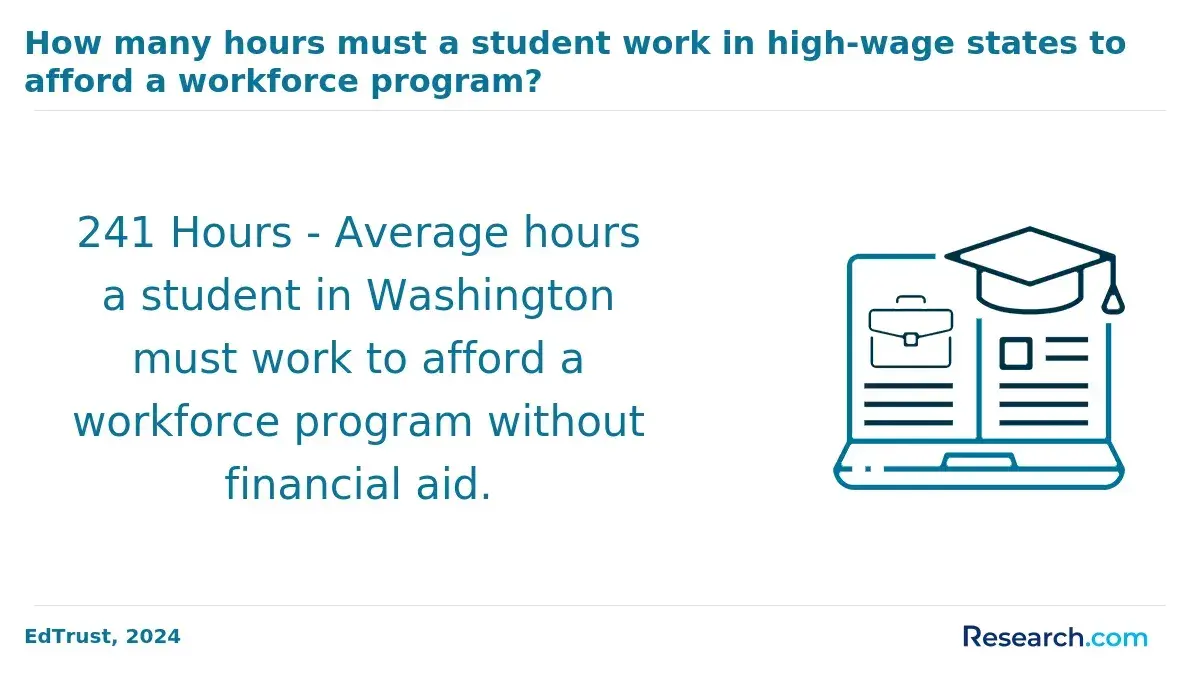
The cost of an accredited online game programming degree depends on tuition rate, residency status, institution type, fees, transfer credits, course load, and required technology. Online programs can save money on housing or commuting, but students may still pay technology fees, software fees, graduation fees, and hardware costs.
College Board's 2024 published tuition and fee benchmarks provide a useful starting point for comparing U.S. four-year institutions before grants, scholarships, and discounts. These are broad benchmarks, not program-specific prices, so students should request a full cost of attendance from each school.
- $11,610 for in-state students at public four-year institutions
- $30,780 for out-of-state students at public four-year institutions
- $43,350 for students at private nonprofit four-year institutions
For online game programming students, the sticker price is only one part of the budget. A realistic cost comparison should include tuition, mandatory fees, books, software, a capable development computer, internet, external storage, controller or testing devices, and possible travel for optional residencies or graduation events.
Financial aid may include federal grants, federal student loans, state aid, institutional scholarships, employer tuition assistance, military education benefits, private scholarships, and payment plans. To access federal aid, students generally need to complete the FAFSA and attend an eligible accredited institution. Federal borrowing costs also matter: for loans first disbursed in the 2024-2025 award year, the fixed interest rate for Direct Subsidized and Unsubsidized Loans for undergraduates was 6.53%. That rate affects total repayment cost, so borrowing less can improve long-term return on investment.
Use these steps to compare affordability without focusing only on advertised tuition:
- Ask each school for total program cost after estimated transfer credits, not just cost per credit.
- Compare net price after grants and scholarships, because published tuition may not reflect what you actually pay.
- Confirm whether online students pay the same tuition regardless of state residency.
- Estimate hardware costs before enrolling, especially if the program requires Unreal Engine, 3D production tools, or GPU-intensive coursework.
- Calculate how part-time enrollment may affect aid eligibility, completion time, and total fees.
- Choose the lowest-cost credible program only if it still offers the technical curriculum, faculty support, and portfolio outcomes you need.
A common affordability mistake is assuming the cheapest program has the best ROI. A low-cost degree that lacks rigorous programming, weakens your portfolio, or has poor student support can cost more in lost time than it saves in tuition.
What entry-level and advanced career paths can a game programming degree support?
A game programming degree can support jobs in game studios, entertainment technology, simulation, training software, education technology, defense contracting, XR development, mobile applications, visualization, and general software development. The degree is most useful when students pair it with a strong portfolio and marketable technical skills.
Entry-level roles vary by employer. Some studios hire junior programmers directly, while others expect candidates to start in QA, tools support, technical design, or associate software roles before moving into gameplay or engine work.
The table below connects common roles with their responsibilities and typical preparation. It can help you map the degree to a realistic first job and longer-term path.
| Career path | Typical responsibilities | Useful preparation | Advancement direction |
| Junior gameplay programmer | Implement mechanics, controls, cameras, combat, UI interactions, and scripted systems | C++, C#, engine projects, debugging, math for games, portfolio demos | Gameplay programmer, senior gameplay engineer, technical lead |
| Tools programmer | Create internal tools that help artists, designers, and developers work faster | Software engineering, UI tools, scripting, pipelines, user feedback | Pipeline engineer, technical director, developer experience lead |
| Engine programmer | Work on rendering, memory, physics, optimization, build systems, or platform features | Advanced C++, computer architecture, graphics, algorithms, performance profiling | Senior engine programmer, systems architect, principal engineer |
| QA automation or test engineer | Build automated tests, reproduce bugs, document issues, and improve release quality | Scripting, testing frameworks, debugging, version control, communication | Software development engineer in test, tools programmer, release engineer |
| Simulation or XR developer | Create interactive training, visualization, AR, VR, or real-time 3D applications | Unity or Unreal, 3D math, performance optimization, usability testing | XR engineer, simulation architect, product technical lead |
| Data or player analytics role | Analyze player behavior, retention, monetization, telemetry, or product experiments | Programming, SQL, statistics, analytics tools, data visualization | Game data analyst, product analyst, data scientist |
Students interested in player analytics, personalization, experimentation, or large-scale game telemetry may eventually need stronger statistics and machine learning preparation. In that case, comparing this pathway with the best online data science masters options can clarify whether a graduate data credential would be a better next step after a technical bachelor's degree.
To prepare for the job market, students should build a portfolio that shows both finished work and engineering judgment. Employers often want to know what problem you solved, what code you wrote, what trade-offs you made, and how the project changed after testing.
Before graduation, students should aim to complete these career-building actions:
- Publish at least two polished technical projects with clear descriptions of your individual contributions.
- Maintain a clean code repository that shows readable structure, version history, and documentation.
- Participate in a game jam, team capstone, open-source project, modding community, or simulation project.
- Practice technical interviews that cover data structures, algorithms, debugging, and engine-specific problem solving.
- Customize resumes for each role, separating gameplay, tools, engine, QA automation, XR, or general software skills.
- Network with alumni, faculty, student teams, online developer communities, and local industry events when available.
One mistake is waiting until the final semester to think about employability. In game programming, the portfolio is built over time. Students who save projects, document decisions, and revise work throughout the degree usually have a stronger job-search foundation.
What salary ranges, job outlook, and industry demand can game programmers expect?
Salary outcomes for game programming graduates vary by role, region, employer, experience, portfolio strength, and whether the job is in games, simulation, XR, or broader software development. Because the federal labor market system does not isolate every game programming title cleanly, the most reliable benchmark is the broader software developer and software quality category.
BLS data published for May 2024 lists the median annual wage for software developers at $133,080. This figure should not be read as a promise for new game graduates; it is a national median across industries and experience levels. However, it shows that the underlying software skills taught in strong game programming programs can be economically valuable beyond entertainment games.
The job outlook is also favorable in broader software roles. BLS projections for 2024-2034 show 15% growth for software developers, quality assurance analysts, and testers, which is much faster than the average for all occupations. For readers, the practical takeaway is that a technically rigorous game programming degree may provide more employment flexibility than a narrow creative program, especially if it includes general software engineering skills.
The table below gives a decision-oriented view of salary and demand context. It avoids treating game-specific outcomes as guaranteed and instead shows how related technical paths differ.
| Role category | Salary context | Demand context | What improves competitiveness |
| Game programming roles | Pay varies widely by studio size, location, platform, and experience | Competition can be high because many candidates want to work in games | Shipped projects, strong C++ or C#, engine fluency, teamwork, and specialization |
| General software developer roles | BLS May 2024 median for software developers was $133,080 | BLS projects strong growth for the broader software developer and QA category | Algorithms, systems design, databases, cloud tools, testing, and production coding experience |
| QA automation and test roles | Often accessible to candidates with scripting, debugging, and testing experience | Demand follows software release quality needs across many industries | Automated testing, bug documentation, CI/CD familiarity, and communication skills |
| XR and simulation roles | Compensation depends on industry, security requirements, and technical depth | Hiring may come from training, health, defense, education, and enterprise visualization | Unity or Unreal, 3D math, performance optimization, hardware awareness, and usability testing |
AI and automation are changing the work but not eliminating the need for technical judgment. Developers may use AI-assisted coding, asset generation tools, procedural systems, or automated testing, but employers still need people who can evaluate code quality, protect performance, debug complex interactions, and understand user experience.
The smartest career strategy is to treat game programming as a specialized software path. If you develop transferable skills in programming, math, testing, data structures, and collaboration, you can pursue game jobs while keeping options open in adjacent software fields.
How can students evaluate and choose a reputable, accredited online game programming program?
Choosing a reputable online game programming program requires more than scanning rankings or picking the school with the most exciting promotional videos. Students should evaluate accreditation, curriculum depth, faculty experience, portfolio outcomes, student support, cost, and career services together.
Use this evaluation process before enrolling. It is designed to help you avoid programs that sound appealing but do not provide enough technical preparation.
- Verify institutional accreditation through the school's website and recognized accreditation databases before discussing tuition or enrollment.
- Read the full curriculum and confirm that it includes programming, data structures, math, game engines, software engineering, testing, and capstone production.
- Ask to see examples of student portfolios, capstone projects, or public showcases that demonstrate actual technical work.
- Review faculty backgrounds for professional development experience, computing credentials, published work, or industry-relevant technical expertise.
- Confirm how online students receive tutoring, office hours, technical support, code feedback, library access, disability services, and career advising.
- Ask how team projects are managed online, including time-zone expectations, collaboration tools, peer evaluation, and conflict resolution.
- Compare total net cost, not just tuition per credit, and ask how transfer credits will be applied in writing.
- Check career support for technical roles, including resume review, portfolio review, interview practice, employer events, alumni networks, and internship guidance.
Some red flags deserve special attention. Be cautious if a program avoids accreditation questions, promises job placement or salary outcomes, has vague course descriptions, lacks programming depth, does not require a capstone or portfolio, pressures you to enroll quickly, or cannot explain hardware and software requirements.
Students should also understand that program evaluation differs across fields. For example, guides to the best online registered dietitian programs emphasize supervised practice and credentialing requirements, while game programming programs are judged more by accreditation, technical curriculum, portfolio evidence, and software development preparation.
The final decision should match your goal. Choose a game programming degree if you want a structured, accredited path into interactive software and you are ready for technical coursework. Choose computer science if you want the broadest software foundation. Choose a certificate if you already have a degree and only need engine-specific skills. Choose a creative game design or art program if your strongest interest is storytelling, visual production, or design rather than coding.
Other Things You Should Know About Game Programming & Development
It can be worth it if the program is accredited, technically rigorous, affordable for your situation, and helps you graduate with a strong portfolio. It is less likely to be worth it if you choose a weak program, borrow heavily without a plan, or mainly want a non-programming role.
In 2027, learning C++ and C# is crucial for game development, as they are widely used in industry-standard engines like Unity and Unreal. Python is also valuable for prototyping and scripting. Mastering these languages through an online degree can enhance your proficiency and employability in the gaming sector.
Most programs require 6 to 12 credits of math, usually college algebra, discrete mathematics, and calculus or linear algebra. These courses support engine logic, simulation, graphics, and physics. Some curricula also add statistics for testing and gameplay analytics.
References
- Practice-Ready Assessment (PRA) for IMGs in Canada: Provincial Pathways and Comprehensive Guide https://imgultrasoundtraining.ca/2025/06/13/practice-ready-assessment-pra-for-imgs-in-canada-provincial-pathways-and-comprehensive-guide/
- Career Path and Salary for Video Game Designers | ComputerScience.org https://www.computerscience.org/careers/video-game-designer/career-outlook-and-salary/
- Tuition & Payments Options | CG Spectrum https://www.cgspectrum.com/tuition-payment-options
- Game Programming Bachelor’s Degree at University of Advancing Technology https://www.uat.edu/game-programming-degree
- What should a beginner Game Developer know about? https://nofluffjobs.com/log/work-in-it/career-as-gamedev-what-should-a-beginner-game-developer-know-about/
- Game Development Degrees: What You Need to Know https://www.ivywise.com/ivywise-knowledgebase/gaming-majors/
- Is Game Programming a Good Career Path? Opportunities, Salary, Outlook - Champlain College https://www.champlain.edu/blog/stories/game-programming-career-path/
- Game Design Requirements: Skills, Portfolio & Entry Guide | BSBI https://www.berlinsbi.com/blog/game-design-requirements-what-you-need-to-know-before-you-apply
- How to Choose the Right Game Programming Course - Gamespublisher.com https://gamespublisher.com/how-to-choose-the-right-game-programming-course/
- The Video Game Designer Job Outlook | NEIT https://www.neit.edu/blog/video-game-designer-job-outlook