2027 Fastest Accredited Online Graphic Design Programs: Accelerated Degrees and Completion Times

Co-Founder and Chief Data Scientist
Choosing the fastest online graphic design degree is really a question of speed, accreditation, portfolio quality, and schedule fit. The U. S. Bureau of Labor Statistics reported a 2024 median wage of $61,300 for graphic designers, but employers still judge candidates heavily by portfolio strength. This guide is for students comparing accredited online programs, especially transfer students and working adults.
You'll learn what "accelerated" actually means, how short terms and competency-based models work, and why transfer credits, prerequisites, course load, portfolio reviews, and required projects can change the advertised completion time.
Key Things You Should Know
- The fastest realistic accredited online bachelor's path in graphic design is usually a degree-completion route: students with about 75 to 90 transferable credits may finish in roughly 12 to 24 months, while first-time bachelor's students usually need closer to 3 to 4 years.
- Most accelerated online graphic design programs use 7.5-week or 8-week courses, year-round start dates, and heavier course loads; these formats shorten the calendar but do not reduce the total work required for studio projects, critiques, software practice, and portfolio development.
- Many regionally accredited online bachelor's programs accept up to about 90 transfer credits toward a 120-credit degree, but residency rules, major-course sequencing, portfolio requirements, and minimum upper-division credits can limit how much time students actually save.
Which Colleges Offer the Fastest Accredited Online Graphic Design Programs?
The fastest accredited graphic design programs are usually not "short" degrees from start to finish. They are accredited bachelor's completion programs, online BFA or BA programs with 7.5-week or 8-week terms, or flexible programs that let qualified students transfer a large block of previous college credit.
The table below compares accredited online options that are commonly considered by students seeking faster graphic design or design-adjacent bachelor's pathways. Use it as a starting point, then confirm the latest catalog, transfer policy, tuition, and course sequencing with each school before applying.
| College | Online graphic design option | Accreditation to verify | Speed features | Best fit for fastest completion |
| Southern New Hampshire University | Online BA in Graphic Design and Media Arts | Institutional accreditation through NECHE | 120-credit curriculum, 8-week online terms, and transfer credit options commonly used by adult learners | Students with substantial general education or elective credits who need an online bachelor's completion path |
| Liberty University | Online BFA in Graphic Design | Institutional accreditation through SACSCOC; confirm current program-level details | 8-week online courses and transfer-credit policies that may allow a large portion of the degree to be completed elsewhere | Students seeking a Christian university setting and a studio-focused online BFA format |
| Arizona State University Online | Online BS in Design in Graphic Design | Institutional accreditation through HLC; confirm current design-school accreditation status | 7.5-week online classes and a major offered through a large public research university | Students who want a design-school environment and can follow a structured course sequence |
| Rocky Mountain College of Art + Design | Online BFA in Graphic Design | Institutional accreditation through HLC; NASAD status should be confirmed for current program coverage | Online studio coursework and accelerated-style terms in an art-and-design college setting | Students prioritizing portfolio depth, critique, and an art-school identity over the absolute shortest calendar |
| Academy of Art University | Online BFA in Graphic Design | Institutional accreditation through WSCUC; confirm current NASAD coverage | Fully online studio program with flexible enrollment options | Students who want a broad visual communication curriculum and can handle a higher total credit load |
| Bellevue University | Online BA in Graphic Design | Institutional accreditation through HLC | Transfer-friendly adult-learning model and online degree structure | Students with prior college coursework who want a practical, career-oriented bachelor's path |
No table can identify the single fastest option for every student because the deciding factor is often the transfer evaluation, not the catalog. A program that advertises short terms may still take longer if your previous credits do not satisfy general education requirements, if design courses must be taken in sequence, or if a capstone portfolio is offered only in certain terms.
How Long Does It Take to Complete an Accredited Online Graphic Design Degree?
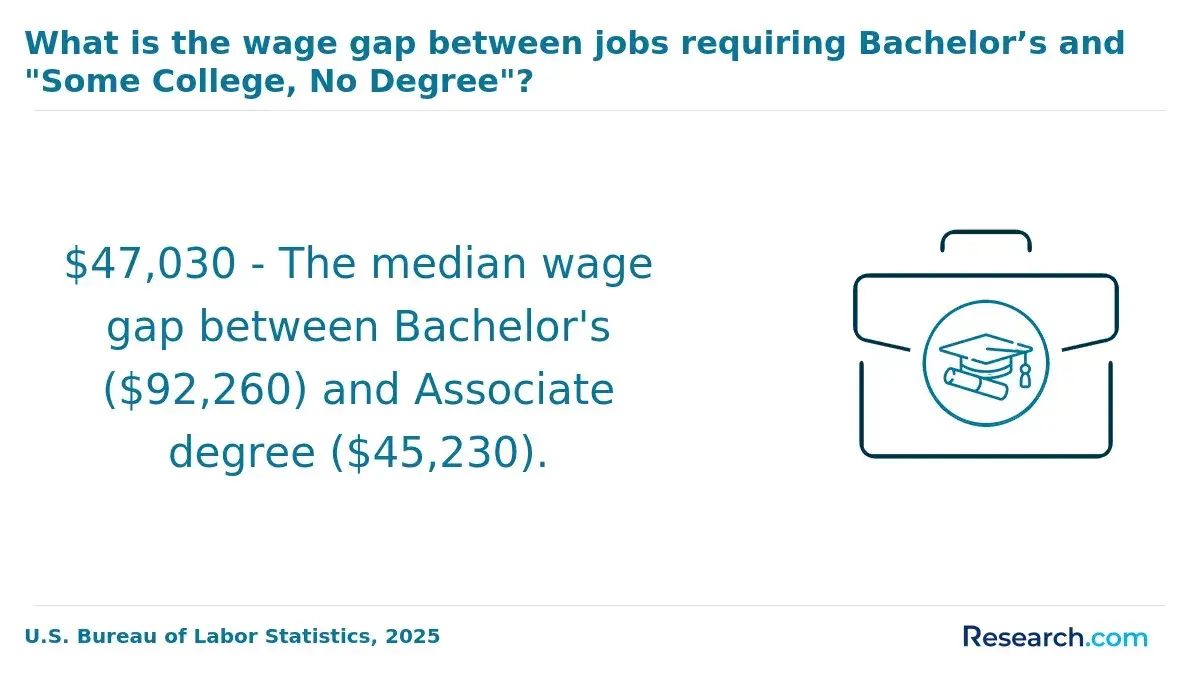
"Completion time" means the number of calendar months from your first enrolled term to your final required course, not just the number of credits in the catalog. For online graphic design, the timeline depends heavily on whether you are starting from zero credits, transferring an associate degree, or returning with a large number of completed general education credits.
The comparison below shows realistic ranges for U.S. students. These ranges assume the program is accredited, the student remains continuously enrolled, and required studio courses are available when needed.
| Credential path | Typical required credits | Fastest realistic online timeline | More common timeline | Main timeline risk |
| Undergraduate certificate in graphic design | About 12 to 30 credits | 6 to 12 months | 1 year | May not be a degree and may not carry the same transfer value |
| Associate degree in graphic design | About 60 to 65 credits | 18 to 24 months | 2 years | Studio sequencing and general education requirements |
| Bachelor's completion degree | Usually 120 credits total, with many credits transferred in | 12 to 24 months | 2 years | Transfer-credit limits, upper-division residency rules, and major prerequisites |
| Full online bachelor's degree | Usually 120 to 132 credits | About 3 years with heavy year-round enrollment | 4 years | Course load, portfolio courses, and prerequisite chains |
| Graduate design-related program | Varies widely by degree | 1 to 2 years | 2 years or more | Portfolio admission, thesis, and studio expectations |
Students sometimes compare accelerated bachelor's completion programs with a one-year master's degree, but the timeline logic is different. A one-year master's usually assumes the student already has a completed bachelor's degree, while a fast graphic design bachelor's depends on how many undergraduate credits the school accepts and how many major courses remain.
A shorter academic term also does not mean a lighter course. An 8-week typography or digital imaging class can require the same project hours, critique participation, revision cycles, and software practice that a 16-week course would spread over a longer period.
How Do Accelerated and Competency-Based Online Graphic Design Programs Work?
Accelerated online graphic design programs usually shorten the calendar by changing the delivery format, not by removing core design learning. Students still need to build skills in composition, typography, color, branding, user experience basics, image editing, layout, and professional portfolio presentation.
Most fast online graphic design pathways use one or more of the following structures. Each format can reduce time to graduation, but each also changes the workload pattern.
- Short terms: Courses run in 7.5-week or 8-week sessions instead of traditional 15-week or 16-week semesters, allowing students to complete more course cycles per year.
- Year-round enrollment: Students take courses in fall, spring, and summer instead of pausing for long breaks, which can shorten the calendar by several months.
- Stacked course loads: Students take two courses per short term or a heavier full-time schedule, which can speed completion but may be difficult during studio-heavy classes.
- Transfer-first degree plans: Advisors apply prior general education, electives, and lower-division credits so the student can focus on remaining major requirements.
- Competency-based or self-paced elements: Students move faster through material they already know, though fully competency-based graphic design bachelor's degrees are less common than term-based online programs.
Competency-based education works best when outcomes are measurable and students can demonstrate mastery quickly. In graphic design, that can be harder than in some fields because strong work often depends on critique, iteration, concept development, and a polished portfolio rather than multiple-choice assessments.
The best approach is to compare the actual pacing rules. The same scrutiny students use when evaluating accelerated professional programs, such as fastest online MSW programs, also applies here: check term length, required hours, supervised or applied components, and whether the advertised timeline assumes transfer credit.
What Accreditation Should an Online Graphic Design Program Have?
At minimum, a graphic design degree should come from an institution accredited by an agency recognized by the U.S. Department of Education or the Council for Higher Education Accreditation. Institutional accreditation matters for federal financial aid eligibility, transfer credit, graduate school review, and employer confidence.
Programmatic accreditation can also matter, especially for art and design schools. The National Association of Schools of Art and Design is the best-known specialized accreditor for many U.S. art and design programs, but not every reputable online graphic design degree has NASAD accreditation. A regionally accredited university without NASAD recognition may still be a legitimate choice, particularly if the curriculum, faculty, portfolio outcomes, and career support are strong.
Before enrolling, students should verify accreditation directly instead of relying only on marketing language. These checks help prevent delays caused by nontransferable credits or degrees that do not meet a future school's expectations.
- Confirm the institution appears in the U.S. Department of Education's recognized accreditation database.
- Check whether the specific campus or online division is included under the institution's accreditation.
- Ask whether the graphic design program has specialized design accreditation, and whether that accreditation applies to the online format.
- Verify whether credits from the program are commonly accepted by graduate schools or other institutions.
- Avoid programs that advertise unrealistic completion times but provide unclear accreditation, curriculum, faculty, or transfer information.
Accreditation is not the same as quality, but it is a baseline protection. For students trying to graduate quickly, it is also a time-saving issue: credits from nonaccredited or poorly recognized schools are more likely to be rejected later.
How Can Transfer Credits and Prior Learning Shorten an Online Graphic Design Degree?
Transfer credit is usually the biggest factor in fast completion. A student entering with an associate degree or many completed general education credits can often move faster than a first-time student, even if both enroll in the same online program.
The table below explains how different forms of prior learning may affect time to degree. The exact impact depends on the school's transfer rules, minimum grade requirements, residency requirement, and whether credits match the graphic design curriculum.
| Credit source | How it may help | Possible time saved | Common limitation |
| Completed associate degree | May satisfy many lower-division and general education requirements | Often 1 to 2 years | Studio or major courses may not transfer as direct equivalents |
| Previous college credits | Can reduce electives, general education, or introductory requirements | Varies by number of accepted credits | Old credits, low grades, or nonmatching courses may be rejected |
| AP, IB, CLEP, or DSST exams | May satisfy general education or elective requirements | One course at a time | Policies and minimum scores vary by school |
| Prior learning assessment | May award credit for documented professional learning or training | Limited but useful for adult learners | Portfolio review fees and documentation requirements may apply |
| Professional design coursework | May support elective or lower-level design credit | Usually limited | Noncollege bootcamps and vendor certificates are not always credit-bearing |
To graduate as quickly as possible, treat the transfer evaluation as a planning tool rather than a formality. The goal is to know exactly which courses remain before you commit to a start date.
- Request an unofficial pre-evaluation before applying if the school offers one.
- Send transcripts from every college attended, even if you completed only one or two courses.
- Ask how many credits can transfer into the degree overall and how many must be completed at the school.
- Confirm whether prior design courses count toward the major or only as electives.
- Ask for a term-by-term graduation plan that includes prerequisites, portfolio courses, and capstone timing.
A common mistake is assuming that "up to 90 transfer credits" means every student can bring in 90 credits. In practice, those credits must fit the degree audit, meet grade rules, and leave enough upper-division coursework to satisfy the institution's residency requirement.
What Are the Admission Requirements and Start Dates for Accelerated Online Graphic Design Programs?
Admission requirements vary by school and degree type, but online undergraduate graphic design programs are often designed for a mix of first-time students, transfer students, and working adults. Some programs admit students directly into the major, while others require foundation courses before advanced studio work.
These are the admission and enrollment details most likely to affect how quickly you can start and finish. They matter because a missing transcript, delayed portfolio review, or unavailable prerequisite can push graduation into a later term.
- High school diploma or GED: First-time undergraduate applicants typically need proof of secondary completion.
- Official college transcripts: Transfer students must submit all prior college records for an accurate credit evaluation.
- Minimum GPA: Some schools have open or broad admission policies, while others require a minimum GPA for transfer or major admission.
- Portfolio requirement: Many undergraduate online programs do not require a portfolio for first-year admission, but BFA, advanced standing, or graduate programs may require one.
- Software and hardware readiness: Students may need access to Adobe Creative Cloud or comparable tools, a reliable computer, and sufficient storage before the first studio course.
- Multiple start dates: Accelerated online programs often offer several starts per year, but not every course is available in every term.
Rolling admission can help you begin sooner, but it does not automatically create a faster degree plan. If a required typography, branding, or portfolio course is offered only in certain sessions, your completion date may depend on the course rotation rather than the admission date.
How Much Does a Fast Online Graphic Design Degree Cost, and Is Financial Aid Available?
A fast online graphic design degree may cost less if it reduces the number of terms you pay for, but speed does not automatically mean lower total cost. Tuition is usually charged by credit, so transfer credits, accepted exam credit, and prior learning can matter more than the advertised calendar length.
Students should compare the full cost of attendance, not only tuition. These cost categories can affect the real price of an accelerated online design degree.
- Per-credit tuition for remaining courses after transfer evaluation
- Online course fees, technology fees, graduation fees, and portfolio or assessment fees
- Required software subscriptions, especially design, layout, image-editing, and prototyping tools
- Computer hardware, drawing tablet, storage, backup drives, and color-calibrated display needs
- Textbooks, stock asset licenses, printing, presentation materials, and portfolio hosting
- Extra costs if a course must be repeated because the accelerated workload was too heavy
Federal financial aid may be available when the school and program meet eligibility rules and the student completes the FAFSA. The maximum Federal Pell Grant for the 2025-26 award year is $7,395, which can meaningfully reduce out-of-pocket costs for eligible undergraduates but may not cover the full cost of tuition, fees, and design technology.
Cost control is especially important if you plan to pursue graduate study later. A guide to inexpensive master's programs can help you think beyond the bachelor's degree and avoid overborrowing before you know whether a graduate credential will be necessary for your goals.
The smartest financial comparison is cost per completed degree, not cost per credit alone. A school with slightly higher tuition may be less expensive overall if it accepts more of your previous credits, while a cheaper school may cost more if it requires many repeated or nontransferable courses.
Can You Work Full Time While Completing an Accelerated Online Graphic Design Degree?
Yes, some students work full time while completing an accelerated online graphic design degree, but the schedule can be demanding. Studio courses require focused creative time, critique participation, revisions, and software practice that may not fit neatly into evenings and weekends.
The table below compares workload scenarios so you can judge whether the fastest path is realistic. The best timeline is the one you can sustain without sacrificing portfolio quality or risking failed courses.
| Enrollment pattern | Typical pace | Work compatibility | Likely completion effect |
| One course per 8-week term | Part time | Most manageable for full-time workers | Slower but more sustainable |
| Two courses per 8-week term | Full time or near full time | Possible with strong time management | Often the fastest realistic pace for working adults |
| Three or more courses in a short term | Heavy accelerated load | Difficult during studio-heavy terms | Can shorten time but raises burnout and repeat-course risk |
| Year-round enrollment | Continuous progress | Works best with planned breaks around major projects | Can reduce calendar time without overloading one term |
Students who work full time should be especially careful with course pairing. Combining typography, motion graphics, branding, and portfolio courses in the same short session can create a heavier workload than the credit count suggests.
A practical approach is to accelerate strategically rather than constantly. Take heavier loads during general education or familiar software courses, then reduce the load during portfolio, capstone, or advanced studio courses where the quality of work may affect internships, freelance opportunities, and job applications.
Are Accelerated Online Graphic Design Degrees Respected by Employers and Graduate Schools?
An accelerated online graphic design degree can be respected when it comes from an accredited institution and results in a strong portfolio. Employers in graphic design usually care about demonstrated ability: visual judgment, typography, layout, brand thinking, software fluency, collaboration, and the ability to revise based on feedback.
The BLS reported a 2024 median annual wage of $61,300 for graphic designers, but that figure is not a guaranteed outcome for any degree holder. It includes workers across industries, experience levels, and locations, and many entry-level candidates compete through portfolios, internships, freelance work, and networking as much as through credentials.
Graduate schools generally focus on accreditation, transcripts, GPA, prerequisites, recommendations, statement of purpose, and portfolio quality. A degree completed online or on an accelerated schedule is less likely to be a problem than a weak portfolio, nonaccredited institution, or missing prerequisite coursework.
Graphic design is different from licensed fields where the program format may be tied to state board rules. For example, students comparing MFT master's programs must pay close attention to supervised clinical requirements, while graphic design students usually need to focus more on accreditation, portfolio depth, and employer-relevant skills.
The main risk of accelerating too aggressively is not the word "online" on the transcript. It is graduating with a thin portfolio because there was not enough time to revise projects, seek critique, learn tools deeply, or develop a coherent design identity.
How Should You Compare the Fastest Accredited Online Graphic Design Programs?
The best program is not simply the one with the shortest advertised timeline. It is the accredited online program that lets you finish quickly while protecting credit transfer, financial aid eligibility, portfolio quality, and your ability to keep up with the workload.
Use the following comparison steps before enrolling. They are designed to reveal the real graduation timeline, not just the marketing estimate.
- Confirm institutional accreditation and, where relevant, specialized art and design accreditation.
- Request a written transfer-credit evaluation before committing to a start date.
- Ask for a term-by-term plan showing every remaining course, prerequisite, and capstone or portfolio requirement.
- Compare 7.5-week, 8-week, and 16-week formats based on weekly workload, not only calendar speed.
- Verify how often required major courses are offered and whether any are locked behind prerequisites.
- Calculate total remaining tuition, fees, software, and equipment costs after transfer credit is applied.
- Review student work, faculty experience, internship support, career services, and portfolio outcomes.
- Ask what happens if you need to slow down for work, family, health, or financial reasons.
Students who are unsure whether graphic design is the right major may also compare broader online degree paths. For example, affordable online interdisciplinary studies degrees can be useful for learners who want to combine design, communication, business, technology, or media coursework rather than commit to a studio-heavy graphic design major.
Watch for red flags: vague accreditation claims, no clear course sequence, pressure to enroll before a transfer review, promises that "accelerated" means easy, or a program that says most students finish quickly without explaining the required transfer credits and course load. A fast degree should still give you time to build the portfolio you will use after graduation.
Other Things You Should Know About Graphic Design
To enroll in an accelerated online graphic design program in 2027, applicants typically need a high school diploma or GED, a portfolio showcasing design skills, and possibly completion of prerequisite courses in basic design principles or software proficiency. Specific prerequisites vary by institution.
The typical course load for accelerated online graphic design programs in 2027 involves completing 15-18 credit hours per term. These programs are designed for fast completion, often within one to two years, depending on the institution and prior credits.
Online graphic design students can succeed with moderately priced equipment. While high-end tools enhance convenience, most beginner courses require only a computer and basic design software. Many programs utilize cloud-based tools, reducing the need for costly hardware upgrades.
References
- A Marie Kondō-Inspired Approach to Designing Accelerated Online Courses https://edtecharchives.org/journal/354/5925
- Online Degree & Certificate Programs | Graphic Design - Sessions College https://www.sessions.edu/graphic-design-info/
- The 6 Best Graphic Design Courses Online for Beginners https://designlab.com/blog/best-graphic-design-courses-online-for-beginners
- Graphic Design Courses: Top Universities, Fees, Scholarships https://www.aeccglobal.com/study-abroad/courses/graphic-design
- Online Graphic Design Degrees https://mycollegeguide.org/online-graphic-design-degrees/
- Graphic Design Bachelor's https://www.fullsail.edu/degrees/graphic-design-bachelor-degree-program
- Best Online Graphic Design Degrees https://www.onlineu.com/degrees/graphic-design
- Graphic Design | Accelerated Bachelor’s Degrees | NEIT https://www.neit.edu/academics/bachelors-degrees/graphic-design-career-focused-bs
- Graphic Design Courses from American Graphics Institute https://www.agitraining.com/graphic-design-classes