2027 Game Programming Jobs With the Best Work-Life Balance

Co-Founder and Chief Data Scientist
Choosing a game programming career is not just about building games; it is also about avoiding chronic crunch, unstable contracts, and mismatched training. The Game Developers Conference's 2024 industry survey reported that 35% of developers said they or colleagues had been affected by layoffs, making stability and workload more important career filters. This guide is for students, career changers, and junior developers who want creative technical work without sacrificing long-term health. You will learn which roles tend to offer better balance, what education helps, and how to compare programs wisely.
Key Things You Should Know
- The most balanced game programming paths are usually tools programming, engine programming, technical UI, build/release engineering, gameplay systems in mature studios, and serious-games development because they rely on predictable production pipelines more than last-minute content pushes.
- Use salary data carefully: the U.S. Bureau of Labor Statistics reported a May 2024 median annual wage of $133,080 for software developers, but game-specific roles can vary widely by studio size, location, platform, bonus structure, and overtime expectations.
- A bachelor's degree in computer science, game programming, software engineering, or a related computing field is the most common route into stable roles, while certificates and portfolios work best when they prove specific engine, C++, C#, tools, or QA automation skills.
What game programming jobs offer the best work-life balance?
The game programming jobs with the best work-life balance are usually the ones closest to reusable systems, platform infrastructure, and internal tools rather than roles tied to emergency content delivery. "Work-life balance" in this field means more than remote work; it includes predictable hours, low crunch frequency, transparent production planning, realistic sprint scope, supportive managers, and compensation that does not depend on unpaid overtime.
Readers should also separate "game industry excitement" from day-to-day job design. A cinematic gameplay programmer at a deadline-driven AAA studio may face intense milestone pressure, while a tools programmer at the same company may work on editor workflows with more stable sprints. The table below compares common programming roles by balance factors, not by prestige.
| Role | Typical responsibilities | Why balance may be stronger | Watch-outs |
| Tools programmer | Builds editors, automation, debugging utilities, asset pipelines, and workflow tools for designers and artists. | Work is often planned around internal productivity needs instead of launch-day content emergencies. | Can become stressful when a broken tool blocks an entire production team. |
| Engine programmer | Improves rendering, physics, memory, performance, platform support, and core runtime systems. | Deep technical work is often structured around long-term architecture and optimization goals. | AAA releases and platform certification deadlines can still create crunch periods. |
| Build and release engineer | Maintains build systems, continuous integration, deployment, version control, and release pipelines. | Strong process maturity, automation, and cross-team planning can reduce chaos. | On-call expectations may exist near launch or live-service updates. |
| Technical UI programmer | Implements menus, HUDs, accessibility settings, controller navigation, and UI performance. | UI features are visible but often scoped more clearly than broad gameplay systems. | Late design changes can increase rework, especially in live-service games. |
| Gameplay systems programmer | Builds reusable systems for movement, combat, quests, inventory, cameras, or abilities. | Balance is better in studios with mature pipelines, stable scopes, and feature ownership. | Feature polish near milestones can be demanding if design scope changes frequently. |
| Serious-games or simulation developer | Creates training simulations, educational games, defense simulations, medical visualization, or enterprise interactive software. | Clients may operate on business schedules rather than entertainment launch cycles. | Creative freedom may be narrower than in entertainment games. |
For many people, the best-balanced path is not the flashiest job title. It is the role where technical skills are portable, work can be estimated realistically, and the employer has the budget and management discipline to avoid constant emergency production.
Before accepting a role, ask direct questions about workload rather than relying on vague culture statements. Useful questions include the following:
- How many weeks of crunch did the team experience during the last shipped project?
- Is overtime paid, discouraged, expected, or treated as a normal part of production?
- How are sprint commitments approved, and who can push back when scope grows?
- How often do programmers support live incidents, weekend releases, or certification emergencies?
- What percentage of the team has been with the studio for more than two years?
A common mistake is assuming that remote game jobs automatically offer better work-life balance. Remote work can reduce commuting stress, but it can also blur boundaries if the studio expects late-night messages, constant availability, or cross-time-zone meetings without clear norms.
What education do game programmers need for stable roles?
Stable game programming roles usually require strong software engineering fundamentals first and game-specific skills second. Employers may list degrees differently, but the common foundation includes programming, algorithms, data structures, math for graphics and physics, debugging, version control, and collaborative software development.
A bachelor's degree is the most common credential for long-term programming roles, especially at larger studios, simulation companies, and employers that use formal hiring screens. Students who want broader mobility should compare game programming degrees with a general online computer science degree, because computer science can support both game and non-game software jobs if the game market becomes unstable.
The best path depends on how certain you are about games and how much career flexibility you want. The table below summarizes common education routes and when each one makes sense.
| Education path | Best fit | Strengths | Limitations |
| Bachelor's in computer science | Students who want game roles plus backup options in general software, AI, cloud, or data systems. | Strongest general software foundation and broad employer recognition. | May require self-directed game projects to prove engine and gameplay skills. |
| Bachelor's in game programming or game development | Students committed to technical game roles and portfolio-based hiring. | Often includes engines, graphics, game math, production courses, and team projects. | Quality varies widely; some programs are more design-focused than programming-focused. |
| Associate degree | Students seeking lower-cost entry, transfer preparation, or junior technical roles. | Can reduce total cost if credits transfer cleanly to a bachelor's program. | May not be enough for competitive programming roles without a strong portfolio. |
| Certificate or bootcamp | Career changers who already know programming or need focused engine skills. | Shorter and often more project-based. | Less useful if it skips algorithms, systems programming, or math fundamentals. |
| Master's degree | Programmers targeting graphics, AI, simulation, research, or technical leadership. | Can deepen specialization and support advanced roles. | Usually not necessary for entry-level gameplay jobs. |
Education should lead to evidence. In game programming hiring, a transcript alone rarely carries the decision. A useful graduate portfolio includes playable projects, readable code, performance notes, version-control history, and a clear explanation of what the applicant personally built.
Students should avoid programs that market "game design" heavily but provide little programming depth. If your target is a programming job, the curriculum should include multiple semesters of coding, not just game concepting, art tools, or production theory.
Which game programming degrees and certificates are most useful?
The most useful degrees and certificates are those that build both core software ability and job-specific proof. A program should help you become employable beyond one game engine, because tools change and studios often need programmers who can debug unfamiliar systems quickly.
For undergraduate students, computer science, software engineering, game programming, and interactive simulation are the most relevant degree labels. For advanced specialists, graduate study can make sense in areas such as graphics, artificial intelligence, data-driven player behavior, and simulation. A programmer considering analytics-heavy technical leadership could compare a doctorate in data analytics online with a master's or employer-funded certificate, but doctoral study is usually excessive for standard game programming roles.
Certificates are most valuable when they document concrete production skills. They should not be treated as replacements for a weak portfolio, but they can help organize learning in specialized areas.
- Engine-focused certificates can help students demonstrate Unity, Unreal Engine, scripting, editor tooling, and project packaging skills.
- Programming certificates can be useful when they strengthen C++, C#, Python, graphics APIs, or software testing fundamentals.
- Cloud or DevOps certificates may help candidates move into build engineering, live operations, backend services, or multiplayer infrastructure.
- Project management or Scrum training can be useful later, but it should not replace technical depth for entry-level programming roles.
One practical way to compare credentials is to ask whether each option produces portfolio assets that map to job postings. A certificate that ends with a small playable project, automated build pipeline, or performance optimization case study is usually more useful than one that only issues completion badges.
Be cautious with programs that promise rapid entry into AAA game programming without explaining prerequisites. If a short certificate assumes no coding background and still claims to prepare students for programming roles, review graduate work samples carefully before enrolling.
How do online and campus game programming programs compare?
Online and campus programs can both work for game programming, but they support different learners. Online study is often better for working adults, military learners, caregivers, and students who need geographic flexibility. Campus study may be better for students who want in-person labs, local studio networking, team production spaces, and structured peer accountability.
Online education has become a mainstream option across many technical and applied fields. If you are comparing formats across disciplines, even a program such as an online animal science degree shows the same core issue: online programs can be convenient, but students must verify hands-on requirements, support services, and whether the format matches the career goal.
The table below compares the major trade-offs for game programming students. Use it to decide which format fits your schedule, learning style, and portfolio needs.
| Factor | Online program | Campus program | Decision tip |
| Schedule | Often more flexible, especially asynchronous courses. | Usually fixed class times and studio schedules. | Choose online if you need to keep working; choose campus if structure keeps you on track. |
| Collaboration | Uses remote tools, repositories, chat, and virtual playtesting. | Offers in-person team projects and lab access. | Remote collaboration is realistic for modern studios, but weak online programs may under-support team projects. |
| Hardware and software | Student may need a capable computer and paid software access. | Labs may provide workstations, VR equipment, capture tools, or console development access. | Ask for a full technology cost list before enrolling. |
| Networking | Depends on virtual events, Discord communities, alumni channels, and online showcases. | May offer local studio visits, campus showcases, and in-person career fairs. | Campus has an edge if the school has real employer relationships. |
| Portfolio development | Can be strong if courses require public builds, code reviews, and team repositories. | Can be strong if capstones simulate production teams. | Format matters less than the quality of projects and feedback. |
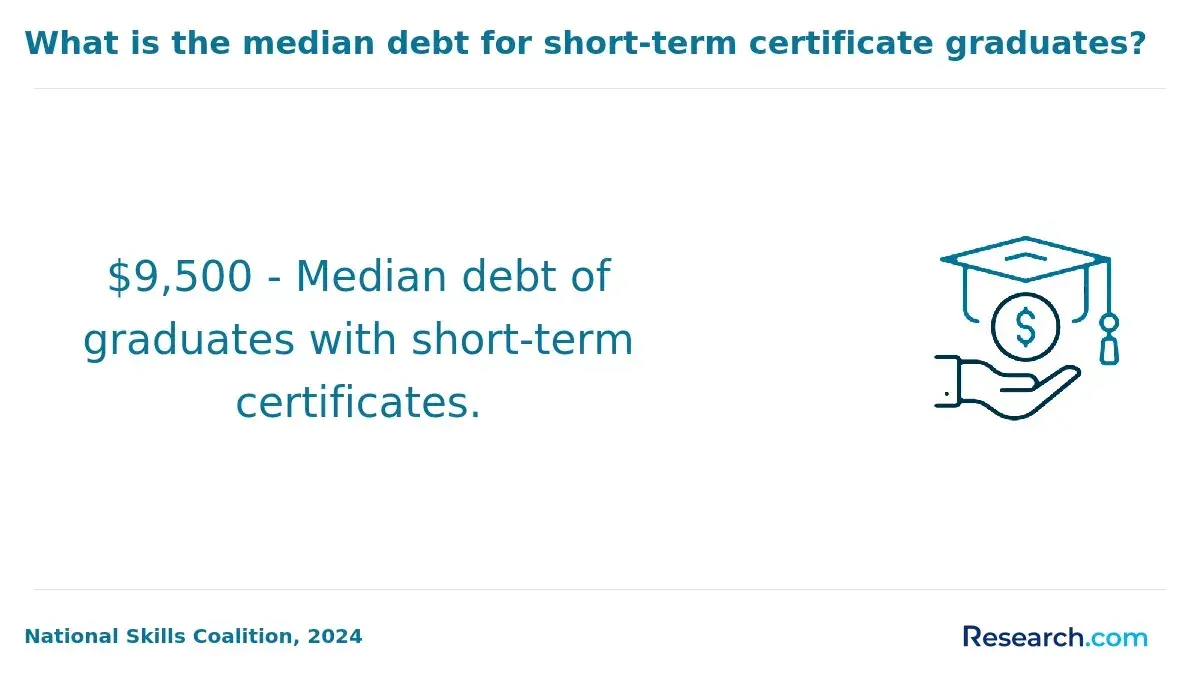
Cost also affects the online-versus-campus decision. The College Board's 2024 pricing report listed average published tuition and fees of $11,610 for in-state students at public four-year institutions and $43,350 at private nonprofit four-year institutions for the 2024-2025 academic year. That gap does not automatically decide value, but it shows why students should compare total program cost, scholarships, transfer credits, equipment, and likely career flexibility before choosing a school.
A common mistake is selecting an online program only because it is convenient. For game programming, convenience is not enough; the program must still provide rigorous programming assignments, team production experience, instructor feedback, and career support tied to technical roles.
What coursework is in a game programming program?
A strong game programming curriculum should look like a software engineering program with game-specific applications layered on top. Students should expect substantial coding, math, debugging, and systems work, not just game concept development.
The courses below are common in solid programs and matter because each maps to real studio responsibilities. A balanced job often depends on being the programmer who can prevent production problems through good systems, tools, and communication.
- Programming fundamentals in languages such as C++, C#, Python, or Java, with emphasis on clean code and debugging.
- Data structures and algorithms for performance, memory use, gameplay logic, pathfinding, and real-time systems.
- Game math, including vectors, matrices, transforms, collision detection, interpolation, and physics foundations.
- Game engine development or engine scripting using tools such as Unreal Engine or Unity.
- Computer graphics and rendering, including shaders, lighting, optimization, and GPU basics.
- Software engineering practices such as version control, testing, code review, documentation, and agile production.
- Gameplay systems, AI behavior, UI programming, networking, or multiplayer architecture depending on the concentration.
- Capstone or studio courses where students build games in teams and document their technical contribution.
AI is also changing coursework expectations. Students do not need to become machine learning researchers for every game programming role, but they should understand how AI tools affect workflow, testing, content pipelines, non-player character behavior, procedural systems, and code review. Employers increasingly value programmers who can use automation responsibly while still verifying correctness, performance, and security.
Portfolio assignments should be treated as career assets, not disposable homework. For each major project, keep a short technical write-up explaining the problem, your implementation, trade-offs, bugs you solved, and what you would improve with more time.
What are common admission requirements for game programming schools?
Admission requirements vary by school and degree level, but most undergraduate game programming programs look for academic readiness in math, computing, and communication. Highly selective programs may also review portfolios, prior projects, or programming experience.
Before applying, students should understand which requirements are firm and which ones can be strengthened through preparation. The table below summarizes common admissions expectations.
| Requirement | What schools may ask for | How to prepare |
| Academic record | High school diploma, GED, transcripts, or prior college credits. | Prioritize math, science, and computing courses when possible. |
| Math readiness | Placement tests or prerequisites in algebra, precalculus, calculus, or discrete math. | Review algebra, functions, trigonometry, and problem-solving before placement exams. |
| Programming background | Some programs require none; others prefer introductory coding experience. | Complete small projects in C#, Python, JavaScript, or C++ and save code samples. |
| Portfolio | Game prototypes, code repositories, mods, apps, or technical demos. | Show what you personally built and include short explanations. |
| Application materials | Essay, recommendation letters, resume, or interview. | Explain why you want programming specifically, not just a general interest in games. |
| Transfer evaluation | Prior college credits, military training, AP credits, or dual-enrollment credits. | Ask for a written transfer-credit estimate before committing. |
Students without a programming background should not assume they are disqualified. Many bachelor's programs start with introductory courses. However, doing a few small projects before enrollment can help confirm that you enjoy debugging, logic, and iteration, which are central to the job.
One admissions red flag is a school that does not clearly separate game art, game design, and game programming. If the admissions advisor cannot explain the math sequence, programming language sequence, and capstone expectations, keep asking questions or compare other programs.
How long does game programming training usually take?
Game programming training can take a few months to several years depending on your starting point and target role. The right timeline should balance speed with readiness; rushing into applications without a strong portfolio can waste time, while over-studying can delay paid experience unnecessarily.
Program length varies across online degrees because hands-on requirements, transfer credits, and pacing differ by field. For example, an exercise science degree online may involve different lab or practicum expectations than a programming degree, but both require students to verify how the online format handles applied learning.
The table below gives realistic timelines for common routes. These are not guarantees, but they help you plan how much time you may need before applying for technical roles.
| Training route | Typical length | Best use | Portfolio expectation |
| Self-study plus projects | 6 to 18 months for learners with strong discipline. | Testing interest, building prototypes, or supplementing another degree. | At least two polished technical demos or one substantial project. |
| Certificate or bootcamp | 3 to 12 months depending on intensity. | Focused engine, language, tools, or production training. | Projects should show code quality and specific technical contribution. |
| Associate degree | About 2 years full time. | Lower-cost start, transfer preparation, or junior technical support roles. | Several class projects plus one team or capstone project. |
| Bachelor's degree | About 4 years full time, less with transfer credit. | Main route for competitive studio programming roles. | Multiple playable projects, code samples, and capstone documentation. |
| Master's degree | 1 to 3 years depending on format and enrollment status. | Advanced graphics, AI, simulation, research, or specialization. | Research, advanced technical demos, or specialized systems work. |
If your goal is a balanced role, use training time to build durable skills rather than chasing every new tool. C++, C#, data structures, engine architecture, testing, version control, and performance analysis remain more transferable than narrow familiarity with a single plugin or visual scripting feature.
A smart preparation sequence is simple but demanding. Follow these steps to move from learning to employability:
- Learn one general-purpose programming language well enough to build complete small applications.
- Study data structures, algorithms, and game math before relying heavily on engine templates.
- Build small prototypes that isolate one technical problem, such as pathfinding, inventory, save systems, or UI navigation.
- Join a team project or game jam to practice collaboration, version control, and scope control.
- Polish one or two projects with documentation, performance notes, and a clear explanation of your contribution.
- Apply to internships, junior roles, QA automation roles, tools roles, and simulation roles rather than limiting yourself to one dream studio.
What careers can game programming graduates pursue?
Game programming graduates can pursue more than one career path. That matters for work-life balance because the most stable long-term option may sit near games rather than inside a high-pressure entertainment studio.
The table below connects career paths to responsibilities and balance considerations. Use it to compare both game-specific and adjacent technical roles.
| Career path | What the work involves | Balance outlook | Good fit for |
| Junior gameplay programmer | Implements features, fixes bugs, supports designers, and maintains gameplay systems. | Varies widely by studio planning quality and milestone pressure. | Programmers who enjoy iteration, communication, and player-facing systems. |
| Tools programmer | Improves internal workflows, editors, automation, importers, and debugging tools. | Often stronger because work can be planned around internal productivity. | Developers who like solving workflow problems for other developers. |
| Engine programmer | Works on rendering, memory, performance, physics, platform support, and core systems. | Can be balanced in mature teams, but deadlines can be intense near launch. | Strong C++ programmers who enjoy low-level systems and optimization. |
| Build engineer | Maintains build pipelines, CI systems, version control, release automation, and deployment processes. | Can be predictable with strong automation, but may involve release support. | Programmers who like infrastructure, reliability, and process improvement. |
| QA automation engineer | Writes automated tests, test tools, performance checks, and regression systems. | Often more structured than manual test roles and can lead into tools or build engineering. | Detail-oriented programmers who enjoy preventing defects. |
| Simulation software developer | Builds training, educational, defense, medical, industrial, or research simulations. | Often more business-schedule oriented than entertainment games. | Developers who want interactive 3D work with broader industry stability. |
| Backend or live services developer | Supports accounts, matchmaking, telemetry, commerce, cloud services, and multiplayer systems. | Can offer strong pay and mobility, but may include on-call duties. | Programmers interested in distributed systems and service reliability. |
Graduates should not overlook adjacent industries. Architecture visualization, defense simulation, health training, education technology, virtual production, augmented reality, and enterprise training can use game-engine skills while offering different production rhythms.
Advancement often follows one of three tracks. Understanding them early helps you choose projects and training that match the role you want later:
- Technical specialist: moves from junior programmer to senior programmer, engine specialist, graphics programmer, AI programmer, or performance engineer.
- Production systems path: moves from QA automation, tools, or build engineering into infrastructure, release engineering, DevOps, or technical operations.
- Leadership path: moves from programmer to lead programmer, technical director, engineering manager, or studio technology leader.
The biggest career mistake is applying only to entertainment game studios and ignoring transferable roles. A first job in simulation, interactive media, QA automation, or tools development can still build the experience needed for better-balanced game programming roles later.
How much do game programmers earn in balanced roles?
Game programmer pay depends on role, location, seniority, platform, studio funding, and whether compensation includes bonuses, royalties, equity, or overtime. Because "game programmer" is not always a separate federal occupation, U.S. salary comparisons often use software developer and computer programmer data as reference points.
The U.S. Bureau of Labor Statistics reported a May 2024 median annual wage of $133,080 for software developers. This figure is useful because many game programming roles require comparable software skills, but it should not be read as a promise for entertainment game jobs, where pay can differ from broader software markets.
The table below uses occupational proxies to frame earning potential for balanced roles. It is most helpful for comparing role families rather than predicting a specific offer.
| Role family | Relevant salary context | Balance-related compensation issue | How to evaluate an offer |
| Software developer roles | BLS listed a May 2024 median annual wage of $133,080 for software developers. | Game studios may pay differently from finance, cloud, or enterprise software employers. | Compare base pay, expected hours, bonus structure, and overtime policy. |
| Computer programmer roles | BLS listed a May 2024 median annual wage of $98,670 for computer programmers. | Programming titles vary; some roles are maintenance-heavy while others involve complex systems. | Ask whether the role is feature development, tools, scripting, automation, or support. |
| Build, backend, and DevOps-adjacent roles | Pay may align more closely with broader software infrastructure markets than traditional game content roles. | Higher pay can come with on-call or incident response duties. | Clarify rotation schedules, weekend work, and release support expectations. |
| Serious-games and simulation roles | Compensation often depends on the employer's sector, such as government contracting, education technology, or health technology. | Work hours may be steadier, but creative scope may be narrower. | Evaluate benefits, contract stability, clearance requirements, and project funding. |
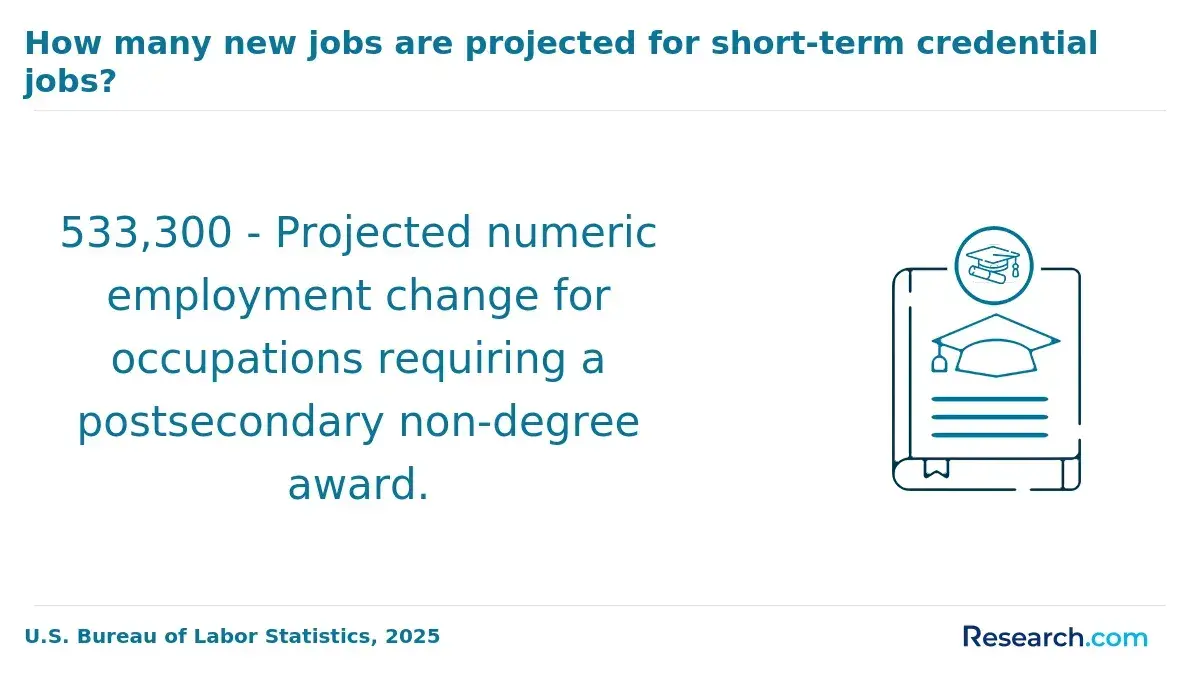
Job outlook should also influence education decisions. BLS projected much faster-than-average growth for software developers, quality assurance analysts, and testers over the 2024-2034 period, which supports the value of transferable software skills. For game-focused students, the key takeaway is to build a skill set that qualifies for both game and non-game technical roles.
When comparing salaries, avoid looking only at the highest posted number. A lower salary with a 40-hour norm, strong benefits, remote flexibility, and low turnover may be a better work-life choice than a higher offer tied to repeated launch crunch.
How can you choose an accredited game programming program?
Accreditation matters because it affects financial aid eligibility, transfer credit, graduate school options, and employer confidence. For U.S. students, the first step is to confirm that the institution is accredited by an agency recognized by the U.S. Department of Education or the Council for Higher Education Accreditation.
Programmatic accreditation is less universal in game programming than in fields such as nursing or engineering, but some computing programs may hold ABET accreditation. ABET is not required for every game programming job, yet it can signal that a computing curriculum has been reviewed against external standards.
Use the following checklist before enrolling. These questions help you avoid expensive programs that sound exciting but do not support real career outcomes.
- Confirm institutional accreditation through an official accreditor database, not only the school's marketing page.
- Ask whether the specific program is computer science, software engineering, game programming, game design, or digital media, because those labels can mean very different curricula.
- Request a full cost estimate that includes tuition, fees, equipment, software, books, travel, housing if applicable, and portfolio or showcase expenses.
- Review required programming courses and make sure they include advanced coding, math, software engineering, and team-based technical projects.
- Ask how transfer credits are evaluated and whether you can receive a written estimate before paying a deposit.
- Look for career support tied to technical roles, including internship help, code portfolio review, mock technical interviews, and employer showcases.
- Review graduate portfolios and capstone projects to see whether students build playable, technically credible work.
- Ask about class size, instructor industry experience, tutoring, lab access, and support for online students if the program is remote.
Several red flags should slow your decision. Be careful with schools that guarantee employment, refuse to provide transparent cost information, rely mostly on flashy game trailers instead of code-heavy student work, or pressure you to enroll before you can compare financial aid offers.
The best program is not automatically the most famous or the most game-branded. It is the accredited option that fits your budget, teaches durable computing skills, produces a strong portfolio, and keeps multiple career paths open.
Other Things You Should Know About Game Programming & Development
Tools programmers, engine programmers, and technical support engineers most often work standard 40-hour weeks, especially in studios with fixed release calendars. These roles usually avoid the late-stage “crunch” common in live game production and often follow Monday-to-Friday office schedules or fully remote arrangements.
Many stable programming roles prefer a bachelor's degree in computer science, software engineering, game programming, or a related field. However, a strong portfolio, internships, open-source work, and proven engine experience can also matter significantly.
It can be stressful, especially in studios with frequent crunch, unstable funding, or live-service emergencies. Stress is usually lower in teams with realistic scopes, clear sprint planning, paid overtime policies, and strong engineering processes.
In 2027, roles like UI/UX programming and tools development in game programming are known for offering a better work-life balance. These positions often have structured tasks and clearer schedules, allowing developers to maintain regular working hours and minimize crunch time.
References
- Does the video game industry have a terrible work life balance? https://www.gameindustrycareerguide.com/video-game-industry-work-life-balance/
- Online Game School | Everything You Need to Know - CodaKid https://codakid.com/online-game-school/
- Game Design Requirements: Skills, Portfolio & Entry Guide | BSBI https://www.berlinsbi.com/blog/game-design-requirements-what-you-need-to-know-before-you-apply
- Explore Online Game Programming Courses | Code Your Own Games https://www.cgspectrum.com/courses/game-programming
- Game Schools Ranking | by GAMEducation https://www.gameschools.com/
- Choosing the right College/Program for Game Programming. https://www.gamedeveloper.com/programming/choosing-the-right-college-program-for-game-programming-
- The 10 Best Video Game Design Schools Online | 2023 https://gamedesigning.org/schools/online/
- Best Game Programming Certifications This Year https://gamedevacademy.org/best-game-programming-certifications/
- Game programming - ARTFX https://artfx.school/en/courses/master-programming/
- Game Developer Salaries by Country 2025-2026 https://optiveum.com/articles/game-developer-salaries-by-country/