2027 Online Game Programming and Development Degrees for Students Who Want Engine Programmer Roles

Co-Founder and Chief Data Scientist
Choosing an online game programming degree is really a career-design decision: will the program build the low-level coding, math, tools, and portfolio evidence needed for engine programmer roles? The stakes are higher as studios adopt Unreal, Unity, proprietary engines, AI-assisted workflows, and performance-heavy cross-platform production. The U. S. market remains large, with the Entertainment Software Association reporting 190.6 million U. S. players in 2024. This guide helps aspiring engine programmers compare degree types, costs, accreditation, technical coursework, online formats, and career outcomes before enrolling.
Key Things You Should Know
- Engine programmer preparation should emphasize C++, data structures, computer graphics, physics, memory management, multithreading, debugging, profiling, and engine architecture-not only game design or asset creation.
- For salary context, the U.S. Bureau of Labor Statistics reported a 2024 median pay of $133,080 for software developers, while projected employment growth for software developers from 2023 to 2033 was 17%.
- Cost comparisons should include total tuition, fees, software or hardware needs, transfer credit, and aid; College Board's 2024-25 published tuition and fees averaged $11,610 for in-state public four-year colleges and $43,350 for private nonprofit four-year colleges.
What is an online game programming and development degree and how does it prepare engine programmers?
An online game programming and development degree is a computing-focused program that teaches students how to build interactive software, gameplay systems, tools, simulations, and game-engine features. For engine programmer roles, the strongest programs look closer to applied computer science than to visual game design: they require rigorous programming, math, architecture, debugging, and performance optimization.
An engine programmer works on the technical foundation that lets a game run. Depending on the studio, this may include rendering pipelines, physics systems, animation systems, asset pipelines, memory allocation, networking, build tools, platform optimization, or integrations with Unreal Engine, Unity, or a proprietary engine. Gameplay programmers often implement mechanics; engine programmers usually build or improve the systems that gameplay programmers rely on.
Students comparing a broad video game development degree should check whether the curriculum is programming-heavy enough for engine work. A design-centered program can be valuable for creative production roles, but engine hiring usually rewards evidence of advanced C++, systems thinking, math fluency, and shipped technical projects.
The table below summarizes common online degree options and how well they usually align with engine programmer preparation. Use it as a fit check, not as a substitute for reading each school's course catalog.
| Program type | Typical focus | Engine programmer fit | Best for |
| Associate degree in game programming | Introductory coding, scripting, game tools, general education | Limited by itself, but useful as a transfer path | Students seeking a lower-cost start or a bridge into a bachelor's program |
| Bachelor's in game programming or game development | Programming, math, game engines, production, capstone projects | Strong if it includes C++, graphics, data structures, and systems coursework | Most entry-level engine programmer candidates |
| Bachelor's in computer science with game electives | Algorithms, systems, software engineering, theory, electives | Often strong, especially for engine, tools, and platform roles | Students who want game options plus broader software career flexibility |
| Master's in game programming, computer science, or interactive technology | Advanced graphics, simulation, AI, research, specialized systems | Strong for specialization, but usually not required for entry-level roles | Students with prior coding background targeting advanced technical roles |
| Certificate or bootcamp | Narrow tools, portfolio projects, accelerated skill building | Useful supplement, rarely a complete substitute for systems depth | Career changers filling specific technical gaps |
A good online degree should help you graduate with more than course credits. It should help you demonstrate a working engine feature, a performance-optimized system, readable code, version-control habits, technical documentation, and the ability to explain engineering trade-offs.
What courses and technical skills do online game programming programs teach for engine roles?
For engine roles, course titles matter less than the technical depth behind them. A program that advertises "game development" but teaches mostly scripting, level design, or production management may not prepare students for low-level engine work.
The strongest curricula usually combine computer science fundamentals with game-specific systems. Before enrolling, look for coursework that builds the following skill clusters:
- Core programming: C++, object-oriented design, data structures, algorithms, software engineering, debugging, testing, and version control.
- Engine foundations: game architecture, entity-component systems, build systems, asset pipelines, scripting integration, editor tools, and runtime systems.
- Math and simulation: linear algebra, vectors, matrices, calculus basics, numerical methods, collision detection, physics, animation math, and spatial reasoning.
- Graphics and performance: rendering pipelines, shaders, GPU concepts, lighting, optimization, profiling, memory management, multithreading, and platform constraints.
- Production fluency: Agile workflows, code review, technical documentation, team capstones, source control branching, issue tracking, and milestone delivery.
AI is changing game production, but it has not removed the need for systems-level programmers. AI-assisted coding can speed up routine tasks, while studios still need engineers who can profile a frame-rate drop, fix platform-specific crashes, reason about memory, and validate generated code. Students interested in deeper machine learning, agent behavior, or research-oriented AI systems may eventually compare an online PhD in artificial intelligence usa, but that is a very different path from most entry-level engine programming roles.
The table below shows how common courses map to engine-related responsibilities. It can help you identify whether a program's curriculum supports your target role or is mainly oriented toward design and production.
| Course area | What it should teach | Why it matters for engine roles |
| C++ programming | Pointers, memory, templates, build systems, debugging | Many engines and proprietary systems use C++ for performance-critical code |
| Data structures and algorithms | Complexity, containers, graphs, search, sorting | Engine work requires efficient systems under real-time constraints |
| Computer graphics | Rendering pipeline, shaders, cameras, lighting, GPU basics | Rendering and visual performance are central engine specializations |
| Operating systems or systems programming | Threads, processes, memory, file systems, concurrency | Engine programmers often optimize runtime behavior across platforms |
| Physics or simulation | Collision, rigid bodies, constraints, numerical integration | Simulation systems affect gameplay feel, stability, and performance |
| Capstone or team project | Collaborative production, technical ownership, documentation | Employers need proof that students can contribute to a real codebase |
A common mistake is assuming that learning Unreal Engine blueprints or Unity scripting alone is enough. Those skills are useful, but engine programmer portfolios should also show source-code-level problem solving, profiling results, and technical explanations of why a system was built a certain way.
How do online game programming and development degrees compare to campus-based programs?
Online and campus-based game programming degrees can both lead toward engine roles, but they create different learning conditions. The best choice depends on your schedule, learning style, access to equipment, need for networking, and ability to stay disciplined without a physical lab environment.
The comparison below highlights the practical trade-offs students should weigh. It is especially useful if you are choosing between a local campus program and a fully online or hybrid computing degree.
| Factor | Online game programming degree | Campus-based game programming degree | Decision point |
| Schedule | Often asynchronous or evening-friendly | Usually fixed class and lab times | Online may fit working adults better |
| Collaboration | Uses Git, chat, video meetings, remote project tools | Offers in-person labs, clubs, jams, and studio spaces | Campus may help students who need frequent face-to-face feedback |
| Hardware access | Student may need a capable personal computer | Campus labs may provide workstations and specialized devices | Online students should budget for hardware before enrolling |
| Networking | Depends on virtual events, alumni access, and project teams | May offer more local studio visits and peer contact | Ask how online students connect with faculty, alumni, and employers |
| Portfolio development | Can be strong if projects are code-heavy and team-based | Can be strong if lab support and faculty critique are active | Format matters less than project quality and technical rigor |
Online programs can be excellent for students who already code, can manage deadlines, and want geographic flexibility. They can be weaker for students who need structured in-person accountability or who struggle to troubleshoot technical problems independently.
To compare formats realistically, ask admissions and faculty these questions before committing:
- Are engine-related courses taught by faculty with professional programming, graphics, tools, or systems experience?
- Do online students complete team-based projects using industry-standard version control and issue tracking?
- Can online students access tutoring, code reviews, office hours, career services, game jams, and portfolio feedback?
- What hardware and software are required, and are cloud labs or remote desktops available?
- How many credits can transfer from prior college work, military training, or industry certifications?
The biggest red flag is a program that treats online delivery as recorded lectures only. Engine programming is learned by building, breaking, debugging, and improving systems, so feedback loops are essential.
What education background and prerequisites do you need for an online game programming degree?
Admissions requirements vary by degree level, but engine-focused students benefit from entering with a stronger math and programming base than the minimum application checklist may require. If you are new to coding, you can still start, but you should expect a steeper first year.
The table below summarizes typical preparation by program level. Requirements differ by school, so use this as a planning guide rather than a universal admissions rule.
| Program level | Typical admissions background | Preparation that helps engine-focused students |
| Associate degree | High school diploma or GED, placement tests, basic math readiness | Introductory Python or C++, algebra, basic game engine experimentation |
| Bachelor's degree | High school diploma or transfer credits, transcripts, possible math placement | Precalculus, introductory programming, problem-solving practice, Git basics |
| Transfer-completion bachelor's | Prior college credits, often general education and introductory computing courses | Completed programming sequence, discrete math, calculus or linear algebra if available |
| Master's degree | Bachelor's degree, transcripts, programming background, possible portfolio or prerequisites | Strong C++ or systems experience, algorithms, linear algebra, prior technical projects |
Students who want engine roles should not wait until senior year to build technical depth. The earlier you strengthen math, systems programming, and debugging habits, the easier advanced graphics and engine courses become.
If your background is weak, take these steps before or during your first term:
- Complete a beginner programming course and then move quickly into C++ fundamentals, including memory, pointers, and debugging.
- Review algebra, trigonometry, and vectors before taking linear algebra or computer graphics.
- Install Git and learn basic branching, commits, pull requests, and repository documentation.
- Build one small game or simulation and write a short technical postmortem explaining what failed and how you fixed it.
- Ask the program whether remedial math or introductory coding courses count toward graduation or add extra cost.
Avoid choosing the fastest program if it skips prerequisites you actually need. Accelerated schedules can work well for experienced programmers, but beginners may need more time to absorb C++, math, and debugging skills.
How can you identify accredited and reputable online game programming and development schools?
Accreditation matters because it affects transfer credit, federal financial aid eligibility, graduate school options, and employer trust. For online game programming degrees, start with institutional accreditation, then look for program-level quality signals.
Institutional accreditation should come from an agency recognized by the U.S. Department of Education or the Council for Higher Education Accreditation. Some computing programs may also hold ABET accreditation, which can be a useful signal of computing rigor, but many legitimate game-related programs do not have ABET accreditation. The absence of ABET is not automatically disqualifying; the absence of recognized institutional accreditation is a much bigger concern.
Use the checklist below to evaluate whether an online program is reputable enough for an engine-focused student:
- Verify recognized institutional accreditation through official accreditation databases, not only the school's marketing page.
- Read the full curriculum and confirm that required courses include advanced programming, math, computer graphics, systems, or software engineering.
- Review faculty backgrounds for professional software, games, graphics, simulation, or computing experience.
- Ask for examples of student capstones, portfolios, technical demos, or project repositories.
- Check whether online students receive the same degree title, transcript, career support, and faculty access as campus students.
- Confirm transfer policies, credit expiration rules, prior learning assessment options, and residency requirements.
Red flags include vague accreditation claims, pressure-heavy admissions calls, no public course catalog, unclear tuition and fee disclosures, weak math requirements, and portfolio examples that show only game art or design documents. Engine roles require evidence of code quality and technical problem solving.
Reputation should be evaluated by outcomes and fit, not by brand alone. A lesser-known public university with rigorous computing courses may be a better engine pathway than a famous creative school whose online program is mostly design-focused.
What is the typical length, credit load, and structure of online game programming degrees?
Online game programming degrees vary widely in length because students enter with different transfer credits and study loads. For planning purposes, the biggest variables are credit requirements, term structure, course sequencing, and whether advanced technical classes are offered every term.
The table below gives typical U.S. structures for online degree pathways. Individual schools may use semesters, quarters, eight-week terms, or competency-based pacing.
| Credential | Typical credit load | Common full-time length | Common part-time length | Structure notes |
| Certificate | 12 to 30 credits | Several months to 1 year | 1 to 2 years | Best for targeted skills, not broad engine preparation |
| Associate degree | About 60 credits | 2 years | 3 to 4 years | Often used for transfer into a bachelor's program |
| Bachelor's degree | About 120 credits | 4 years | 5 to 6 years or more | Main entry route for many programming roles |
| Master's degree | 30 to 45 credits | 1 to 2 years | 2 to 4 years | Best for specialization after a technical bachelor's degree |
According to the National Center for Education Statistics, U.S. postsecondary institutions continue to serve large numbers of distance learners, and 2024 federal reporting keeps online education as a standard part of higher education rather than a niche format. For students, that means there are more legitimate online options, but also more variation in quality.
When reviewing a degree plan, pay close attention to course sequencing. If computer graphics, engine architecture, or advanced C++ are offered only once per year, dropping or failing one course can delay graduation. Ask for a sample degree map for both full-time and part-time pacing.
Online students should also budget time for portfolio work outside assigned coursework. A degree plan may show 120 credits, but engine hiring often depends on what you build beyond minimum assignments: custom tools, rendering experiments, physics demos, optimization reports, or contributions to team projects.
What are the total costs of online game programming degrees and what financial aid is available?
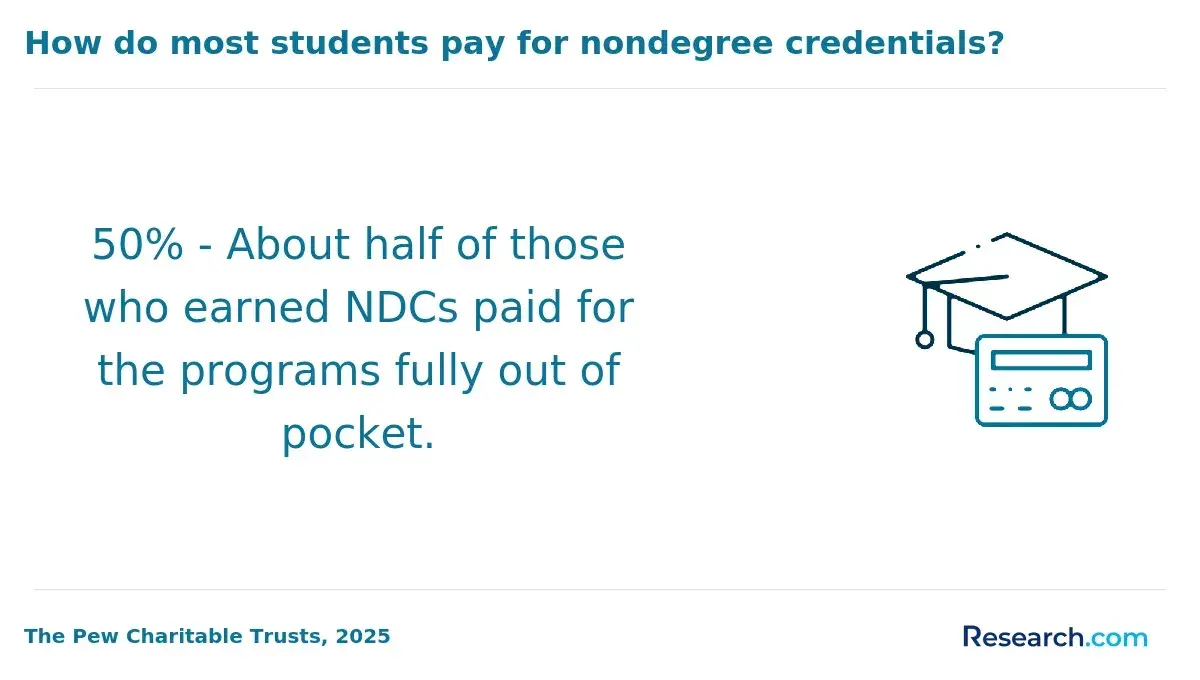
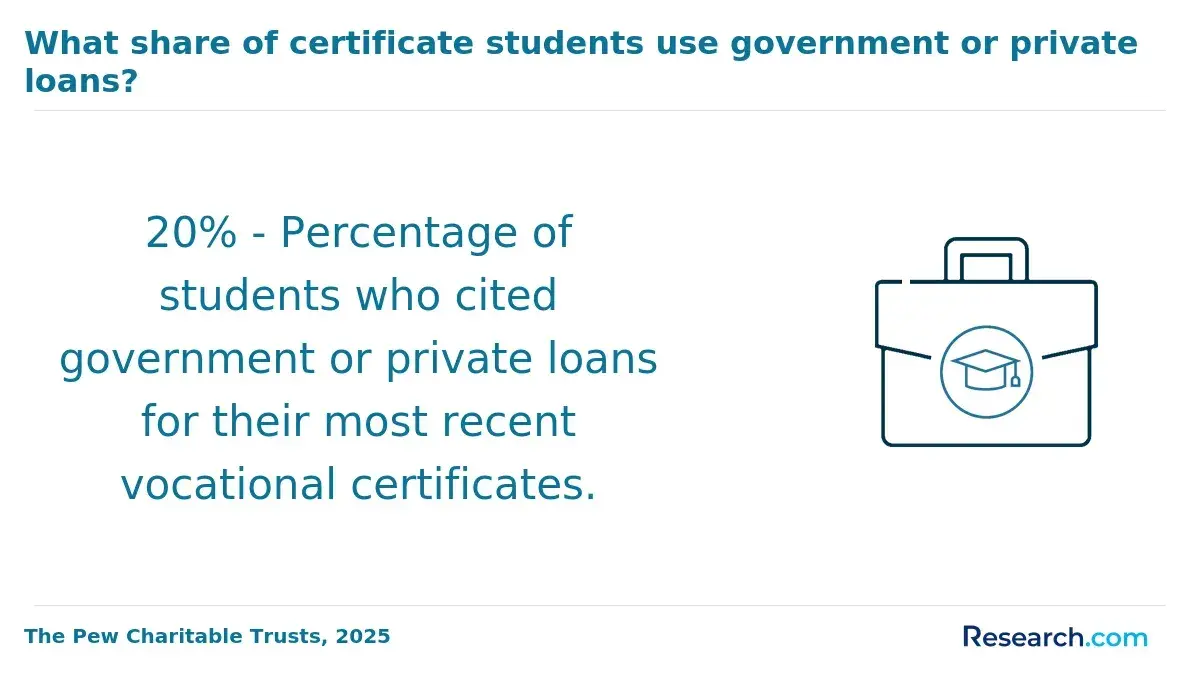
The total cost of an online game programming degree is more than tuition. Students should compare tuition, mandatory fees, technology fees, course materials, software subscriptions, hardware, transfer credit, lost work hours, and the cost of taking extra prerequisite courses.
For a national benchmark, College Board reported average published 2024-25 tuition and fees of $11,610 for in-state public four-year institutions and $43,350 for private nonprofit four-year institutions. Online program prices can be lower or higher than those figures, especially when schools charge separate online rates, but the benchmark helps you recognize whether a quote is unusually high.
Use this cost checklist when comparing programs so you do not underestimate the final price:
- Tuition per credit and the total number of credits required after transfer evaluation.
- Mandatory online, technology, graduation, lab, proctoring, and course-specific fees.
- Required hardware, including a graphics-capable computer, storage, headset, drawing tablet if needed, and reliable internet.
- Software costs for engines, IDEs, plugins, version-control tools, cloud services, or specialized production software.
- Costs of repeated courses, prerequisite courses, or credits that do not count toward the degree.
- Opportunity cost, especially if a full-time schedule reduces your ability to work.
Financial aid may include federal grants, federal student loans, state aid, institutional scholarships, employer tuition assistance, veterans benefits, and private scholarships. The maximum Federal Pell Grant for the 2024-25 award year was $7,395, but eligibility depends on financial need, enrollment intensity, program eligibility, and FAFSA results.
To reduce cost without weakening career preparation, prioritize transfer credit, public in-state online options, employer aid, and programs that include portfolio-ready projects within required courses. Be cautious with very cheap programs if they lack advanced computing depth, and be equally cautious with expensive programs that cannot show strong technical outcomes.
Which game programming degree pathways best lead to engine programmer and related careers?
The best degree pathway depends on whether your target is engine programming specifically or a related technical role in games. Engine roles usually require deeper systems knowledge than general game production roles, so the safest pathway is often a bachelor's degree in computer science, software engineering, game programming, or a closely related computing field with strong C++ and graphics coursework.
The table below compares common pathways by career alignment. It can help you choose a route that matches your actual goal rather than the most exciting program title.
| Target role | Strong degree pathway | Portfolio evidence employers may value | Alternative route |
| Engine programmer | Bachelor's in computer science, software engineering, or game programming | Rendering demo, memory optimization, custom engine feature, profiling report | CS degree plus game engine projects and internships |
| Tools programmer | Computer science, software engineering, or game development with tools courses | Editor plugin, pipeline automation, build tool, asset importer | Software degree plus Python, C#, C++, and production tooling projects |
| Graphics programmer | Computer science with graphics specialization or game programming degree | Shader work, rendering pipeline, GPU profiling, lighting or post-processing demo | Master's study for advanced rendering or simulation specialization |
| Gameplay programmer | Game programming, computer science, or interactive media with coding depth | Playable systems, AI behavior, controls, combat, networking, polished mechanics | Strong portfolio plus software fundamentals |
| Technical designer | Game development, game design with scripting, or interactive media | Blueprint systems, prototypes, tuning tools, design documentation | Design degree plus scripting and engine tools |
A data science PhD online is typically better aligned with research, analytics, machine learning, or data leadership than with entry-level engine programming. It may make sense for students targeting player behavior modeling, game analytics, recommender systems, or AI research, but it is not the shortest route into engine teams.
Choose the engine-focused path if you enjoy low-level technical problems, performance constraints, math-heavy systems, and debugging complex failures. Consider a different path if you mainly want to design levels, write stories, manage production, create 3D assets, or use engines without building their underlying systems.
For students starting from scratch, a practical pathway often looks like this:
- Begin with foundational programming, discrete math, and linear algebra as early as possible.
- Build small technical projects before attempting a full game, such as a collision demo, shader demo, or custom editor tool.
- Use electives for graphics, operating systems, networking, physics, compilers, or parallel programming when available.
- Complete a capstone where you own a technical subsystem and can explain the architecture.
- Apply for internships, QA automation roles, tools internships, software internships, or modding teams to gain codebase experience.
The common mistake is choosing the most game-branded degree without checking whether it teaches enough computer science. For engine roles, the transcript and portfolio should show that you can write efficient software, not just that you love games.
What salary ranges and job outlook can engine programmers expect in the U.S. game industry?
Engine programmer salaries vary by studio size, location, specialization, seniority, platform, and whether the employer is a game studio, technology company, simulation firm, defense contractor, or software publisher. Because the BLS does not publish a separate national category for "engine programmer," software developer data is the most reliable broad U.S. benchmark.
The BLS reported a 2024 median annual wage of $133,080 for software developers. That number should not be read as a guaranteed game industry salary; it is a national software benchmark that includes many industries. For engine-focused students, it shows that the underlying software skill set has strong labor-market value beyond games.
The table below frames salary and outlook using realistic role categories rather than promising a single game-specific number. Use it to understand how engine programming relates to the wider software labor market.
| Role category | Typical work | Salary context | Outlook considerations |
| Junior game programmer | Gameplay tasks, bug fixes, tools support, scripting, small systems | Often below experienced software developer medians | Competitive entry-level market; portfolio and internships matter |
| Engine programmer | Runtime systems, rendering, memory, platform optimization, architecture | Can align with higher-skill software developer roles when C++ and systems depth are strong | Demand depends on studio hiring cycles and technical specialization |
| Graphics programmer | Shaders, rendering pipelines, GPU optimization, visual systems | Specialized technical skill can support stronger compensation potential | Advanced math and graphics portfolios are important |
| Tools programmer | Editors, pipeline automation, build systems, workflow tools | May overlap with software engineering and developer productivity roles | Skills transfer well to non-game software environments |
| Software developer outside games | Applications, platforms, cloud tools, systems, enterprise software | BLS software developer median provides the broadest benchmark | Broader market can provide fallback options if game hiring slows |
The BLS projected 17% employment growth for software developers from 2023 to 2033, much faster than the average for all occupations. For prospective students, the key takeaway is not that game jobs are easy to get; it is that strong software development skills can remain useful even if the game industry experiences layoffs or hiring freezes.
Current hiring trends make specialization important. Studios increasingly expect candidates to show practical experience with engine workflows, optimization, collaboration tools, and readable production code. AI coding tools may help with boilerplate, but they also increase the value of engineers who can review, test, profile, and maintain complex systems safely.
Are there certifications, portfolios, or industry standards that strengthen engine programmer prospects?
Engine programmer hiring is usually portfolio-driven. A degree can help you pass education filters and build fundamentals, but employers often want proof that you can solve technical problems in a real codebase. Certifications can support that proof, but they rarely replace a strong project portfolio.
The strongest portfolio pieces are small enough to understand and deep enough to prove engineering ability. Instead of showing ten unfinished games, engine candidates are often better served by three or four polished technical demos with source code, build instructions, performance notes, and a clear explanation of trade-offs.
Consider building portfolio evidence in these areas:
- A rendering feature such as deferred lighting, shadows, post-processing, terrain rendering, or a shader system.
- A performance case study showing before-and-after profiling results, bottleneck analysis, and optimization decisions.
- A custom engine subsystem such as an entity-component system, asset loader, physics integration, input layer, or memory allocator.
- A tools project such as an editor plugin, asset pipeline utility, build automation script, or debugging visualization tool.
- A team project where you can identify your technical ownership, code contributions, documentation, and collaboration process.
Certifications can be useful when they match the tools used in your target role. Unity or Unreal credentials may help validate engine familiarity, while cloud, C++, graphics, or software testing credentials can support adjacent skills. However, a certification that only proves basic tool usage will not carry much weight for engine roles unless paired with source-code-level projects.
Just as students evaluating another credential might ask is a masters in library science worth it, game programming students should judge each certificate or degree by its career fit, cost, credibility, and evidence produced. The right question is not "Will this credential impress employers?" but "Will this credential help me build skills and proof that match the role?"
Before applying for engine internships or junior roles, prepare these materials:
- A resume that highlights C++, graphics, systems, tools, math, and team programming experience.
- A GitHub or code portfolio with clean repositories, readable commits, build instructions, and technical documentation.
- A short demo reel or project page that shows the system running and explains what you built.
- Technical write-ups that describe constraints, bugs, performance problems, and design decisions.
- Interview preparation for data structures, C++, debugging, math, architecture, and code review discussions.
Avoid hiding your code behind only screenshots or gameplay videos. For engine roles, the implementation is often more important than the visual result.
Other Things You Should Know About Game Programming & Development
Not always. A game programming degree can work if it has strong computer science depth. However, a computer science or software engineering degree often provides broader career flexibility and may be stronger for engine, tools, graphics, and platform roles.
In 2027, an online game programming degree can be worth it for aspiring engine programmers. It provides foundational knowledge in programming and game engines while offering flexibility for self-directed study. However, practical experience and portfolio projects are crucial for industry readiness.
An online game development degree should include calculus I and II, linear algebra, discrete mathematics, and physics focused on mechanics and vectors. Engine programmers use these subjects for rendering, collision detection, animation, and simulation. Many programs require about 12 to 18 credit hours in this technical core.
References
- Is Game Programming a Good Career Path? Opportunities, Salary, Outlook - Champlain College https://www.champlain.edu/blog/stories/game-programming-career-path/
- Video Game Jobs | Job Outlook for Game Developers in 2026 and Beyond https://videogamejobs.co/blog/job-outlook-for-game-developers
- Programmer Certifications: Best Credentials to Advance Your Career | Teal https://www.tealhq.com/career-paths/programmer-certifications
- Online Game Development Courses | Learn from Top Game Devs https://www.cgspectrum.com/courses/game-development
- Paying for a Computer Science Degree | Scholarships, Grants, Loans https://www.computerscience.org/resources/how-to-pay-for-a-degree/
- Admissions : Campus Tuition | Full Sail University https://www.fullsail.edu/admissions/tuition
- How to Start Your Game Development Career | OEd https://oed.com.ph/courses-to-work-in-game-development/
- African Leadership University (ALU) https://www.alueducation.com/best-certifications-for-software-developers/
- Circuit Stream · Your Guide to the Different Career Pathways You Can Take in the Game Development Industry https://www.circuitstream.com/blog/your-guide-to-the-different-career-pathways-you-can-take-in-the-game-development-industry
- Salaries in game development industry | InGame Job https://ingamejob.com/en/salaries