2027 Online Game Programming and Development Degrees With the Best Financial Aid Guidance

Co-Founder and Chief Data Scientist
Choosing an online game programming degree is really a cost, time, and career-fit decision. The Entertainment Software Association reported in 2024 that about 190.6 million Americans play video games, which helps explain why schools now offer more flexible game development pathways. This guide is for prospective students, career changers, and parents comparing online programs, financial aid, and job outcomes. You will learn how to judge program quality, estimate total cost, compare degree levels, and avoid expensive mistakes before enrolling.
Key Things You Should Know
- Online game development degrees are best for students who want structured training in programming, game engines, design systems, math, and portfolio development rather than a short, tool-specific bootcamp.
- Financial aid can materially change affordability: the maximum Federal Pell Grant is $7,395 for the 2025-26 award year, but eligibility depends on the FAFSA, enrollment status, school participation, and financial need.
- Career outcomes vary by role: the BLS reported a 2024 median pay of $133,080 for software developers, quality assurance analysts, and testers, while computer programmers had a lower median of $98,670 and a declining long-term outlook.
What are online game programming and development degrees, and who are they best for?
Online game programming and development degrees teach students how interactive software is designed, coded, tested, optimized, and shipped. Programs usually combine computer science, mathematics, game engines, graphics, artificial intelligence, user experience, production workflows, and portfolio projects. The "programming" side focuses more heavily on code, algorithms, physics, tools, and systems. The "development" label may also include design, production, storytelling, asset pipelines, and quality assurance.
These degrees are best for learners who want a career connected to games but also want transferable software skills. A strong program should prepare you for game studios, simulation companies, educational technology firms, defense contractors, health technology teams, and broader software development roles. That transferability matters because the game industry can be competitive, project-based, and sensitive to hiring cycles.
The degree may be a strong fit if you can tolerate repeated testing, debugging, iteration, and critique. It may not be the best first choice if you mainly want to play games, write stories, or make visual art without learning technical production. Students comparing technology niches may also want to look at adjacent options such as blockchain degrees, cybersecurity, computer science, or data analytics if they want a broader non-game career market.
Before choosing a program, clarify what kind of work you want to do. The table below shows how common student goals map to better-fit academic paths.
| Student goal | Best-fit path | Why it fits |
| Build game mechanics, tools, and engine systems | BS in game programming, software engineering, or computer science with game electives | Prioritizes coding depth, math, algorithms, and technical portfolio work |
| Design levels, systems, and player experiences | BA or BS in game design or interactive media | Emphasizes design documents, prototyping, playtesting, and player psychology |
| Enter the field quickly or upskill while employed | Certificate, minor, or post-baccalaureate program | Can build targeted skills faster, though it may not replace a degree for some employers |
| Work in animation, 3D modeling, or visual effects | Digital arts, animation, or game art program | Focuses on asset creation, visual pipelines, and art portfolios rather than software systems |
How do online game development programs compare with campus-based options?
Online and campus-based game development programs can cover similar technical material, but the learning experience is different. The key question is not whether online is automatically easier or cheaper; it is whether the program gives you enough feedback, collaboration, software access, portfolio review, and career support to compete for internships or entry-level work.
The comparison below highlights the practical trade-offs that matter most when deciding between online and campus formats.
| Factor | Online game development degree | Campus-based game development degree |
| Schedule flexibility | Often better for working adults, military students, parents, and students outside major studio hubs | Usually better for students who can attend fixed class times and in-person labs |
| Collaboration | Depends on virtual production tools, team projects, and instructor availability | Often easier to build in-person teams for game jams, lab work, and critique sessions |
| Software and hardware access | Requires checking whether students receive engine, cloud, lab, or remote workstation access | May provide physical labs, VR equipment, motion capture, or specialized machines |
| Networking | Can be strong if the school offers virtual showcases, industry mentors, and alumni channels | Can be stronger when the campus is near studios or hosts in-person recruiting events |
| Cost control | May reduce housing and commuting expenses, but technology fees can add up | May include higher living costs but can offer campus jobs, labs, and in-person support |
Online programs make the most sense if you are disciplined, already have a capable computer setup, and need flexibility. Campus programs may be better if you learn best in studios, need access to specialized equipment, or want a daily peer community. A hybrid option can be a good middle ground when it combines online lectures with short residencies, game jams, or studio intensives.
Ask each school how online students participate in team projects. Game development is rarely a solo profession, so a program that has no collaborative production sequence, no version-control workflow, and no portfolio critique may leave graduates underprepared even if the course titles look appealing.
What financial aid options exist for online game programming and development students?
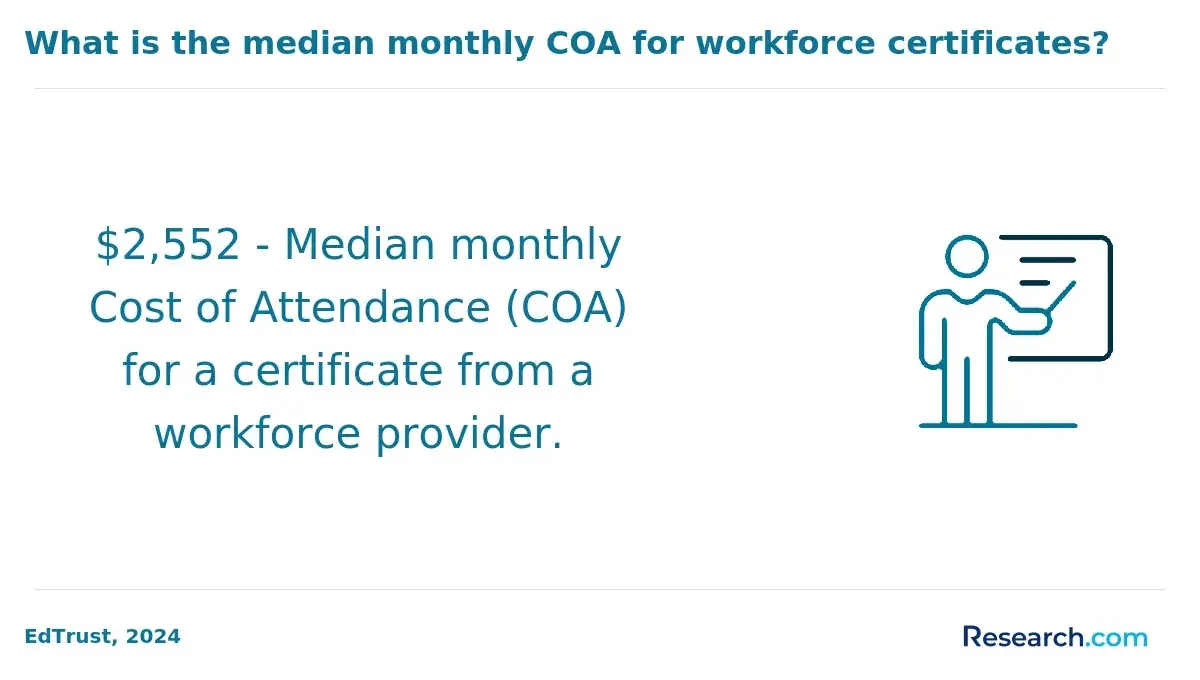
Online students may qualify for many of the same financial aid sources as campus students if they attend an eligible, accredited institution and meet program and enrollment requirements. The most important first step is completing the FAFSA, because it determines eligibility for federal grants, federal loans, work-study, and many state or institutional aid programs.
For the 2025-26 award year, the maximum Federal Pell Grant is $7,395. That amount is not automatic; it depends on financial need, cost of attendance, enrollment intensity, and whether the school participates in federal student aid programs. For game development students, Pell Grants are especially valuable because they do not have to be repaid unless eligibility rules are violated.
Common aid sources include several categories, each with different risks and benefits. Review the full package, not just the award headline.
- Federal grants: Pell Grants and other need-based aid can reduce out-of-pocket cost without adding loan debt.
- Federal student loans: Direct Subsidized and Unsubsidized Loans can fill gaps, but repayment and interest should be considered before borrowing.
- State grants: Some states offer grants for residents attending eligible online programs, though rules vary by state and school location.
- Institutional scholarships: Schools may offer merit, need-based, transfer, military, adult learner, or portfolio-based scholarships.
- Employer tuition assistance: Working students may receive education benefits if the degree supports software, simulation, IT, or digital media work.
- Military and veteran benefits: Eligible students may use GI Bill benefits, military tuition assistance, or school-specific veteran scholarships.
- Private scholarships: Professional associations, local foundations, and technology organizations may fund students in computing, digital arts, or STEM fields.
To compare aid offers accurately, focus on net price and borrowing. A school with higher tuition can sometimes be cheaper after grants and scholarships, while a lower-tuition school can become expensive if it requires more fees, extra software, or repeated courses that do not transfer.
Use this sequence before committing to a program. It helps prevent the common mistake of enrolling before knowing the real bill.
- Confirm that the school and specific online program are eligible for federal student aid.
- Submit the FAFSA as early as possible and list every school you are seriously considering.
- Ask each school for a cost-of-attendance estimate that includes tuition, fees, books, software, hardware, and required residencies.
- Compare grants and scholarships separately from loans so you know what must be repaid.
- Ask whether aid changes if you study part time, transfer credits, fail a course, or pause enrollment.
- Borrow only after calculating the monthly payment range and comparing it with realistic entry-level career paths.
How can you evaluate accreditation and program quality for game development degrees?
Accreditation is one of the first quality checks because it affects federal financial aid eligibility, transfer credit, graduate school options, and employer confidence. In the U.S., institutional accreditation from an agency recognized by the U.S. Department of Education or the Council for Higher Education Accreditation is the baseline. Programmatic accreditation is less common in game development than in fields such as nursing or engineering, so students should also evaluate curriculum depth, faculty experience, portfolio outcomes, and career support.
Do not assume that a flashy game lab, celebrity speaker, or impressive trailer proves academic quality. Game programs should be judged by what students build, how they are mentored, and whether graduates leave with marketable technical evidence. The same careful review applies across online applied degrees; for example, students researching the best exercise science degree online also need to verify accreditation, field expectations, and total cost rather than relying only on marketing claims.
Use these checks to separate stronger programs from risky ones. They are especially important for online students who may not be able to inspect facilities in person.
- Verify institutional accreditation through official accreditor or federal databases, not only the school's website.
- Review the curriculum for programming depth, including C++, C#, data structures, algorithms, graphics, physics, networking, and version control where relevant.
- Ask to see student portfolio examples, capstone games, production reels, or public showcase pages.
- Confirm that online students receive the same academic advising, tutoring, library access, career services, and disability accommodations as campus students.
- Check whether faculty have experience in shipped games, software engineering, simulation, interactive media, or research areas relevant to your goal.
- Ask how team projects are managed online, including source control, sprint planning, QA, documentation, and peer review.
- Review transfer credit, withdrawal, refund, and satisfactory academic progress policies before accepting aid.
Red flags include vague job placement claims, pressure to enroll quickly, unclear accreditation language, no portfolio requirements, very limited programming coursework, and refusal to provide a full cost estimate. Another warning sign is a program that teaches only one commercial tool without explaining underlying software principles; tools change, but programming fundamentals remain useful.
What types of game programming and development degrees can you earn online?
Online game-related credentials range from short certificates to graduate degrees. The best choice depends on your current education, career goal, budget, and how much technical depth you need. A student seeking a first software role usually needs more structure than a working developer who only wants to add Unity, Unreal Engine, or interactive media skills.
The table below compares common online credential levels and the types of students they usually serve.
| Credential | Typical focus | Best for | Decision note |
| Certificate | Game engines, scripting, design tools, or portfolio projects | Career changers testing the field or professionals adding a skill | Lower commitment, but may not satisfy degree-preferred job postings |
| Associate degree | Introductory programming, design fundamentals, math, and general education | Students seeking a lower-cost start or transfer pathway | Transfer agreements are critical if a bachelor's degree is the end goal |
| Bachelor's degree | Programming, production, systems, graphics, AI, engines, and capstone work | First-time degree seekers targeting entry-level technical roles | Often the most complete undergraduate pathway for internships and portfolio building |
| Master's degree | Advanced graphics, AI, research, production leadership, or specialized interactive systems | Developers, designers, educators, or researchers seeking advancement | Works best when aligned with a clear specialization or career pivot |
Some students should consider starting with a broader computer science or software engineering degree and adding game electives, especially if they want maximum labor-market flexibility. Others may prefer a specialized game development degree because it provides more direct production experience and a game-focused portfolio.
Online learning is now common across many applied fields, from software-heavy programs to an online bachelors in animal science. The lesson for game students is that format alone does not determine quality; the deciding factors are curriculum design, support, assessment, and whether hands-on work is realistically supported at a distance.
What courses and technical skills are taught in online game development programs?
Strong online game development programs teach both how to build games and why systems work. Students usually learn programming languages, engines, math, design principles, production workflows, optimization, testing, and teamwork. The goal is not simply to complete assignments; it is to create a portfolio that shows you can solve technical problems in playable projects.
Most programs include a mix of foundational computing, game-specific development, and production courses. The exact course names vary, but the core skill areas are fairly consistent.
- Programming languages: C++, C#, Python, JavaScript, or scripting languages used in engines and tools.
- Game engines: Unity, Unreal Engine, Godot, or proprietary engine concepts such as scenes, components, physics, rendering, and asset pipelines.
- Mathematics: Linear algebra, trigonometry, calculus basics, vectors, matrices, probability, and statistics for gameplay systems and graphics.
- Computer science fundamentals: Data structures, algorithms, object-oriented programming, software design, debugging, and memory concepts.
- Graphics and physics: Rendering pipelines, shaders, collision detection, animation systems, lighting, and performance optimization.
- Artificial intelligence: Pathfinding, behavior trees, decision systems, procedural generation, and basic machine learning concepts where applicable.
- Production skills: Agile workflows, version control, documentation, testing, quality assurance, milestone planning, and team communication.
- Portfolio development: Playable prototypes, capstone games, technical demos, code samples, postmortems, and presentation materials.
AI is changing expectations in game development, but it does not eliminate the need for fundamentals. Students may encounter generative tools for concepting, dialogue, asset workflows, test automation, or code assistance. The strongest programs teach students how to use these tools responsibly while still understanding performance, copyright concerns, debugging, and human-centered design.
Students interested in game analytics, player behavior, monetization systems, or AI-heavy development may benefit from comparing game programming with a data science degree. Data science can be a better fit if you are more interested in modeling, experimentation, and decision systems than in building gameplay mechanics or engine features.
What are typical admission requirements for online game programming and development degrees?
Admission requirements depend on the degree level and the selectivity of the institution. Associate and bachelor's programs usually focus on academic readiness, while master's programs may require prior coursework, programming experience, or a portfolio. Game art and design tracks may weigh creative samples more heavily than programming-focused tracks.
Applicants should expect some combination of the following requirements. The more technical the program, the more important math and coding preparation become.
- High school diploma, GED, or equivalent credential for undergraduate admission.
- Official transcripts from high school and any colleges previously attended.
- Minimum GPA requirement, which varies by school and may be flexible for adult learners or transfer students.
- Placement or prerequisite expectations in algebra, precalculus, programming, or English composition.
- Personal statement explaining career goals and interest in game development.
- Portfolio, code sample, design sample, or creative work for some game design, interactive media, or graduate programs.
- Letters of recommendation, especially for selective bachelor's completion or master's programs.
- English language proficiency documentation for applicants educated in another language.
If you are not ready for college-level math or programming, do not rush into a high-cost program. A community college course in programming, a discrete math refresher, or a lower-cost certificate can help you test your interest before committing to a full degree.
Transfer students should ask whether prior credits apply to general education, electives, or major requirements. A large transfer award is not always useful if most credits apply only as electives and do not shorten the time to graduation.
How long do online game development degrees take, and what do they cost?
Program length depends on the credential, course load, transfer credits, and whether the school uses traditional semesters or accelerated terms. A certificate may take a few months to a year, an associate degree commonly takes about two years full time, a bachelor's degree usually takes about four years full time, and a master's degree often takes one to three years depending on format.
Cost varies widely, so students should compare total cost rather than tuition alone. The College Board's 2024 Trends in College Pricing reported average published tuition and fees of $11,610 for in-state students at public four-year institutions and $43,350 at private nonprofit four-year institutions for 2024-25. Those averages are not game-specific, but they give useful context for judging whether a program's sticker price is unusually high or competitive.
The table below summarizes major cost drivers that can affect the final bill for online game development students.
| Cost factor | Why it matters | What to ask |
| Tuition model | Schools may charge per credit, per term, or flat-rate tuition for full-time enrollment | What is the exact tuition for my expected course load? |
| Transfer credits | Accepted credits can shorten time to degree and reduce cost | Which credits apply to major requirements, not just electives? |
| Technology requirements | Game development may require a powerful computer, storage, graphics capability, and peripherals | What hardware and software must I buy before the first term? |
| Software and engine access | Some tools are free for students, while others require subscriptions or licenses | Are required licenses included in tuition or fees? |
| Online and lab fees | Distance programs may charge technology, platform, or course-specific fees | What fees are mandatory each term? |
| Residencies or showcases | Some programs require travel for intensives, presentations, or graduation events | Are any in-person sessions required, and who pays travel costs? |
To estimate return on investment, compare the net cost after grants and scholarships with realistic job paths. A game development degree may be worth it if it builds strong software skills, produces a credible portfolio, and keeps debt manageable. It is harder to justify if the program is expensive, narrowly focused, weak on programming, and offers little career support.
Common cost mistakes include ignoring fees, assuming all credits will transfer, buying hardware too early, and borrowing up to the full cost of attendance without a repayment plan. A better approach is to ask for a written degree plan, a transfer evaluation, and a term-by-term cost estimate before enrollment.
What careers can you pursue with an online game programming and development degree?
An online game programming and development degree can lead to game-specific roles and broader software roles. The best outcome usually depends on your portfolio, internship experience, technical specialization, location, and willingness to apply outside traditional game studios. Because game hiring can be cyclical, students should build skills that also work in simulation, training, AR/VR, education, mobile apps, and enterprise software.
The table below connects common roles with typical responsibilities and the preparation that helps most.
| Career path | Typical responsibilities | Helpful preparation |
| Game programmer | Build gameplay systems, tools, UI behavior, physics interactions, and engine features | Strong C++ or C#, algorithms, debugging, engine experience, and portfolio projects |
| Gameplay engineer | Translate design ideas into playable mechanics and tune interactions with designers | Prototyping, math, player feedback loops, and collaborative production experience |
| Tools developer | Create internal tools that help artists, designers, and producers work faster | Software engineering, scripting, UX awareness, and pipeline knowledge |
| Quality assurance analyst or game tester | Test builds, document bugs, reproduce issues, and support release readiness | Detail orientation, test plans, communication, bug tracking, and technical curiosity |
| Technical designer | Bridge design and engineering by scripting systems, balancing content, and building prototypes | Game design, scripting, communication, and engine fluency |
| Simulation or AR/VR developer | Build interactive training, visualization, virtual reality, or mixed-reality applications | Real-time engines, optimization, 3D math, UX, and hardware awareness |
| Software developer outside games | Develop applications, platforms, tools, or interactive systems in non-game industries | Computer science fundamentals, clean code, testing, and general software portfolios |
Entry-level applicants should expect to prove ability through projects. A degree helps create structure and credibility, but employers often want to see playable work, readable code, version-control history, team experience, and evidence that you can finish a project.
To improve employability while enrolled, prioritize concrete outputs. Build small but polished projects, contribute to team games, write postmortems explaining your decisions, participate in game jams, and seek internships or contract work when possible.
What salary ranges and job outlook can game development graduates expect?
Salary outcomes in game development vary by role, region, employer, portfolio strength, and experience. It is safer to use broader U.S. occupational data than to assume every graduate will enter a studio role immediately. The BLS reported a 2024 median pay of $133,080 for software developers, quality assurance analysts, and testers, with projected employment growth of 17% from 2023 to 2033. That broad category includes many non-game software roles, so students should treat it as a labor-market reference point rather than a guaranteed game-industry salary.
The table below summarizes relevant U.S. occupational categories and how they connect to game development pathways.
| Occupational category | 2024 median pay | 2023-2033 outlook | How to interpret it |
| Software developers, quality assurance analysts, and testers | $133,080 | 17% growth | Most relevant for programming, tools, QA automation, and broader software roles |
| Computer programmers | $98,670 | Decline expected | Shows why students should build broader software engineering skills, not only coding syntax |
| Special effects artists and animators | $99,060 | 4% growth | More relevant for students on game art, animation, and visual effects tracks |
| Web developers and digital designers | $95,380 | 8% growth | Relevant for interactive media students who may work on web-based games or digital experiences |
The strongest salary strategy is to avoid over-specializing too early. Students who understand programming fundamentals, engine architecture, debugging, testing, collaboration, and performance optimization can apply to a wider set of roles. That flexibility is valuable when game studios slow hiring or when entry-level studio roles are highly competitive.
Location also matters. Major game and technology markets may offer more opportunities but higher living costs. Remote work exists, but entry-level candidates often benefit from internships, local networks, and portfolio visibility. Use salary data as one input in a broader decision that includes debt, relocation, cost of living, and the likelihood of building a competitive portfolio.
Other Things You Should Know About Game Programming & Development
Yes. Many 2027 online game programming and development degrees ask for a portfolio or coding sample, such as a small game, GitHub repository, or project demo. Schools may also require official transcripts, a minimum GPA, and proof of prerequisite math or programming coursework.
Many employers care more about skills, portfolio quality, teamwork, and problem-solving than whether the degree was online or on campus. However, the school's reputation, accreditation, curriculum, and project quality can still influence how competitive you are.
Yes, financial aid can cover an online game development degree in 2027. Prospective students should explore federal student aid options, merit-based scholarships, and institutional grants uniquely available for online programs. Consulting with a school's financial aid office ensures personalized guidance and maximized aid opportunities.
References
- Game Dev Financing: Explore Different Financial Aid Options https://www.m3dsacademy.com/game-dev-financing-explore-different-financial-aid-options/
- We help game developers learn and grow https://gamedev.tv/
- Salaries in game development industry | InGame Job https://ingamejob.com/en/salaries
- How important is colledge degree in game development? https://discussions.unity.com/t/how-important-is-colledge-degree-in-game-development/484055
- Project Horseshoe | Solving Game Design's Toughest Problems https://www.projecthorseshoe.com/2013/09/17/endorsement-of-game-design-game-development-courses-at-universities/
- How to Start Your Game Development Career | OEd https://oed.com.ph/courses-to-work-in-game-development/
- Online Game Development Courses: The Path to Mastering Virtual Worlds and Career Success https://macrobiangames.com/blog/online-game-development-courses/
- Career Path and Salary for Video Game Designers | ComputerScience.org https://www.computerscience.org/careers/video-game-designer/career-outlook-and-salary/
- Game Development Degrees: What You Need to Know https://www.ivywise.com/ivywise-knowledgebase/gaming-majors/
- AIAS Foundation Scholarships https://www.aiasfoundation.org/programs/scholarships.asp