2027 Online Game Programming and Development Degrees With Indie Development Focus

Co-Founder and Chief Data Scientist
Choosing an online game programming degree is really a question of focus: do you want to build playable systems, ship small games, and possibly run your own studio? The market is large enough to make that decision meaningful; the Entertainment Software Association reported in 2024 that 190.6 million Americans play video games. This guide is for prospective students comparing online degrees with an indie development focus. You will learn what these programs teach, how much they may cost, how careers work, and how to judge whether a degree fits your goals.
Key Things You Should Know
- Indie-focused online game programming degrees usually combine software development, game engines, production, portfolio projects, and business skills so students can build small commercial or self-published games.
- For cost planning, College Board's 2024-25 national tuition benchmarks list average published tuition and fees at $11,610 for in-state public four-year colleges, $30,780 for out-of-state public colleges, and $43,350 for private nonprofit colleges.
- The U.S. Bureau of Labor Statistics does not track "indie game developer" as a separate occupation, but its 2024 median pay for software developers, quality assurance analysts, and testers was $133,080, with outcomes varying widely by role, portfolio quality, employer, location, and studio revenue.
What is an online game programming and development degree with an indie focus?
An online game programming and development degree with an indie focus is a college program that teaches students to design, code, test, publish, and maintain games, often with special attention to small-team development. Instead of preparing only for a narrow production role at a large studio, it helps students learn enough programming, design, production, and business workflow to build complete games with limited resources.
The word indie usually means independent development: small studios, solo developers, self-published projects, contract work, or games made outside the traditional publisher-funded model. In a degree program, that focus may appear through portfolio-based courses, capstone games, entrepreneurship projects, game jam participation, digital storefront strategy, and cross-functional training in code, art pipelines, sound implementation, user testing, and marketing.
Students comparing a programming-heavy path with a broader game design degree online should look closely at course titles and portfolio requirements. A design degree may emphasize mechanics, narrative, level design, and player experience, while a programming degree should go deeper into engines, scripting, algorithms, debugging, tools, networking, artificial intelligence, and performance optimization.
This type of degree is a strong fit for students who want to build playable projects, understand game technology, and graduate with a portfolio rather than only a transcript. It may be a poor fit for students who dislike coding, want a guaranteed studio job, or expect a degree alone to replace the hard work of shipping projects, networking, and learning current engines.
How do online game programming degrees compare to campus-based programs for indie developers?
Online and campus-based game programming programs can both lead to strong portfolios, but they support different learning styles. The best choice depends less on prestige alone and more on access to feedback, team projects, software tools, internship support, transfer policies, and how much structure the student needs.
The table below summarizes the practical differences that matter most to indie-focused students. Use it to decide whether flexibility, peer collaboration, equipment access, or local industry connections should carry more weight in your search.
| Factor | Online program | Campus-based program | Best fit |
| Schedule | Often asynchronous or hybrid, making it easier to study while working | More fixed class times and studio lab schedules | Online works well for working adults and transfer students |
| Collaboration | Uses remote tools such as version control, project boards, chat, and cloud repositories | Offers in-person labs, critiques, clubs, and game jams | Campus may help students who need face-to-face accountability |
| Portfolio building | Can be strong if courses require completed playable games and code repositories | Can be strong if students have access to studio labs and multidisciplinary teams | Either format works if the curriculum requires finished projects |
| Cost control | May reduce relocation, commuting, and housing costs | May include higher living or transportation costs | Online may be better when total cost is a major constraint |
| Career networking | Depends heavily on virtual career services, alumni access, Discord or Slack communities, and faculty connections | May benefit from local studios, campus events, and in-person showcases | Campus may help students near active game industry hubs |
For indie developers, online learning has a real advantage: remote collaboration mirrors how many small studios already work. If a program teaches Git, agile workflows, online playtesting, distributed builds, and remote production habits, students can practice the same systems used by modern small teams.
The main risk is isolation. Students should avoid online programs that rely mostly on lectures and quizzes without critique, code review, team production, and instructor feedback. A flexible program is useful only if it still creates pressure to finish, polish, test, and publish work.
What types of accredited online degrees specialize in indie game development?
Accredited online game programming options appear at several academic levels. The right credential depends on your current education, how quickly you need job-ready skills, and whether you want a broad computer science foundation or a highly applied game-development curriculum.
The table below compares common degree types. It focuses on how each option serves an indie development goal, not just the credential name.
| Credential | Typical length | Common focus | Indie development value | Best for |
| Certificate or undergraduate certificate | Several months to 1 year | Game engines, scripting, prototyping, or production tools | Useful for building targeted skills quickly, but may not provide a full programming foundation | Career changers testing the field or degree students adding a specialization |
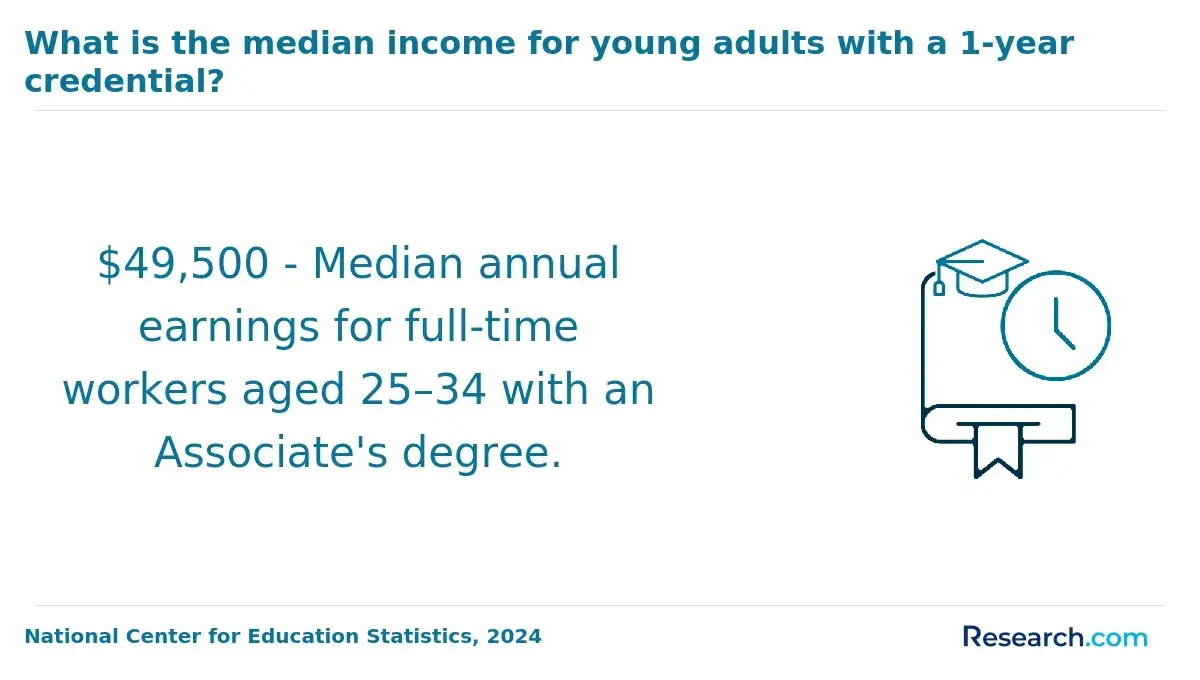
| Associate degree | About 2 years full time | Introductory programming, math, game design basics, and general education | Can support entry-level work or transfer into a bachelor's program | Students seeking a lower-cost starting point |
| Bachelor's degree | About 4 years full time, less with transfer credit | Programming, engines, software development, computer graphics, game production, and portfolio work | Usually the most complete option for students seeking both studio employability and indie capability | First-time college students and transfer students who want a full credential |
| Master's degree | About 1 to 2 years | Advanced game technology, production, research, technical art, or interactive media | Can help experienced developers specialize, teach, lead teams, or build advanced prototypes | Students with a bachelor's degree and a clear technical or creative direction |
Accreditation matters because it affects credit transfer, eligibility for federal financial aid, and employer confidence. In the U.S., students should verify institutional accreditation through recognized accreditors and confirm whether the specific program has computing-related accreditation when relevant. Programmatic accreditation is not always required for game development careers, but institutional accreditation should be treated as a baseline.
Some students discover that their interest in games overlaps with other simulation fields. For example, city-building systems, procedural urban environments, and civic simulations can connect game technology with planning careers, where a masters urban planning online may make more sense than a game degree for students whose primary goal is public-sector planning or urban analytics rather than entertainment software.
What core courses and skills are taught in indie-focused game programming programs?
Indie-focused game programming programs should teach both how to build software and how to finish games. A strong curriculum does not stop at theory; it pushes students to produce playable prototypes, iterate after feedback, and understand how design decisions affect performance, scope, and player experience.
The following course areas are especially important because they map directly to the work small teams need to handle without a large specialized staff.
- Programming fundamentals: variables, control flow, data structures, object-oriented programming, debugging, and code organization.
- Game engine development: Unity, Unreal Engine, Godot, or similar tools used to build gameplay systems, user interfaces, physics, animation, audio, and input.
- Mathematics for games: vectors, matrices, geometry, probability, collision detection, interpolation, and simulation logic.
- Gameplay systems: character controllers, combat, inventory, camera behavior, procedural content, artificial intelligence behaviors, and save systems.
- Graphics and optimization: rendering basics, shaders, asset pipelines, frame-rate management, memory use, and performance profiling.
- Production and project management: agile methods, milestones, version control, bug tracking, scope control, and team communication.
- Playtesting and user experience: usability testing, telemetry interpretation, accessibility, iteration, and balancing.
- Business and publishing: storefront requirements, pricing strategy, community building, marketing basics, intellectual property, and post-launch support.
Artificial intelligence is becoming more important in both gameplay and development workflows. Students should distinguish between using AI tools to speed up concepting or testing and learning the underlying technical skills needed to implement behavior trees, pathfinding, procedural generation, and adaptive systems. Learners who want a research-heavy AI path rather than an applied game-development path may want to compare this route with an online PhD in artificial intelligence usa program.
A portfolio is often the most important evidence of readiness. By graduation, students should aim to show finished or near-finished work, readable code, documented design choices, bug-fix history, and ideally at least one project that external players have tested.
What are typical admission requirements for online game programming and development degrees?
Admission requirements vary by school and degree level, but online game programming programs generally look for academic readiness, basic technical comfort, and the ability to succeed in a remote learning environment. Competitive programs may also want evidence that the applicant understands the difference between loving games and building them.
Applicants should expect some combination of the following requirements. The details matter because missing a prerequisite can add time and cost before degree courses even begin.
- High school diploma or equivalent: Usually required for undergraduate certificates, associate degrees, and bachelor's degrees.
- Transcripts: Schools commonly ask for high school and any prior college transcripts to evaluate admission and transfer credit.
- Math readiness: Programs may require or recommend algebra, precalculus, statistics, or placement testing because programming and graphics depend on quantitative skills.
- Prior programming experience: Some beginner-friendly programs start from zero, while others expect basic coding in languages such as Python, C#, C++, or JavaScript.
- Portfolio or creative sample: More selective programs may ask for games, code samples, mods, interactive projects, art, writing, or design documents.
- Personal statement: Applicants may need to explain their goals, preferred area of game development, and readiness for online study.
- Graduate prerequisites: Master's programs typically require a bachelor's degree and may expect programming, math, or computing coursework.
Students without a technical background should not automatically rule themselves out. A realistic path may start with a community college programming course, a certificate, or a low-cost engine project before applying to a full bachelor's program. The key is to confirm whether remedial or prerequisite courses count toward the degree or add extra credits.
Transfer students should ask for a written transfer evaluation before enrolling. Credits in general education, programming, math, and digital media may reduce cost and time, but engine-specific or portfolio courses may not transfer cleanly if the receiving school wants students to complete its own production sequence.
How long do online game programming degrees take and what do they cost?
Most online game programming degrees follow the same broad timelines as other computing degrees, but total completion time can vary significantly because of transfer credits, course sequencing, part-time enrollment, and capstone requirements. Students working full time should be especially cautious about accelerated schedules that leave little time for portfolio-quality projects.
For cost context, College Board's 2024-25 figures show average published tuition and fees of $11,610 at in-state public four-year institutions, $30,780 at out-of-state public institutions, and $43,350 at private nonprofit institutions. These are broad national benchmarks rather than exact online game-program prices, but they help students understand why residency status, transfer credits, and institutional aid can change the final bill dramatically.
The table below summarizes the main time and cost variables. It is designed to help you compare programs beyond the advertised per-credit tuition rate.
| Cost or time factor | Why it matters | What to ask before enrolling |
| Per-credit tuition | Game degrees may require many credits, so small per-credit differences can become meaningful | What is the total tuition for the degree after transfer credit is applied? |
| Technology fees | Online programs may charge platform, lab, or course fees | Are online, lab, engine, or graduation fees included in the estimate? |
| Hardware requirements | Game engines may require a capable computer and graphics card | What computer specifications are required for upper-level courses? |
| Software access | Some tools are free for students, while others may require licenses or subscriptions | Which engines, digital content tools, and repositories are included? |
| Transfer credits | Accepted credits can shorten the degree and reduce tuition | Which credits apply to major requirements rather than only electives? |
| Course rotation | Specialized game courses may not run every term | How often are required engine, graphics, and capstone courses offered? |
A typical full-time bachelor's degree takes about four years from the start, while an associate degree usually takes about two years. Adult learners with prior credits may finish faster, but students should not compress the degree so much that they graduate without a strong portfolio.
To reduce cost without weakening outcomes, students can take general education courses at a lower-cost accredited institution, apply for federal aid by completing the FAFSA, compare employer tuition assistance, and choose programs that allow portfolio development within required courses rather than requiring expensive outside bootcamps.
What entry-level and advanced careers can indie-focused game programming graduates pursue?
Graduates of indie-focused game programming programs can pursue both game-industry roles and adjacent software roles. This flexibility matters because indie income can be unpredictable, and many developers build games while also working in software, simulation, education technology, or interactive media.
The table below connects common career paths with the work graduates are likely to perform. It also shows why a strong programming portfolio can support more than one employment strategy.
| Career path | Typical responsibilities | Indie relevance | Common advancement direction |
| Junior game programmer | Build gameplay features, fix bugs, implement UI, work in an engine, and collaborate with designers and artists | Directly applicable to small-team game production | Gameplay programmer, systems programmer, lead programmer |
| Gameplay or systems developer | Create mechanics, tools, save systems, AI behaviors, progression systems, and performance improvements | Helps indie teams build deeper and more reliable games | Technical director, senior programmer, independent studio founder |
| Quality assurance analyst or technical tester | Test builds, reproduce bugs, document issues, verify fixes, and support release readiness | Useful entry point for understanding production pipelines | Automation tester, producer, associate developer |
| Technical designer | Prototype mechanics, script events, balance systems, and bridge design and engineering | Valuable in small studios where hybrid roles are common | Senior technical designer, game designer, systems designer |
| Tools or engine programmer | Create internal tools, improve workflows, extend editors, and optimize development pipelines | Can help small teams work faster with fewer people | Senior tools engineer, engine programmer, technical lead |
| Independent developer or studio founder | Design, code, test, publish, market, and support games | The central indie career path, but also the riskiest financially | Studio owner, publisher partner, contractor, consultant |
Some graduates apply game development skills outside entertainment. Serious games, training simulations, rehabilitation tools, sports performance apps, and interactive learning products may require similar programming abilities. Students more interested in human performance than game production could compare this direction with an online sports science degree, especially if they want to work in exercise, coaching, or wellness rather than software development.
The smartest career strategy is usually a two-track plan: build a credible game portfolio while also developing employable software skills. C#, C++, Python, JavaScript, databases, version control, automated testing, and cloud deployment can make graduates more resilient if indie revenue takes time to develop.
What salary ranges and earning potential exist for indie game programmers and developers?
Salary expectations for indie game programmers require caution because public labor data does not isolate self-published developers. A solo developer's income may come from game sales, contract work, freelance programming, crowdfunding, teaching, consulting, or a salaried job at a studio, and those sources can fluctuate from month to month.
The most reliable way to estimate earning potential is to compare indie-focused skills with related U.S. occupations. The U.S. Bureau of Labor Statistics reported a 2024 median annual wage of $133,080 for software developers, quality assurance analysts, and testers. This figure should not be read as a promise for game graduates; it is a broad occupational median that includes many industries, experience levels, and technical specialties.
The table below shows how earnings context differs by path. It avoids treating indie development as a single salary category because that would be misleading.
| Path | Income pattern | What raises earning potential | Main risk |
| Salaried game programmer | Usually paid as an employee by a studio or interactive media company | Strong engine skills, shipped projects, C++ or C# proficiency, debugging, and teamwork | Competition for entry-level game roles can be high |
| Software developer in adjacent industries | Often more stable than self-published game income | Transferable programming skills, testing, databases, web services, and cloud tools | Work may be less focused on games |
| Freelance or contract game developer | Project-based income that depends on client demand and reputation | Reliable delivery, niche engine expertise, clear communication, and a public portfolio | Income gaps and unpaid business development time |
| Independent studio founder | Revenue depends on product sales, funding, publishing deals, and post-launch support | Scope control, marketing, community building, platform knowledge, and repeated releases | High uncertainty and no guaranteed salary |
Students evaluating return on investment should compare total program cost with more than one career scenario. A degree may be more financially defensible if it prepares the student for both game roles and broader software jobs rather than only one highly competitive indie outcome.
How is the job outlook for indie game developers and related game programming roles?
The job outlook is strongest for graduates who can frame themselves as software professionals with game specialization, not only as game fans. According to the U.S. Bureau of Labor Statistics, employment for software developers, quality assurance analysts, and testers is projected to grow 15% from 2024 to 2034, much faster than the average for all occupations. That projection covers a broad technology labor market, but it signals continued demand for programming, testing, and software maintenance skills.
For game-specific roles, competition remains intense because many applicants want to work in entertainment. Indie development adds another layer of uncertainty: a developer can create and publish independently, but market visibility, platform algorithms, user reviews, marketing budgets, and production scope strongly affect outcomes.
Current trends that should shape a student's decision include AI-assisted workflows, remote collaboration, cross-platform development, live-service expectations, accessibility standards, and growing demand for interactive simulations outside entertainment. These trends reward students who understand both creative production and durable engineering practices.
Students can improve their outlook by taking practical steps before graduation. The sequence below is useful because it turns coursework into visible evidence of capability.
- Build small playable games before attempting a large dream project.
- Use version control from the first project and keep repositories organized enough to show employers or collaborators.
- Join game jams to practice scope control, rapid prototyping, and team communication.
- Publish at least one polished project or public demo with clear documentation and a trailer or gameplay capture.
- Learn testing, bug tracking, and performance profiling so your portfolio shows reliability, not just ideas.
- Network with developers, faculty, alumni, local tech groups, and online communities before you need a job.
The outlook is best for students who treat indie development as a professional practice. Passion helps, but employers and players respond to finished work, technical reliability, and the ability to collaborate under constraints.
How can students evaluate and choose a reputable online indie game development program?
A reputable online indie game development program should be accredited, technically current, portfolio-driven, transparent about cost, and honest about career outcomes. The goal is not to find the flashiest program; it is to find the one that best converts your time and money into skills, projects, and credible opportunities.
Before enrolling, use a structured evaluation process. These steps are especially important because game programs can sound exciting in marketing materials while differing greatly in rigor and support.
- Verify institutional accreditation through recognized accreditation sources and confirm that the school is eligible for federal financial aid if you plan to use it.
- Review the full curriculum and make sure programming, engines, math, production, testing, and capstone projects are required rather than optional.
- Ask to see student portfolios, capstone games, demo reels, code samples, or showcase events from recent cohorts.
- Confirm which engines and languages are taught, and check whether the program updates courses as tools change.
- Request a complete cost estimate that includes tuition, fees, hardware, software, books, and expected time to completion.
- Ask how online students receive feedback, collaborate on teams, access faculty, and participate in critiques or showcases.
- Compare career support, internship guidance, alumni networks, and employer connections for online students specifically.
- Get transfer credit decisions in writing before committing, especially if you already completed programming or general education courses.
Common red flags include vague curriculum descriptions, no completed student games, unclear accreditation, heavy reliance on pre-recorded lectures, unrealistic salary claims, no code review, weak career services for online students, and programs that promise an easy path into indie success. Indie development is possible, but it is not low-effort or low-risk.
The best choice is usually the program that matches your target role. Future gameplay programmers should prioritize coding depth and engine work, future technical designers should look for scripting and prototyping, and future studio founders should seek production, publishing, and business training alongside programming.
Other Things You Should Know About Game Programming & Development
It can be worth it if the program is accredited, affordable for your situation, and built around finished portfolio projects. It is less likely to be worth it if it offers little programming depth, weak feedback, or no clear path to transferable software skills.
No. Many indie developers are self-taught or come from software, art, design, or media backgrounds. A degree can help by providing structure, feedback, credentials, and team projects, but shipped work and practical skill still matter heavily.
Game programming is best if you want to build systems and work directly in engines. Game design is better for mechanics, levels, narrative, and player experience. Computer science may offer the broadest software foundation, especially if you want flexibility outside games.
A strong portfolio should include at least three finished projects: one 2D game, one 3D game, and one published team project with source code on GitHub. Indie studios look for working builds, clear code structure, and evidence of gameplay systems such as save files, UI, and basic AI.
References
- Game Developer Salaries by Country 2025-2026 https://optiveum.com/articles/game-developer-salaries-by-country/
- We help game developers learn and grow https://gamedev.tv/
- Online Game Development Courses | Learn from Top Game Devs https://www.cgspectrum.com/courses/game-development
- mages.edu.sg: Verifying that you are not a robot... https://mages.edu.sg/program/short-courses-tech/indie-game-development/
- Game Development Program https://www.vertexschool.com/game-development-program
- How to Land Entry Level Game Design Jobs Without a Degree https://gamedesignskills.com/game-design/entry-level-game-design-jobs-without-degree/
- Indie Game Academy Reviews https://www.coursereport.com/schools/indie-game-academy
- Aspiring Video Game Designers in 2025: What You Need to Know https://www.dice.com/career-advice/aspiring-video-game-designers-in-2025-what-you-need-to-know
- Is Game Development a Good Career? https://www.albany.edu/cehc/communications/is-game-development-a-good-career
- The Rookies - Global School Rankings 2024 - Game Design & Development https://www.therookies.co/schools/rankings/2024/game-design-and-development