2027 Online Game Programming and Development Degrees That Work Well With Employer Sponsorship

Co-Founder and Chief Data Scientist
Choosing an online game programming degree is harder when your employer is helping pay for it: the program must build real technical skill, fit reimbursement rules, and lead to roles beyond "game designer." The Entertainment Software Association reported in 2024 that 190.6 million Americans play video games, supporting demand for interactive software across entertainment, training, simulation, education, and enterprise tools.
This guide is for working adults, career changers, and sponsored employees comparing online options. You'll learn which degrees fit sponsorship best, how to check quality, and how to weigh cost, time, skills, and career outcomes.
Key Things You Should Know
- Employer sponsorship usually works best with accredited, credit-bearing degrees because many tuition-assistance policies require regional or institutional accreditation and may cap tax-advantaged education benefits at $5,250 per year under IRS educational-assistance rules.
- The strongest game programming degrees are software-first: computer science, software engineering, game programming, and simulation-focused programs generally offer more transferable career value than art-only or design-only programs.
- BLS May 2024 data places software developers at a median annual wage of $133,080, while computer programmers are listed at $98,670, so students should compare target job titles before enrolling.
What are online game programming degrees?
Online game programming degrees are college programs that teach students how to build interactive software, usually through programming, game engines, computer graphics, physics, artificial intelligence, systems design, and project-based development. The most useful programs prepare students to write code, debug performance problems, collaborate with artists and designers, and ship playable projects for a portfolio.
It helps to separate game programming from nearby fields. Game programming focuses on the software systems that make a game run. Game design focuses on mechanics, levels, player experience, and systems balance. Game art focuses on visual assets, animation, character modeling, and environments. Game development is the broader umbrella that can include all of these areas.
The table below compares common online degree types. Use it to match the credential to your employer's sponsorship rules and your preferred career direction.
| Degree type | Best fit | Typical strengths | Main trade-off |
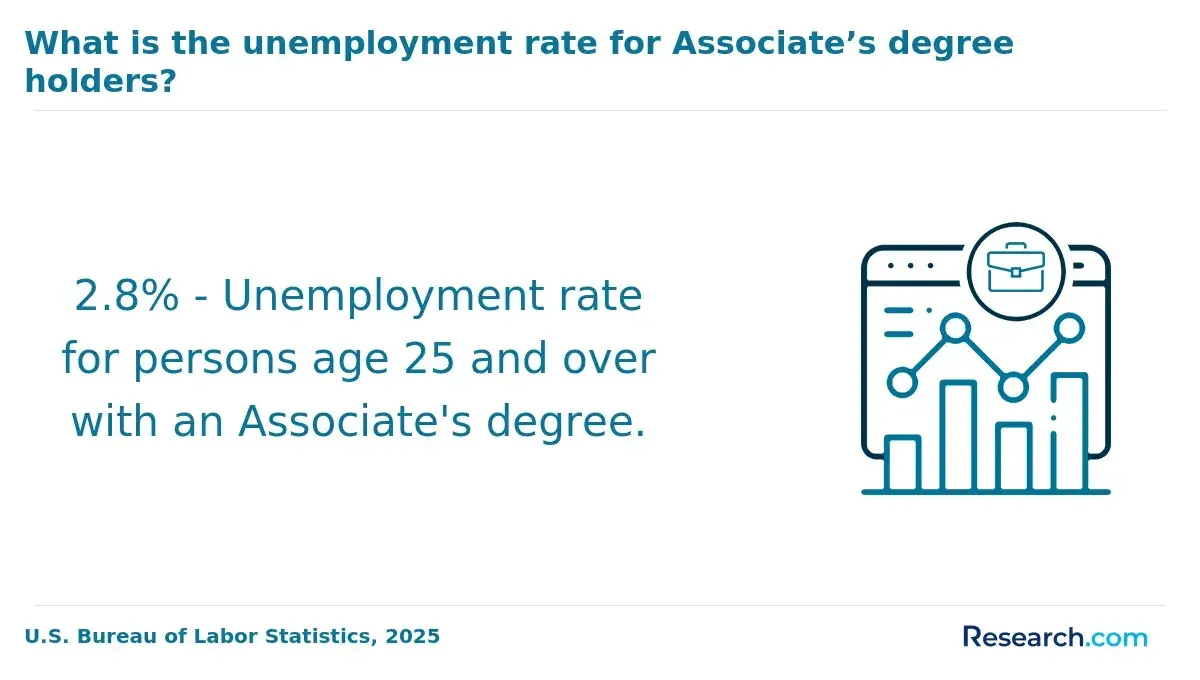
| Associate degree in game development or programming | Students seeking a lower-cost entry point or transfer pathway | Introductory programming, game engines, portfolio basics | May not be enough for competitive software developer roles without a bachelor's degree or strong portfolio |
| Bachelor's in computer science with game development electives | Students who want game jobs plus broader software options | Algorithms, data structures, operating systems, math, scalable coding skills | May include fewer game-specific studio courses than a dedicated game degree |
| Bachelor's in game programming or game development | Students focused on gameplay, engine, tools, or technical game roles | Game engines, graphics, physics, production pipelines, team projects | Quality varies widely; accreditation and curriculum depth matter |
| Bachelor's in software engineering | Working adults whose employers value enterprise software skills | Software architecture, testing, DevOps, requirements, maintainability | May require students to build game-specific portfolio work independently |
| Master's in computer science, AI, or interactive media | Experienced professionals seeking advanced technical roles | AI, graphics, simulation, machine learning, research-oriented systems | Usually requires stronger math, programming background, and higher total cost |
A degree is usually worth considering if you want a structured path, access to faculty feedback, financial aid eligibility, and a recognized credential for employer reimbursement. A shorter certificate or bootcamp may make more sense if you already hold a degree, need only Unity or Unreal skills, or your employer reimburses non-degree training.
Which degrees help with employer sponsorship?
The degrees that work best with employer sponsorship are usually those that connect clearly to the employee's current job, future internal mobility, or a documented business need. Employers are more likely to approve programs that teach transferable software, data, simulation, visualization, or product-development skills instead of programs framed only as entertainment training.
For sponsored learners, the best choices tend to share several features. They are accredited, offered online or in a flexible hybrid format, priced so annual reimbursement covers a meaningful share of tuition, and built around employer-recognized competencies such as C++, C#, Python, cloud tools, agile development, quality assurance, and AI-assisted workflows.
Use the following decision path before submitting a tuition-assistance request. It can help you avoid choosing a program that is interesting but difficult to justify under workplace policy.
- Read the sponsorship policy first. Check whether your employer pays upfront or reimburses after grades are posted, whether the school must be accredited, whether only job-related programs qualify, and whether you must remain employed for a set period after reimbursement.
- Choose a degree title that maps to business value. Computer science, software engineering, game programming, simulation, interactive technology, and applied computing are often easier to justify than narrowly branded entertainment programs.
- Ask admissions for a course-by-course plan. Confirm which courses are asynchronous, how group projects work across time zones, and whether the degree can be completed part time.
- Compare annual tuition against the employer cap. A program with lower per-credit tuition may reduce out-of-pocket costs more than a faster but expensive accelerated option.
- Get written approval before enrolling. Do not rely on a verbal statement from a manager or admissions advisor when reimbursement depends on HR approval.
Not every creative game-related degree is a programming degree. If your goal is UI, concept art, visual design, or production art rather than code, an accredited online graphic design degree may align better with your portfolio and sponsorship request.
Common mistakes include choosing a school because it advertises "game design" without enough programming depth, assuming any online program qualifies for reimbursement, and ignoring whether credits transfer if you change jobs. The safer approach is to choose a program with strong software fundamentals and then use electives, projects, and internships to specialize in games.
How do online and campus programs compare?
Online and campus game programming programs can lead to similar credentials, but the learning experience is different. Online programs work best for sponsored employees who need schedule control, while campus programs may offer easier access to labs, studio culture, recruiting events, and in-person collaboration.
Cost is often the first comparison point, but it should not be the only one. College Board's 2024 Trends in College Pricing reported average published tuition and fees of $11,610 for in-state public four-year students and $43,350 for private nonprofit four-year students in 2024-25; this shows why employer reimbursement can substantially change the affordability equation, especially for working adults who can study part time.
The table below summarizes the practical differences that matter most when employer sponsorship is involved.
| Factor | Online program | Campus program | What sponsored students should check |
| Schedule | Often asynchronous or evening-friendly | More fixed class times | Whether work travel, overtime, or shift schedules can be accommodated |
| Cost structure | May charge per credit and reduce relocation costs | May include housing, commuting, and campus fees | Total cost after employer reimbursement, fees, books, hardware, and software |
| Collaboration | Remote teams, version control, online critiques | In-person labs, studio courses, live playtesting | How team projects are managed and assessed |
| Portfolio support | Digital portfolio, GitHub, capstone builds, online showcases | Studio showcases, local events, faculty labs | Whether graduates leave with playable projects and code samples |
| Employer approval | Often easier to fit around full-time work | May be harder unless nearby or hybrid | Whether the program format meets HR requirements for eligible education |
Online learning is a strong fit if you are disciplined, already comfortable with technology, and need to keep working while studying. Campus learning may be better if you need more structure, want frequent in-person critique, or are targeting schools with established game studios, labs, or local employer pipelines.
Are accredited game programming programs important?
Accreditation matters because it is one of the clearest quality signals available to students, employers, and financial aid offices. For employer-sponsored education, accreditation can also determine whether a course or degree is reimbursable. Many companies require the institution to be accredited by an agency recognized by the U.S. Department of Education or the Council for Higher Education Accreditation.
For game programming, there are two accreditation questions. First, is the institution accredited? Second, does the specific computing program have specialized accreditation, such as ABET accreditation for computer science, software engineering, or related computing programs? ABET is not required for every game-related job, but it can be useful when you want a rigorous, software-first curriculum with stronger transferability.
Before enrolling, verify accreditation directly rather than relying only on marketing language. These checks can prevent problems with reimbursement, transfer credits, and graduate school admission.
- Check institutional accreditation through the U.S. Department of Education's Database of Accredited Postsecondary Institutions and Programs or the accreditor's official site.
- Ask whether the exact online program is covered because some schools have different approvals for campuses, locations, or program formats.
- Confirm employer requirements with HR before registration, especially if the program is competency-based, accelerated, or offered through a third-party online platform.
- Review transfer-credit policy if you may later move from an associate degree to a bachelor's degree or from one employer-approved school to another.
- Be cautious with vague claims such as "industry recognized," "licensed," or "career certified" when the school cannot identify a recognized accrediting body.
The biggest red flag is a program that promises fast game-industry employment but cannot clearly explain accreditation, credit transfer, graduation requirements, or career-support outcomes. Accreditation does not guarantee a job, but it reduces avoidable credential risk.
What courses are in game programming degrees?
Game programming degrees usually combine computer science fundamentals with applied game-development courses. The best programs do not teach only one engine; they teach problem-solving skills that transfer when tools change.
The table below shows common course areas and why each one matters. Use it to compare curricula from different schools rather than judging programs only by their titles.
| Course area | What students learn | Why it matters for careers |
| Programming fundamentals | C++, C#, Java, Python, debugging, version control | Builds the coding base needed for gameplay, tools, and general software roles |
| Data structures and algorithms | Memory, runtime, search, sorting, graphs, optimization | Supports technical interviews and performance-sensitive game systems |
| Game engines | Unity, Unreal Engine, scripting, asset integration, build pipelines | Helps students create playable projects and understand production workflows |
| Computer graphics | Rendering, shaders, lighting, geometry, GPU concepts | Important for engine, graphics, visualization, and simulation roles |
| Game physics and mathematics | Vectors, matrices, collision, motion, probability | Supports gameplay mechanics, animation systems, and real-time interaction |
| AI for games | Pathfinding, behavior trees, decision systems, procedural content | Useful for non-player characters, simulation, automation, and adaptive systems |
| Software engineering | Testing, design patterns, agile methods, documentation, code review | Shows employers that students can work on maintainable team software |
| Capstone or studio project | Team production, milestones, playtesting, portfolio delivery | Creates evidence of practical skill beyond transcripts |
Current trends are changing what students should prioritize. AI-assisted coding, procedural generation, real-time 3D, cloud gaming infrastructure, extended reality, and simulation-based training are expanding where game-development skills can be used. Students should still learn fundamentals first because tools such as engines, plugins, and generative systems change faster than math, algorithms, and software architecture.
A strong curriculum should leave you with code samples, a playable project, and a clear explanation of your role on each team assignment. If a program's portfolio work is mostly concept documents, mood boards, or game ideas, it may be better suited to design than programming.
What admission requirements do these programs have?
Admission requirements vary by school and degree level, but most online undergraduate game programming programs look for proof that the student can handle college-level math, writing, and computing coursework. Selective programs may also ask for a portfolio, coding sample, or prior programming experience.
The table below outlines common admission expectations. Exact requirements differ, so applicants should confirm details with each school and with their employer's tuition-assistance office.
| Program level | Common requirements | What strengthens an application |
| Associate degree | High school diploma or GED, placement tests, transcripts | Intro programming, algebra readiness, basic digital portfolio |
| Bachelor's degree | High school or transfer transcripts, GPA minimum, math placement, application essay at some schools | Completed college math, prior programming, GitHub projects, strong grades in technical courses |
| Bachelor's completion program | Prior college credits, minimum GPA, prerequisite courses | Transferable general education credits and introductory computing courses |
| Master's degree | Bachelor's degree, transcripts, programming prerequisites, letters or statement at some schools | Computer science background, portfolio, professional software experience, math preparation |
Working adults should ask admissions teams practical questions before applying. These questions are especially important if employer sponsorship requires continuous enrollment, minimum grades, or course approval before each term.
- How many transfer credits can be applied toward the degree, and will prior associate-level programming courses count?
- Are math or programming prerequisites required before taking game engine, graphics, or AI courses?
- Can courses be taken part time without losing access to required classes or financial aid eligibility?
- Does the school provide documentation that HR departments commonly request, such as itemized tuition, accreditation status, course descriptions, and grades?
- What happens if a course is not offered every term and delays a sponsored student's reimbursement plan?
If you are comparing unrelated sponsored pathways, be honest about your strengths. A person who enjoys structured information systems, archives, metadata, and digital access may be better served by online library science programs than by a programming-heavy game degree.
How long do online game degrees take?
Online game degrees can take a few months to several years, depending on degree level, transfer credits, course load, and whether the program uses traditional semesters or accelerated terms. Employer sponsorship often favors part-time pacing because it lets students keep working and spread tuition across multiple reimbursement cycles.
The table below gives realistic timeline ranges. These are not guarantees; course availability, prerequisites, transfer evaluations, and work schedules can change the actual completion time.
| Credential | Typical full-time length | Typical part-time length | Best use case |
| Undergraduate certificate | 6 to 12 months | 1 to 2 years | Adding Unity, Unreal, C#, or portfolio skills without committing to a degree |
| Associate degree | 2 years | 3 to 4 years | Lower-cost start, career exploration, or transfer into a bachelor's program |
| Bachelor's degree | 4 years | 5 to 6 years or more | Primary credential for many software and technical game roles |
| Bachelor's completion program | 1 to 2 years after transfer | 2 to 3 years | Students with substantial prior credits |
| Master's degree | 1.5 to 2 years | 2 to 4 years | Advanced technical specialization, leadership, AI, graphics, or simulation |
To shorten the timeline without weakening the degree, focus on transfer credits, prerequisite planning, and steady enrollment. Avoid overloading on technical courses while working full time; game programming classes often require long debugging sessions and team coordination outside scheduled class time.
A practical sponsored-student plan is to take one technical course and one lighter general education or elective course per term when possible. This pace may reduce burnout while keeping progress visible to both the school and employer.
What jobs can game programming graduates get?
Game programming graduates can pursue jobs in entertainment games, serious games, simulation, education technology, virtual production, defense training, healthcare visualization, enterprise learning, and general software development. The most employable graduates usually present themselves as software developers with interactive media expertise, not only as game fans.
The table below connects common roles to responsibilities and the type of portfolio evidence employers often expect.
| Role | Typical responsibilities | Useful portfolio evidence |
| Gameplay programmer | Implement mechanics, player controls, camera systems, combat, interaction, and game logic | Playable prototypes, clean code samples, mechanic breakdowns |
| Engine programmer | Work on rendering, performance, tools, memory, platform systems, and low-level architecture | C++ projects, graphics demos, optimization notes, engine contributions |
| Tools programmer | Create software that helps artists, designers, and developers build content faster | Editor extensions, pipeline tools, automation scripts |
| Technical artist | Bridge art and engineering through shaders, rigging tools, visual effects, and asset pipelines | Shader demos, pipeline documentation, before-and-after workflow examples |
| QA automation or game tester with coding focus | Test builds, write automated checks, reproduce bugs, support release quality | Bug reports, test scripts, automation examples, issue-tracking experience |
| Simulation software developer | Build interactive training, visualization, VR, or real-time systems outside entertainment | Real-time 3D demos, physics projects, scenario-based simulations |
| General software developer | Build applications, services, tools, and platforms in non-game industries | Full-stack apps, APIs, data structures work, team software projects |
Entry-level applicants should expect competition, especially for entertainment studio roles. To improve your odds, build a focused portfolio rather than a large collection of unfinished projects. Employers generally learn more from one polished, documented project than from several incomplete prototypes.
Follow these steps while enrolled to make the degree more career-ready.
- Pick a target role early. Gameplay, tools, engine, QA automation, technical art, and simulation roles require different portfolio evidence.
- Use version control on every serious project. Git history helps show how you code, revise, and collaborate.
- Document your contribution to team projects. Recruiters need to know what you personally built.
- Complete at least one project outside class. Independent work shows initiative and can target the exact job you want.
- Apply beyond game studios. Simulation, training, health tech, education, and enterprise visualization may value interactive development skills.
If your interests shift toward analytics, player behavior, recommendation systems, or product experimentation, a data science learning path may pair well with game-development knowledge and open broader technical roles.
What salary can game programmers expect?
Game programming salary depends heavily on job title, location, experience, portfolio strength, and whether the role is in entertainment games, enterprise software, simulation, or another technical field. A degree can help qualify you for interviews, but it does not determine compensation by itself.
BLS May 2024 wage data is useful because many game programming roles overlap with broader software occupations. The median annual wage for software developers was $133,080, while the median for computer programmers was $98,670. This difference matters because students who build strong software engineering skills may be able to compete for a wider set of roles than graduates trained only on narrow game tools.
The table below shows how to think about salary context by role family rather than assuming one "game programmer salary."
| Role family | Salary context | What can influence pay |
| Software developer | BLS reported a May 2024 median annual wage of $133,080 | Industry, location, cloud experience, system design, interview performance, seniority |
| Computer programmer | BLS reported a May 2024 median annual wage of $98,670 | Language specialization, maintenance work, automation, legacy systems, contract status |
| QA analyst or tester | Often a starting point for game and software careers, especially when paired with automation skills | Manual versus automated testing, scripting, release experience, platform knowledge |
| Technical artist or tools developer | Compensation varies because the role blends creative and technical responsibilities | Shader skill, pipeline automation, engine expertise, studio needs, portfolio depth |
| Simulation or real-time 3D developer | May align with broader software, defense, training, health, or industrial visualization markets | Security clearance, C++ skill, graphics, physics, VR, domain knowledge |
Job outlook should also be evaluated by broader role category. BLS projects software developer employment to grow much faster than the average for all occupations over the 2024-2034 period, while traditional computer programmer employment is projected to decline. For students, the takeaway is clear: prioritize software engineering, systems thinking, testing, collaboration, and adaptability instead of preparing only for narrow coding tasks that may be automated or outsourced.
When calculating return on investment, include tuition not reimbursed by your employer, required hardware, software subscriptions, time to completion, lost overtime opportunities, and whether the degree improves internal promotion options. The best ROI often comes from a program that lets you keep earning while building a portfolio and a credential your employer recognizes.
Which certifications strengthen game developer applications?
Certifications can strengthen a game developer application when they validate a specific tool or workflow, but they rarely replace a degree, portfolio, or coding interview. The best certifications are targeted: choose them only when they support the role you want.
The table below lists certification and credential options that may complement an online game programming degree.
| Credential area | Examples | Best for | Limitations |
| Game engine certification | Unity or Unreal Engine training credentials | Students applying for gameplay, tools, XR, or technical artist roles | Tool-specific; employers still want portfolio evidence |
| Cloud certification | AWS, Microsoft Azure, or Google Cloud credentials | Students interested in multiplayer infrastructure, backend services, live operations, or scalable platforms | Less useful for purely local gameplay or art-focused roles |
| Programming and software credentials | Vendor or platform certificates in C#, Python, DevOps, or testing | Students targeting software engineering, automation, or tools roles | Quality and employer recognition vary by provider |
| Project management credentials | Scrum, agile, or entry-level project management certificates | Developers moving toward producer, lead, or team-coordination roles | Usually more valuable after some team experience |
| Graduate certificate or master's specialization | AI, computer graphics, simulation, or interactive systems | Professionals seeking advanced technical depth | Higher cost and prerequisite burden than short certificates |
AI is increasingly relevant to game development, but students should be careful not to chase every new tool. If you want deeper training in machine learning, procedural systems, or AI product development, comparing the cheapest online masters in artificial intelligence can make sense after you have built a solid programming foundation.
For most applicants, the strongest credential stack is simple: an accredited degree, two or three polished projects, public code samples where appropriate, one targeted tool certification, and evidence of teamwork. Avoid paying for multiple certificates before you know which role you are targeting.
Other Things You Should Know About Game Programming & Development
It can be worth it if the degree is accredited, reimbursable, software-focused, and aligned with a realistic career goal. Employer sponsorship can reduce out-of-pocket cost, but you should still compare total tuition, time commitment, transfer credits, and portfolio support.
Before enrolling, ask your employer about eligibility requirements, the extent of financial support, preferred universities or programs, and the possibility of integrating work projects into the curriculum. Confirm any post-degree work commitments or conditions tied to sponsorship.
Not always. Some developers enter through portfolios, internships, modding, indie projects, QA roles, or prior software experience. However, a degree can help with employer screening, structured learning, financial aid access, and tuition reimbursement eligibility.
Yes, some employer sponsorship plans cover tuition, fees, and approved software or lab access, but the policy must name those items in writing. Ask whether the benefit has an annual cap, requires grade minimums, and pays only after you submit receipts or final grades.
References
- How important is colledge degree in game development? https://discussions.unity.com/t/how-important-is-colledge-degree-in-game-development/484055
- Unity Certified Associate | Unity https://unity.com/products/unity-certifications/associate-game-developer
- Immigration and citizenship Website https://immi.homeaffairs.gov.au/employer-subsite/Pages/compare-sponsored-skilled-visa-options.aspx
- How Long Does It Take to Earn an Online Degree | DeVry University https://www.devry.edu/blog/how-long-to-earn-an-online-degree.html
- Salaries in game development industry | InGame Job https://ingamejob.com/en/salaries
- What Types of Jobs Qualify for Visa Sponsorship? - Graham Adair, Inc. https://grahamadair.com/visa-sponsorship-job-types/
- The REAL Salary of a Game Developer in 2023 - Simple Programmer https://simpleprogrammer.com/game-developer-salary/
- Game Development Degrees: What You Need to Know https://www.ivywise.com/ivywise-knowledgebase/gaming-majors/
- Game Development Bachelor's Degree https://www.fullsail.edu/degrees/game-development-bachelor
- Game Development Courses & Degrees | Media Design School at Strayer https://www.mediadesignschool.com/courses/game-development-courses-degrees