2027 Online Game Programming and Development Degrees That Prepare Students for Gameplay and Engine Careers

Co-Founder and Chief Data Scientist
Choosing a game programming degree is really a choice about what kind of technical work you want: gameplay systems, tools, graphics, networking, or engine development. The decision matters because the Entertainment Software Association reported in 2024 that 190.6 million Americans play video games, supporting a large but competitive talent market. This guide is for prospective students comparing online and campus programs. You will learn how these degrees work, what they cost, which credentials matter, and how to judge whether a program can realistically support your career goals.
Key Things You Should Know
- Online game programming degrees are technical computing programs, not art-only game design degrees; strong programs teach C++, C#, data structures, algorithms, game engines, graphics, physics, networking, and portfolio production.
- The U.S. Bureau of Labor Statistics reported a May 2024 median wage of $133,080 for software developers and projected 17% growth for software developers, quality assurance analysts, and testers from 2023 to 2033, but game-specific roles vary widely by studio, location, portfolio, and specialization.
- Cost depends heavily on institution type: College Board's 2024-25 figures show average published tuition and fees of $11,610 for in-state public four-year colleges and $43,350 for private nonprofit four-year colleges, before grants, transfer credits, and aid.
What is an online game programming and development degree, and how does it differ from game design?
An online game programming and development degree is a computing-focused program that teaches students how to build the software systems behind playable games. It typically emphasizes programming languages, algorithms, real-time simulation, game engines, graphics pipelines, artificial intelligence behavior, debugging, optimization, and collaborative production. The "online" part usually means lectures, code reviews, assignments, and some team projects are completed through a learning platform, while development work happens in professional tools such as Unity, Unreal Engine, Visual Studio, Git, and issue-tracking systems.
The most important distinction is that game programming is about implementation, while game design is about player experience. Designers define mechanics, rules, progression, levels, economy, and player goals. Programmers turn those ideas into working systems. In small teams, one person may do both, but employers often separate these responsibilities for gameplay, tools, engine, graphics, networking, and technical design roles.
The table below shows how the degree focus changes the type of work a student is preparing to do. This comparison is useful if you are deciding between a specialized game program and a broader computing route such as a computer science degree online.
| Path | Main academic focus | Best fit for students who want to | Potential limitation |
| Game programming and development | Programming, engines, gameplay systems, optimization, production pipelines | Build playable systems, technical prototypes, tools, and engine features | May be narrower than a traditional computer science degree if the curriculum is light on theory |
| Game design | Mechanics, level design, narrative systems, user experience, player psychology | Create rules, levels, interactions, and play experiences | May not provide enough coding depth for programmer roles |
| Computer science | Algorithms, systems, software engineering, databases, operating systems, theory | Keep options open across games, software, cybersecurity, AI, and data roles | May require students to build game-specific portfolio work independently |
A game programming degree is usually the better fit if you already know you want to write code for games and need structured practice building interactive software. A broader computing degree may be smarter if you want maximum flexibility, especially because game hiring can be portfolio-driven and cyclical.
How do online game programming and development degrees prepare students for gameplay and engine careers?
Online game programming programs prepare students by combining computing theory with repeated production practice. The strongest programs do not just teach students to "use an engine"; they teach why an engine works, how to extend it, and how to make technical decisions when performance, memory, physics, networking, or player responsiveness become constraints.
Gameplay careers and engine careers overlap, but they are not the same. Gameplay programmers work close to the player experience, while engine developers work deeper in the technology stack. Students should choose electives, projects, and portfolio pieces based on which direction they prefer.
| Career direction | What students should practice | Evidence employers often look for | Common early-career title |
| Gameplay programming | Input systems, character controllers, combat mechanics, UI integration, scripting, camera systems | Playable prototypes, polished mechanics, readable code, team project experience | Junior gameplay programmer |
| Engine programming | Rendering, memory management, multithreading, build systems, performance profiling, platform constraints | C++ projects, engine modification, systems-level debugging, technical writeups | Junior engine programmer or tools programmer |
| Tools programming | Editor extensions, asset pipelines, automation, user-facing developer tools | Tools that save artists or designers time, usability awareness, scripting skills | Associate tools developer |
| Network programming | Client-server architecture, latency handling, replication, matchmaking, security basics | Multiplayer demos, networking tests, documentation of trade-offs | Junior network programmer |
Students get the most value when assignments build toward a portfolio instead of disappearing after grading. A useful portfolio usually contains a small number of complete projects rather than many unfinished experiments. For a gameplay path, that may mean a polished combat prototype or puzzle system. For an engine path, it may mean a renderer, custom physics feature, profiling tool, or engine module with documentation.
AI is also changing preparation. Studios increasingly use AI-assisted workflows for testing, animation support, procedural content, and developer productivity, but employers still need programmers who can evaluate code, protect performance, debug complex systems, and understand intellectual property and data risks. Students should treat AI tools as accelerators, not substitutes for core programming ability.
Are online game programming and development degrees accredited, and which credentials matter most?
Accreditation matters because it affects financial aid eligibility, transfer credit, graduate school recognition, and employer confidence. For U.S. students, the first credential to verify is institutional accreditation from an agency recognized by the U.S. Department of Education or the Council for Higher Education Accreditation. Without recognized institutional accreditation, students may have fewer options for federal aid and credit transfer.
Programmatic accreditation is more complicated in game programming. Some programs are housed in computer science, software engineering, or information technology departments that may hold ABET accreditation. ABET can be a strong signal for computing fundamentals, assessment, and continuous improvement, but many legitimate game development programs do not have ABET accreditation because game degrees are often interdisciplinary or newer than traditional computing majors.
The credentials below have different meanings, so students should not treat them as interchangeable. Use them to separate academic legitimacy from marketing extras.
| Credential or signal | What it tells you | How much weight to give it |
| Recognized institutional accreditation | The college or university meets broad academic and administrative standards | Essential for most degree-seeking students |
| ABET accreditation | A computing or engineering-related program meets discipline-specific standards | Valuable, especially for students who want broad software credibility |
| Faculty industry experience | Instructors may understand studio pipelines, tools, and production expectations | Helpful, but not a substitute for accreditation |
| Unity, Unreal, cloud, or vendor certificates | Students may gain tool-specific knowledge | Useful as supplements, not replacements for a degree |
| Portfolio and capstone requirements | The program expects students to produce demonstrable work | Very important for game industry hiring |
A practical rule is to verify institutional accreditation first, then examine curriculum depth, faculty, student work, internship support, and portfolio expectations. If a school leads with flashy engine screenshots but avoids clear accreditation, graduation, tuition, or outcomes information, treat that as a red flag.
What types of online and campus game programming degrees are available, and which level should you choose?
Game programming education exists at several levels, from short certificates to graduate degrees. The right level depends on your current background, timeline, budget, and target role. A bachelor's degree is the common baseline for many software and game programming jobs, but certificates and associate degrees can still be useful when they are part of a larger plan.
The table below compares common options so you can match the credential to your goal rather than choosing based only on speed or brand name.
| Credential level | Typical purpose | Best fit | Watch out for |
| Certificate or bootcamp-style program | Focused skills in Unity, Unreal, C#, C++, or portfolio development | Career changers testing the field or degree holders adding game-specific work | May not satisfy degree requirements for employers that screen by bachelor's degree |
| Associate degree | Introductory programming, math, game tools, and general education | Students planning to transfer or reduce first-year and second-year costs | Credits may not transfer cleanly unless agreements are confirmed in writing |
| Bachelor's degree | Full undergraduate preparation in programming, systems, engines, production, and portfolio work | Most students seeking entry-level gameplay, tools, QA automation, or junior software roles | Quality varies widely; curriculum depth matters more than the degree title alone |
| Master's degree | Advanced specialization, research, leadership, graphics, simulation, AI, or technical direction | Students with a computing background who want advanced technical roles or academic research | Not usually necessary for junior gameplay roles unless it adds clear technical depth |
Online programs make the most sense for students who need flexibility, are comfortable learning technical material independently, and can manage team projects across time zones. Campus programs may be better for students who want in-person labs, studio culture, networking events, local internships, and direct access to faculty or peers. Hybrid options can offer a middle ground.
Some students discover that their interest is not commercial game development but simulation, civic technology, interactive maps, or urban systems. In that case, a field such as a master of urban planning online may be a better long-term match than a game programming degree, especially for students drawn to serious games, digital twins, or public-sector visualization.
What is the typical curriculum in a game programming and development program, including engine-focused courses?
A strong game programming curriculum should look like a computing degree with game-specific application, not a collection of software tutorials. Students should expect both technical courses and production courses where they work in teams, manage scope, test builds, and respond to feedback.
The following curriculum areas are especially important for students targeting gameplay and engine careers. If a program skips several of these areas, ask admissions or faculty how graduates build equivalent skills.
- Programming foundations: C++, C#, object-oriented programming, scripting, debugging, version control, and code review.
- Computer science core: data structures, algorithms, discrete math, software engineering, operating systems, databases, and architecture basics.
- Game math and simulation: linear algebra, vectors, matrices, quaternions, collision detection, physics, probability, and numerical reasoning.
- Engine development: rendering pipelines, shaders, memory management, asset loading, animation systems, editor tools, profiling, and optimization.
- Gameplay systems: input handling, camera behavior, AI behavior, UI implementation, game state, save systems, combat, movement, and interaction logic.
- Networked and online games: replication, latency compensation, client-server models, matchmaking concepts, telemetry, and security basics.
- Production and portfolio: team projects, agile methods, capstones, technical documentation, playtesting, and postmortems.
Engine-focused students should pay close attention to whether the program teaches C++ beyond introductory syntax. Unreal Engine, custom engines, graphics work, performance optimization, and systems programming all reward deeper understanding of memory, pointers, compile times, and low-level debugging. Unity and C# remain valuable, especially for gameplay, tools, mobile, indie, and rapid prototyping, but they should not be the only technical foundation if the student wants engine roles.
AI coursework is increasingly relevant for gameplay behavior, procedural systems, testing, animation tools, and developer productivity. Students who want a more specialized path can compare game AI electives with broader degrees in AI, especially if they are open to careers beyond games.

What are the admission requirements for U.S. online game programming and development bachelor's programs?
Admission requirements for U.S. online bachelor's programs in game programming and development vary by school, but most resemble other computing or applied technology programs. Selective universities may require stronger math preparation, while open-admission or transfer-friendly programs may focus more on transcripts and placement readiness.
Before applying, students should confirm whether the program admits directly into the major or requires a secondary review after prerequisite courses. This matters because some students are accepted to the university but not immediately to the specialized game or computing track.
- High school diploma, GED, or equivalent credential.
- Official transcripts from high school and any colleges previously attended.
- Minimum GPA requirement or conditional admission pathway, depending on the institution.
- Math readiness, often including algebra, precalculus, or placement testing for computing majors.
- Optional or required SAT/ACT scores, depending on the school's current testing policy.
- Personal statement, resume, or short essay for programs that review motivation and fit.
- Portfolio or coding sample for some selective or art-and-technology programs, though many bachelor's programs do not require one for first-year admission.
- English proficiency documentation for applicants whose prior education was not in English.
Transfer applicants should be especially careful. A course called "game design" at one college may transfer as a free elective rather than a programming requirement at another. Ask for a degree audit before enrolling, not after, and verify whether programming, math, and general education credits apply to graduation requirements.
Students can strengthen their application by completing introductory programming, precalculus, and a small playable project before they apply. The project does not need to be commercially polished. Admissions teams and faculty are often more interested in persistence, technical curiosity, and the ability to explain what you built and what you learned.
How long do online game programming and development degrees take, and what do they cost?
Most bachelor's degrees in game programming and development require about four years of full-time study. Online students who transfer credits, enroll year-round, or choose accelerated terms may finish faster, while part-time students may need five to six years. Associate degrees commonly take about two years full time, and certificates may take a few months to a year depending on intensity.
Cost is harder to compare because advertised tuition rarely equals total cost. College Board's 2024-25 national figures show average published tuition and fees of $11,610 for in-state students at public four-year institutions and $43,350 at private nonprofit four-year institutions. For online game programming students, this means the biggest savings often come from transfer credits, public in-state tuition, employer tuition assistance, and avoiding unnecessary repeated coursework.
When comparing costs, estimate the full price of attendance and the net price after aid. The following cost categories are the ones most likely to change the real total.
- Tuition charged per credit, per term, or through flat-rate full-time pricing.
- Technology, online learning, lab, graduation, portfolio, or proctoring fees.
- Game development hardware, including a computer that can run current engines and development tools.
- Software, asset marketplace purchases, cloud storage, collaboration tools, and optional certification exams.
- Transfer credit acceptance, which can reduce both tuition and time if credits apply to the major.
- Financial aid, scholarships, military benefits, employer reimbursement, and payment plans.
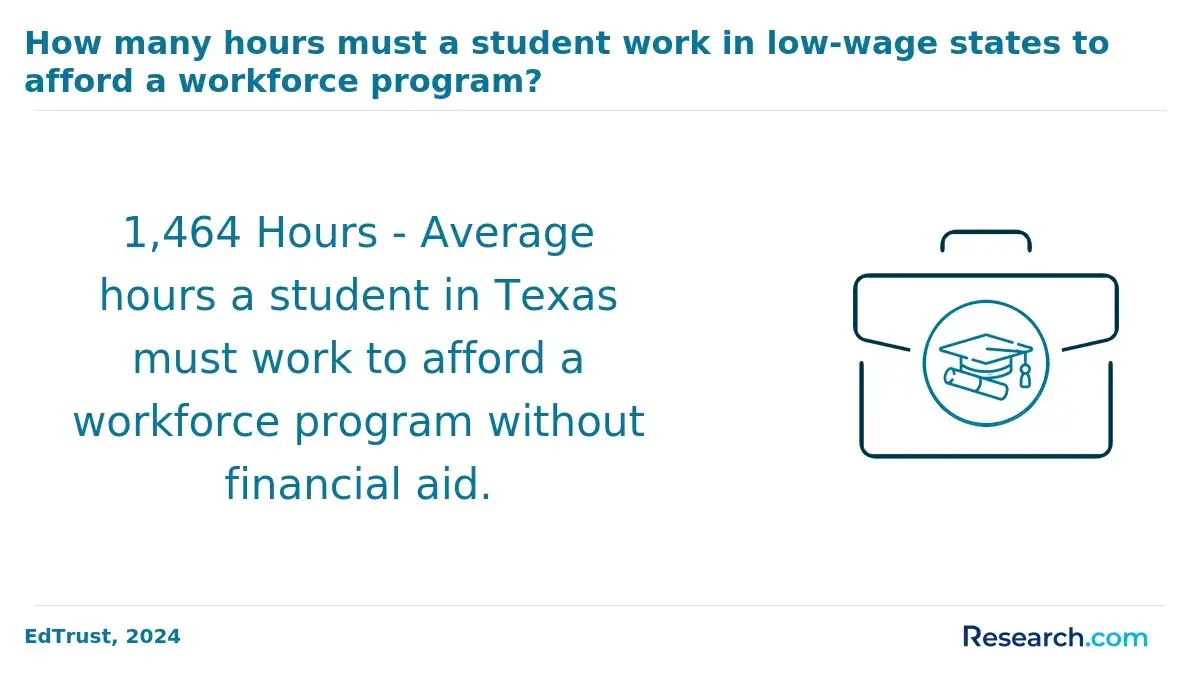
Federal aid can reduce upfront cost, but borrowing still deserves caution. The maximum Federal Pell Grant for the 2024-25 award year is $7,395 for eligible students, which can help but may not cover the full annual cost of a four-year program. Students should compare net price, expected debt, and realistic entry-level pathways rather than assuming a game job will quickly offset any amount borrowed.
To evaluate value, ask whether the program produces a portfolio that can compete for both game jobs and general software roles. A program that teaches strong programming fundamentals may offer better downside protection if the student later chooses simulation, enterprise software, educational technology, defense, AR/VR, or mobile development instead of studio work.
What careers can graduates of game programming and development degrees pursue in the game industry?
Graduates of game programming and development degrees can pursue roles inside game studios, adjacent entertainment technology companies, simulation firms, education technology companies, AR/VR teams, defense contractors, and broader software organizations. The game industry is attractive, but it is also competitive, so students should prepare for related roles that use the same skills.
The table below summarizes common career paths and what each role usually emphasizes. Job titles vary by studio, and entry-level candidates may start in QA, tools, technical support, or general software roles before moving into specialized game programming.
| Career path | Typical responsibilities | Key skills | Portfolio evidence |
| Gameplay programmer | Implement mechanics, character abilities, UI hooks, cameras, and player-facing systems | C++, C#, scripting, debugging, collaboration with designers | Playable mechanics with clear source code and design notes |
| Engine programmer | Improve rendering, memory, performance, tools, platform support, or low-level systems | C++, graphics, profiling, architecture, math | Engine modules, renderer demos, optimization reports |
| Tools programmer | Build editor extensions, pipeline automation, and internal tools for artists and designers | Python, C#, C++, UX awareness, pipeline knowledge | Tools with user documentation and before-and-after workflow examples |
| QA automation or test engineer | Create automated tests, reproduce bugs, analyze builds, and improve release quality | Scripting, testing frameworks, bug tracking, communication | Automated test scripts, bug reports, build validation examples |
| Technical designer | Bridge design and code by scripting systems, prototyping mechanics, and tuning gameplay | Engine scripting, design thinking, communication, iteration | Playable prototypes and documented design decisions |
| Simulation or AR/VR developer | Create interactive training, visualization, or immersive applications | Real-time engines, 3D math, UI, hardware integration | Interactive simulations or immersive demos |
Not every student who likes games will enjoy game programming. This path fits people who like solving technical problems, reading documentation, revising code, testing edge cases, and collaborating under production constraints. Students who are more interested in narrative, visual art, audio, community management, or player research may want a different major or a complementary minor.
It is also wise to compare game programming with other information-centered careers. For example, students who enjoy organizing digital systems, metadata, archives, and user access may find the question is library science a good career more relevant than a game development path.
What salary range and job outlook can game programmers and engine developers expect?
Salary and outlook data for game programmers require careful interpretation because the U.S. Bureau of Labor Statistics does not publish a separate national occupation for "gameplay programmer" or "engine developer." The closest broad category is software developers. BLS reported a May 2024 median annual wage of $133,080 for software developers, but game studio compensation can differ based on location, company size, platform, specialization, overtime culture, and whether the role is full time, contract, or indie.
Job outlook is also best understood through broader software labor data. BLS projected 17% employment growth for software developers, quality assurance analysts, and testers from 2023 to 2033, which is much faster than the average for all occupations. For readers, this suggests that programming skills can travel beyond games, but it should not be read as a guarantee that entry-level game studio openings will be easy to secure.
The table below compares related occupational categories students may encounter when researching salary data. Use it as a context tool, not as a promise of individual earnings.
| Broad occupation used for comparison | May 2024 median annual wage | How it relates to game programming | Important limitation |
| Software developers | $133,080 | Closest broad match for gameplay, engine, tools, and systems programmers | Includes many industries outside games, often with different pay structures |
| Computer programmers | $98,670 | Relevant to coding-heavy roles, maintenance, scripting, and implementation work | Does not capture the full software development lifecycle or game specialization |
| Software quality assurance analysts and testers | $102,610 | Relevant for QA automation, test engineering, and build validation paths | Manual game QA jobs may pay differently from software QA analyst roles |
Specialization can influence opportunity. Engine, graphics, networking, and tools roles often demand deeper technical knowledge and may have fewer openings, but they can also transfer well to simulation, real-time visualization, autonomous systems, and high-performance software. Gameplay roles are more visible and popular with students, which can make junior competition intense.
Students should evaluate ROI by considering multiple outcomes: a game studio job, a non-game software job, a simulation or AR/VR job, and a QA automation or tools pathway. A degree is more resilient when it prepares the student for several technical labor markets rather than only one dream studio.
How can prospective students evaluate and choose a reputable online game programming program?
Choosing a reputable online game programming program requires more than scanning rankings or watching a highlight reel. The best program for you is one that fits your budget, technical starting point, schedule, learning style, and target role while offering credible academic quality and portfolio support.
Use the following steps before you enroll. They are designed to help you verify quality, avoid avoidable debt, and choose a program that supports both game and non-game technical options.
- Verify institutional accreditation through a recognized accreditor before discussing tuition discounts or enrollment deadlines.
- Map the curriculum against your target role, checking for C++, C#, data structures, algorithms, math, engine work, team production, and capstone requirements.
- Ask to see examples of student portfolios, capstone projects, technical postmortems, or graduate showcases.
- Request a written transfer credit evaluation if you have prior college credits, military training, AP credit, or industry certifications.
- Compare net price rather than sticker price, including fees, hardware, software, aid, scholarships, and expected borrowing.
- Ask how online team projects work, including time zones, source control, faculty feedback, and conflict resolution.
- Review faculty backgrounds for a mix of academic computing strength and relevant industry or technical production experience.
- Check career support, internship access, employer relationships, alumni outcomes, and whether the school helps students prepare technical interviews.
Several red flags deserve extra attention. Be cautious if a school promises employment, advertises salaries without explaining sources, avoids accreditation questions, lacks advanced programming courses, has no meaningful portfolio requirement, or pushes enrollment before giving a clear total cost. Also be wary of programs that teach only one commercial engine without broader software engineering fundamentals.
A good final test is to ask, "If I do not get my first-choice game studio job, what else will this degree qualify me to do?" If the answer includes general software development, QA automation, tools, simulation, AR/VR, or technical production, the program may offer stronger long-term value.
Other Things You Should Know About Game Programming & Development
Most programs require at least college algebra, discrete mathematics, and sometimes calculus or linear algebra. These courses support engine physics, graphics, AI, and gameplay systems. Schools may also require a minimum GPA, often 2.0 to 2.5, before students can enroll in advanced programming classes.
No. Some developers enter through computer science, software engineering, math, self-directed portfolios, or QA-to-programming pathways. However, a structured degree can help students build fundamentals, receive feedback, complete team projects, and qualify for employers that prefer a bachelor's degree.
Yes, but they need discipline and feedback. Competitive portfolios usually include polished playable projects, readable code, technical documentation, version control history, and clear explanations of the student's individual contributions to team work.
References
- Video Game Jobs | Job Outlook for Game Developers in 2026 and Beyond https://videogamejobs.co/blog/job-outlook-for-game-developers
- Game Programming Degree | Bachelor of Game Development https://www.cgspectrum.com/courses/game-programming-program
- Game Development - studia I stopnia - Collegium Da Vinci Poznań https://cdv.pl/en/first-cycle-degree/creative-media-and-art/game-development-2/
- FULL-TIME | WINNIPEG LOCATIONS GAMPF-AD Game Development - Programming https://catalogue.rrc.ca/Programs/WPG/FullTime/GAMPF-AD/PrinterFriendly
- Bachelor of Science inGame Design and Development Online or On Campus https://www.albany.edu/cehc/programs/bs-game-design-and-development
- Career Path and Salary for Video Game Designers | ComputerScience.org https://www.computerscience.org/careers/video-game-designer/career-outlook-and-salary/
- Considering an MS in Game Development? 5 Key Factors to Evaluate a Potential Program https://www.princetonreview.com/grad-school-advice/game-design/key-factors-grad-game-program
- Game Development Degrees: What You Need to Know https://www.ivywise.com/ivywise-knowledgebase/gaming-majors/
- Game Development Courses & Degrees | Media Design School at Strayer https://www.mediadesignschool.com/courses/game-development-courses-degrees
- A Game Development Curriculum https://avdi.codes/a-game-development-curriculum/