2027 Online Game Programming and Development Degrees With C++ Game Development Coursework

Co-Founder and Chief Data Scientist
Choosing an online game programming degree is really a career-fit and ROI decision: Will the program teach the C++ skills employers expect, and will it be worth the cost? The U. S. game audience remains large, with the Entertainment Software Association reporting in 2024 that more than 190 million Americans play video games. That demand supports a competitive industry where technical portfolios matter. This guide is for prospective students comparing online programs, costs, accreditation, curriculum, and career outcomes so they can choose a path that fits their goals.
Key Things You Should Know
- Strong online game programming degrees usually combine computer science foundations, C++ programming, game engines, graphics, physics, math, software engineering, and portfolio-based projects.
- Cost varies widely: College Board's 2024 data lists average published tuition and fees at $11,610 for in-state public four-year colleges and $43,350 for private nonprofit four-year colleges, before aid.
- Career outcomes are not guaranteed, but BLS 2024 data places software developers at a median annual wage of about $133,000, while game-specific C++ roles are often more competitive and portfolio-driven.
What is an online game programming and development degree with C++ coursework?
An online game programming and development degree is a college program that teaches students how to build interactive software for games, simulations, entertainment platforms, and real-time applications. The "C++ coursework" part matters because C++ remains a core language for performance-heavy development, especially in engines, rendering systems, gameplay systems, physics, tools, and console or PC game development.
These degrees are usually offered as associate, bachelor's, or master's programs. A bachelor's degree is the most common choice for students targeting entry-level game programmer, software developer, technical designer, tools programmer, or gameplay programmer roles. Associate degrees and certificates can be useful for skill-building, but they may not carry the same weight for employers that prefer a full programming or computer science background.
The best fit is usually a student who enjoys coding, math, debugging, problem-solving, and building projects over time. This path is less ideal for someone who mainly wants to write stories, draw characters, produce music, or manage game communities, unless they also want to develop strong technical skills. Students who are more interested in visual communication may want to compare this pathway with a graphic design degree, which usually emphasizes layout, branding, digital imaging, typography, and creative production rather than engine-level programming.
It is also important to understand that "game development" is not one job. Programming degrees prepare students for technical roles, while game art, animation, design, production, and audio programs prepare students for different responsibilities. A C++-focused program should be evaluated as a software development investment first and a game industry specialization second.
How do online game programming degrees compare to campus-based programs?
Online and campus-based game programming programs can lead to similar academic credentials, but the learning experience is different. Online programs can be a good match for students who need flexibility, want to continue working, live far from game-related campuses, or prefer self-paced study. Campus programs may offer more in-person labs, local studio connections, team-based production spaces, and face-to-face mentoring.
The table below compares the major decision factors. Use it to identify which format supports your learning style, schedule, and career goals rather than assuming one format is automatically better.
| Factor | Online degree | Campus-based degree | Best fit |
| Schedule flexibility | Often stronger, especially asynchronous courses | Usually tied to fixed class times | Working adults, parents, military students, and remote learners |
| Team projects | Can work well through version control, video meetings, and online collaboration tools | Often easier to coordinate in labs and studios | Students who want daily in-person collaboration may prefer campus |
| Hardware access | Student may need a strong personal computer and software setup | Campus labs may provide workstations and testing devices | Students without reliable hardware should compare technology requirements carefully |
| Networking | Depends heavily on online events, faculty access, alumni groups, and portfolio reviews | May provide more local networking and studio visits | Students targeting a specific regional game hub may value campus access |
| Career preparation | Can be strong if the program includes portfolio reviews, capstones, and employer-facing projects | Can be strong if the school has studio partnerships and active recruiting | Either format can work if outcomes and portfolio support are strong |
The biggest online-program risk is isolation. Game development is collaborative, so a quality online program should require group projects, code reviews, Git-based collaboration, milestone planning, and playable prototypes. If an online degree is mostly lecture videos and quizzes with little production work, it may not build the evidence employers want to see.
Campus programs are not automatically superior either. A campus degree with outdated engines, limited C++ depth, weak faculty access, or no capstone may offer less value than a well-designed online program with rigorous programming projects. The deciding question is not "online or campus?" but "Which program produces stronger technical proof of skill?"

What C++ game development courses and skills are typically included in the curriculum?
A strong C++ game programming curriculum should teach both general software engineering and game-specific systems. Employers often care less about course titles and more about whether students can write clean code, solve performance problems, work in an engine, and show finished projects.
The table below summarizes common curriculum areas and why they matter. It can help you compare degree plans and spot programs that are too narrow or too art-focused for a programming career.
| Curriculum area | Typical topics | Why it matters for C++ game development |
| C++ programming | Object-oriented programming, memory management, pointers, templates, standard libraries, debugging | Builds the language fluency needed for engine and gameplay systems |
| Data structures and algorithms | Arrays, trees, graphs, sorting, searching, pathfinding, complexity analysis | Supports efficient gameplay logic, AI behavior, and performance optimization |
| Game engines | Unreal Engine, engine architecture, scripting integration, asset pipelines | Connects code to playable projects and industry workflows |
| Computer graphics | Rendering pipelines, shaders, lighting, cameras, 2D and 3D math | Prepares students for graphics, engine, and technical art collaboration |
| Physics and simulation | Collision detection, rigid bodies, motion, constraints, numerical methods | Supports realistic movement, interactions, and gameplay mechanics |
| Software engineering | Version control, testing, architecture, agile workflows, documentation | Shows employers that students can contribute to production teams |
| Portfolio and capstone | Playable prototypes, team projects, code samples, demos, postmortems | Provides evidence of applied skill beyond grades |
Students should also expect substantial math. Linear algebra, discrete math, trigonometry, and probability are especially useful in gameplay systems, graphics, AI, and simulation. A program that markets game development but avoids math and advanced programming may be better suited to game design or media production than to C++ programming.
AI is also changing expectations. Developers increasingly use AI-assisted coding, procedural content tools, automated testing, and machine learning concepts, but these tools do not replace fundamentals. A good program should teach students how to evaluate generated code, debug systems, protect intellectual property, and understand performance rather than simply prompting tools to write scripts.
What accreditation and quality standards should these online game programming programs meet?
Accreditation is one of the most important filters because it affects transfer credits, federal financial aid eligibility, graduate school options, and employer confidence. In the U.S., students should first confirm that the institution is accredited by an accreditor recognized by the U.S. Department of Education or the Council for Higher Education Accreditation.
Program-level accreditation is less common for game development than for fields such as nursing or engineering, but quality signals still matter. Some computing-related programs may hold ABET accreditation, especially if they are housed in computer science, software engineering, or information technology departments. ABET is not required for most game programming jobs, but it can indicate a structured technical curriculum.
Before enrolling, students should verify several quality markers rather than relying on marketing language. These checks can reduce the risk of choosing a program that looks appealing but lacks academic or career value.
- Confirm institutional accreditation through official accreditor or federal databases, not only the school's promotional pages.
- Review the course catalog to make sure C++ appears in required technical courses, not just as an optional elective.
- Look for portfolio-based assessment, team production courses, capstones, and code review expectations.
- Check whether faculty have experience in software engineering, game development, graphics, simulation, or related technical fields.
- Ask whether online students receive the same career services, tutoring, library access, software access, and faculty support as campus students.
- Request transparent data on retention, graduation, transfer credit acceptance, and career support when available.
Be cautious with programs that promise employment, advertise unrealistic salaries, hide total costs, or cannot clearly explain accreditation. A reputable school should be willing to discuss limitations, not just benefits.
What are the admission requirements and prerequisites for online game programming degrees?
Admission requirements vary by level and school, but most online bachelor's programs require a high school diploma or equivalent, transcripts, an application, and sometimes placement testing. Selective programs may ask for a portfolio, programming sample, essay, minimum GPA, or prior math coursework.
Students do not always need professional programming experience to enter an undergraduate program, but they should be ready for technical work. If you have never coded before, look for programs that include introductory programming before advanced C++ courses. If you already have credits from community college, ask for a transfer evaluation before applying.
The table below outlines typical admissions expectations by degree level. It is useful for determining whether you are ready now or should complete prerequisites first.
| Program level | Common admission requirements | Best for |
| Certificate | High school diploma or prior college enrollment; some require programming basics | Students testing the field or adding C++ game skills to another degree |
| Associate degree | High school diploma or GED, transcripts, placement testing in math or English | Students seeking a lower-cost starting point or transfer pathway |
| Bachelor's degree | High school diploma or transfer credits, transcripts, application, possible GPA or portfolio requirement | Students targeting entry-level programming and development roles |
| Master's degree | Bachelor's degree, transcripts, programming background, possible resume, statement, or portfolio | Students with prior computing experience seeking specialization or advancement |
Prospective students can strengthen their preparation before enrolling by learning basic programming syntax, practicing algebra and trigonometry, building small games, and becoming comfortable with debugging. Even a simple text-based game or 2D prototype can help you understand whether you enjoy the work enough to pursue a full degree.
How long do online game programming and development degrees take, and what do they cost?
Timeline depends on degree level, transfer credits, course load, and academic calendar. A full-time bachelor's degree typically takes about four years, while transfer students may finish faster if prior credits apply. Part-time online students often take longer, but they may reduce financial pressure by continuing to work.
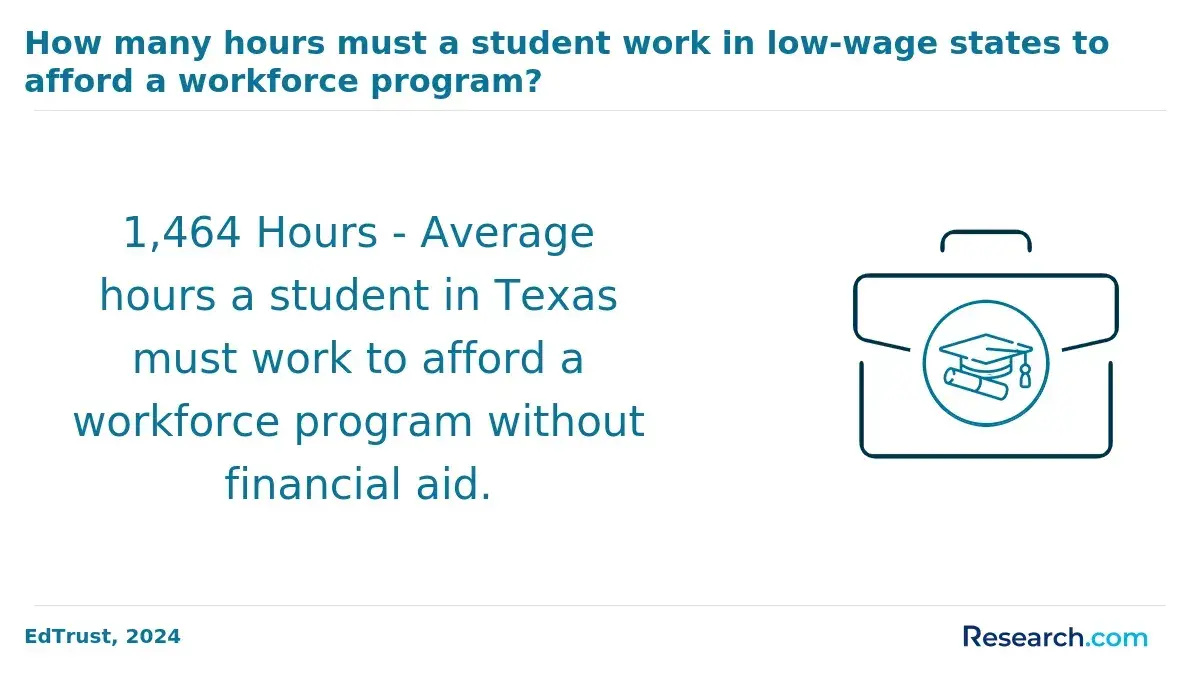
Cost is harder to compare than tuition alone because students may also pay technology fees, course materials, software subscriptions, hardware costs, portfolio expenses, and graduation fees. College Board's 2024 data lists average published tuition and fees for 2024-25 at $11,610 for in-state public four-year colleges, compared with $43,350 for private nonprofit four-year colleges. For online students, this means institutional type and residency rules can significantly affect the starting price before grants, scholarships, employer aid, or transfer credits.
The table below summarizes common time and cost considerations. Use it to compare the full financial picture, not just the advertised tuition rate.
| Degree option | Typical time to complete | Major cost factors | Decision trade-off |
| Certificate | Several months to one year | Per-course tuition, software, limited aid eligibility in some programs | Lower commitment, but may not replace a degree for programming jobs |
| Associate degree | About two years full time | Community college tuition, transfer fees, general education courses | Affordable start, but students should confirm transfer pathways early |
| Bachelor's degree | About four years full time | Tuition, fees, hardware, textbooks, possible residency pricing | Most common degree route for entry-level software and game programming roles |
| Master's degree | One to three years depending on format | Graduate tuition, fewer grant options, opportunity cost | Best for students who already have computing foundations and a clear specialization goal |
To reduce total cost, ask schools about transfer credits, credit for prior learning, military benefits, employer tuition assistance, scholarships, and whether online students pay in-state rates. Also estimate borrowing carefully. Federal student loan rates and repayment terms can change by academic year, so the lowest sticker price is not always the same as the lowest long-term cost.
Students comparing technology degrees may also want to look at adjacent fields. For example, those interested in analytics, AI systems, or technical product roles can compare game programming with the cheapest data science masters in USA options if they already hold a bachelor's degree and want a broader labor-market path.
What game development careers can you pursue with a C++-focused programming degree?
A C++-focused game programming degree can support several technical career paths, but the exact role depends on the student's portfolio, internship experience, engine knowledge, and software fundamentals. Game studios often hire for demonstrated skill rather than degree title alone.
The table below shows common roles connected to C++ game development. It can help you decide which curriculum features and portfolio projects matter most for your target job.
| Career path | Typical responsibilities | Portfolio evidence employers may value |
| Gameplay programmer | Implements player mechanics, combat systems, interactions, UI logic, and game rules | Playable prototypes with clean code, responsive controls, and documented design choices |
| Engine programmer | Works on core systems, performance, rendering support, memory, tools, and platform integration | C++ systems projects, profiling examples, engine modifications, technical writeups |
| Graphics programmer | Builds rendering features, shaders, lighting systems, camera systems, and visual effects pipelines | Shader demos, rendering experiments, math-heavy graphics projects |
| Tools programmer | Creates editors, automation tools, content pipelines, and workflow improvements for development teams | Custom tools, editor extensions, pipeline scripts, usability-focused technical projects |
| AI programmer | Develops non-player character behavior, pathfinding, decision systems, and simulation logic | Pathfinding demos, behavior trees, state machines, enemy AI prototypes |
| Software developer outside games | Builds applications, simulations, real-time systems, or interactive software in other industries | General software projects, testing examples, version-controlled code repositories |
Students should also understand adjacent careers. Technical artists, level designers, producers, and UX designers contribute to games but usually require different portfolios. If your interests shift toward storytelling, visual design, health simulation, training software, or environmental visualization, your programming skills may still transfer into other sectors. Career exploration can be broad; for example, students comparing mission-driven fields may research what can you do with an environmental studies degree to see how technical, analytical, and visualization skills appear outside entertainment.
For entry-level applicants, the most practical strategy is to build a portfolio around one target role. A gameplay programmer should not submit only concept art, and an engine programmer should not rely only on design documents. Employers need to see working code, problem-solving ability, and evidence that you can finish projects.
What salary ranges and earning potential do C++ game programmers typically have?
Game programming salaries vary by role, studio size, location, experience, platform, and whether the job is in entertainment games, simulation, tools, defense, education technology, or broader software development. There is no official BLS occupation called "game programmer," so the closest national benchmarks are usually software developers, computer programmers, and software quality roles.
BLS May 2024 wage data places software developers at a median annual wage of about $133,000. This is a useful benchmark for the broader software market, but game-specific entry-level offers can differ because the games industry is competitive, project-based, and concentrated in certain regions and studios.
The table below explains how to interpret earning potential without assuming a degree produces one fixed salary outcome.
| Career stage | Typical compensation factors | What can improve earning potential |
| Entry-level | Portfolio quality, internships, engine experience, coding tests, location | Finished projects, C++ fluency, GitHub samples, team capstones, internships |
| Mid-career | Specialization, shipped titles, system ownership, leadership on features | Graphics, engine, tools, networking, optimization, or AI expertise |
| Senior and lead roles | Architecture decisions, mentoring, cross-team coordination, production experience | Shipped products, technical leadership, scalable systems, strong communication |
| Adjacent software roles | Industry, employer size, security needs, real-time systems, simulation complexity | Broader software engineering skills, cloud or data experience, domain knowledge |
Students should evaluate salary data as a planning tool, not a promise. A strong C++ degree can open doors, but internships, location, networking, portfolio strength, interview performance, and the broader hiring market strongly affect outcomes.
What is the job outlook and industry demand for C++ game developers in the U.S.?
The U.S. outlook for software talent remains positive overall, but game development is more selective than the general software market. BLS projections released in 2024 estimate 17% growth for software developers, quality assurance analysts, and testers from 2023 to 2033. That figure supports the broader value of software skills, but it should not be read as a game-studio hiring guarantee.
C++ remains relevant because high-performance interactive software still needs efficient memory use, real-time rendering, engine-level control, and platform optimization. It is especially important for Unreal Engine development, console and PC games, simulation systems, VR and AR applications, robotics visualization, and performance-sensitive tools.
Demand is also shaped by current industry trends. Studios are using AI-assisted workflows, live-service analytics, cross-platform deployment, procedural generation, cloud collaboration, and increasingly complex production pipelines. These trends favor programmers who can combine C++ fundamentals with scripting, debugging, collaboration, and systems thinking.
At the same time, the games industry can be cyclical. Project cancellations, studio restructuring, and platform changes can affect hiring. Students who want stronger career flexibility should build software engineering skills that transfer outside entertainment games, such as testing, tools development, simulation, graphics, data structures, and version-controlled team development.
How can prospective students choose a reputable online C++ game programming program?
The smartest way to choose a program is to work backward from your target role. A student aiming for gameplay programming should prioritize playable projects and engine work. A student aiming for engine or graphics programming should prioritize advanced C++, math, rendering, systems, and performance optimization.
Use the following steps to compare programs before applying. They focus on evidence you can verify, not marketing claims.
- Define your target role, such as gameplay programmer, engine programmer, tools programmer, graphics programmer, or broader software developer.
- Download the full course catalog and check which C++ courses are required, which are electives, and when students build portfolio projects.
- Confirm institutional accreditation and ask whether credits transfer to other accredited colleges or graduate programs.
- Review capstone examples, student showcases, code expectations, and whether projects are individual, team-based, or both.
- Ask about online student support, including tutoring, faculty office hours, career coaching, technical help, and access to software.
- Calculate total cost after transfer credits, aid, fees, hardware, and expected time to completion.
- Ask admissions or program staff how often the curriculum is updated for engines, tools, platforms, and employer expectations.
Common mistakes include choosing a program because it has exciting game art, ignoring accreditation, underestimating math, focusing only on tuition, or assuming a degree alone will secure a studio job. A better approach is to evaluate whether the program will help you graduate with a credible technical portfolio and transferable software skills.
It is also reasonable to compare game programming with other online degrees if your long-term goal is not strictly game development. For example, students interested in health technology, biomechanics software, sports simulation, or wellness platforms may compare this pathway with an online degree in exercise science to decide whether they want a technical, scientific, or hybrid academic direction.
Other Things You Should Know About Game Programming & Development
It can be worth it if the program is accredited, technically rigorous, affordable for your situation, and produces a strong portfolio. It may not be worth it if the curriculum is light on C++, math, software engineering, and real projects.
Not always, but C++ is important for many performance-focused roles, especially Unreal Engine, engine programming, graphics, and console or PC development. Some roles use C#, Python, Lua, JavaScript, or visual scripting, depending on the engine and job.
A 2027 online game programming and development degree should include coursework in C++ for game development, foundational programming, game design, graphics programming, and collaborative project work. It should also offer opportunities for internships or industry connections to reinforce practical skills and employability.
Many U.S. programs do not require a standardized admissions test, but they usually ask for a high school diploma or GED, transcripts, and proof of prerequisite math or computer science work. Some schools may require placement tests, while transfer applicants often need 24 or more prior college credits.
References
- Complete C++ programmer salary data https://skillpanel.com/blog/c-plus-plus-developer-salary/
- Comprehensive Guide Online Game Development Bachelor’s Degree https://www.computerdegreesonline.org/game-development-bachelors-degree/
- Video Game Jobs | Job Outlook for Game Developers in 2026 and Beyond https://videogamejobs.co/blog/job-outlook-for-game-developers
- Game Programming Degree | Bachelor of Game Development https://www.cgspectrum.com/courses/game-programming-program
- Game Development - studia I stopnia - Collegium Da Vinci Poznań https://cdv.pl/en/first-cycle-degree/creative-media-and-art/game-development-2/
- Career Path and Salary for Video Game Designers | ComputerScience.org https://www.computerscience.org/careers/video-game-designer/career-outlook-and-salary/
- What Does a C++ Developer Earn? – Jobsking https://jobsking.com/en/blog/what-does-a-c-developer-earn
- Decoding Game Development and Programming Salaries: A Comprehensive Guide https://ghanitricks.com/
- Professional Game Development in C++ and Unreal Engine https://courses.tomlooman.com/p/unrealengine-cpp
- How to Become a Game Developer After 12th: Courses and Job Opportunities For 2026 - Artemisia College https://www.artemisiacollege.com/blog/become-game-developer-after-12th/